

A travel blogger is someone who creates authentic, experience-driven content that builds community and generates revenue across multiple channels. The role has evolved well beyond digital diary writing. Today, the most successful bloggers treat their sites as media businesses, with structured content strategies, diversified income streams, and audience relationships built on genuine trust. The travel blogging market is oversaturated, which means standing out requires a sharp niche, a clear content plan, and a real commitment to treating your blog like the business it is.
1. How to choose your niche as a travel blogger
Picking a narrow niche is the single most important decision you make when starting a travel blog. Niche focus drives traction in a crowded market far more effectively than broad, general content. A blog about “travel” competes with millions of sites. A blog about solo travel for women over 50, or budget backpacking in Southeast Asia, competes with far fewer.
Your niche should sit at the intersection of your genuine expertise and a real audience need. Ask yourself what travel problems you have solved that others still struggle with. That gap is your content opportunity.
- Solo travel niches: budget solo trips, solo female travel, solo travel after 60
- Experience niches: culinary travel, adventure sports, slow travel, van life
- Audience niches: family travel, LGBTQ+ travel, accessible travel for disabled readers
- Geographic niches: Central America on a budget, off-grid Europe, rural Japan
Pro Tip: Pick a niche you can write 100 articles about without running out of ideas. If you struggle to list 20 topics right now, the niche is too narrow or the wrong fit.
2. Building a content strategy that actually grows traffic
The most effective content ratio for travel blogs is 50% how-tos and destination guides, 30% itineraries, and 20% personal stories. This split balances SEO traffic with the emotional connection that keeps readers coming back. How-tos rank well in search. Itineraries convert readers into buyers. Personal stories build loyalty.

Map every article to a reader’s stage in the decision process. Inspiration content catches readers who are dreaming. Planning content serves readers who have chosen a destination. Action content, like booking guides and packing lists, targets readers ready to spend money. Linking these stages logically drives conversions and monetization far more effectively than publishing random posts.
Effective travel content also blends emotional storytelling with practical detail. Blocks like daily pacing, budgeting breakdowns, and logistics FAQs reduce planning anxiety and keep readers on your site longer. That combination of heart and utility is what separates the best travel bloggers from the rest.
For a deeper look at how to structure your content mix, Stacyknows covers SEO content strategies that apply directly to travel blog growth.
3. Essential tools and platforms for launching your blog
A self-hosted WordPress.org site is required for full monetization capabilities. Free blogging platforms restrict your ability to run ads, install affiliate plugins, and own your content outright. WordPress.org gives you complete control.
Here are the core tools every serious travel blog needs:
- WordPress.org — self-hosted platform for full ownership and monetization
- Yoast SEO or Rank Math — on-page SEO optimization plugins
- WP Rocket — page speed and caching for better Core Web Vitals scores
- Canva — graphics, Pinterest pins, and social media visuals
- ConvertKit or MailerLite — email list building and automation
- Google Search Console — track search performance and fix indexing issues
- Ahrefs or Semrush — keyword research and competitor content analysis
Beyond the blog itself, multi-platform SEO (sometimes called SEOx) extends your visibility beyond Google. Publishing on Pinterest, YouTube, and social platforms creates additional discovery points that protect you when search algorithms shift.
| Tool category | Primary purpose | Free tier available |
|---|---|---|
| CMS (WordPress.org) | Full site ownership | No (hosting required) |
| SEO plugin | On-page optimization | Yes |
| Email platform | List building | Yes |
| Keyword research | Content planning | Limited |
| Page speed | Core Web Vitals | Yes |
4. Building a loyal audience that sustains your blog
Chasing raw traffic numbers is the wrong goal. Building 1,000 true fans through an owned email list delivers more consistent income than tens of thousands of passive visitors. True fans buy your products, click your affiliate links, and share your content without being asked.
Your email list is your most valuable asset. Social media platforms change their algorithms constantly. Your email list belongs to you. Grow it by offering a specific, useful lead magnet: a packing checklist, a destination budget template, or a free mini itinerary.
Here is what builds genuine audience loyalty:
- Show your face. Readers connect with people, not anonymous websites. Photos and video of you in the places you write about build trust fast.
- Reply to comments and emails. A personal response turns a casual reader into a loyal fan.
- Create micro-communities. A private Facebook group or Discord server for your readers gives them a reason to stay connected between posts.
- Be consistent. Publishing one strong post per week beats publishing five mediocre ones.
Pro Tip: Use email marketing strategies designed for travel audiences to segment your list by destination interest. Targeted emails convert at a much higher rate than generic newsletters.
5. Monetization methods that work for travel bloggers
Display advertising and affiliate marketing are the two primary revenue streams for most established travel bloggers. Mediavine, one of the top premium ad networks, requires 50,000 monthly sessions for access. That threshold is a realistic goal for a blog that is 12–18 months old with consistent publishing.
Affiliate marketing works best when you focus on bottom-of-funnel keywords where readers already intend to book or buy. A post titled “Best Travel Insurance for Southeast Asia” converts far better than “Is Southeast Asia Safe?” even if the second post gets more traffic.
| Revenue stream | Effort to start | Income potential | Best for |
|---|---|---|---|
| Display ads (Mediavine) | Low | Medium | High-traffic blogs |
| Affiliate marketing | Medium | High | Niche, intent-driven content |
| Sponsored posts | Medium | High | Established blogs with engaged audiences |
| Digital products | High | Very high | Bloggers with loyal email lists |
| Paid memberships | High | Recurring | Community-focused bloggers |
Selling your own products, such as travel guides, itinerary templates, or online courses, removes the middleman entirely. Paid memberships create recurring revenue that does not depend on monthly traffic fluctuations. Brand collaborations work well once your audience is engaged, but they should never be your only income stream.
6. Content and workflow tips to future-proof your blog
Content clusters are the most effective SEO structure for travel blogs. A cluster groups a broad pillar post with several supporting articles, all internally linked. This signals topical authority to search engines and keeps readers moving through your site. A pillar post on “Traveling in Portugal” links to supporting posts on Lisbon neighborhoods, Porto day trips, and Algarve budget tips.
Original personal media makes your content algorithm-proof. Photos you took, videos you filmed, and stories only you can tell cannot be replicated by AI-generated content. That originality is your competitive advantage. Lean into it.
Protecting your content is also worth taking seriously. Services like the Copymight Coalition help bloggers protect original content from AI scraping and unauthorized use. As AI tools pull from published web content at scale, having your intellectual property protected becomes a real business concern, not just a theoretical one.
Pro Tip: Audit your top 10 posts every quarter. Update outdated information, add new internal links, and refresh photos. Updated content often ranks higher than new content.
Running a travel giveaway is another underused tactic for audience growth. A well-structured giveaway can rapidly expand your email list and social following. Running a travel giveaway effectively requires clear entry rules, a relevant prize, and a promotion plan that reaches beyond your existing audience.
What I’ve learned after years of watching travel blogs succeed and fail
The blogs that last are the ones that made a decision early: this is a business, not a hobby. That shift in mindset changes everything. It changes how you choose topics, how you structure posts, and how you spend your time.
The biggest mistake I see aspiring travel bloggers make is writing what they feel like writing instead of what their audience is searching for. Passion matters, but passion without strategy produces a beautiful blog that nobody reads. The sweet spot is writing content you genuinely care about that also answers a real question your reader is typing into Google.
Patience is non-negotiable. Most travel blogs take 12–24 months to generate meaningful income. The bloggers who quit at month six never find out what month eighteen looks like. The ones who stay focused on building their email list, publishing consistently, and targeting buyer-intent keywords are the ones who eventually get to call this their job.
One more thing: do not try to do everything at once. Pick one social platform, one monetization method, and one content format to master before adding more. Spreading yourself thin is the fastest way to burn out and produce mediocre content across the board.
— Stacy
Stacyknows has resources for every lifestyle creator
Travel blogging sits at the center of lifestyle content creation, and the skills you build as a blogger carry into every area of your life. Stacyknows covers the full spectrum of lifestyle topics that matter to modern readers, from wellness and beauty to relationships and local experiences.
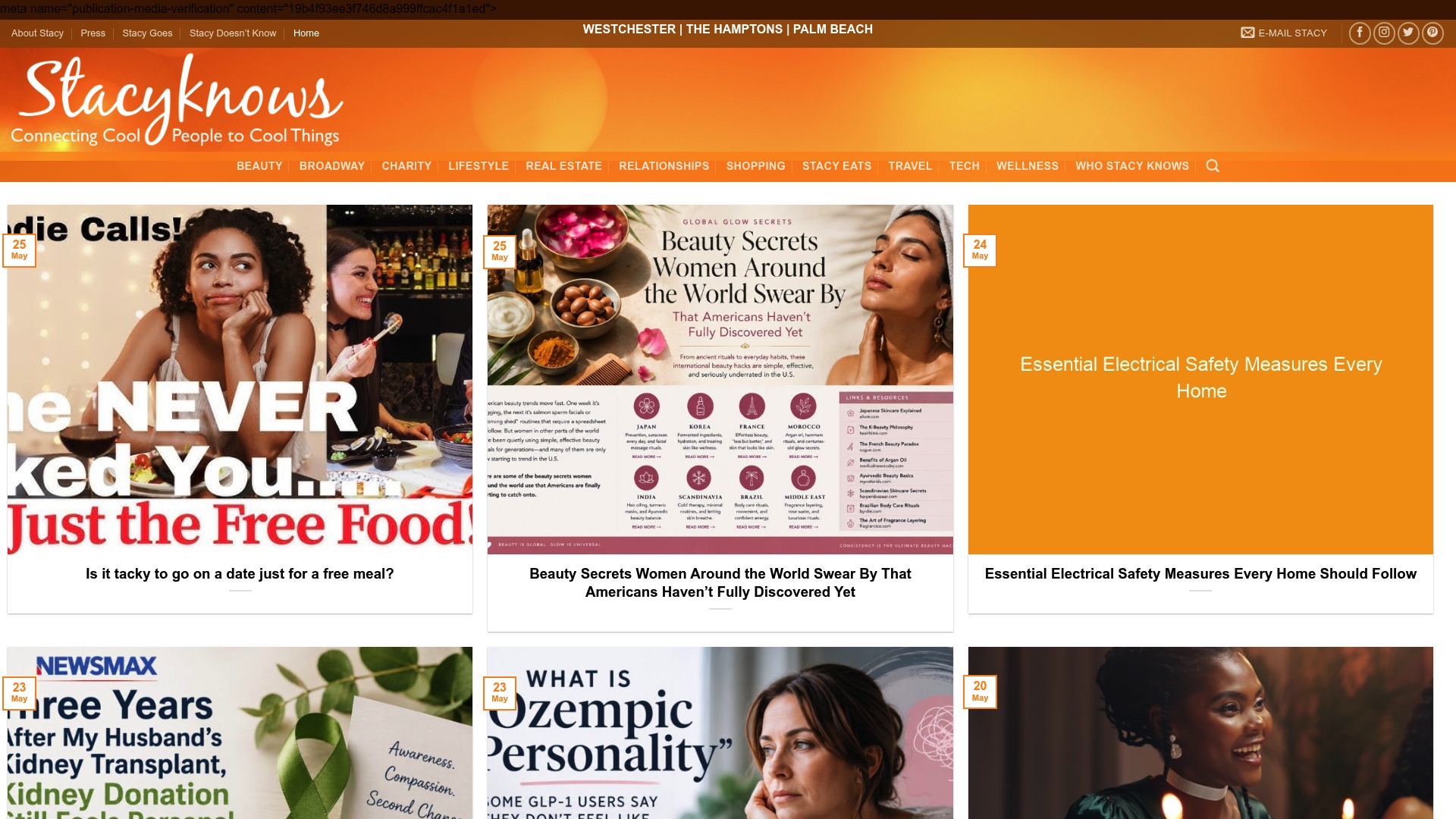
If you are building a travel blog, you are already someone who pays attention to how you live. Stacyknows speaks directly to that curiosity. Browse beauty secret finds curated for readers who want the best of what the world has to offer, or explore wellness content that fits the travel lifestyle. There is always something worth reading when you are building a life worth writing about.
FAQ
What is a travel blogger?
A travel blogger is a content creator who publishes travel-focused articles, guides, and stories online, typically on a self-hosted blog, with the goal of building an audience and generating income through ads, affiliate links, or products.
How long does it take to make money travel blogging?
Most travel blogs take 12–24 months to generate consistent income. Reaching the Mediavine ad network threshold of 50,000 monthly sessions is a common early milestone for display ad revenue.
What niche should I choose for my travel blog?
Choose a niche at the intersection of your genuine expertise and a real audience need. Narrow niches like solo female travel, accessible travel, or budget backpacking in a specific region gain traction faster than broad travel blogs.
What content should a travel blog focus on?
The most effective content ratio is 50% how-tos and destination guides, 30% itineraries, and 20% personal stories. This mix balances SEO traffic with audience loyalty and affiliate conversion potential.
Do I need WordPress for a travel blog?
A self-hosted WordPress.org site is the standard choice for bloggers who want full monetization capabilities, including affiliate plugins, ad networks, and complete content ownership.
Recommended
- The Reality of Being an Influencer in 2026 (No One Tells You This) – Stacyknows
- Luxury Travel Style Starts From the Ground Up
- Planning a Safari Adventure: A Guide for Modern Travelers – Stacyknows
- The Dog Mom’s Guide to Road Trips
