

A food blogger is a content creator who builds an audience by sharing culinary content, including recipes, food photography, and personal stories, through a dedicated blog or digital platform. The best food blogs in 2026 share three traits: a clear niche, search-optimized content, and photography that stops readers mid-scroll. Getting all three right takes deliberate strategy, not just passion for cooking. Whether you want to document weeknight dinners or build a full-time business around gourmet food blogging, the steps below give you a proven path forward.
1. What does a food blogger actually do?
A food blogger creates, tests, photographs, and publishes culinary content designed to attract and retain a loyal audience. The role blends cooking expertise with writing, SEO, and visual storytelling. Many full-time food bloggers come from non-culinary backgrounds, which proves that consistency and a professional mindset matter more than formal training. Treating your blog as a business from day one separates creators who grow from those who stall.
2. Choosing a niche that sets you apart
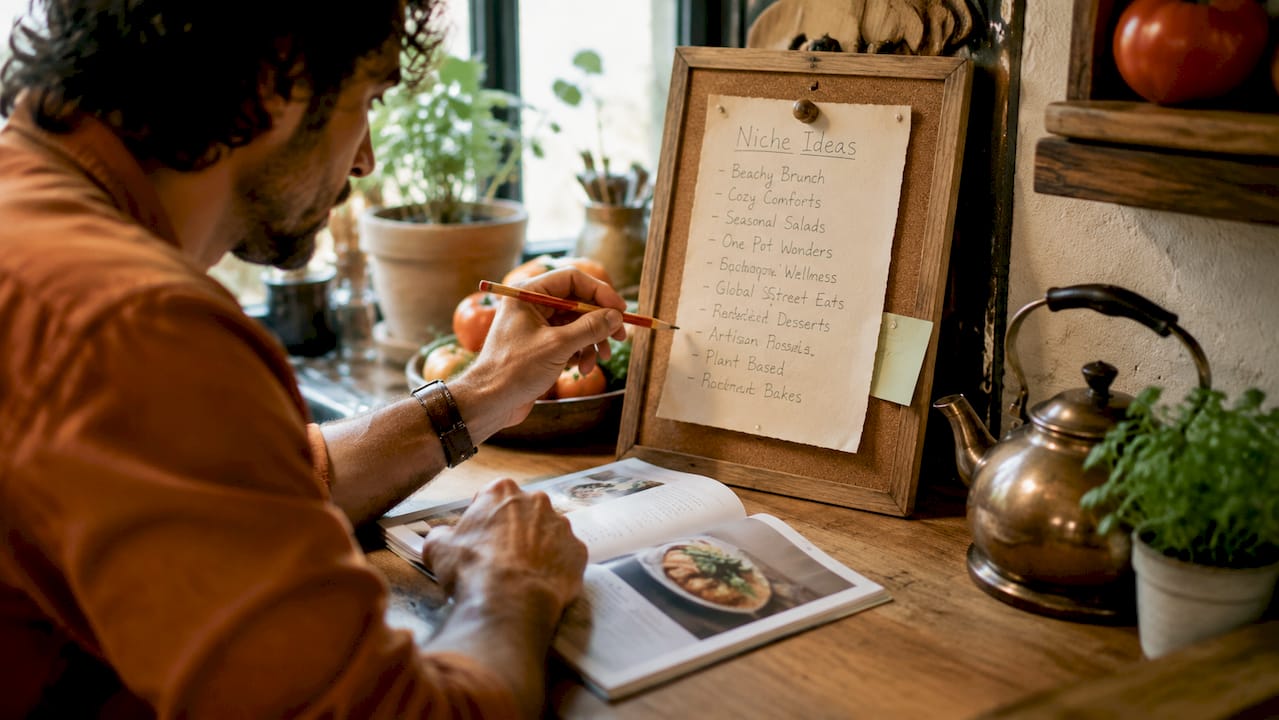
Niche selection is the single most important decision you make before publishing your first post. A focused niche builds topical authority, which helps Google understand what your site covers and rank it higher for relevant searches. Niche intersections let new bloggers rank more easily by targeting specific, lower-competition long-tail keywords rather than broad topics like “easy dinner recipes.”
Strong niche examples include:
- Vegan sourdough discard recipes
- Weeknight Indian cuisine for busy families
- Gluten-free baking for kids
- Budget Mediterranean meal prep
- Healthy recipes for postpartum recovery
Each of these targets a specific reader with a specific problem. That specificity is what drives topical authority and attracts qualified audiences who actually want what you publish.
Pro Tip: Pick a niche at the intersection of two passions. If you love Thai food and you have celiac disease, “gluten-free Thai cooking” is a niche with real search demand and almost no direct competition.
3. Building a content strategy around reliable recipes
Content quality is the foundation every other strategy rests on. Readers return to blogs they trust, and trust comes from recipes that work every time. Professional food bloggers test recipes at least three times before publication to confirm reliability and reduce negative feedback.
A strong content strategy follows these steps:
- Test the recipe at least three times. Include substitutions in your testing, such as dairy-free swaps or different flour types, so readers with dietary restrictions get reliable results too.
- Write instructions in plain language. Use precise measurements and clear, sequential steps. Avoid vague phrases like “cook until done.”
- Add personal anecdotes strategically. A short story about why this dish matters to you builds connection. Keep it to two or three sentences before the recipe card.
- Use a dedicated recipe plugin. WordPress recipe plugins generate JSON-LD structured data, which produces rich search results showing photos, ratings, and cook times directly in Google.
- Structure posts for skimmers. Use jump-to-recipe links, clear headings, and a FAQ section at the bottom. Many readers arrive just for the recipe card.
Pro Tip: Write your recipe instructions as if you are guiding someone who has never cooked the dish before. That level of clarity wins five-star reviews and repeat visitors.
4. Mastering SEO and promotion for food content
SEO for food blogs has shifted away from keyword stuffing toward writing that sounds natural and serves the reader first. Content written for humans consistently outperforms algorithm-focused writing in search rankings. That shift changes how you approach every post.
The most effective SEO and promotion tactics for food bloggers include:
- Long-tail keywords: Target 3–5 word phrases like “easy vegan lentil soup” instead of “soup recipes.” These phrases have lower competition and higher purchase or cook intent.
- Schema markup via recipe plugins: Rich search results with photos, ratings, and cook times increase click-through rates significantly.
- Internal linking: Connect related recipes and guides within your site to help Google map your content and keep readers reading longer.
- Pinterest as a visual search engine: Pinterest drives major traffic for food bloggers. Vertical pins with keyword-rich descriptions and consistent pinning, around 2–3 times daily, build steady referral traffic over months.
- Email list building: An email list is one of the most valuable assets a food blogger owns. It provides direct communication that no algorithm change can take away.
“Building an email list gives you a direct line to your readers that social media platforms cannot interrupt. Every subscriber is a relationship you own outright.”
Food blog marketing strategies
Understanding how media incentives affect coverage also helps you make smarter decisions about sponsored content and brand partnerships, keeping your audience’s trust intact.
For a deeper look at applying these tactics to your site, Stacyknows covers SEO content strategies that apply directly to food bloggers and digital creators.
5. Elevating your blog with food photography
Photography is the first thing a reader judges. A weak photo sends them back to the search results before they read a single word. The “hero” photo at the top of each post acts as a visual anchor, and high-quality photography is what convinces readers to stay and try the recipe.
You do not need a professional studio to take great food photos. These practices work on any budget:
- Use natural light whenever possible. Position your dish near a window and shoot during the morning or early afternoon for soft, even light.
- Shoot from multiple angles. Overhead shots work well for flat dishes like pizza or grain bowls. A 45-degree angle shows depth for soups, stacks, and layered desserts.
- Keep backgrounds simple. A wooden cutting board, a linen napkin, or a plain white surface keeps the food as the focus.
- Edit consistently. Use the same preset or editing style across all photos to build a recognizable visual brand.
- Add props with purpose. Fresh herbs, a linen napkin, or a vintage spoon add context without distracting from the dish.
For practical photography techniques that translate directly to food content, the Stacyknows guide on getting amazing photos covers composition and lighting principles worth applying to your food shoots.
6. Building community and monetizing your blog
A loyal community is what turns a blog into a business. Readers who feel seen and heard come back, share your content, and buy what you recommend. Engagement is not a vanity metric. It is the engine of long-term growth.
Practical community and monetization tactics include:
- Reply to every comment in the first month. Early engagement signals to readers that a real person is behind the blog, which builds trust fast.
- Be transparent about sponsorships. Disclose affiliate links and paid partnerships clearly. Readers reward honesty with loyalty.
- Diversify income streams. Successful food bloggers combine display advertising, affiliate marketing, sponsored posts, digital products like e-books, and online cooking classes.
- Publish on a consistent schedule. An editorial calendar removes the guesswork from content planning and signals reliability to both readers and search engines.
- Collaborate with other bloggers. Guest posts, recipe roundups, and social media takeovers expose your content to new audiences without paid advertising.
Starting a food blog involves six core steps, from domain registration to consistent content strategy. The startup cost can range from $15 to $99 initially, with recurring hosting and plugin costs as the blog grows. That low barrier to entry means the differentiator is never money. It is always execution.
What I’ve learned after years of watching food blogs rise and fall
The food bloggers I have seen build real, lasting audiences share one quality: they stayed specific when everything around them said to go broad. The temptation to cover every cuisine, every dietary trend, and every cooking method is real. Resist it.
I have also noticed that the bloggers who treat their site as a business from the start, with an editorial calendar, a content budget, and a monetization plan, grow faster than those who treat it as a hobby waiting to become a business. The mindset shift is not about losing the joy of cooking. It is about giving that joy a structure that lets it reach more people.
SEO changes every year. Photography trends shift. Social platforms rise and fall. What does not change is the value of a blogger who knows their reader deeply, tests their recipes obsessively, and shows up consistently. If you are just starting out, pick your niche, publish your first ten posts, and then revisit your strategy. The data you collect from real readers will teach you more than any guide can.
One more thing: do not wait until your photos are perfect or your writing is polished. Publish, learn, and improve in public. The lessons from long-term bloggers all point to the same truth. Starting is the hardest part, and the bloggers who start imperfectly always outpace the ones who wait.
— Stacy
Stacyknows has more for the creative lifestyle you’re building
Food blogging is one part of a bigger creative life, and Stacyknows covers the full picture. From wellness habits that keep your energy up through long recipe-testing sessions to beauty finds that help you show up confidently on camera, the site is built for people who take their lifestyle seriously.
If you are building a food blog, you are also building a personal brand. That means how you look, feel, and present yourself matters as much as your recipes. Stacyknows’ beauty secret finds are curated for exactly that kind of creator: someone who wants to feel their best while doing work they love. Explore the full range of lifestyle content at Stacyknows and find the resources that support every part of your creative life.
FAQ
What is a food blogger?
A food blogger is a content creator who publishes culinary content, including recipes, food photography, and personal stories, on a dedicated blog or digital platform to build and engage an audience.
How much does it cost to start a food blog?
Starting a food blog can cost as little as $15 to $99 initially, covering domain registration and basic hosting, with additional costs for plugins and tools as the blog grows.
What niche should I choose for my food blog?
Choose a niche at the intersection of your passion and a specific audience need, such as gluten-free baking or weeknight Indian cuisine, since focused niches rank more easily by targeting lower-competition long-tail keywords.
How do recipe plugins help with SEO?
WordPress recipe plugins generate JSON-LD structured data that produces rich search results showing photos, ratings, and cook times directly in Google, which increases click-through rates.
How often should I post on my food blog?
Consistency matters more than frequency. Publishing on a predictable schedule, whether weekly or twice a month, signals reliability to both readers and search engines and supports steady audience growth.
Recommended
- Local Influencer: Your 2026 Community Growth Guide – Stacyknows
- SEO Content Strategies for Every Website – Stacyknows
- After More Than 20 Years of Blogging, Here’s What I’ve Learned: People Don’t Remember Everything – Stacyknows
- Helpful Tips for Taking Your Event to the Next Level
