
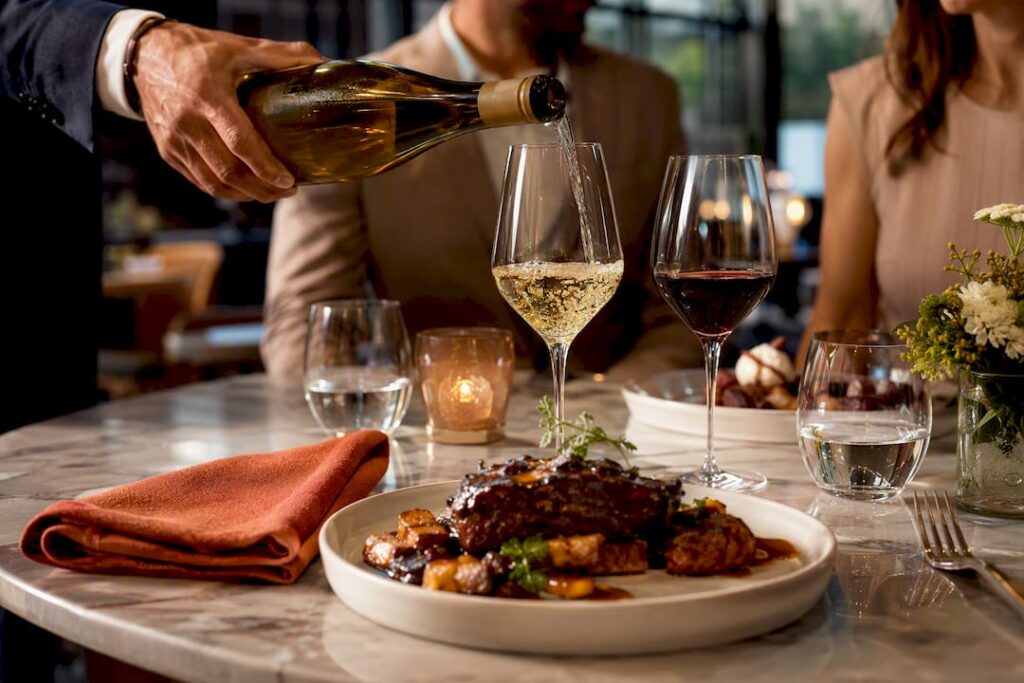
Match the wine’s body to the dish, then use acidity, tannin, or sweetness to balance whatever dominates the plate. When in doubt, a bottle of dry sparkling, a light Pinot Noir, or an off-dry Riesling will carry you through almost any dinner. These are guidelines, not laws, so treat them as a starting point you can bend once you know why they work.
The Four Building Blocks of Wine Pairing Basics
Every wine pairing decision comes down to four things: body, acidity, tannin, and sweetness. Once you can read these in a glass, you can pair almost anything without memorizing a single chart.
Body is how heavy a wine feels in your mouth, roughly light, medium, or full. A crisp Pinot Grigio is light. A California Chardonnay leans full. The rule that matters most here: match the weight of the wine to the weight of the dish, so a delicate poached fish doesn’t get flattened by a bold Cabernet, and a rich short rib doesn’t make a light rosé taste like water. Pairing experts consistently point to this weight match as the single most reliable starting point for choosing wine with food.
Acidity is the tartness you feel on the sides of your tongue, the reason a squeeze of lemon perks up a dish. High-acid wines (Sauvignon Blanc, Champagne, Chianti) refresh your palate and cut through richness, which is exactly why pairing experts recommend acidic wines for fatty or salty foods like fried chicken or buttery pasta.
Tannin is that drying, slightly gripping sensation from red wine, especially young Cabernet or Nebbiolo. Tannins bind to protein and fat, which softens the wine’s harshness and makes both the food and the wine taste better together, a big reason steak and Cabernet became a classic pairing in the first place.
Sweetness follows one firm rule: the wine should be at least as sweet as the dish, or the food will make the wine taste bitter and thin.
Quick reference for the four elements:
- Body: light wines with light dishes, full wines with rich dishes
- Acidity: high-acid wines cut through fat, salt, and richness
- Tannin: tannic reds soften alongside protein and fat
- Sweetness: wine sweetness should meet or beat the dish’s sweetness
Pro Tip: If you’re not sure how tannic a red is, look at the color. Deep, opaque purple usually means more tannin than a wine you can see light through.
Should You Match the Dish or Contrast It?
There are really only two strategies in wine pairing, and beginners can learn both in under a minute.
Congruent pairing means matching similar flavors to intensify them. Earthy Pinot Noir with mushroom risotto is a classic example: the wine echoes the dish instead of fighting it.
Complementary pairing means using contrast to balance a dish’s dominant trait. Bubbly, high-acid Champagne next to salty, greasy fried chicken is the textbook version, where the wine cuts against the food rather than mirroring it.
- Use congruent pairing when a dish already tastes balanced and you want to amplify its best quality
- Use complementary pairing when a dish leans heavy, fatty, salty, or spicy and needs contrast to feel balanced
The one-line rule: if the dish could use a break from itself, contrast it; if it’s already working, match it. This idea of switching between the two approaches gives beginners a fast mental shortcut instead of a long list of rules to memorize.
What Are the Basic Tastes That Affect Wine Pairing?
Before you pick a bottle, run through the dish’s dominant tastes. Each one interacts with wine differently, and knowing the pattern lets you handle a dish you’ve never paired before.
- Acid (lemon, vinegar, tomato): needs a wine with equal or higher acidity, or the wine tastes flat and dull next to the food.
- Sweetness (glazes, fruit, caramelized elements): needs a wine at least as sweet, otherwise the wine turns bitter on your tongue.
- Salt (cured meats, briny seafood, salty cheese): pairs beautifully with acidic or slightly sweet wines, which is why sweet wines are the classic fix for salty, pungent cheeses.
- Fat (butter, cream, marbled meat): calls for high acid or firm tannin, both of which cut through richness instead of adding to it.
- Bitter (charred food, dark greens, strong tannin already in the dish): avoid stacking more tannin on top; go softer and fruitier instead.
- Spice (chili heat, black pepper): needs lower alcohol and a touch of sweetness, since alcohol amplifies the burn of spicy food rather than calming it.
The sauce usually decides the pairing more than the protein itself. Grilled chicken in lemon butter and the same chicken in a smoky barbecue glaze call for two completely different bottles, even though the meat never changed.
How Do You Pick a Wine at the Table in Four Steps?
You don’t need a sommelier standing next to you. This four-step framework works whether you’re at a restaurant table or standing in a wine shop aisle with dinner already planned.
- Judge the weight. Is the dish light (salad, white fish), medium (roast chicken, pork chops), or heavy (braised beef, rich pasta)? Match a wine of similar weight, since weight mismatches are the most common beginner error.
- Scan for dominant tastes. In about ten seconds, note whether the dish is fatty, acidic, salty, sweet, or spicy. That single trait usually tells you what the wine needs to balance.
- Decide match or contrast. If the dish is rich or fatty, contrast with acid or tannin. If it’s delicate, match it with something equally light. Two warnings worth remembering: never pair a tannic, full red with lean fish (the tannin will taste metallic against it), and always reach for something off-dry, not bone-dry, with spicy food.
- Pick a fallback if you’re stuck. Sparkling wine, dry Riesling, and Pinot Noir handle an unusually wide range of dishes, which makes them safe choices when the table is ordering five different entrees.
Pro Tip: At a group dinner, order one white and one red instead of trying to find a single bottle that pleases everyone. Let each guest choose based on their own plate.
What Wine Goes With Red Meat, Fish, Cheese, and More?
Specific food categories come with their own patterns, and once you know a few, you can extend the logic to almost any dish.
Red meat. Well-marbled steak wants a tannic, full-bodied red like Cabernet Sauvignon or Malbec, since the fat and protein soften the wine’s tannin while the tannin cuts the richness right back. Leaner cuts, like flank steak or venison, do better with a medium-bodied red such as Merlot or Sangiovese instead of something punishingly tannic.
Poultry and pork. Let the sauce lead. Lemon butter or cream sauces want a crisp white like Sauvignon Blanc or unoaked Chardonnay. Tomato-based or barbecue preparations shift the same protein toward a medium red like Chianti or Grenache.
Fish and shellfish. Bright, high-acid whites (Albariño, Sauvignon Blanc) or dry sparkling wine shine here, especially with anything fried or citrusy. Richer fish like salmon or tuna can handle a light red such as Pinot Noir or Beaujolais without clashing.
Cheese. Start with weight before flavor. Soft, mild cheeses like brie want light whites or sparkling; aged, hard cheeses like Manchego handle fuller reds. Sweet wines tame salty, pungent options like blue cheese, and region can act as a helpful shortcut since cheese and wine from the same area were often built to go together.
Vegetarian and plant-forward dishes. Roasted vegetables bring earthy, sometimes bitter notes, and umami-rich dishes like mushroom risotto or eggplant parmesan pair well with acidic whites or lighter reds. Grüner Veltliner and Pinot Noir both handle vegetable-forward menus without overpowering them.
Desserts. The wine must be at least as sweet as the dessert, ideally sweeter. A dry wine next to a chocolate cake tastes sour and thin by comparison. Pour dessert wines in small portions, two to three ounces, since they’re rich and meant to be sipped slowly.
What Are Some Easy Wine Pairings for Beginners?
Keep this cheat sheet handy, whether it’s saved on your phone or taped inside a kitchen cabinet.
| Dish | Wine | Why It Works |
|---|---|---|
| Fried chicken | Champagne or dry sparkling | Bubbles and acid cut through the fat |
| Grilled steak | Cabernet Sauvignon | Tannin softens against marbled protein |
| Roast chicken (lemon butter) | Sauvignon Blanc | Bright acid matches the citrus |
| Spicy Thai curry | Off-dry Riesling | Lower alcohol and sweetness tame the heat |
| Salmon | Pinot Noir or dry rosé | Light body suits the fish’s richness |
| Mushroom risotto | Pinot Noir | Earthy congruent match |
| Blue cheese | Sauternes or port | Sweetness balances the salt |
| Brie or soft cheese | Sparkling wine | Light, versatile, cuts creaminess |
| Tomato pasta | Chianti | High acid mirrors the tomato |
| Sushi | Dry Riesling or sparkling | Clean acid complements delicate fish |
| Barbecue ribs | Zinfandel | Fruit-forward body stands up to smoke |
| Chocolate dessert | Port or late-harvest wine | Wine’s sweetness matches the dessert |
If you only stock a few bottles at home, sparkling wine, Pinot Noir, and dry Riesling are excellent versatile choices. They cover a wide range of dishes including fried food, cheese boards, light meats, and many spicy or mixed-flavor meals without much guesswork. Hosting a bigger dinner? Scale from one bottle to two by adding a contrasting option, one white and one red, so guests eating different courses each have something that works.
What Mistakes Do Beginners Make With Wine Pairing?
The most common error is defaulting to red wine no matter what’s on the plate, which ruins more pairings than any other habit. Ignoring the sauce is a close second, since a protein-first mindset misses that barbecue chicken and lemon chicken need entirely different bottles. Picking an overly tannic red for something lean, like sole or roast turkey breast, is another classic misfire that makes both the food and the wine taste worse.
- Test with small pours before committing a full glass to a pairing you’re unsure about
- Keep water and plain bread on the table to reset your palate between bites
- Once you understand why a rule exists, you have full permission to break it deliberately
Pro Tip: Trying an unconventional pairing at a dinner party? Taste it privately first. A five-minute test in the kitchen saves you from serving a clash to six guests.
Some of the most interesting pairings come from breaking convention on purpose, not from ignorance of the rules. Chefs experimenting with bold, modern flavor combinations are proof that the “rules” are really just a place to start.
A Real Tasting That Put This Framework to Work
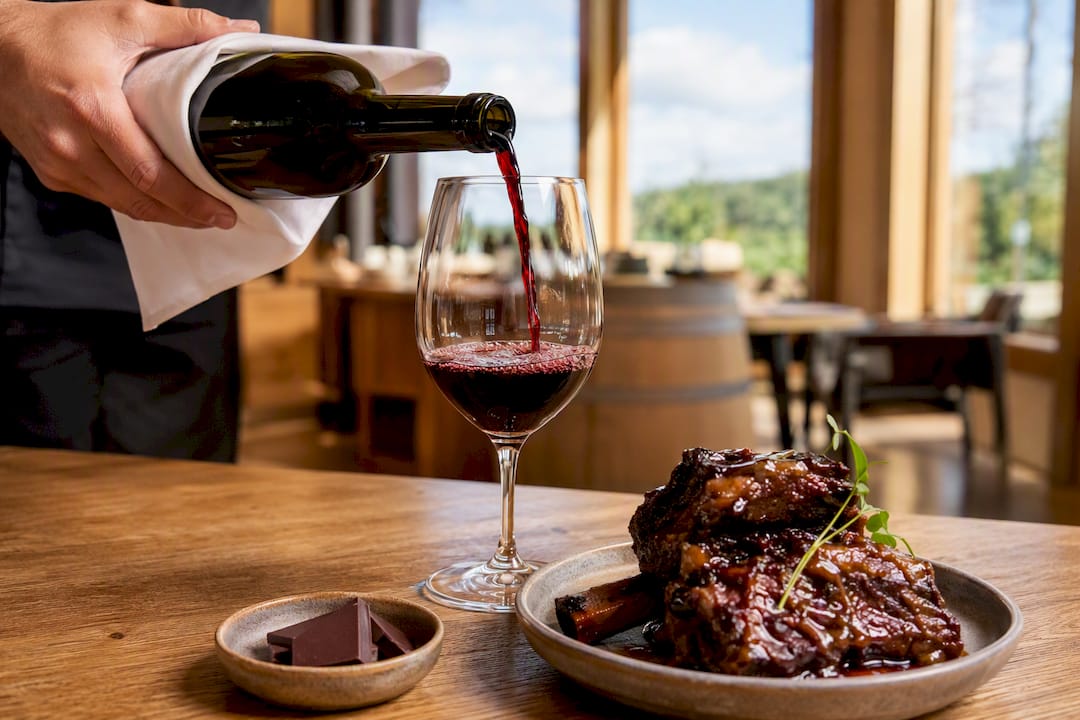
At a recent tasting at Ferreira Carpenter Winery, the pourer’s note on a bold Malbec mentioned “grilled meat and dark chocolate.” Sure enough, the same wine that felt aggressive on its own turned soft and rounded next to a plate of short ribs. The takeaway: read the tasting note before you drink, not after, and let it steer your next bite. If you want more chances to practice this in real time, StacyKnows keeps a running guide to local wine tastings worth booking.
Why Wine Pairing Basics Matter More Than “Rules”
People treat wine pairing like a test they can fail, and that’s the whole problem. The four building blocks in this guide, body, acidity, tannin, sweetness, aren’t rules so much as explanations for why certain combinations feel good in your mouth. Once you understand the mechanism, you stop needing permission to experiment.
What beginners underestimate is how forgiving this actually is. A “wrong” pairing rarely ruins dinner; it just means the wine and food don’t amplify each other the way they could have. Try the cheat sheet above at your next dinner party, then start bending it on purpose once you see how the logic holds up. Good wine pairing is really about paying attention, and enjoying what’s in your glass matters more than getting it textbook perfect. For more approachable food and wine guidance, keep following Stacyknows.
— Stacy Geisinger
Sources
- Food and Wine Pairing Basics (Start Here!) — Wine Folly
- How to Pair Wine With Food (Without Memorizing a Single Rule) — The Modern Wine Edit
- How to pair wine to cheese using weight, region, and flavor contrast principles — Know the Cheese
- How to Pair Wine with Food: The Complete Beginner’s Guide | Sommo
FAQ
What Is the Number One Rule of Wine Pairing?
Match the wine’s body or weight to the dish’s weight, then use acidity, tannin, or sweetness to balance whatever taste dominates the plate.
What Wine Goes With Almost Everything?
Sparkling wine, Pinot Noir, and dry Riesling are the most versatile fallback bottles, covering fried food, many cheeses, lighter meats, and spicy dishes.
Should Wine Be Sweeter Than Dessert?
Yes. Wine should be at least as sweet as the dessert, or the sugar in the food will make the wine taste flat and bitter.
Is Red Wine Always Wrong With Fish?
Not always. A full-bodied, tannic red clashes with lean fish, but a light red like Pinot Noir or Beaujolais works fine with richer fish such as salmon.
How Do I Pair Wine With Cheese?
Match weight first, mild cheese with light wine and aged cheese with fuller wine, then use sweet wines to balance salty or pungent cheeses like blue cheese.
Recommended
- Unique Twists on Your Wine Tasting Girls Night
- Wine Tastings: Best Experiences & Quick Booking Guide
- 3 Cheeses, 3 Meats: Shop, Build and Time a Perfect Charcuterie Board
