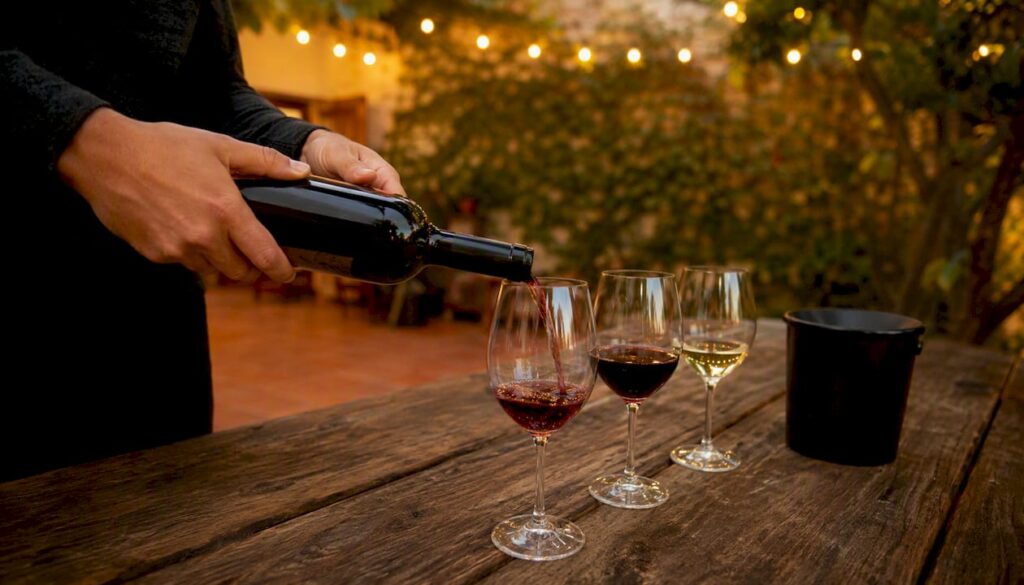
Most people do best with a seated tasting flight at a small winery or urban tasting room, structured but relaxed enough to actually enjoy the wine instead of rushing through it. Couples tend to gravitate toward romantic vineyard settings, casual explorers like guided urban tours through neighborhoods with several tasting rooms, and anyone who wants real education should book a masterclass with a sommelier or vintner leading the room.
You have three fast ways to book. Go direct through a winery’s own site for the most flexible cancellation terms, use an aggregator like Tripadvisor to compare prices and reviews in one sitting, or book through a local tour operator when you want a guide, transportation, and multiple stops handled for you.
- Seated winery tasting — best for couples and beginners who want guidance without pressure
- Guided urban tasting tour — best for casual explorers hopping between several venues in one afternoon
- Sommelier-led masterclass — best for wine lovers who want real education and rare pours
Pick your format, then reserve directly with the venue or through a trusted aggregator today.
Comparing Your Options for Booking Wine Tastings
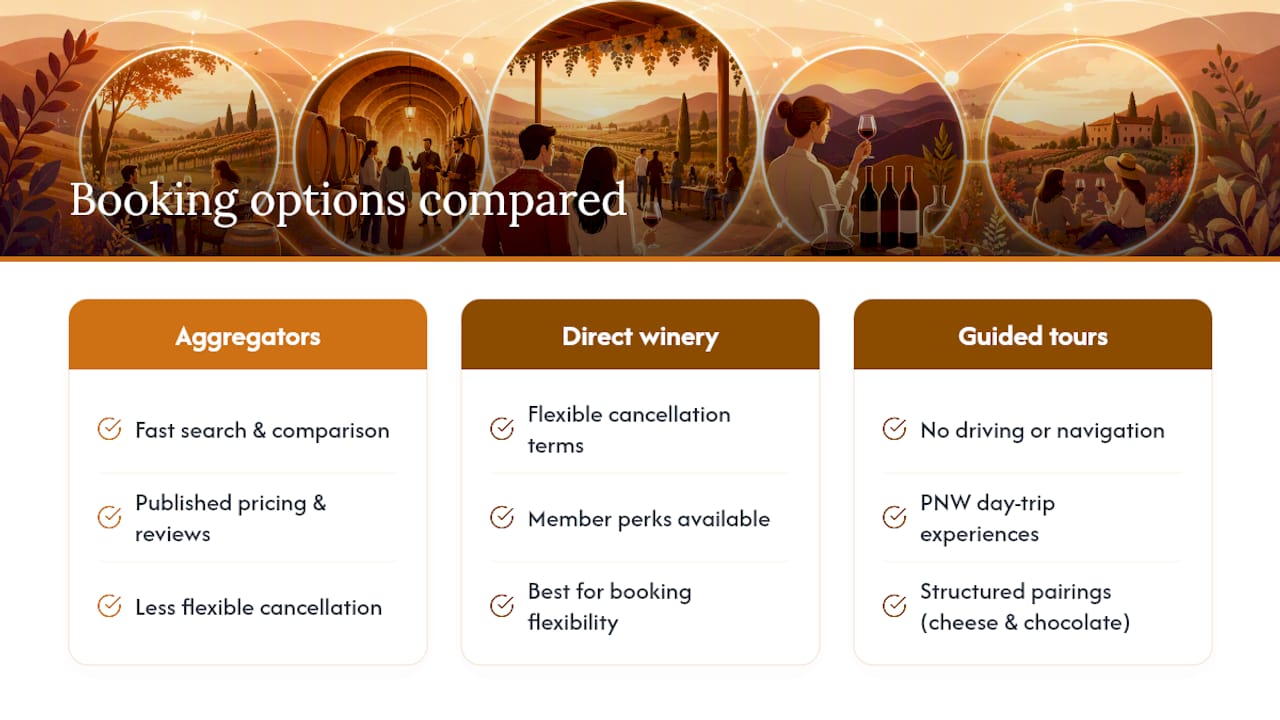
Every route to a great tasting comes with tradeoffs in price, flexibility, and how much planning you have to do yourself. Aggregators win on speed and comparison shopping. Direct winery bookings win on flexibility and member perks. Guided tours win when you don’t want to drive, navigate, or figure out logistics between stops.
Several of these entries reward different kinds of travelers. The Bon Vivant Woodinville Wine Tasting Tour and the Snoqualmie Falls and Wineries Tour from Seattle both lean into Pacific Northwest scenery, pairing tasting stops with a genuine day-trip feel rather than a quick pour-and-go. The Northwest Wine Tasting Tour with Cheese and Chocolate stands out for structured pairings that actually teach you something about contrast, not just flavor matching for its own sake.
Urban options like Chicago Winery, Bronzeville Winery, Acanto, Le Midi, and Pops for Champagne skip the vineyard drive entirely. They work well for date nights or after-work outings where you want the tasting-room feel without leaving the city. Pops for Champagne, in particular, narrows its focus to sparkling wine, which suits a specific kind of celebratory outing better than a general flight would.
Pro Tip: Book a masterclass or curated tour when you want structured education and access to wines you can’t buy at a regular tasting counter. Choose a walk-in tasting room when you just want a relaxed hour without advance planning.
Aggregators like Tripadvisor list dozens of U.S. wine tasting tours with published pricing and review counts, which makes them useful for narrowing options fast, though direct winery booking often provides more flexible cancellation terms and member perks that aggregators can’t match.
The trust signals worth checking before you book anywhere: posted hours and directions, a clear reservation or walk-in policy, visible pricing, and enough reviews to gauge consistency. A venue that hides its cancellation terms until after you’ve paid is one to skip.
How Do You Choose the Right Wine Tasting?
The right tasting depends on what you’re actually after: romance, casual variety, deep education, or a specific pairing experience. Matching format to goal saves you from an awkward mismatch, like booking a formal seated flight when what you really wanted was a loud, social afternoon hopping between tasting rooms.
Weigh these criteria before booking:
- Experience type — flight, guided tour, masterclass, or private event
- Atmosphere — quiet and educational versus social and casual
- Learning level — beginner-friendly pours versus technical, vintner-led sessions
- Food options — whether pairings are included or available as an add-on
- Accessibility — parking, seating, and any physical limitations to plan around
- Price — what’s included in the stated cost versus what costs extra
Before you commit, run through a short checklist when calling or booking online:
- Is a reservation required, or can you walk in?
- How many pours are included, and how large is each pour?
- What is the cancellation and rescheduling policy?
- Is there a minimum group size or age requirement?
- Are food pairings included or sold separately?
Watch for a few red flags that suggest a venue isn’t ready for your business. No posted pricing anywhere on the site is one. A cancellation policy that’s vague or missing entirely is another; you shouldn’t have to ask twice. And if a venue doesn’t list a physical address or working phone number, treat that as a reason to look elsewhere. Legitimate wineries and tasting rooms, even small ones, publish their hours, their location, and their booking rules because customers expect it.
What Actually Happens During a Wine Tasting?
Tasting formats vary more than most first-timers expect. A standard tasting room flight gives you four to six small pours at your own pace, usually guided by a staff member who explains each wine briefly. Seated tastings slow things down further, often with printed notes and a host walking the table through each pour together. Guided tours bundle several stops into one day, handling transportation between wineries. Masterclasses and vertical or blind tastings go deeper still, often built around a theme or a single producer’s range across vintages.
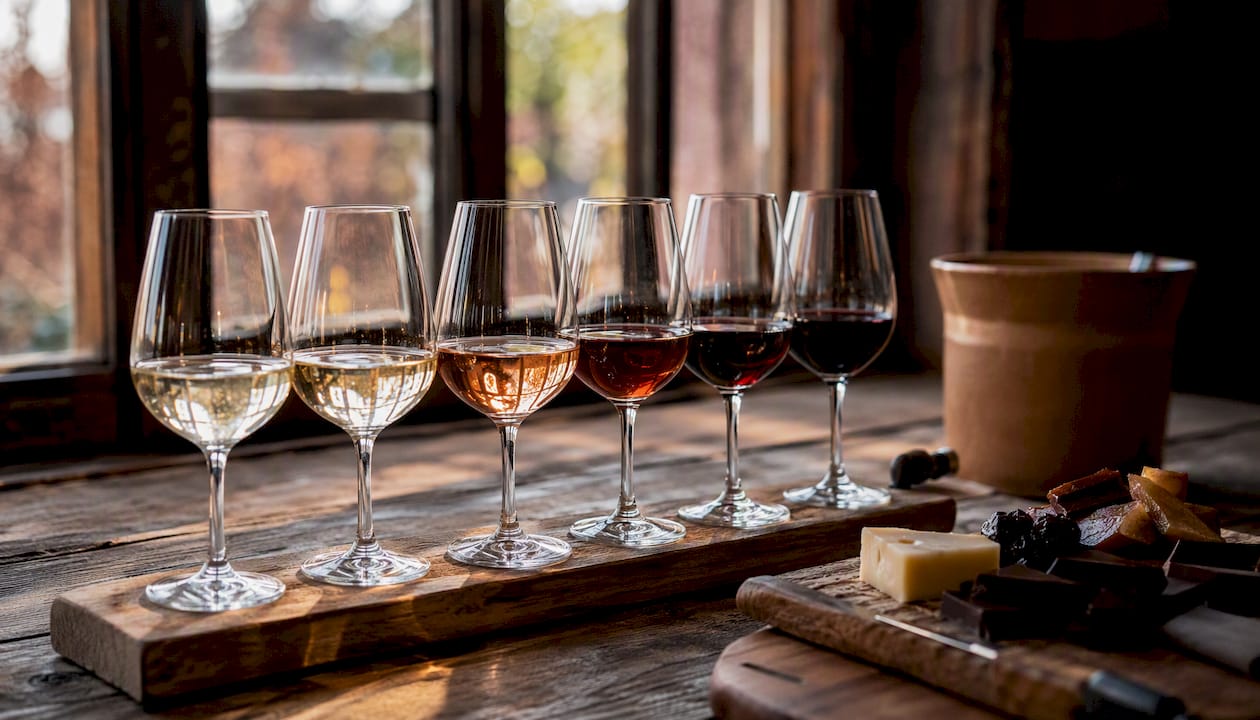
Most tastings run 45 minutes to an hour for a basic flight, longer for seated or guided experiences. Pours are small by design, usually one to two ounces, so you can taste six or more wines without overdoing it. Spitting is completely normal and expected, even encouraged, especially if you’re visiting more than one venue in a day. Nobody will judge you for using the spit bucket.
Bring a valid photo ID every time, since nearly all tasting rooms card regardless of your apparent age. Water, comfortable shoes, and a few genuine questions for your host round out the essentials. If you have dietary restrictions, ask ahead whether food pairings can accommodate them. Not every venue offers substantial food, so plan a meal around the tasting rather than relying on it.
Pro Tip: Cap your day at two or three wineries. Your palate genuinely fatigues after that, and the wines start blurring together.
Seasoned sommeliers consistently recommend keeping tastings to two or three wineries per day to preserve palate clarity and leave room for real conversation with the people pouring, a rhythm curated series like Loudoun Pours to Explore are built around.
What Does a Wine Tasting Cost?
Prices scale with how much structure and access you’re paying for. A basic tasting room flight typically runs on the lower end, while reserve tastings featuring limited-production wines cost more. Masterclasses and full-day multi-estate itineraries sit at the top of the range because they bundle education, transportation, or rare access into one ticket.
| Experience Type | What You’re Paying For |
|---|---|
| Basic flight | A handful of standard pours, self-guided pace |
| Reserve tasting | Limited-production wines, seated format |
| Masterclass | Sommelier or vintner led, small group, deeper education |
| Full-day multi-estate itinerary | Multiple wineries, transport, and pairings bundled together |
Full-day bundled experiences, like Beringer’s Napa Narrative, link several estate visits into a single priced itinerary so you’re not booking each stop separately.
- Ticketed events often require guest-list registration and enforce strict no-refund policies
- Direct winery bookings tend to allow easier rescheduling than third-party ticket sites
- Minimum guest counts sometimes apply to private or group reservations
Treat ticketed tasting events the way you’d treat concert tickets: name on the list, no refunds, and a firm start time.
When Is a Masterclass Worth the Extra Cost?
A masterclass earns its higher price tag when it delivers something you genuinely can’t get at a standard tasting counter: rare bottles, small-group access to the person who made the wine, and a structured tasting methodology instead of a casual pour-and-chat. A Napa event pairing Master Sommelier Andrea Robinson with vintner Dan Petroski around six coastal wines is a clear example. Limited seating and expert framing turned a tasting into an actual lesson.
Masterclasses and curated events typically cost more precisely because they’re capped in size and built around access you can’t buy elsewhere.
Curated regional series work similarly on a smaller scale. Loudoun Pours to Explore prioritizes education and limited attendance over volume, which suits anyone who wants to learn rather than just sample.
Why Trust Matters More Than a Fancy Label
I look for a few things before recommending any wine tasting: clear pricing posted up front, a host or venue with real credibility, accessibility for readers with different needs, and some local character that makes the visit memorable rather than generic.
Accessibility deserves a direct callout. Most wineries and tasting events welcome service animals under ADA guidelines, but policies vary by venue, so confirm ahead if that matters to your visit. ID rules are near universal, and worth double checking if your group includes anyone who might get carded unexpectedly.
Every recommendation in this guide is chosen independently. If a venue or tour operator ever sponsors coverage, that will always be disclosed. For more ideas on building a tasting into a full outing, our wine tasting girls’ night guide and our visit to Ferreira Carpenter Winery are good next reads.
A Different Way to Plan Your Wine-Country Weekend
Booking a single tasting is one thing. Planning the whole weekend around it, where to eat beforehand, what to pack, which local event might be worth building the trip around, is a different job entirely, and it’s the one Stacyknows actually handles.
Where a tour operator gets you from winery to winery, Stacyknows helps you shape the rest of the day: pairing dinners, packing lists for wine country trips, and local event coverage that turns one tasting into a full outing worth remembering. Our guide on what to pack for a wine country trip and our roundup of premium lifestyle experiences both start from the same idea: the tasting itself is only part of a good day out. For readers building a broader itinerary, our friends at ToDoInTC cover regional event listings worth checking too.
Start with our curated beauty and lifestyle picks to see how we approach recommendations, then browse our local event guides for the outing that pairs best with your next tasting.
Frequently Asked Questions About Wine Tastings
Do I need a reservation for a wine tasting?
Many tasting rooms accept walk-ins, but weekends and holidays fill up fast, especially in popular regions. Reserving ahead, even a day or two out, guarantees your spot and often unlocks a better pour count or a seated experience.
How much should I tip at a wine tasting?
Tipping isn’t mandatory the way it is at a restaurant, but $5 to $10 per person is common for an attentive host, more if you’re on a guided tour with a driver.
What’s the difference between a tasting room visit and a wine tasting tour?
A tasting room visit is a single stop you book yourself. A tour bundles multiple wineries, transportation, and sometimes food into one guided day, which suits anyone who doesn’t want to drive between stops.
Can I bring kids to a wine tasting?
Policies vary widely by venue. Some wineries welcome families with designated areas, while others restrict visits to adults only, so check directly before planning a family outing.
Are virtual wine tastings worth trying?
Virtual tastings work well for at-home learning or connecting with a winery you can’t visit in person, though they can’t replicate the atmosphere or spontaneous conversation of an in-person visit.
Sources
- ADA service animal Q&A
- Quench at Copia: Wines That See the Sea — Eventbrite
- THE 15 BEST United States Wine Tasting Tours (2025) – Tripadvisor
- Napa Narrative: Three Estates, One Journey — Beringer
- Loudoun Pours to Explore — Loudoun Wine
Recommended
- Unique Twists on Your Wine Tasting Girls Night
- A Taste of Piedmont: What To Pack for a Late Fall Trip
- Visiting Friends: How To Be a Good House Guest
- How To Make Your Next Outdoor Private Event Special – Stacyknows
