
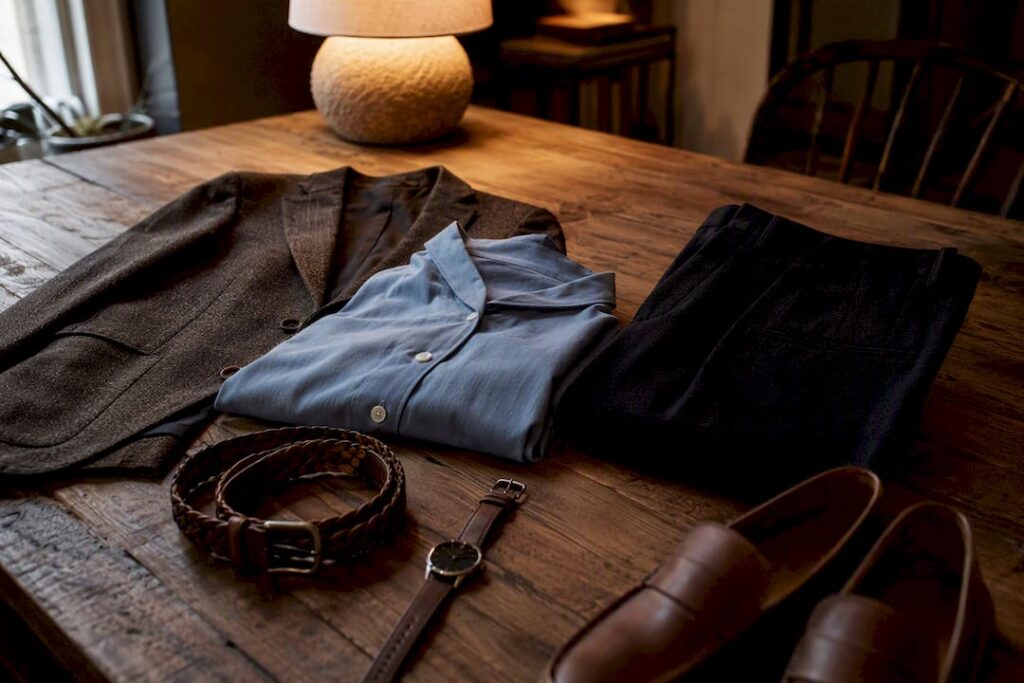
Smart casual means one polished piece paired with one relaxed piece, and nothing sloppy in between. It’s the dress code that sits between a suit and sweatpants, and it works because it flexes without becoming a free-for-all. The easiest way to nail it: pick one item that says “effort” (a blazer, tailored trousers, a real leather shoe) and let one item stay easy (dark jeans, a soft knit, a simple dress).
Two examples to hold onto:
- For him: navy blazer, white button-down, dark jeans, clean leather loafers.
- For her: a knit sweater, tailored black trousers, and simple gold hoops with loafers.
If you’re standing in your closet unsure whether an outfit reads “trying too hard” or “didn’t try at all,” that one polished plus one relaxed rule is your fastest fix.
What Does Smart Casual Actually Mean?
Smart casual sits in the middle of the formality spectrum, closer to business casual than to weekend loungewear, but with more room to breathe. It’s an ambiguously defined dress code that bridges formal and casual, built to look elevated without demanding the full corporate uniform. That ambiguity isn’t a flaw. It’s the point. Hosts and offices use the term precisely because they want polish without rigidity.
Wikipedia’s entry on the style describes it as a Western dress code that blends elements of a lounge suit with casual wear, and that blend is exactly why the term confuses so many people. Business casual usually still expects a collared shirt and dress pants, no exceptions. Plain casual barely has rules at all. Smart casual asks for a bit of both: structure somewhere in the outfit, ease somewhere else.
You’ll see the phrase most often on invitations for after-work gatherings, dinner reservations at restaurants that don’t require a jacket but frown on flip-flops, first dates where you want to look put-together without looking like you’re headed to an interview, and casual workplaces that still want employees to look presentable. A restaurant dress code listed as smart casual usually means dark denim is fine, sneakers might not be, and a blazer never hurts. When in doubt about a specific venue, that’s the safest read.
The confusion mostly comes from context switching. What reads as smart casual at a Tuesday lunch meeting looks underdressed at a Saturday dinner reservation, and what works for a rooftop happy hour might feel stiff at a backyard barbecue. The dress code itself doesn’t change. Your interpretation of “polished” and “relaxed” needs to shift with the room.
What Are the Wardrobe Essentials for Smart Casual?
Building a smart casual wardrobe starts with a short list of pieces that mix and match without a second thought. You don’t need a closet overhaul. You need a handful of items that work in multiple combinations, and quality matters more than quantity here.
For men, the core pieces are:
- A collared shirt in a solid color or subtle pattern (button-down or Oxford cloth)
- A blazer or sports jacket in navy or gray
- Chinos in a neutral tone like khaki, olive, or stone
- Dark, undistressed denim
- A fine-gauge knit sweater or cardigan
- Loafers or derby shoes in brown or black leather
For women, the equivalents are just as versatile:
- A structured blazer, ideally in a neutral shade that pairs with almost everything
- Tailored trousers with a clean line
- Dark denim without rips or heavy distressing
- A simple dress that can go dressed up or down depending on shoes and layers
- A silk or silk-blend top for a touch of polish
- Loafers, ankle boots, or minimalist smart sneakers
Fabric and fit matter more than the price tag on the label. Most authoritative style guidance recommends favoring fabric quality, fit, and condition over trendiness, which means a $40 shirt that fits your shoulders correctly beats a $200 shirt that bunches at the collar. Check for pilling on knitwear, fading on denim, and scuffed leather before you leave the house. A worn hem or a stretched-out collar undercuts the entire outfit no matter how expensive the piece once was. If you’re auditing what you already own before buying anything new, our guide to building a capsule wardrobe walks through exactly which staples earn their closet space.
What Are Some Smart Casual Outfit Ideas?
The formula behind every smart casual outfit is simple: one polished piece, one relaxed piece, and a rough 2:1 ratio of tailored to casual elements. When you’re stuck, add a third piece, like a blazer, scarf, or structured bag, to instantly shift the balance toward “polished” without changing anything else.
Here are eight combinations that cover most situations you’ll actually face:
- Office presentation: Navy blazer, white shirt, gray trousers, brown leather loafers. Swap the blazer for a cardigan to dress it down for a casual Friday.
- First date, daytime: Fitted knit sweater, dark jeans, white leather sneakers. Add a structured watch for a touch more polish.
- Dinner reservation: Silk blouse, tailored black trousers, ankle boots, small gold hoops. Trade the blouse for a fitted turtleneck in colder months.
- Weekend brunch: Simple midi dress, denim jacket, minimalist sneakers. Swap the jacket for a blazer if the venue leans upscale.
- After-work drinks: Chinos, a fitted polo, suede loafers, no socks. Add a linen blazer in summer for extra polish.
- Casual networking event: Blazer, graphic tee, dark denim, clean white sneakers. This mixes structure with ease without looking like you tried too hard.
- Fall date night: Turtleneck, wool trousers, chunky loafers, a wool overcoat. The cropped trench coat works here too if you want a lighter silhouette.
- Client dinner, no suit required: Button-down, dark chinos, blazer, leather derbies. This reads professional without formal-wear stiffness.
Pro Tip: Keep one “elevator piece,” like a blazer or a structured bag, by your door. When you’re unsure if an outfit is too casual for where you’re headed, grabbing it on the way out solves the problem in ten seconds.
Which Shoes and Accessories Work With Smart Casual?
Shoes make or break smart casual faster than anything else you’re wearing. Leather loafers, clean derbies, ankle boots, and minimalist sneakers in white or neutral tones all work because they read as intentional rather than athletic. The shoe doesn’t need to be expensive. It needs to look cared for and free of visible wear.
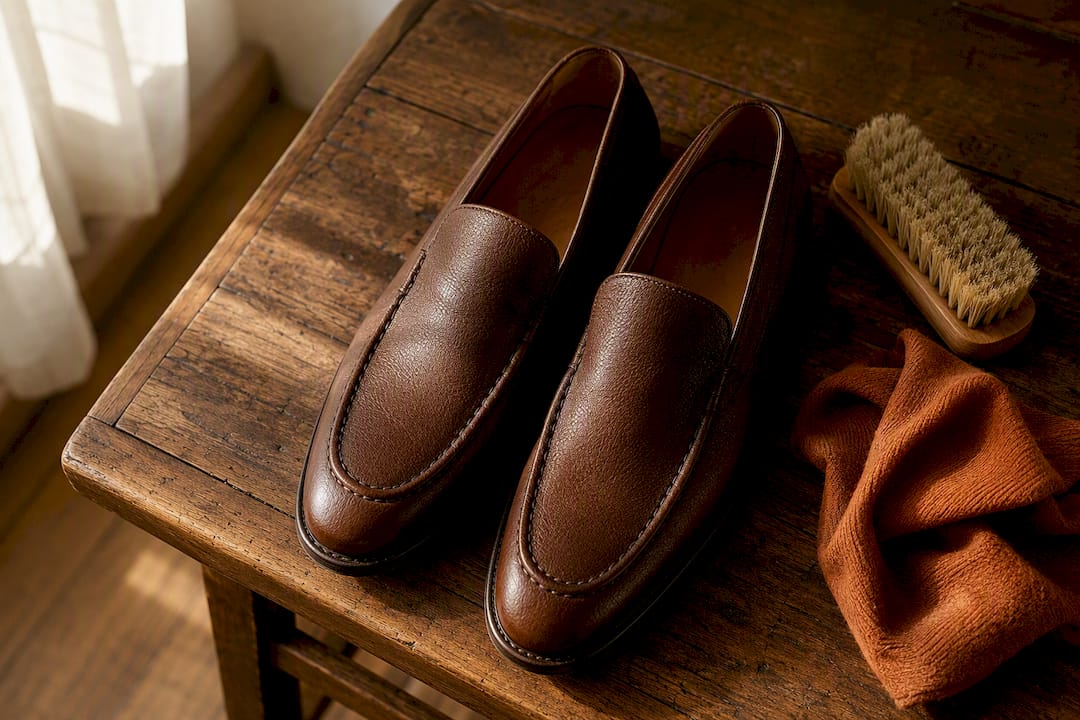
Accessories are where you add polish without adding effort. A leather belt that matches your shoes, a structured bag, a simple watch, and understated jewelry all elevate an outfit quietly. None of these need to be flashy. The goal is coordination, not decoration.
What to avoid is just as important as what to wear:
- Flip-flops or slides, even on the hottest days
- Athletic running shoes with visible mesh or bright branding
- Bags or belts with oversized logos
- Frayed or scuffed leather that signals neglect rather than style
- Novelty socks or ties that pull focus from the rest of the outfit
If you’re rethinking your shoe rotation entirely, it’s worth reading how owning fewer, better shoes actually saves money over time. Two well-made pairs in rotation outlast five cheap ones, and they photograph better in every outfit you build around them.
Are Jeans Okay for Smart Casual?
Dark, undistressed denim is one of the most reliably accepted bottoms in smart casual, according to Cosmopolitan’s breakdown of the dress code, as long as you pair it with a smart top and shoes. Rips, heavy fading, and distressing push denim firmly into weekend-casual territory, and no amount of a nice blazer fixes that.
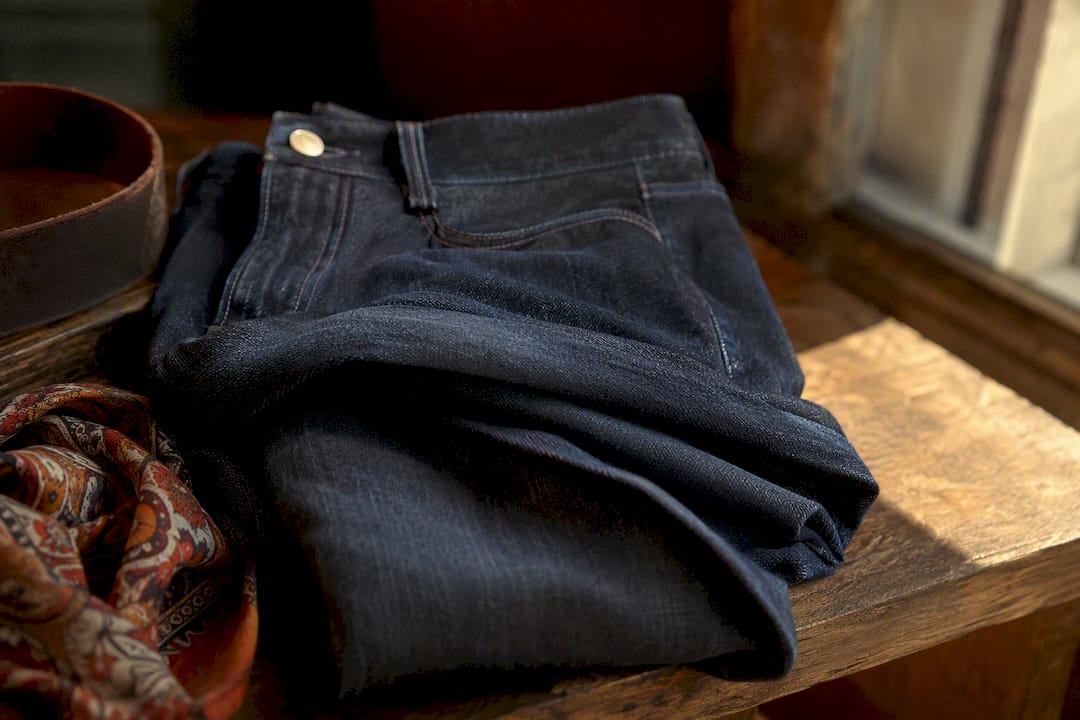
Straight-leg and slim-straight cuts work best. Skip anything with visible whiskering or paint splatter effects. If jeans feel risky for the occasion, tailored trousers, chinos, or a midi skirt are safer defaults that carry the same polish with less ambiguity.
Bottoms that read too casual for this dress code include cargo shorts, sweatpants (even the elevated joggers), athletic leggings, and jeans with rips at the knee. None of these recover well even with a sharp top layered over them. The bottom half sets the tone for the entire outfit, so this is not the place to cut corners.
How Do You Adjust Smart Casual by Occasion or Season?
Calibrating smart casual comes down to reading the event and nudging your outfit one notch in either direction. The Art of Manliness notes that smart casual shows up across social events, casual workplaces, and mixed professional settings, which is exactly why one fixed outfit rarely works for every invitation.
A few calibration rules that hold up across most situations:
- For client meetings or interviews framed as “smart casual,” lean toward the polished end: blazer stays on, shoes stay leather.
- For social gatherings and dates, you can loosen up: swap the blazer for a knit, trade dress shoes for clean sneakers.
- In summer, lighter fabrics like linen and cotton poplin keep you cool without sacrificing structure.
- In winter, wool trousers, turtlenecks, and structured coats (our winter style guide has more layering ideas) add warmth while keeping the silhouette clean.
- Before you leave, do a thirty-second check: one polished piece, one relaxed piece, shoes clean, nothing frayed.
That checklist takes less time than picking a playlist for the drive over, and it catches most mistakes before you’re standing in the wrong outfit at the door.
Why Do Fit and Tailoring Matter So Much?
A $30 alteration does more for a smart casual outfit than a $300 impulse purchase. Hemming trousers to break cleanly over your shoe, taking in a blazer at the waist, or shortening sleeves so cuffs don’t swallow your hands are the three highest-impact fixes most closets need. None of them cost much, and all of them make existing clothes look intentional instead of borrowed.
Shoe care matters just as much. Polished leather and clean soles read as put-together even on a basic outfit, while scuffed shoes undercut a $500 blazer instantly. Check hems, buttons, and fabric condition before every wear, not just before big events.
Pro Tip: Most neighborhoods have a local tailor charging $15 to $40 for basic hems and waist adjustments. That’s cheaper than most dinner reservations, and it fixes the fit problem hiding in half your closet right now.
How Do You Make Fast Smart Casual Decisions?
Mastering this dress code eventually comes down to judgment more than rules, what some stylists call a practical feel for the room. You walk in, read the crowd, and adjust one piece rather than rebuilding the whole outfit. That skill develops faster than most people expect.
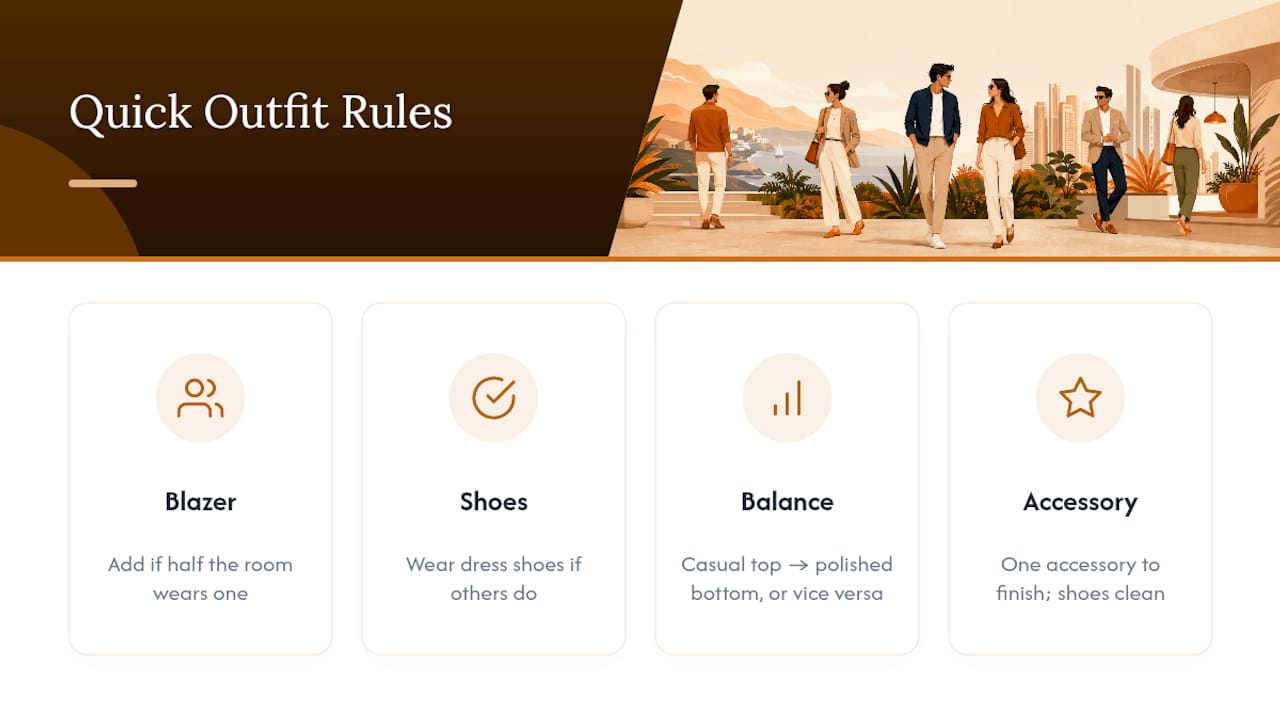
A few decision rules that simplify borderline calls: if half the room is in blazers, add yours. If everyone’s in sneakers, your dress shoes can stay in the closet. When your top is casual, let your bottom carry the polish, and vice versa. Stylist consensus points to fabric quality and the third piece as the fastest levers you have when an outfit isn’t quite landing.
Before you walk out the door, run this: one polished piece, one relaxed piece, shoes clean, nothing damaged, one accessory for finish. If you’re shopping your own closet for options rather than buying new, these closet-shopping strategies help you spot combinations you’ve been overlooking.
Where to Read More on Smart Casual Style
A few sources back up the guidance in this piece if you want to go deeper. Indeed’s career guide breaks down workplace applications well. The MIT career development center’s explainer offers a clean, no-nonsense definition. The Art of Manliness covers men’s outfit templates in detail, and FashionValet’s stylist breakdown is a solid resource for women’s specific guidance.
A Few Honest Words From Stacy
Smart casual rewards effort, not expense. Start with what’s already hanging in your closet, add one tailored piece, and trust the one-polished-one-relaxed rule more than any trend. If you want more ways to make your existing wardrobe work harder, browse our beauty and style finds for more grounded, practical picks.
Sources
- Guide to smart casual attire | Indeed Career Advice
- What is a smart casual dress code? | CAPD (MIT resource)
- A man’s guide to smart casual | The Art of Manliness
- Smart casual dress code for women explained | FashionValet
Recommended
- The Hidden Economics of Owning Fewer but Better Shoes – Stacyknows
- The Art of Dressing Well Without Following Trends
- Fashion Over 50: Build a Wardrobe That Works for You – Stacyknows
- What Your Evening Dress Says Before You Speak
