
Sauna blankets deliver real, measurable benefits for relaxation, sleep, and short-term muscle recovery. What they don’t deliver is systemic “detox” or lasting fat loss, no matter what the marketing copy promises. The heat you feel is genuine, the sweat is real, but your liver and kidneys are already handling toxin clearance long before you zip yourself into a blanket.
Here’s the honest breakdown searchers actually need:
- Evidence-backed effects: better sleep architecture after consistent use, temporary vasodilation that eases sore muscles, and a legitimate relaxation response tied to heat and quiet time.
- Overclaims worth questioning: “detoxifies your organs,” “melts fat while you nap,” or “cures chronic disease.” Sweating cools you down. It doesn’t flush toxins.
A small 2024 randomized trial found that 24 men who used a far-infrared blanket nightly for a period showed statistically significant increases in deep sleep and REM sleep, alongside higher serotonin and melatonin levels. That’s a real signal worth paying attention to, even though the sample size means it’s far from the final word.
Key Takeaways
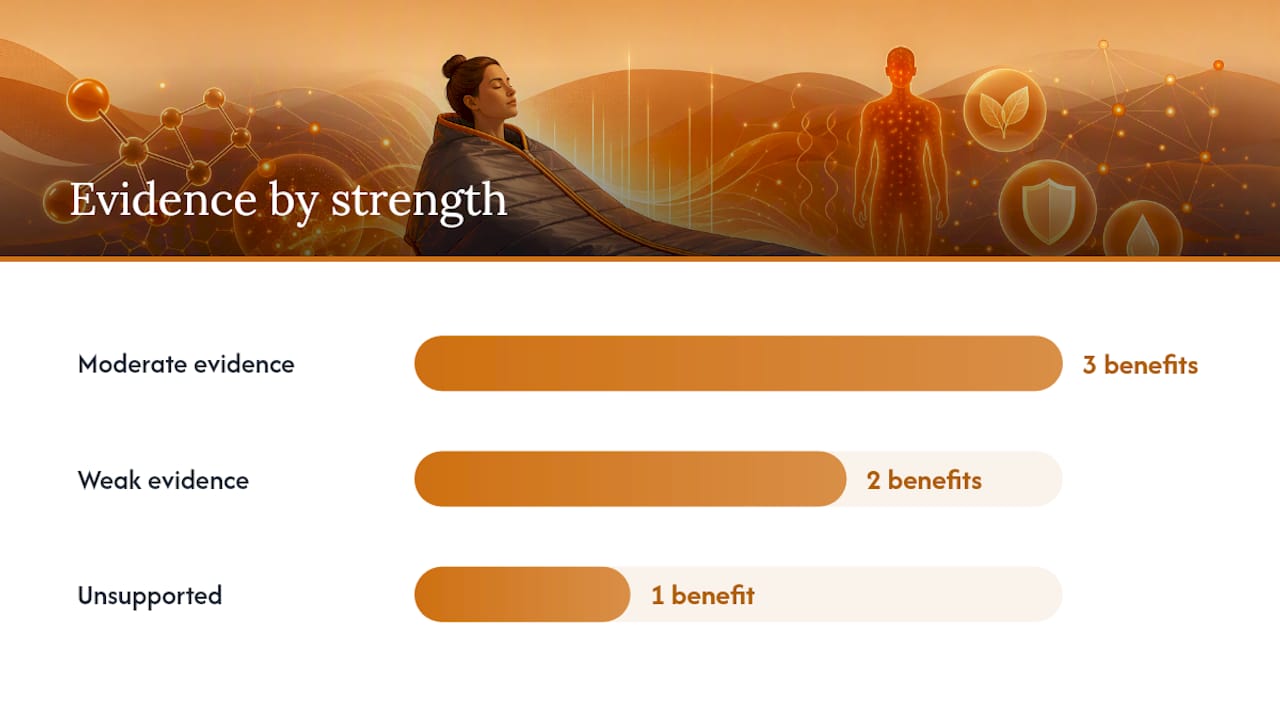
| Benefit | Evidence strength | What to expect |
|---|---|---|
| Sleep improvement | Moderate (small trial) | Better deep/REM sleep after consistent nightly use |
| Relaxation/stress relief | Moderate, ritual-driven | Real calming effect, partly from quiet time itself |
| Muscle recovery/pain relief | Moderate, small studies | Short-term relief via increased blood flow |
| Circulation/heart effects | Weak for blankets specifically | Borrowed mostly from traditional sauna research |
| Skin glow | Weak, temporary | Post-sweat flush, not lasting change |
| Detox/fat loss | Unsupported | Water loss only, no toxin removal |
What Are Sauna Blanket Benefits and How Does the Heat Actually Work?
Infrared sauna blankets use far-infrared or near-infrared wavelengths to warm your body directly instead of heating the air around you, the way a traditional sauna does. Far-infrared light is often described as penetrating roughly 1.5 inches into soft tissue, reaching muscle and connective tissue rather than just warming skin. That direct heating is why you can feel intensely warm inside a blanket even when the surrounding room stays at a normal temperature.
Your body responds the same way it would to any heat stress: blood vessels dilate, heart rate climbs, and sweat glands activate. This is the physiological engine behind most of the benefits people report.
- Vasodilation increases blood flow to muscles and skin, which is the mechanism behind post workout soreness relief.
- A faster heart rate mimics mild cardiovascular exertion, similar to a brisk walk.
- Sweating cools your core temperature but doesn’t pull toxins from your bloodstream.
Because the blanket heats you rather than the room, sessions often feel more tolerable than a traditional sauna cabin, which Mayo Clinic notes can allow some people to stay in longer without the oppressive, all-encompassing heat of a wood-fired room.
Sauna Blanket Benefits, Ranked by How Much Evidence Backs Them
Not every claimed benefit deserves equal trust. Here’s how they stack up when you actually look at the research behind each one.
- Relaxation and stress reduction. The heat itself matters, but so does the ritual: twenty screen-free minutes wrapped in warmth functions like a forced pause button. Experts note that a meaningful chunk of the calming effect comes from the mindfulness the session creates, not the infrared wavelength alone.
- Sleep improvement. The 2024 sleep trial is the strongest single data point here, showing better deep sleep and REM sleep after two weeks of nightly use, tied to higher serotonin and melatonin.
- Muscle recovery and pain relief. Vasodilation increases circulation to sore tissue. Small studies on infrared heat therapy report symptom improvement in osteoarthritis and fibromyalgia, though results vary by study design.
- Circulation and heart effects. Traditional sauna research links repeated heat exposure to short-term drops in blood pressure and improved vessel function, but most of that data comes from full saunas, not blankets specifically, so treat the extrapolation with caution.
- Skin appearance. Expect a temporary post-sweat glow from increased blood flow, not a lasting transformation. That’s a different mechanism entirely from targeted photobiomodulation devices.
- Weight loss and detox. Sweating causes water loss, which shows up as a lighter number on the scale the next morning and disappears the moment you rehydrate. Systemic detoxification is your liver and kidneys’ job, and there’s no established pathway for infrared heat to pull toxins out through skin.
What the Actual Studies Show, and Where They Fall Short
The sleep study deserves a closer look because it’s the single most cited piece of evidence in this space, and it’s also the one most frequently oversold.
- Design: 24 men, 14 consecutive nights, far-infrared blanket versus control.
- Results: Statistically significant gains in deep sleep, REM sleep, and blood levels of serotonin and melatonin.
- Limits: Small sample, male-only, short duration, no data on whether benefits hold for women, older adults, or longer use.
Separate research on heat and infrared therapy for chronic pain shows a similar pattern. Systematic reviews point to moderate-quality evidence for some conditions but flag inconsistent protocols across trials, meaning one study’s “20-minute session at 130°F” isn’t directly comparable to another’s “45 minutes at 150°F.”
The recurring theme across this research isn’t that infrared heat doesn’t work. It’s that most trials are too small, too short, or too narrow in who they studied to support the sweeping claims stamped on product packaging.
The pattern that emerges: sleep and short-term pain relief have real, if modest, small-study support. Circulation benefits are borrowed largely from traditional sauna literature and applied to blankets by inference. Detox and fat-loss claims have essentially no mechanistic backing at all. If you’re deciding how much confidence to place in each benefit, that’s the honest hierarchy, not the one on the box.
Who Should Be Careful, and How Long a Session Should Last
Most healthy adults tolerate sauna blankets well, but “well tolerated” isn’t the same as “risk-free for everyone.” Start conservatively and adjust from there.
- Aim for 15 to 30 minutes per session, two to four times a week, then adjust based on how you feel.
- Drink water before and after every session, and add electrolytes if you sweat heavily.
- Get medical clearance first if you’re pregnant, have unstable heart disease, uncontrolled hypertension, or a nerve condition that affects temperature regulation.
- Check with a doctor if you take medications that impair heat tolerance, including some blood pressure drugs and antihistamines.
- Stop immediately if you feel dizzy, nauseated, or unusually short of breath, cool down, rehydrate, and seek medical care if symptoms don’t resolve quickly.
Pro Tip: Start your first two or three sessions at the lowest available temperature setting and track how you feel afterward. Your tolerance will climb naturally over a few weeks, and you’ll avoid the lightheadedness that turns first timers off the whole idea.
How to Use a Sauna Blanket the Right Way
Getting the routine right matters as much as the blanket itself.
- Dress light. Wear thin cotton or swimwear, keep your head outside the blanket, and lay a towel between your skin and the liner to absorb sweat.
- Time it to your goal. Use 20 to 30 minutes in the evening for sleep support, or 15 to 20 minutes post workout for recovery, starting once or twice weekly before adding sessions.
- Hydrate before and after. Water alone is fine for shorter sessions; add electrolytes if you’re sweating heavily or extending past 30 minutes.
- Rest afterward. Let your body cool naturally rather than jumping into intense exercise, and consider light stretching while you’re still warm.
Pairing the session with calming, low-tempo audio can deepen the wind down effect. Some people sync music to a slower heart rate to reinforce the relaxation response during a session.
Pro Tip: Never stuff the blanket away while it’s still damp. Trapped moisture is the fastest route to mildew and a shortened lifespan for the material.
Keeping Your Sauna Blanket Clean Between Uses
Let the blanket cool completely before you touch it. Wiping down a still-warm surface traps moisture inside the layers instead of releasing it.
- Wipe the interior with a manufacturer-approved cleaner, never a saturating spray near electrical components.
- Air dry fully with the blanket unzipped and open before storing it.
- Store loosely rolled in a dry, ventilated spot. Tight folding while damp is what actually accelerates mold and material breakdown.
A Practical Verdict for Everyday Readers
If your goal is better sleep, a genuine wind down ritual, or easing post workout soreness, a sauna blanket is worth trying, and the evidence, while limited, points in your favor. If your goal is detoxing your organs or losing real body fat, save your money. Weigh cost against how often you’ll realistically use it: two or three sessions a week justifies the investment far better than an occasional splurge, and a hot bath or an occasional infrared session at a spa can cover the same ground for less commitment. For readers focused on sleep specifically, pairing a blanket routine with broader sleep hygiene habits will do more for you than the blanket alone, and addressing the stress that quietly disrupts intimacy and rest matters just as much as the heat itself.
Stacyknows readers exploring at home wellness upgrades can browse more beauty and self care finds to round out a recovery routine that goes beyond a single tool.
Frequently Asked Questions
How does a sauna blanket work compared to a traditional sauna?
A sauna blanket heats your body directly using infrared wavelengths, while a traditional sauna heats the surrounding air to warm you indirectly. That difference lets blankets operate at far lower ambient temperatures, which is often more comfortable for longer sessions.
What are the real sauna blanket benefits I can expect?
Reasonable expectations include better sleep, temporary muscle relaxation, mild pain relief, and a genuine stress reduction ritual. Detox and permanent weight loss aren’t supported by the current evidence.
Are infrared sauna blanket advantages backed by clinical research?
Some are. A small randomized trial found improved sleep architecture after two weeks of nightly use, and separate research links infrared heat to short-term pain relief in some chronic conditions. Both bodies of evidence are still limited by small sample sizes.
How long should a sauna blanket session last?
Most people do well with 15 to 30 minutes per session, two to four times weekly, adjusting based on comfort and hydration.
Who shouldn’t use a sauna blanket?
Anyone pregnant, managing unstable heart disease, uncontrolled hypertension, or a condition affecting temperature regulation should get medical clearance first. The same goes for anyone on medication that impairs heat tolerance.
Is a sauna blanket vs traditional sauna a fair comparison for detox claims?
Not really. Neither delivers meaningful systemic detoxification, since that’s the ongoing job of your liver and kidneys, regardless of how much you sweat in either format.
This article is general information, not a substitute for advice from a qualified doctor. Consult a qualified healthcare professional about your own circumstances before acting on anything here.
Sources
- Effects of far-infrared blanket on sleep architecture and neurotransmitters — PMC
- Heat therapy and infrared interventions for musculoskeletal pain — PMC
- Here’s the science behind infrared heat, the new wellness trend | National Geographic
- Do infrared saunas have any health benefits? – Mayo Clinic
Recommended
- Why Everyone’s Eating Oranges in the Shower (and You Should Too) – Stacyknows
- Why Everyone’s Eating Oranges in the Shower (and You Should Too) – Stacyknows
- Night Sweats: What Are They and Why They Happen
- Beauty Secrets Women Around the World Swear By That Americans Haven’t Fully Discovered Yet – Stacyknows
