
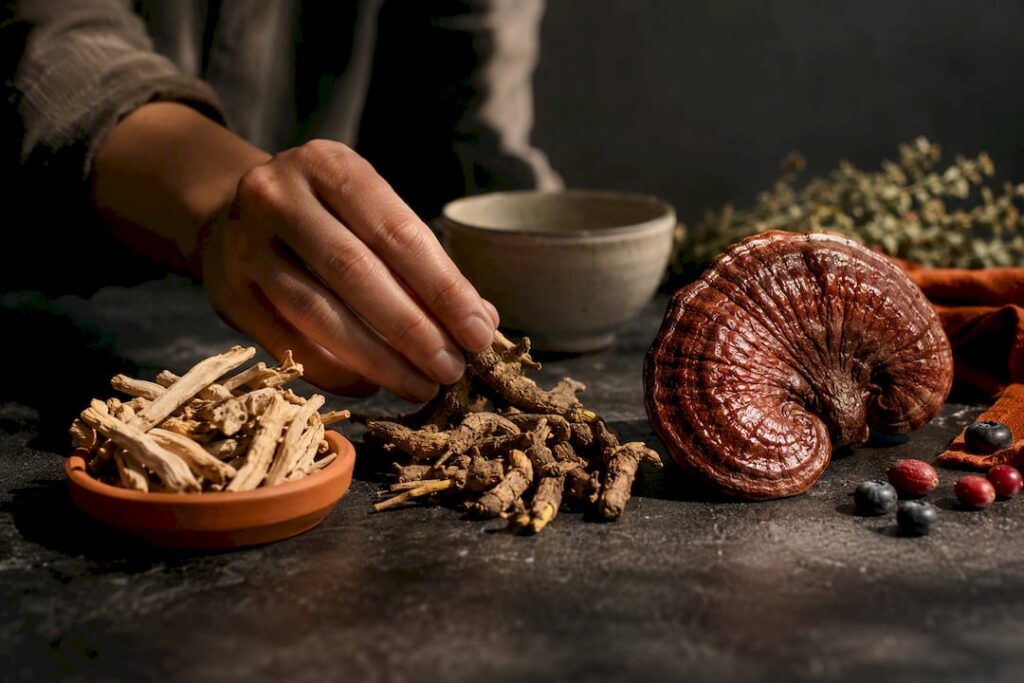
The evidence for adaptogens and stress is modest but real, and ashwagandha carries the strongest human data of the bunch. Most benefits show up gradually over several weeks of consistent use, not overnight. Adaptogens aren’t a substitute for sleep, therapy, or medication when those are needed, and anyone on thyroid medication, immunosuppressants, or blood thinners should talk to a clinician before starting one.
What Are Adaptogens, and How Do They Work?
Adaptogen isn’t a botanical family. It’s a functional label applied to a strange mix of roots, berries, and fungi, including ashwagandha, rhodiola, and reishi, that seem to help the body handle physical or mental strain without any of the sedating effects you’d get from a sleep aid or anti-anxiety drug. The VA Whole Health Library groups them this way precisely because they share a proposed function, not a shared chemistry.
The leading theory involves the hypothalamic-pituitary-adrenal axis, the feedback loop that governs your cortisol release when you’re under pressure. Harvard Health explains that adaptogens likely work by turning stress-response signaling up or down as needed, rather than flooding the system with a single calming compound. Researchers sometimes call this pleiotropic activity: one plant compound nudging multiple biological pathways at once, immune signaling, blood sugar regulation, neurotransmitter balance, instead of a single clean mechanism.
That messiness matters for how you read the research. Because each herb acts on a different combination of pathways, you can’t extrapolate ashwagandha’s results onto rhodiola or reishi. Every plant in this category needs its own trial data, judged on its own terms.
What Does the Clinical Research Actually Show?
The best-studied adaptogen for stress is ashwagandha, and its numbers are genuinely compelling for a botanical supplement. A systematic review of Withania somnifera trials found meaningful reductions in serum cortisol alongside improved Perceived Stress Scale scores in mentally stressed adults after roughly 56 to 60 days of use.
Cortisol, by the numbers: Ashwagandha trials in that review reported average serum cortisol reductions of about 3.27 µg/dL, with individual studies showing drops in the 14% to 30% range, measured after eight weeks of daily dosing.
That’s a real signal, but it comes with caveats worth sitting with:
- Most trials use standardized extracts at fixed doses, so results don’t necessarily apply to random ashwagandha powder off a shelf.
- Study durations usually last a few weeks, meaning the research says little about effects of longer-term daily use.
- Sample sizes are often small, and a number of trials carry industry funding, both of which push down the confidence you should place in any single result.
A broader PMC review of adaptogen research echoes this pattern across the category: short-term randomized controlled trials show consistent, modest effects for some herbs, but heterogeneous methods, extract-specific formulations, and inconsistent endpoints (some trials measure cortisol, others measure anxiety scales, others measure sleep) make head-to-head comparisons difficult. The honest summary is that adaptogens can move the needle, just not as dramatically or as fast as marketing copy tends to suggest.
Common Adaptogens for Stress: An Herb-by-Herb Snapshot
Not every plant on this list has equal footing. Here’s how the most commonly discussed adaptogens for anxiety and stress stack up against the clinical record.
- Ashwagandha carries the strongest repeated signal for stress specifically. Trials typically use standardized extracts at doses studied and report cortisol reductions alongside better stress scores. Skip it without medical guidance if you’re pregnant, have a thyroid condition, or manage an autoimmune disorder, since NCCIH flags these as areas needing caution.
- Rhodiola leans harder toward fatigue and burnout than pure anxiety relief. NCCIH’s review notes the human evidence is limited and of mixed quality, though studies commonly use around 200 mg twice daily of SHR-5 extract. Some people find it activating, which can backfire if you’re already wired.
- Holy basil (tulsi) has smaller trials suggesting anxiety and mood benefits, but the evidence base is thinner than ashwagandha’s and rarely uses a single standardized extract.
- Saffron shows some of the more encouraging mood-related trial data outside ashwagandha, though most research centers on depressive symptoms rather than stress specifically, and it’s not cheap at clinically relevant doses.
- Reishi mushroom has a long traditional-use history for calm and immune support, but rigorous human stress trials are sparse compared to its popularity in wellness circles.
- Panax ginseng shows mixed results for stress and cognitive fatigue, with effects that vary widely by preparation and dose.
- Schisandra appears frequently in adaptogen blends, but stands on the thinnest human evidence of this group for stress specifically.
- Eleuthero (Siberian ginseng) is often lumped in with true ginseng but is botanically distinct, with modest evidence mostly tied to physical endurance rather than psychological stress.
Pro Tip: If a product doesn’t name its extract standard, like KSM-66 or SHR-5, you have no way of knowing whether it resembles what was actually tested in a clinical trial. Read the label before you read the marketing.
Side Effects, Drug Interactions, and Why Regulation Matters Here
Adaptogens are herbs, not candy, and they interact with real physiology. Side effects and interaction risks differ by plant, so lumping them all into one “natural, therefore safe” bucket is a mistake worth avoiding.
- Ashwagandha can cause drowsiness, upset stomach, or, in rare cases reported in the literature, liver injury; it may also amplify thyroid hormone levels, which is why NCCIH’s safety page specifically flags thyroid interactions.
- Rhodiola can cause jitteriness or insomnia in sensitive individuals, especially when taken later in the day.
- Panax ginseng can lower blood sugar and interact with anticoagulants, a real concern for anyone on warfarin or similar medications.
- Reishi may increase bleeding risk when combined with blood thinners or before surgery.
- Across the category, watch for interactions with sedatives, blood-sugar medications, and immunosuppressants, since several adaptogens nudge these same systems.
Cleveland Clinic’s overview of adaptogens reinforces a simple rule: talk to a clinician before adding any of these if you take prescription medication or manage a chronic condition. It’s also worth remembering that the FDA doesn’t preapprove dietary supplements for efficacy or even verify that the bottle contains what the label claims. Look for third-party testing seals like USP or NSF, start at the low end of the studied dose range, and monitor how you feel for the first couple of weeks.
How to Try Adaptogens the Right Way
Form matters more than people assume. Capsules and standardized extracts give you a dose that roughly matches what was studied in trials; teas and tinctures are pleasant rituals but offer far less certainty about how much active compound you’re actually getting. Mushroom powders for reishi vary enormously in potency depending on whether they’re made from fruiting bodies or mycelium, so check the label for specifics.
Match your dose and timeline to the research: 300 to 600 mg daily for ashwagandha, roughly 200 mg twice daily for rhodiola, and a genuine four to eight week trial period before deciding whether it’s working. Judging an adaptogen after four days is like judging a gym membership after one workout.
- Choose products naming a specific standardized extract, not just “ashwagandha root powder.”
- Check for USP or NSF third-party testing seals on the bottle.
- Pair supplementation with habits that actually reduce anxiety, consistent sleep, regular movement, and less caffeine, since adaptogens support these foundations rather than replace them.
Pro Tip: Set a calendar reminder for week six. That’s roughly when most trial data suggests you’ll know whether a given adaptogen is doing anything measurable for you.
A Realistic Take on Adaptogens for Stress
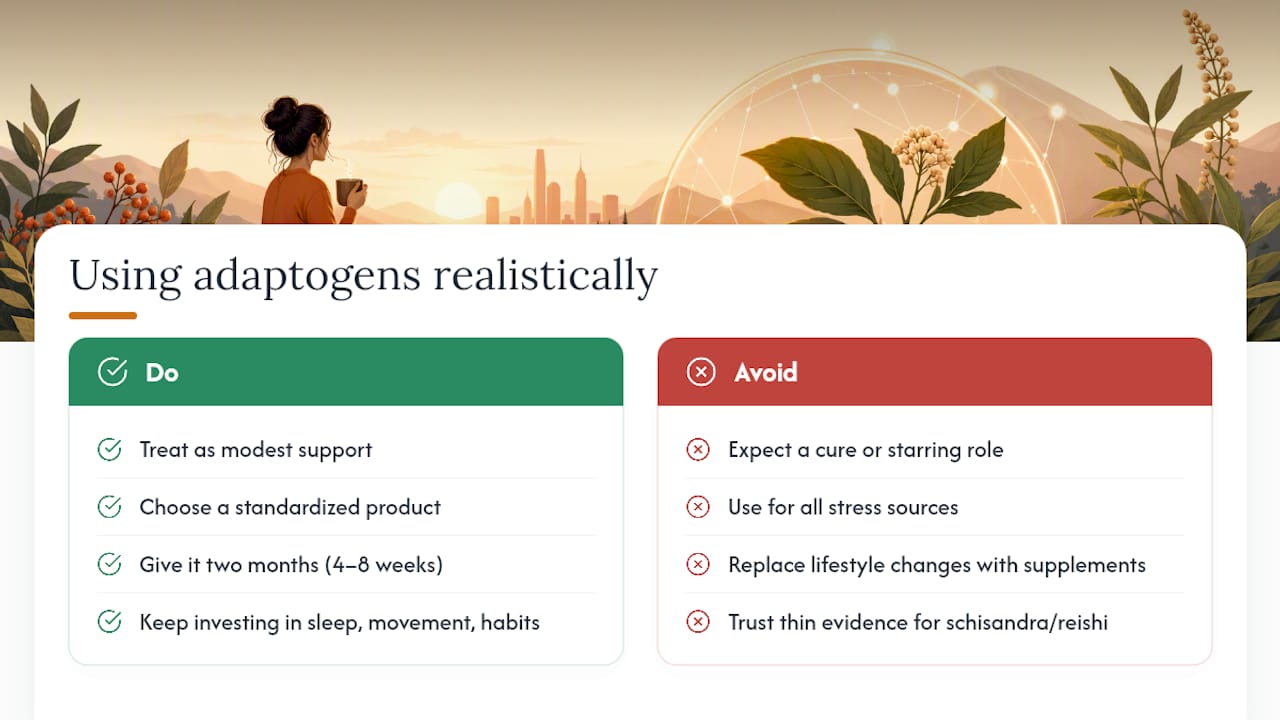
Adaptogens deserve a place in a stress-management toolkit, just not the starring role marketing often gives them. The research on ashwagandha is genuinely encouraging; the research on schisandra or reishi for stress specifically is thin. Treat this category as a modest support, not a fix for a life that’s overloaded on every front.
If you’re going to try one, pick a standardized product, give it two months, and keep investing in sleep, movement, and the everyday habits that actually move the needle on chronic stress. Supplements work best alongside those choices, never instead of them.
— Stacy
Where to Find Vetted Wellness Picks
Sorting a standardized ashwagandha extract from a vague “stress blend” powder takes more label-reading than most people have patience for on a Tuesday night. That’s the gap Stacyknows fills: instead of another generic listicle, our curated beauty and wellness finds page rounds up products readers have actually vetted, so you’re not starting from a blank search results page every time you want to try something new.

Our team also pulls from resources like LearnAroma’s aromatherapy research library when covering non-herbal stress-support methods, because evidence-based wellness rarely comes from a single lane. Browse our current wellness tips and finds for the next product worth adding to your routine. One honest note: Stacyknows is a lifestyle media portal, not a medical provider, so treat everything here as a starting point for your own research and conversations with a clinician, not a diagnosis or a prescription.
This article is general information, not a substitute for advice from a qualified doctor. Consult a qualified healthcare professional about your own circumstances before acting on anything here.
Sources
- Systematic review / meta-analysis (ashwagandha cortisol reductions)
- Harvard Health — Ashwagandha benefits and safety
- NCCIH — Rhodiola overview
- VA Whole Health Library — Adaptogens
- PMC — recent adaptogen review/meta-analysis
Recommended
- Red Light Therapy: What the Science Actually Supports
- How Natural Nootropic Supplements Can Help You
- Why Everyday Stress Quietly Impacts Intimacy and Connection
- Need a Reset? This Fall, Nature Is the Best Medicine
