

Perimenopause is the hormonal transition leading up to menopause, and it officially ends once you’ve gone 12 full months without a period. The most common perimenopause symptoms are irregular periods, hot flashes and night sweats, disrupted sleep, mood swings, and brain fog. How long this lasts and how intense it gets varies enormously from woman to woman, but effective treatments exist for nearly every symptom on the list.
What Causes Perimenopause, and When Does It Start?
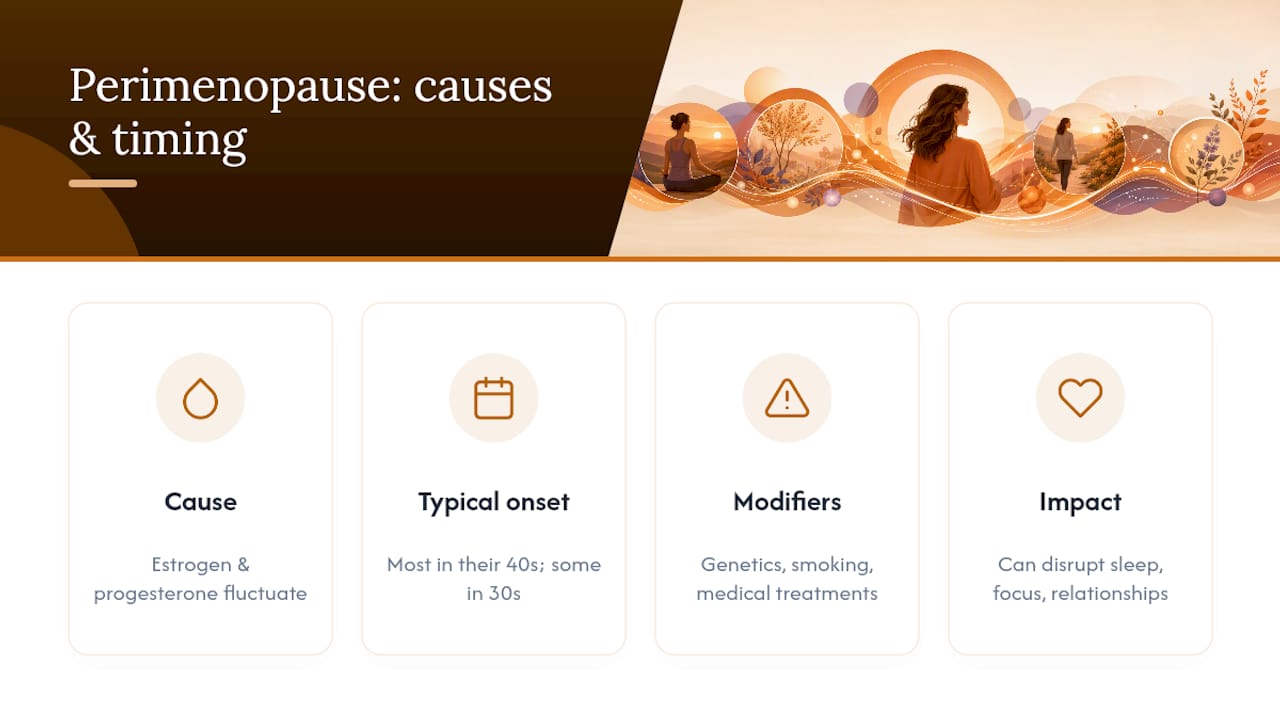
Perimenopause happens because your ovaries start producing estrogen and progesterone less predictably, not because they simply shut off overnight. Hormone levels swing up and down, sometimes within the same week, and that instability is what triggers most of the symptoms women notice first. Think of it less like a dimmer switch turning down slowly and more like a light flickering before it settles.
Most women notice the first signs in their 40s, though some start as early as their mid to late 30s. There’s no single trigger that kicks it off. Genetics, smoking history, and certain medical treatments can all shift the timeline earlier or later.
The World Health Organization frames menopause as a continuum rather than a single event, and that framing matters. Your mother’s experience, your friend’s experience, and yours may look nothing alike, even with similar starting points. Symptoms are rarely dangerous on their own, but they can chip away at sleep, work focus, and relationships if left unmanaged. That’s the real reason to pay attention early.
What Are the Most Common Perimenopause Symptoms?
Perimenopause symptoms touch nearly every system in the body, which is part of why the transition feels so disorienting. Grouping them by category makes the pattern easier to recognize.
Vasomotor symptoms are the ones most people associate with “the change”: hot flashes and night sweats. These happen when hormonal fluctuations affect your brain’s temperature control center, triggering a sudden heat surge, flushing, and sweating that can last a few minutes or linger uncomfortably longer. Heat, caffeine, alcohol, and stress are common triggers.
Menstrual changes are often the earliest sign. Periods might become lighter or heavier, arrive early or late, or come with unpredictable spotting in between. This irregularity is the hallmark most clinicians look for first.
Sleep disruption affects a striking share of women during this transition. Up to 70% report sleep problems during the menopausal transition, and it’s not always because of night sweats waking you up. Hormonal shifts can interfere directly with sleep architecture, independent of hot flashes, according to Stanford Lifestyle Medicine research on the topic.
Mood changes including anxiety, irritability, and depressive symptoms often travel together with poor sleep and hormone swings. It can be hard to tell which came first. Chronic sleep loss alone is enough to spike anxiety in anyone, hormones aside.
Cognitive complaints, commonly called brain fog, show up more often than most people realize. About two-thirds of women report memory-related complaints during the transition, and the good news is that these complaints generally ease after menopause.
Genitourinary symptoms include vaginal dryness, discomfort during sex, and urinary urgency or a higher risk of recurrent UTIs. Falling estrogen thins vaginal and urinary tissue, and this category tends to get less airtime than hot flashes despite being just as disruptive.
Other common changes include:
- Joint aches and stiffness, especially in the morning
- Drier, thinner skin and increased hair shedding
- Weight redistribution toward the midsection, even without changes in diet
- Breast tenderness tied to hormone fluctuation
- Reduced sex drive
The Cleveland Clinic lists this same core cluster of signs and notes that management ranges from simple lifestyle adjustments to hormone therapy, depending on severity.
How Long Does Perimenopause Last?
Perimenopause typically lasts 3 to 5 years on average, though the full range runs anywhere from 2 to 8 years, and some women notice symptoms for a decade before their final period. There’s no way to predict your own timeline in advance, but your menstrual cycle gives useful clues about which stage you’re likely in.
Two cycle changes are worth tracking closely:
- A consistent shift of 7 days or more in your cycle length is typically an early-stage signal, according to cycle-tracking research from Clue.
- A gap of 60 days or more between periods usually points to late-stage perimenopause, much closer to your final period.
Remember that menopause itself is only confirmed retroactively, after 12 consecutive months without any bleeding. Until you hit that mark, ovulation can still happen unpredictably, which means pregnancy remains possible even with irregular cycles.
When Should You See a Doctor About Perimenopause?
Most perimenopause diagnoses come from your symptom history and cycle pattern, not a blood test. Hormone levels like FSH and estradiol fluctuate too wildly day to day to give a reliable snapshot, so clinicians tend to reserve them for specific situations rather than routine screening. Instead, they may order selective labs like TSH or a complete blood count to rule out thyroid issues or anemia that can mimic perimenopause symptoms.
That said, certain symptoms warrant a prompt visit rather than a wait-and-see approach:
- Very heavy bleeding, soaking through a pad or tampon every hour or two
- Any bleeding after you’ve already gone 12 months without a period
- Severe mood changes, especially thoughts of self-harm or suicide
- Sudden, severe, or one-sided symptoms that feel different from your usual pattern
- Pelvic pain that’s new, sharp, or persistent
None of these are things to sit on. Everything else on the symptom list, while uncomfortable, is a conversation to schedule rather than an emergency to rush.
What Treatments Actually Help With Perimenopause Symptoms?
Treatment works best when it’s matched to your specific symptoms rather than applied as a blanket fix, and most women end up combining a few approaches.
Lifestyle measures are the first line for many people:
- Layer clothing and keep a fan nearby to manage hot flashes as they hit
- Exercise regularly, which helps mood, sleep, and bone density all at once
- Cut back on alcohol and caffeine, both known hot flash triggers
- Quit smoking, which is linked to earlier and more severe symptoms
- Build a consistent sleep schedule, even on weekends
Hormone therapy (HRT) remains one of the most effective options for moderate to severe hot flashes, night sweats, and vaginal symptoms. It comes in pills, patches, gels, and rings, and the right delivery method depends on your health history. Contraindications like a history of blood clots, certain cancers, or liver disease need a direct conversation with your clinician before starting.
Nonhormonal medications, including certain antidepressants and a newer class of drugs targeting the brain’s temperature regulation, can ease hot flashes and mood symptoms for women who can’t or don’t want to use hormones.
Topical vaginal estrogen deserves special mention because it’s often overlooked. It treats vaginal dryness effectively and may reduce recurrent UTIs, and because it acts locally rather than systemically, it carries a different risk profile than oral hormone therapy.
Pro Tip: Bring a symptom log to your appointment instead of trying to describe months of changes from memory. Even two weeks of notes on cycle length, sleep, and hot flash frequency gives your clinician far more to work with than “I’ve just been feeling off lately.”
What Can You Do Right Now to Manage Symptoms?
Small, consistent habits tend to outperform dramatic overhauls when it comes to day-to-day relief.
- For sleep: Keep your bedroom cool, stick to a consistent bedtime, and avoid screens for the last 30 minutes before lights out. If night sweats keep waking you, moisture-wicking sheets make a real difference.
- For mood and brain fog: Write things down instead of relying on memory, set phone reminders for appointments, and prioritize social connection. Persistent low mood or anxiety that doesn’t lift is worth discussing with a therapist or doctor.
- For skin, hair, and weight: Add a heavier moisturizer to your routine, increase protein intake, and incorporate resistance training two to three times a week to help offset midsection weight shifts.
- For pelvic health: Daily Kegel exercises support bladder control, and a referral to pelvic floor physical therapy can help with persistent urgency or discomfort during sex.
Pro Tip: If vaginal dryness is affecting intimacy, ask your doctor about local estrogen specifically. It’s a low-risk option many women aren’t offered unless they ask.
For more day-to-day adjustments, Stacyknows breaks down the small changes that actually helped one woman’s morning routine during her own transition.
Why Trust This Perimenopause Guide?
Stacyknows builds its health content around guidance from sources like Harvard Health, the World Health Organization, and the Cleveland Clinic, then pairs that clinical grounding with practical, real-world tactics readers can use the same day. Our women’s health and beauty guide and practical wellness tips cover related territory for readers navigating midlife changes, from skin care to daily energy.
Your Next Three Steps
Start a simple log of your cycle length and symptoms this week. Try one immediate fix, whether that’s a cooling pillow or a moisturizer upgrade. See a doctor if bleeding is heavy, your mood shifts sharply, or urinary symptoms worsen. And keep using contraception until you’ve hit 12 full months without a period.
The Real Problem With Most Perimenopause Advice
Most articles on this topic either lean too clinical, listing symptoms like a textbook, or too soft, offering vague reassurance without anything actionable. Neither approach respects how disruptive this transition can actually be for daily life and relationships.
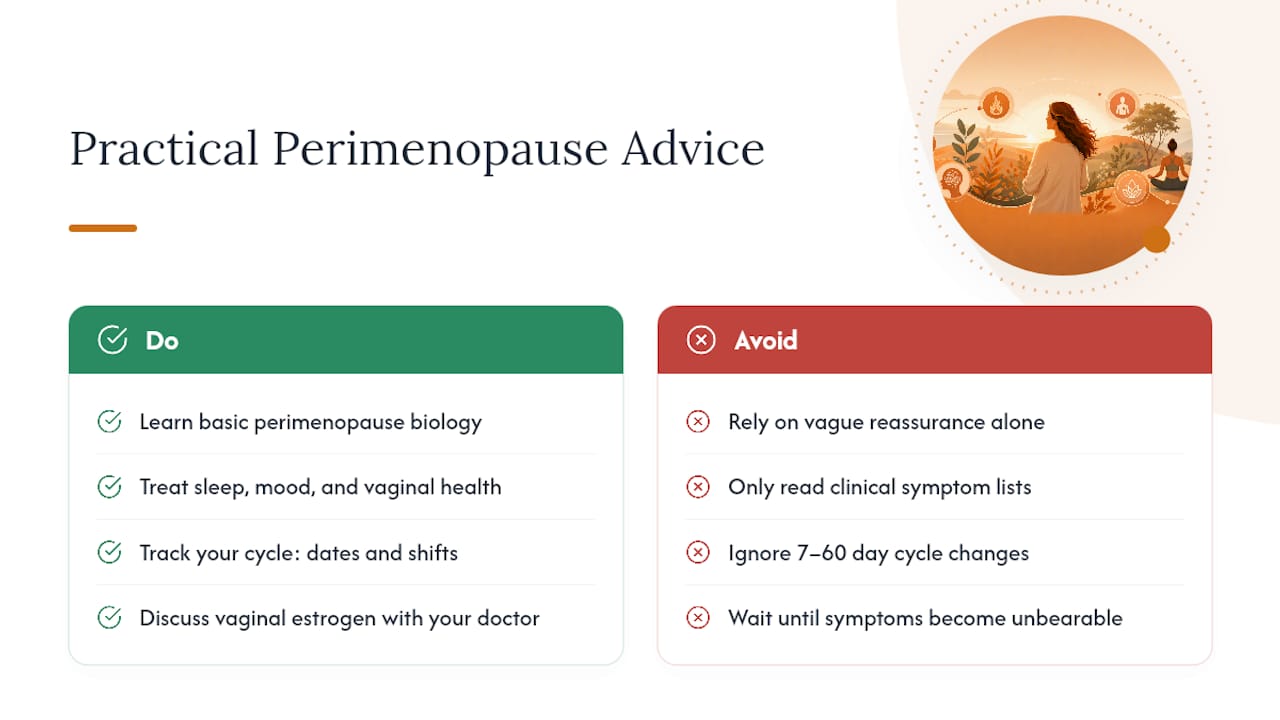
What the research actually supports is a middle path: understand the biology enough to stop panicking over normal symptoms, but treat the practical stuff, sleep, mood, vaginal health, seriously enough to fix it. Vaginal estrogen is a good example. It’s backed by solid evidence, yet it barely comes up in mainstream conversations about perimenopause because hot flashes get all the attention.
My take is that tracking your cycle matters more than most advice admits. That 7-day shift or 60-day gap isn’t just trivia. It’s the clearest, cheapest signal you have for figuring out where you stand and when to push for a real conversation with your doctor, rather than waiting for symptoms to become unbearable first.
— Stacy
This article is general information, not a substitute for advice from a qualified doctor. Consult a qualified healthcare professional about your own circumstances before acting on anything here.
Sources
- A season of transition: three things you need to know about perimenopause — Harvard T.H. Chan School of Public Health
- Menopause symptoms that may surprise you — Harvard Health
- Menopause — World Health Organization
- Perimenopause — Cleveland Clinic
- What is menopause? — National Institute on Aging
Recommended
- Navigating Perimenopause? Here’s What I Added to My Morning Routine
- Women Over 50: Your Complete Health and Beauty Guide
- Why Everyday Stress Quietly Impacts Intimacy and Connection
- Signs Your Beauty Routine Needs a Serious Upgrade
