
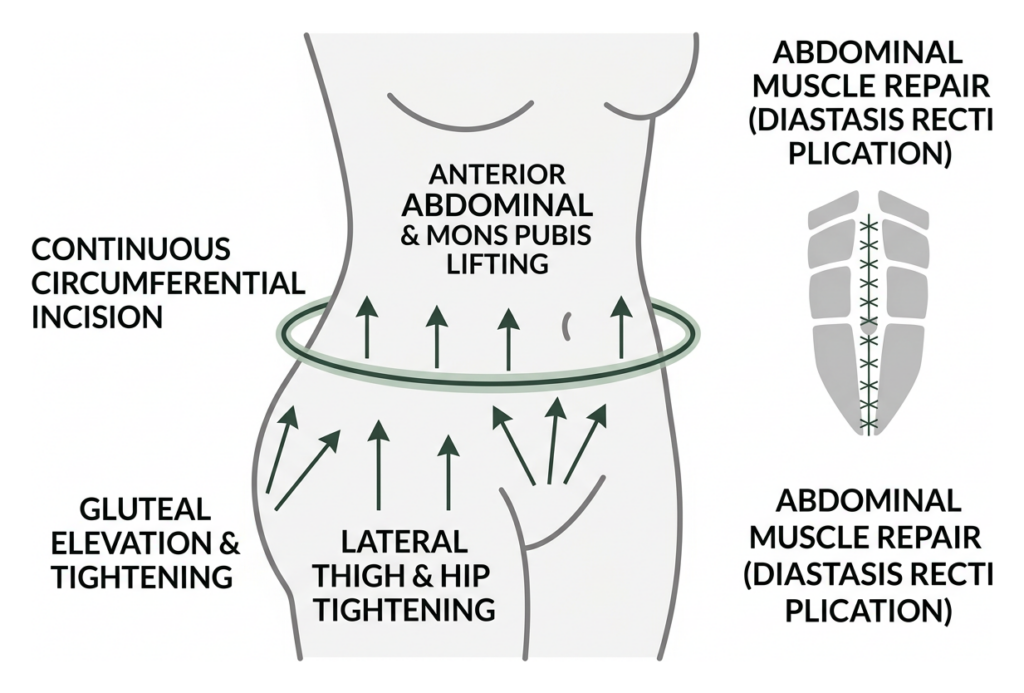
A full lower body lift is a 360-degree surgical restructuring of the entire lower torso. Rather than targeting a single problem area in isolation, it treats the abdomen, waistline, hips, outer thighs, and buttocks as an interconnected anatomical ring.
Significant weight fluctuations, bariatric surgery, multiple pregnancies, or the natural aging process rarely affect just the front of the abdomen. Skin and subcutaneous tissues stretch circumferentially. When weight is lost, elasticity loss causes skin laxity that hangs around the lower trunk like a deflated tire.
An isolated procedure—such as a traditional tummy tuck—removes front-facing skin but leaves loose tissue draping over the hips and a flattened, sagging contour in the buttocks. A circumferential lower body lift addresses the entire midsection simultaneously by excising a continuous belt of redundant tissue and anchoring the remaining tissues to the deep fascial system.
Surgical Parameter Standard Abdominoplasty (Tummy Tuck) Circumferential Lower Body Lift (Belt Lipectomy) Anatomical Scope Anterior abdomen only 360-degree lower trunk (abdomen, hips, flanks, buttocks, outer thighs) Incision Pattern Transverse lower abdominal incision (hip bone to hip bone) Continuous circumferential incision wrapping entirely around the waistline Abdominal Muscle Repair Included (rectus abdominis plication) Included (rectus abdominis plication) Gluteal Lifting & Contouring Not addressed Included (elevation, tightening, and optional autologous volume enhancement) Outer Thigh Tightening Minimal to none Included (vertical lifting of lateral thigh and hip tissues) Mons Pubis Rejuvenation Basic elevation Comprehensive elevation, thinning, and suspension Average Surgical Time 2 to 3 hours 4 to 6 hours Primary Patient Profile Post-pregnancy or localized abdominal skin laxity Post-massive weight loss or severe circumferential skin laxity 
Abdominoplasty and Muscle Repair (Diastasis Recti)
The anterior (front) portion of a lower body lift functions as an extensive abdominoplasty. Your surgeon removes the hanging apron of excess skin and fat, medically termed the pannus.
Beyond skin removal, this step corrects diastasis recti—the vertical separation of the rectus abdominis (“six-pack”) muscles that frequently occurs following pregnancy or significant abdominal expansion. The surgeon places permanent internal sutures along the midline fascia, drawing the separated muscle bellies back together. This internal plication restores core abdominal wall strength, narrows the waistline, and flattens a protruding belly.
This stage also includes:
- Umbilicoplasty: The surgeon transposes and reshapes the belly button through a small opening in the redraped skin, sculpting natural vertical borders and superior hooding.
- Mons Pubis Lift: Heavy, hanging lower abdominal skin pulls the mons pubis downward (mons ptosis). The surgeon excises excess mons skin and secures the underlying tissue to the pubic bone fascia to create a smooth, lifted profile.
Buttock Lift and Gluteal Reshaping
The posterior (back) segment of the body lift removes the redundant band of skin and fat running across the lower back and upper gluteal region. Gravity and volume loss often cause the buttocks to sag, flatten, and develop horizontal folds.
By removing tissue above the gluteal crease and elevating the remaining skin upward, the surgeon restores a perkier, rounded contour.
For patients who have lost significant volume, plastic surgeons can perform an autologous gluteal flap transposition (auto-augmentation). Rather than discarding the excised tissue, your surgeon preserves a vascularized section of your own fat and deep tissue, rotating it downward into the gluteal muscle pocket. This restores natural projection and fullness to deflated buttocks without requiring synthetic silicone implants.
Lateral and Anterior Thigh Tightening
As the circumferential incision extends around the hips, the surgeon lifts the tissues of the outer hips and lateral thighs. This upward vector smooths out lateral thigh ripples, eliminates the “saddlebag” appearance, and reduces laxity along the upper anterior (front) thighs.
Anchoring these tissues to the strong pelvic periosteum and deep fascia establishes a firm, continuous transition from the waist down through the hips and upper legs, preventing early relaxation of the lifted tissue.
Circumferential Liposuction and Contour Refinement
A lower body lift is not solely an excision procedure; it is a structural sculpting surgery. Board-certified plastic surgeons combine targeted liposuction with surgical resection to achieve refined contours.
Prior to or during tissue excision, the surgeon uses power-assisted or ultrasound-assisted liposuction to thin stubborn fat layers along the flanks (“love handles”), lower back, and mid-abdomen. Debulking these zones ensures that when the skin is pulled taut and closed, the result is smooth, tapered, and athletic rather than thick or bulky.
How Is the Lower Body Lift Performed Step-by-Step?
Executing a 360-degree body lift requires meticulous surgical planning, strict patient safety measures, and precise technical execution.
Preoperative Preparation and Safety Protocols
Before entering the operating room, patients undergo a thorough health evaluation. Routine preoperative testing includes:
- Complete Blood Count (CBC): Confirms adequate hemoglobin and hematocrit levels to minimize risks related to surgical blood loss.
- Comprehensive Metabolic Panel (CMP) & Coagulation Profile: Assesses kidney function, liver function, electrolyte balance, and blood-clotting mechanisms.
- Serum Albumin and Total Protein: Confirms proper baseline nutritional status, which is vital for uncomplicated wound healing.
While the patient is standing, the surgeon creates detailed surgical markings. Standing markings ensure that incisions align precisely with the patient’s natural anatomy and will sit discreetly beneath standard underwear and swimwear waistlines.
Once in the operating suite, the surgical team administers general anesthesia. To mitigate the risk of deep vein thrombosis (DVT) during this extensive procedure, safety measures are initiated immediately:
- Sequential compression devices (SCDs) are placed on the lower legs to maintain continuous venous blood flow.
- An intraoperative body-warming system maintains normal core temperature.
- Prophylactic anticoagulation medications (such as Lovenox or subcutaneous heparin) are administered based on clinical risk assessment protocols.
Surgical Positioning and Incision Technique
Because the lower body lift treats the entire circumference of the torso, the operation is divided into distinct stages requiring intraoperative repositioning:
- Posterior Stage (Prone or Lateral Decubitus Position): The surgery typically begins with the patient lying face down. The surgeon makes an incision across the lower back, above the buttocks. Redundant skin and subcutaneous fat are excised. If auto-augmentation is planned, the dermal-fat flaps are sculpted and secured into the gluteal muscles. The lateral hip and outer thigh tissues are elevated and anchored to the deep fascia.
- Patient Repositioning: The surgical team cleans, dresses, and carefully turns the patient onto their back (supine position) using sterile techniques and protective padding to protect pressure points and joint mobility.
- Anterior Stage (Supine Position): The surgeon creates the anterior incision across the lower abdomen. The abdominal skin flap is elevated off the abdominal wall up to the ribcage. The rectus abdominis muscles are plicated along the midline with heavy, non-absorbable sutures. The redundant abdominal pannus is excised, the mons pubis is elevated and secured, and the belly button is repositioned.
- Deep Fascial Anchoring and Layered Closure: To achieve a long-lasting lift and minimize tension on the outer skin, the surgeon anchors the superficial fascial system (SFS) using heavy, slow-absorbing sutures. This internal framework bears the mechanical load of the lift. The surgeon places closed-suction surgical drains to prevent fluid accumulation (seroma), then closes the superficial skin layers with sub-cuticular sutures, skin adhesives, and surgical tape.
Who Is an Ideal Candidate for a Lower Body Lift?
A lower body lift is a major, life-changing operation. Ideal candidates must meet specific physical, metabolic, and lifestyle criteria to ensure safe anesthesia, smooth wound healing, and optimal aesthetic outcomes.
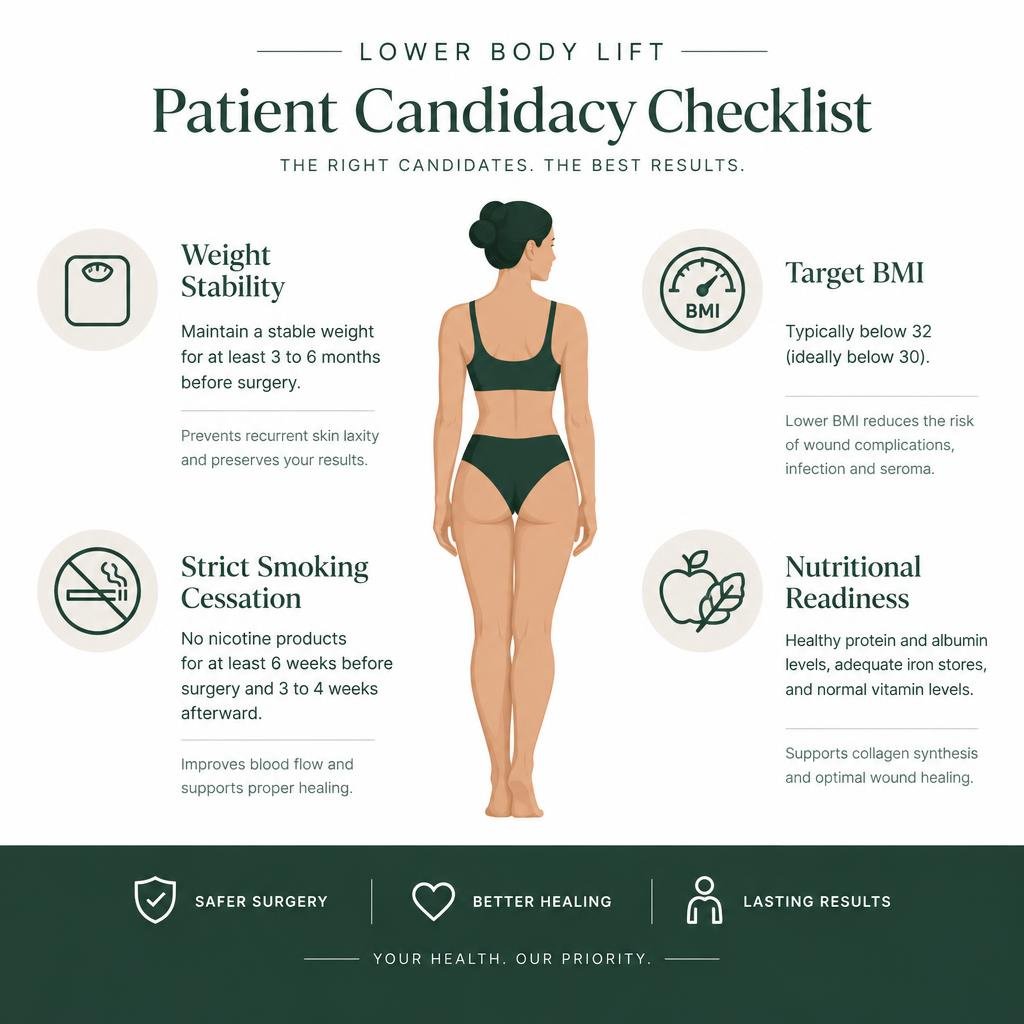
Key Candidacy Prerequisites:
- Weight Stability: Patients must maintain a stable weight for at least 3 to 6 months prior to surgery. Continuing to lose weight after surgery causes recurrent skin laxity, while significant weight gain stretches the tightened tissues and degrades your aesthetic contour.
- Target Body Mass Index (BMI): While individual requirements vary, surgeons typically recommend a BMI below 32 (ideally below 30). Operating on patients with higher BMIs increases the risk of wound breakdown, infection, and seroma formation.
- Strict Smoking Cessation: Nicotine causes severe peripheral vasoconstriction, significantly reducing blood supply to large surgical skin flaps. Patients must completely abstain from all nicotine products (cigarettes, vaping, patches, and gums) for at least 6 weeks before surgery and 3 to 4 weeks afterward.
- Nutritional Readiness: Massive weight loss, particularly after bariatric procedures like gastric bypass or sleeve gastrectomy, can lead to malabsorption and nutritional deficiencies. Patients must demonstrate healthy serum protein and albumin levels, adequate iron stores, and normal vitamin levels to support collagen synthesis and skin healing.
- Realistic Expectations: Patients must understand that trading extensive loose skin for a 360-degree scar is the core design of this procedure. While scars fade and are placed to be hidden by clothing, they are permanent.
At The Waltzman Institute in Long Beach, CA, Board-Certified Plastic Surgeon Dr. Josh Waltzman performs thorough evaluations to determine surgical candidacy. Dr. Waltzman assesses individual skin elasticity, underlying musculoskeletal anatomy, and overall medical history to design a personalized surgical plan—whether that involves a single comprehensive stage or a sequenced approach combined with other post-weight-loss procedures like an arm lift (brachioplasty) or breast lift (mastopexy).
What Are the Expected Recovery Milestones, Results, and Risks?
Recovering from a circumferential lower body lift requires patience, disciplined aftercare, and adherence to physical activity restrictions. Because surgical tension is applied around the entire lower trunk, healing involves distinct stages.
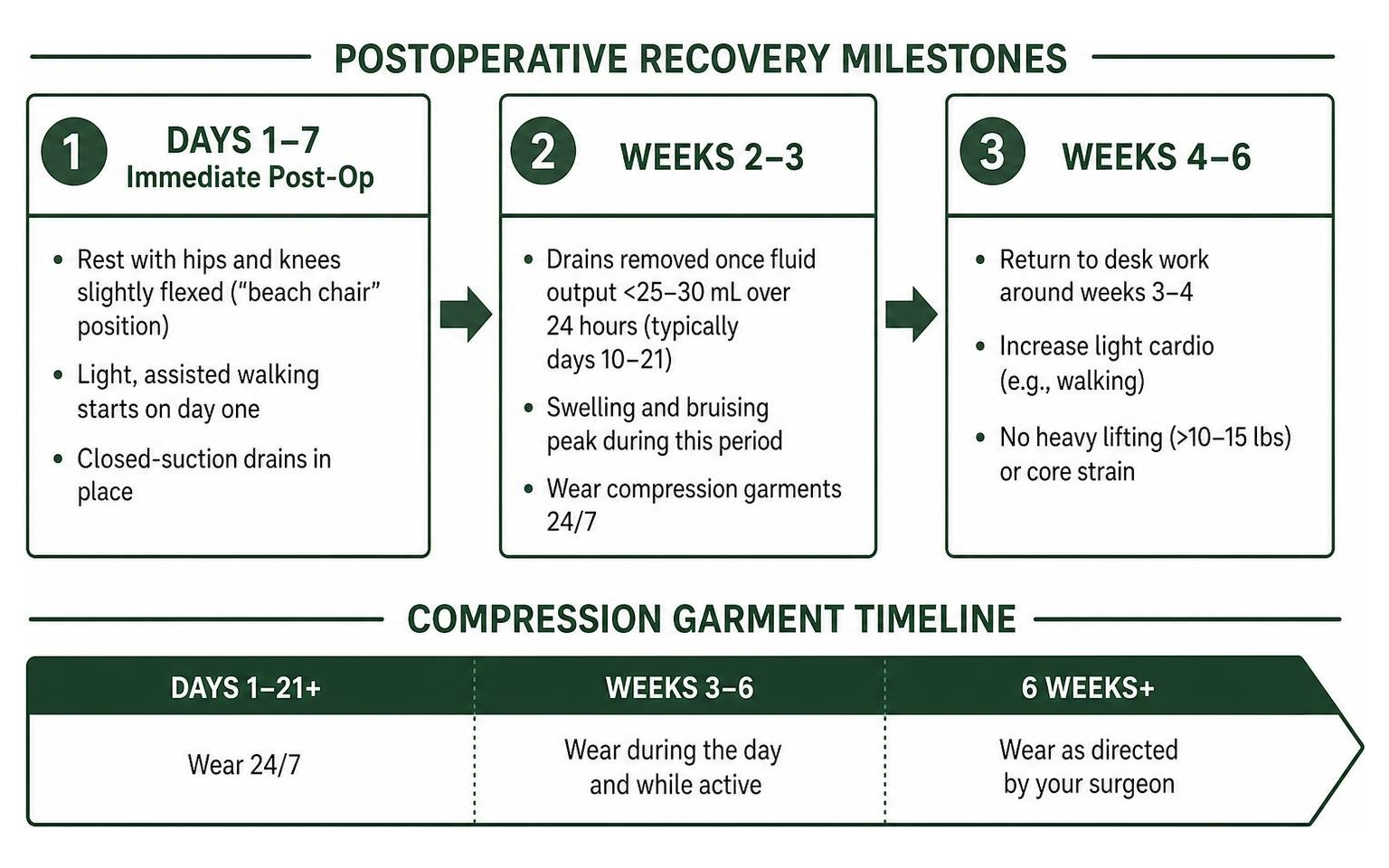
Recovery Milestones and Timeline
- Days 1 to 7 (Immediate Post-Op): Patients typically spend the first day or two resting with hips and knees slightly flexed (“beach chair” position) to minimize tension along the abdominal and lower back incisions. Light, assisted walking starts on day one to encourage circulation and prevent blood clots. Closed-suction drains will be in place, collecting excess lymphatic fluid.
- Weeks 2 to 3: Drains are usually removed once fluid output drops below 25 to 30 milliliters over a 24-hour period (typically between days 10 and 21). Swelling and bruising peak during this period. Patients wear medical-grade compression garments around the clock to support healing tissues and minimize fluid buildup.
- Weeks 4 to 6: Most individuals working desk jobs can safely return to work around weeks 3 to 4. Light cardiovascular exercise (like leisurely walking) can be increased, but heavy lifting (over 10–15 lbs) and core strain remain strictly off-limits.
- Weeks 6 to 8: Surgical incisions have gained significant tensile strength. Under your surgeon’s clearance, patients can gradually resume regular gym routines, light resistance training, and low-impact exercise. Compression garments are typically transitioned to daytime-only wear.
- Months 6 to 24: Residual deep tissue swelling gradually subsides. Incision scars undergo natural remodeling—transitioning from pink and raised to softer, flatter, and closer to your natural skin tone. The definitive, contoured outcome is fully realized by 12 to 24 months.
Evidence-Based Risks and Complication Profiles
Because of the extensive nature of 360-degree tissue removal, body lifts carry a higher baseline complication rate than smaller, localized procedures.
According to peer-reviewed clinical research published in Plastic and Reconstructive Surgery clinical research on lower body lift outcomes, lower body lifts have an overall complication rate of approximately 78%. Importantly, 56% of these complications are minor, manageable issues that resolve with conservative care.
Common minor complications include:
- Superficial Wound Dehiscence: Small separations along the incision line, particularly at high-tension areas like the lower back midline or the T-junction, typically managed with specialized dressings and local wound care.
- Seroma Formation: Fluid collections beneath the skin flaps after drains are removed, easily treated via in-office aspiration.
- Minor Skin or Fat Necrosis: Small areas of delayed healing caused by localized blood supply disruption.
Major risks—including deep wound infections, hematoma requiring surgical evacuation, and venous thromboembolism (DVT/PE)—are significantly less common when surgery is performed in an accredited facility using standardized prevention protocols.
Psychological and Quality-of-Life Benefits
The functional and emotional benefits of a lower body lift are substantial. Multiple clinical studies confirm the transformative psychological impact of this operation:
- A 2017 study found that lower body lifts significantly reduced dismissive body ratings and produced lasting increases in self-esteem and perceived attractiveness.
- A 2013 clinical trial demonstrated that lifting the lower trunk after massive weight loss produced significant, quantifiable improvements in overall health-related quality of life and physical comfort.
Eliminating heavy skin folds resolves chronic skin friction (chafing), prevents recurrent intertrigo fungal infections, relieves lower back strain, and allows patients to exercise and wear fitted clothing with confidence.
How Much Does a Lower Body Lift Cost and Does Insurance Cover It?
A lower body lift is a customized, highly technical surgery. Pricing varies based on procedural complexity, surgical time, geographic region, and the surgeon’s training and experience.
Cost Breakdown
The national average surgeon’s fee for a lower body lift is $19,392, with total all-inclusive costs generally ranging between $15,000 and $34,500.
When reviewing surgical quotes, ensure you receive a comprehensive breakdown covering all associated fees:
Does Health Insurance Cover a Lower Body Lift?
In the vast majority of cases, a circumferential lower body lift is categorized as an elective cosmetic procedure, meaning health insurance does not cover the complete operation.
However, there is an important exception regarding the anterior abdominal portion:
- Panniculectomy Coverage: If a patient suffers from a massive, hanging abdominal pannus that causes documented, chronic medical issues—such as recurrent intertrigo, skin ulcerations, bacterial infections, or severe mobility impairment that fails to resolve with prescription topical and oral medications—health insurance may authorize coverage for an anterior panniculectomy (functional removal of the hanging abdominal apron).
- Combination / Split Billing: When insurance authorizes a panniculectomy, the patient remains financially responsible for the aesthetic and circumferential elements—including abdominal muscle repair (rectus plication), the buttock lift, thigh lifting, liposuction, and the additional surgical facility and anesthesia time required for those components.
Most aesthetic practices offer third-party healthcare financing options (such as CareCredit or Alphaeon Credit) with monthly payment plans to help manage out-of-pocket expenses.
Frequently Asked Questions About Lower Body Lifts?
How does a lower body lift differ from a standard tummy tuck?
A standard tummy tuck (abdominoplasty) addresses only the front wall of the abdomen. It tightens separated abdominal muscles and removes loose skin between the pubic area and the belly button, terminating at the hip bones.
A lower body lift extends that incision 360 degrees around the entire waistline. In addition to repairing the abdominal muscles and removing anterior skin, it lifts the lateral thighs, eliminates flank fullness, elevates sagging buttocks, and corrects mons pubis ptosis in a single operative session.
How long do the results of a lower body lift last?
The results of a lower body lift are long-lasting and considered permanent, as the excised skin and fat cells cannot regenerate.
However, your body will continue to age naturally. To preserve your surgical results for decades, you should:
- Maintain a stable body weight through balanced nutrition.
- Engage in regular strength training and cardiovascular exercise.
- Avoid smoking and protect your skin from excessive sun exposure.
Significant weight gain or subsequent pregnancies will restretch the remaining skin and compromise your surgical outcome.
Will the scars from a lower body lift be visible?
A lower body lift requires a continuous circumferential scar around the waist. However, board-certified plastic surgeons carefully position this incision as low as possible along the hips, pubic line, and upper gluteal crease.
During your preoperative planning, you can wear your preferred style of underwear or bikini bottoms so your surgeon can tailor the surgical markings. This ensures that the resulting mature scar remains concealed beneath standard clothing, activewear, and swimwear. With proper scar care—including silicone gel sheeting, sun protection, and massage—scars soften and fade significantly over the first 12 to 24 months.
Conclusion
A lower body lift is the definitive surgical solution for restoring tone, comfort, and contour to the lower trunk following dramatic weight loss, pregnancy, or aging. By addressing the abdomen, waist, outer thighs, and buttocks simultaneously, this 360-degree procedure eliminates redundant skin folds, repairs deep core muscles, and sculpts balanced proportions.
Because a lower body lift is a complex, extensive operation, choosing a board-certified plastic surgeon with specialized experience in reconstructive plastic surgery and post-bariatric body contouring is essential. A qualified surgeon ensures the highest standards of operating safety, uses advanced tissue-anchoring techniques, and positions incisions strategically for the best aesthetic result.
If you are ready to address persistent loose skin and take the final step in your body transformation, schedule a comprehensive consultation with Dr. Josh Waltzman at The Waltzman Institute in Long Beach, CA, to explore your personalized body contouring plan.
