

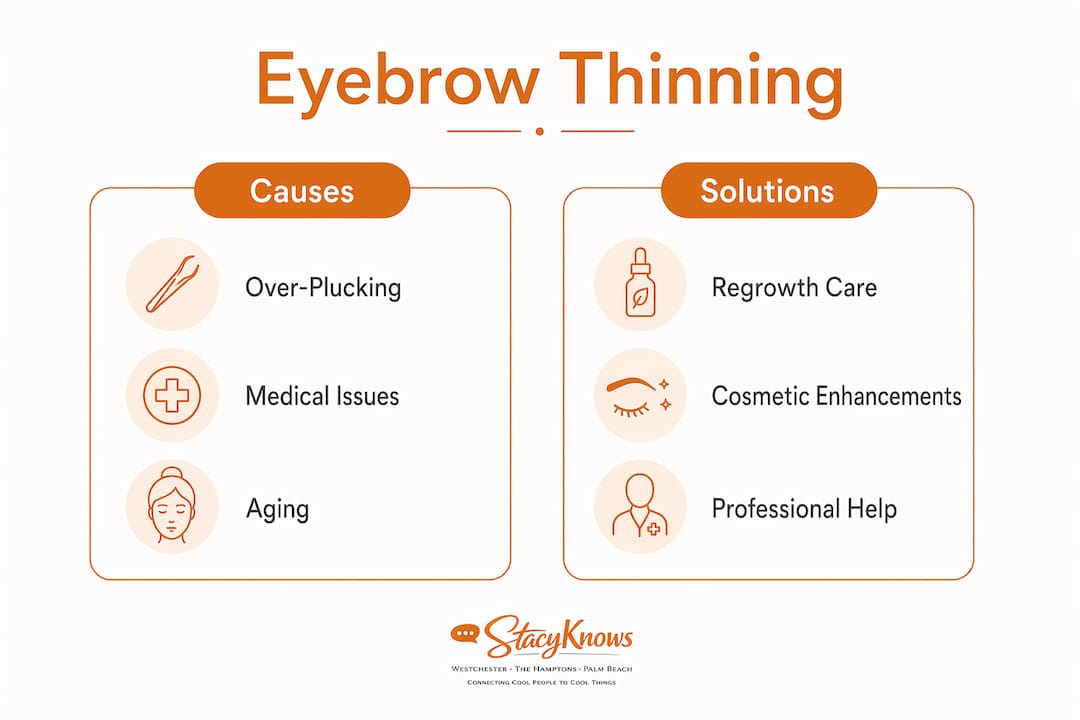
Thinning eyebrows is defined as a noticeable reduction in eyebrow hair density caused by factors ranging from over-plucking and aging to hormonal shifts and medical conditions like thyroid dysfunction. Clinically, the condition is called madarosis, a term dermatologists use to describe eyebrow or eyelash hair loss. Brow hairs grow slowly, at roughly 0.12–0.15 mm per day, with a growth phase of only 2–3 months. That slow cycle explains why regrowth feels like it takes forever. The good news is that most cases are non-scarring and reversible with the right approach, whether that means medical treatment, cosmetic products like Latisse, or techniques like microblading.
What causes thinning eyebrows?
Eyebrow hair loss falls into two broad categories: non-scarring and scarring. Non-scarring causes are potentially reversible. Scarring causes permanently damage the follicle, meaning the hair will not grow back without intervention.
Common non-scarring causes
The most frequent culprits behind sparse brows are lifestyle and hormonal factors. You may recognize more than one on this list:
- Over-plucking or waxing. Repeated trauma to the follicle over years can suppress regrowth, even after you stop.
- Aging. Hair follicles naturally shrink with age, producing finer and fewer hairs.
- Hormonal changes. Pregnancy, menopause, and thyroid imbalances all disrupt the hair growth cycle. Postpartum eyebrow thinning typically resolves on its own within 6–12 months.
- Nutritional deficiencies. Low iron, biotin, vitamin D, or zinc can stall hair production across the body, including the brows.
- Stress. Chronic stress pushes hairs into a resting phase, causing shedding weeks or months later.
- Skin conditions. Atopic dermatitis and seborrheic dermatitis cause inflammation around the follicle, leading to patchy loss.
Medical causes you should not ignore
Thyroid disorders are one of the most recognized medical causes of eyebrow thinning. Loss of hair in the outer third of the brow is called Queen Anne’s sign, and it is a classic indicator of hypothyroidism. Thyroid imbalance disrupts the active growth phase of the hair cycle, slowing production significantly. Treating the thyroid condition medically is the first step. Cosmetic attempts before that stabilization are largely ineffective.
Alopecia areata is an autoimmune condition that causes patchy hair loss on the scalp, brows, and lashes. Frontal fibrosing alopecia, a scarring form, causes permanent follicle damage alongside hairline recession and scaling. Early diagnosis is critical in these cases to prevent irreversible loss.
Pro Tip: Many people confuse hair breakage from harsh makeup removers or chemical services with true follicle loss. If your brow hairs snap off rather than fall out at the root, the issue is damage, not loss. Switching to a gentle oil-based cleanser can restore hair quality without any stimulative treatment.
How to promote eyebrow regrowth
Regrowing brows takes patience. The hair cycle means visible results typically take 3–6 months, even when you do everything right. Here is a practical, evidence-based approach to support regrowth.
-
Take a grooming break. Stop tweezing, waxing, and threading for at least 12 weeks. This rest period allows short hairs to surface and helps you distinguish true regrowth from temporary loss. It also reveals your natural brow shape, which is useful before any cosmetic procedure.
-
Address nutritional deficiencies. Get bloodwork done to check iron, ferritin, vitamin D, and zinc levels. Correcting deficiencies takes months, so start early. One important caveat: high-dose biotin can interfere with thyroid lab results, so let your doctor know if you are supplementing.
-
Ask about Latisse or minoxidil. Latisse (bimatoprost) is FDA-approved for eyelash growth and is used off-label for brows by dermatologists. Topical minoxidil is another common option, but it requires caution near the eyes to avoid irritation. Neither is a DIY product. Both work best under medical supervision.
-
Treat underlying conditions first. If a thyroid disorder, alopecia areata, or skin condition is driving your hair loss, cosmetic regrowth attempts without medical management will not deliver lasting results. Get the diagnosis, then layer in the beauty solutions.
-
Use natural oils with realistic expectations. Castor oil and rosemary oil are popular home remedies. They may support scalp and follicle health through moisturizing and mild circulation effects, but no strong clinical evidence confirms they regrow brows on their own. Think of them as supportive, not curative.
Pro Tip: If you have been off grooming for 12 weeks and still see no new growth, that is your signal to book a dermatology appointment rather than try another serum. Identifying the cause early saves both time and money.
Cosmetic enhancement techniques for sparse brows

While you wait for regrowth, or if regrowth is not fully possible, cosmetic options can restore the look of full brows immediately. These techniques address appearance, not follicle activity. Microblading, tinting, and lamination change color and shape but do not stimulate hair growth.
Makeup options
The right product depends on your brow density and the look you want:
- Brow pencils (like those from Anastasia Beverly Hills or NYX) work best for filling gaps and drawing individual hair strokes. Use a light hand and short strokes for a natural finish.
- Brow powders add soft, diffused fullness. They suit very sparse brows where pencil strokes would look drawn-on.
- Tinted brow gels (like Benefit’s Gimme Brow or e.l.f. Cosmetics’ Brow Lift) add color and hold existing hairs in place. They are ideal for mild thinning.
Semi-permanent procedures: what actually works
| Technique | What it does | How long it lasts | Best for |
|---|---|---|---|
| Microblading | Deposits pigment in hair-stroke patterns | 12–18 months | Sparse or over-plucked brows |
| Brow tinting | Dyes existing hairs a deeper shade | 3–6 weeks | Light or fair brows with decent density |
| Brow lamination | Straightens and lifts existing hairs for a fuller look | 6–8 weeks | Unruly or downward-growing hairs |
| Powder ombre brow | Soft, shaded pigment deposit | 12–24 months | Very sparse brows or oily skin |
Microblading is one of the most requested procedures for eyebrow hair loss. Before booking, read up on what the process actually involves. Stacyknows has a detailed breakdown of what to know about microblading before you commit to it.
One warning worth repeating: avoid lamination or chemical tinting during an active regrowth phase. These processes use peroxide-based solutions that can weaken fragile new hairs. Wait until your brows have stabilized before adding chemical services.
When to see a professional about eyebrow loss
Not every case of sparse brows is a beauty problem. Some patterns point clearly to a medical issue that needs a dermatologist, not a makeup bag.
Watch for these warning signs:
- Sudden or patchy loss that appears quickly without an obvious cause like over-grooming
- Redness, scaling, or itching around the brow area, which may indicate dermatitis or a scarring condition
- Loss of lashes alongside brows, which can signal alopecia areata or a systemic condition
- Scalp hair loss occurring at the same time, especially at the frontal hairline
- No regrowth after 12 weeks of stopping all grooming and harsh treatments
Scarring alopecia conditions like frontal fibrosing alopecia permanently damage follicles. The window for treatment is narrow. Waiting months to try serums before seeing a specialist can mean the difference between reversible and permanent loss.
“Most people try expensive serums before getting a medical evaluation, which leads to ineffective treatment. Diagnosis is the key to targeted therapy.” — npmd.com
Eyebrow loss also carries a real emotional weight. Brows are central to facial expression and recognition. Eyebrow loss impacts emotional well-being and self-confidence in ways that go beyond aesthetics. A good dermatologist or trichologist will consider both the physical and emotional dimensions of treatment. You deserve that full picture, not just a prescription.
For non-medical thinning, you can also explore hair loss solutions that go beyond the standard options, many of which apply to brow restoration as well.
What I have learned from watching people chase the wrong fix
I have seen the same pattern play out more times than I can count. Someone notices their brows thinning, buys a $60 serum, uses it for two months, sees nothing, and then books microblading without ever asking why the thinning started. Six months later, they are frustrated that the pigment is fading and the underlying issue is still there.
The mistake is treating the symptom before understanding the cause. If your thyroid is off, no serum will fix your brows. If you have been over-plucking for a decade, microblading will look great but will not restore your follicles. These are not the same problem, and they do not have the same solution.
What actually works is a two-track approach. Get the medical piece sorted first, even if it just means ruling things out. Then layer in the cosmetic enhancements that make you feel good while your body does the slower work of regrowing. Brow pencils and tinted gels are not a defeat. They are a practical bridge while you wait.
The other thing I would tell anyone going through this: be patient with the grooming break. Twelve weeks feels like a long time when you are used to shaping your brows every week. But those weeks give you real information. You will see what is actually growing back, and you will stop accidentally removing the very hairs you are trying to keep.
Eyebrow loss can quietly dim how you feel about your face. Addressing it, whether medically or cosmetically, is worth taking seriously. You do not have to just live with it.
— Stacy
Find your next brow solution on Stacyknows
If you are ready to take action on your brows, Stacyknows has done the research for you. Whether you are looking for a growth serum, the right brow pencil, or a product that actually delivers on its promises, the Stacyknows Beauty Secret Finds page is a curated collection of beauty picks worth your attention.

From targeted brow serums to full makeup kits, every recommendation is chosen with real results in mind. You will also find tips on ingredients to look for, products to avoid, and beauty secrets from around the world that American shoppers are only just discovering. Stop guessing and start shopping with confidence.
FAQ
What are the most common causes of thinning eyebrows?
The most common causes include over-plucking, aging, hormonal changes, thyroid disorders, nutritional deficiencies, and skin conditions like dermatitis. Identifying the specific cause is the first step toward effective treatment.
How long does eyebrow regrowth take?
Eyebrow regrowth typically takes 3–6 months, given that brow hairs grow at roughly 0.12–0.15 mm per day with a short active growth phase of 2–3 months. Postpartum thinning may resolve naturally within 6–12 months.
Does castor oil actually regrow eyebrows?
Castor oil may support follicle health through moisturizing effects, but no strong clinical evidence confirms it regrows brows on its own. It works best as a supportive measure alongside medical or nutritional treatment.
What is the difference between microblading and brow lamination?
Microblading deposits semi-permanent pigment in hair-stroke patterns and lasts 12–18 months, while brow lamination straightens and lifts existing hairs for a fuller look lasting 6–8 weeks. Microblading suits very sparse brows; lamination works best when you already have decent density.
When should I see a doctor about eyebrow hair loss?
See a dermatologist if you experience sudden or patchy loss, redness or scaling around the brow, lash loss alongside brow loss, or no regrowth after 12 weeks of stopping all grooming. These signs may indicate a medical condition like alopecia areata or a scarring disorder that needs prompt treatment.
Recommended
- Top 4 Things You Should Know About Eyebrow Microblading – Stacyknows
- Hair Loss Solutions That Don’t Involve Pills or Plugs – Stacyknows
- 3 Ways To Feel More Confident In Your Appearance: 3 Top Tips – Stacyknows
- Facelift vs. Fillers: Why Temporary Fixes May Be Costing You More – Stacyknows
