

Electric vehicles are defined as the single most scalable technology available today for decarbonizing transportation and reducing global dependence on oil. The role of EV in energy transition goes far beyond swapping gas for electricity. It connects directly to how clean your grid is, how smart your charging behavior is, and whether your government’s policies are sequenced to match grid improvements. For individuals and policymakers alike, understanding these connections is what separates genuine climate progress from well-intentioned but incomplete action.
How electric vehicles reduce fossil fuel use and emissions
EVs displace oil demand at a scale that is now measurable at the global level. As of 2025, electric vehicles reduced global oil demand by approximately 1.8 million barrels per day. That figure represents a structural shift in energy consumption, not a marginal efficiency gain.
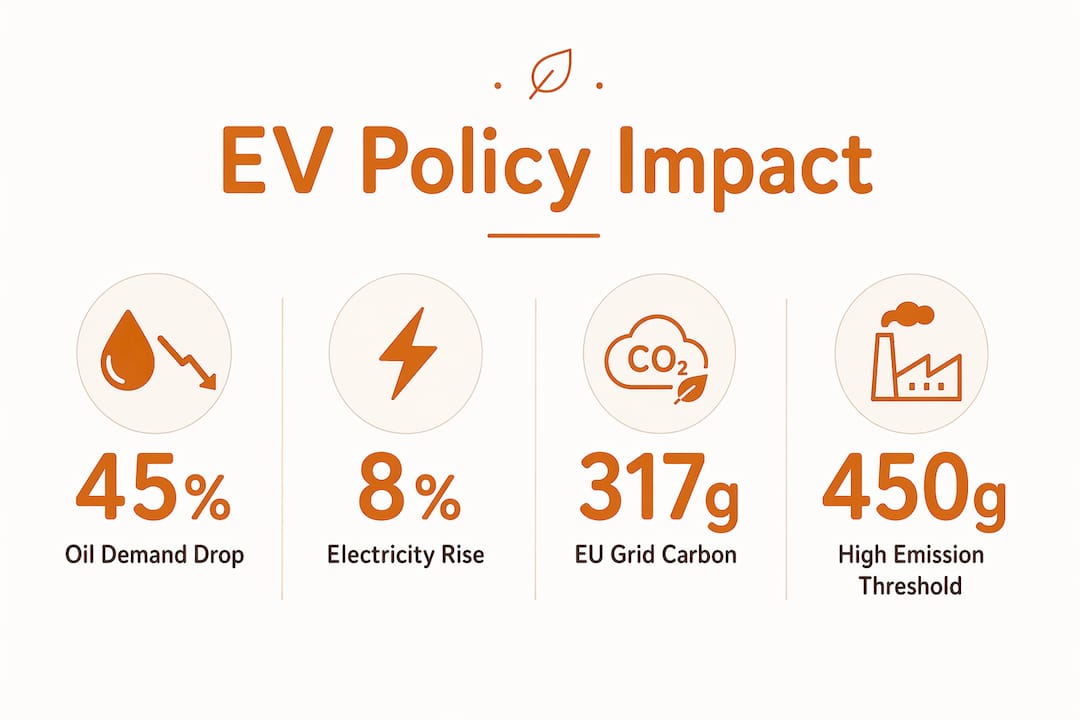
The electricity demand side tells a parallel story. EVs accounted for roughly 8% of the 849 TWh rise in global electricity demand in 2025. That means EVs are already reshaping both the oil market and the power sector simultaneously, which is exactly the kind of dual-sector pressure that accelerates energy transition.
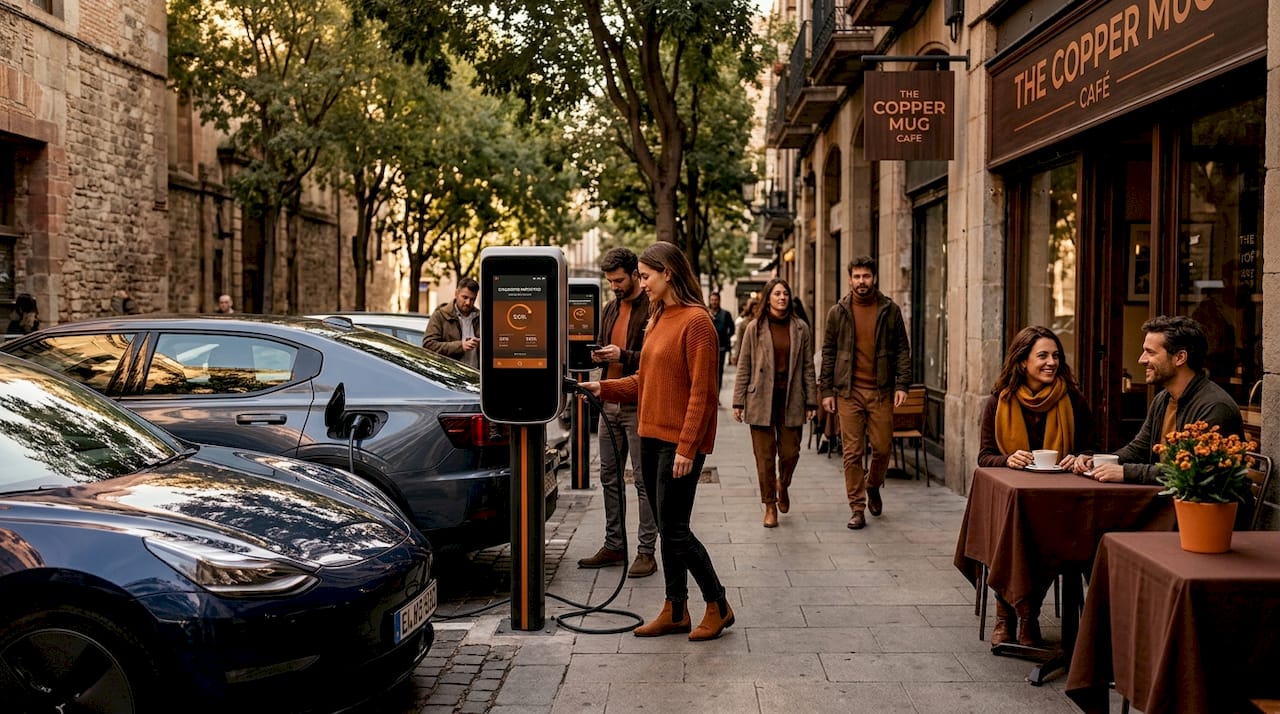
The lifecycle emissions picture is also compelling, though it comes with conditions. Research shows that grid decarbonization alone accounts for roughly a 30% reduction in battery electric vehicle lifecycle emissions, with advanced battery recycling adding another 15 to 18% on top of that. Combined, these two factors can reduce BEV lifecycle emissions by approximately 45% compared to baseline assumptions.
Here is what the emissions picture looks like across key scenarios:
- Internal combustion engine vehicles produce emissions at every mile driven, with no pathway to zero without fuel switching.
- Battery electric vehicles on a coal-heavy grid can still produce significant lifecycle emissions, though typically less than gasoline equivalents.
- Battery electric vehicles on a renewable-heavy grid produce dramatically lower lifecycle emissions, especially when battery recycling is factored in.
- BEVs paired with smart charging reduce their carbon footprint further by avoiding high-emission charging windows.
The takeaway is clear. EVs reduce fossil fuel use and emissions, but the magnitude of that reduction is not fixed. It scales with how clean the grid becomes.
Does grid carbon intensity change EV climate benefits?
The short answer is yes, significantly. Grid carbon intensity varies from roughly 317 gCO2e/kWh in the EU to approximately 874 gCO2e/kWh in India, based on 2022 averages. That is nearly a threefold difference, and it directly determines whether an EV charged in one country delivers the same climate benefit as one charged in another.
This variability creates a policy problem. Governments that subsidize EV purchases without accounting for their local grid’s carbon intensity may be funding vehicles that deliver far less climate benefit than advertised. Research suggests a carbon intensity threshold of 450 gCO2/kWh as the point where battery electric vehicles outperform hybrid electric vehicles on lifecycle emissions. Below that threshold, EV subsidies make clear environmental sense. Above it, the case weakens.
The timing of charging also matters more than most people realize. Smart charging aligned with periods of low grid emissions can meaningfully cut an EV’s total carbon footprint, particularly in regions where coal still dominates overnight generation. This is not a minor optimization. In coal-heavy grids, the difference between charging at peak coal generation versus peak solar generation can shift an EV’s emissions profile substantially.
| Grid type | Approximate carbon intensity | EV lifecycle advantage over gasoline |
|---|---|---|
| EU average grid | ~317 gCO2e/kWh | High |
| U.S. average grid | ~400 gCO2e/kWh | Moderate to high |
| India average grid | ~874 gCO2e/kWh | Low to marginal |
| 100% renewable grid | Near zero | Maximum |
Pro Tip: If you own an EV or are advising on EV policy, check whether your utility offers time-of-use rates tied to renewable generation. Charging during midday solar peaks or overnight wind windows can reduce your vehicle’s effective carbon footprint without any hardware changes.
What are the biggest challenges for EVs in the energy transition?
Rapid EV adoption creates real stress on local power grids, and that stress is not evenly distributed. Unequal charging access and grid constraint risks call for integrated energy and transport planning rather than isolated EV deployment. Without that coordination, the communities that need clean transportation most, often lower-income urban and rural areas, end up with the least reliable charging access.
The vehicle-to-grid concept, where EVs feed stored electricity back into the grid during peak demand, sounds like an elegant solution. In practice, it is more complicated. Battery aging depends on discharge depth, cycling frequency, and temperature, and economic models frequently overestimate V2G benefits by ignoring degradation costs. A battery cycled aggressively for grid support may lose range faster than the owner anticipated, which undermines both the financial case and consumer trust.
The infrastructure equity gap deserves more attention than it typically gets in policy discussions. Apartment dwellers, renters, and residents of older housing stock often cannot install home chargers. Public charging networks remain sparse in many regions. If EV adoption outpaces public charging infrastructure, the benefits of electric vehicles in sustainability will concentrate among wealthier homeowners while others are left out. You can read more about the practical side of this in Stacyknows’ breakdown of EV charging levels to understand what different infrastructure options actually mean for drivers.
Pro Tip: Policymakers designing EV incentive programs should require charging infrastructure deployment in multifamily housing and underserved communities as a condition of funding, not an afterthought.
Key infrastructure challenges to address:
- Grid upgrade requirements in neighborhoods with high EV density
- Public charging gaps in rural and low-income urban areas
- Battery degradation risks from aggressive V2G cycling
- Lack of coordination between transportation and energy planning agencies
How do policy and cost reductions shape EV adoption?
Cost is the most direct lever for EV market growth. A uniform 20% cost reduction in non-energy EV expenses, covering purchase price, insurance, and maintenance, could push global EV market share to 70 to 85% by 2035. That is a striking projection, and it underscores that the future of electric vehicles in energy depends as much on economics as on environmental conviction.
Policy sequencing matters just as much as policy generosity. Subsidizing EV purchases in regions where the grid is still heavily coal-dependent can create what researchers call a “sequencing trap,” where emissions goals may not be met during the vehicle’s lifetime. The smarter approach links EV incentives to grid decarbonization milestones, so subsidies scale up as the electricity supply gets cleaner.
There is also a positive feedback loop worth noting. Aggressive EV adoption stimulates renewable energy investment, with scenario modeling suggesting clean generation could cover EV demand entirely by around 2045. EVs create electricity demand, that demand justifies renewable buildout, and cleaner grids make each subsequent EV purchase more impactful. The cycle reinforces itself when policy supports both sides.
Comparing policy approaches helps clarify what works:
| Policy approach | Strength | Weakness |
|---|---|---|
| Flat EV purchase subsidy | Simple, broad uptake | Ignores grid carbon intensity |
| Grid-indexed EV incentive | Targets real emissions reductions | More complex to administer |
| Technology-neutral procurement | Encourages competition | May slow BEV-specific scaling |
| Charging infrastructure mandates | Addresses equity gaps | Requires upfront public investment |
The most effective EV adoption and energy policy frameworks combine cost reduction with clean energy standards, rather than treating vehicle electrification as a standalone program. Pairing EV adoption with clean energy policies produces greater emissions reductions than electrification alone, and that pairing is the defining factor in whether a country’s EV program actually moves the needle on climate.
Key takeaways
EVs reduce emissions and oil dependence most effectively when grid decarbonization, smart charging, and equity-focused infrastructure investment advance together.
| Point | Details |
|---|---|
| Grid carbon intensity is decisive | EV climate benefits scale directly with how clean the electricity supply is in each region. |
| Smart charging multiplies impact | Charging during low-emission periods reduces lifecycle emissions without any hardware changes. |
| Policy sequencing prevents the trap | Linking EV subsidies to grid carbon thresholds avoids funding vehicles that underdeliver on emissions. |
| Infrastructure equity cannot be optional | Charging access gaps in low-income and rural areas limit who actually benefits from EV adoption. |
| Cost reductions drive mass adoption | A 20% drop in non-energy EV costs could push global market share to 70 to 85% by 2035. |
Why EVs are not a silver bullet, and why that is okay
I have spent a lot of time reading through EV policy frameworks, and the pattern I keep seeing is this: governments announce ambitious EV targets, then treat the job as mostly done. It is not. The role of electric cars in green energy is real and significant, but it is conditional on decisions that happen outside the vehicle itself.
What I find genuinely encouraging is the feedback loop between EV adoption and grid investment. When communities commit to EVs, utilities have a concrete reason to build out renewables. That is not wishful thinking. It is showing up in scenario modeling and early real-world data. The lights do not dim on climate progress just because the path is more complicated than a simple swap from gas to electric.
What concerns me is the infrastructure equity gap. If we build an EV transition that works beautifully for homeowners with garages and solar panels, but leaves renters and rural residents behind, we have not solved the problem. We have just moved it. Policymakers who want to understand the full picture of how EVs are changing driving should look beyond adoption rates and ask who is actually being served.
The honest take is that EVs are one of the most powerful tools we have for decarbonizing transportation. They work best when they are part of a system, not a substitute for one.
— Stacy
Explore more EV and energy insights on Stacyknows
Stacyknows covers the practical side of the EV and clean energy shift in ways that are actually useful, whether you are a driver weighing your next car purchase or a policy researcher tracking adoption trends.

If you are thinking about whether an EV makes sense for your situation right now, the Stacyknows guide on getting an electric car in 2026 breaks down the real costs, benefits, and trade-offs with no fluff. And if you want to go deeper on the renewable energy side of the equation, including how solar panels pair with home EV charging, the team at France Habitat ENR has put together solid resources on that solar-EV connection. For more lifestyle reads that connect sustainability with everyday decisions, browse Stacyknows’ full content library and see what else resonates.
FAQ
How do EVs contribute to the energy transition?
EVs reduce oil demand and shift transportation energy use to electricity, which can be generated from renewables. As of 2025, EVs displaced approximately 1.8 million barrels of oil per day globally.
Does a dirty grid cancel out EV benefits?
Not entirely, but it significantly reduces them. Research shows that grids above 450 gCO2/kWh may produce EVs with lifecycle emissions comparable to hybrid vehicles rather than delivering the full climate benefit of battery electrics.
What is smart charging and why does it matter?
Smart charging means scheduling EV charging during periods when the grid runs on lower-carbon sources, such as midday solar or overnight wind. This practice can meaningfully cut an EV’s total lifecycle greenhouse gas emissions without any changes to the vehicle itself.
What are the main infrastructure barriers to EV adoption?
Unequal access to charging infrastructure, especially for renters and rural residents, is the most significant barrier. Grid upgrade requirements in high-density EV neighborhoods and battery degradation concerns around vehicle-to-grid services also slow deployment.
How much could cost reductions accelerate EV adoption?
A 20% reduction in non-energy EV costs, covering purchase price, insurance, and maintenance, could raise global EV market share to between 70 and 85% by 2035, according to research from Cornell University.
Recommended
- Types of EV Charging Levels: What Every Driver Should Know – Stacyknows
- How to Install a Home EV Charger in 2026 – Stacyknows
