
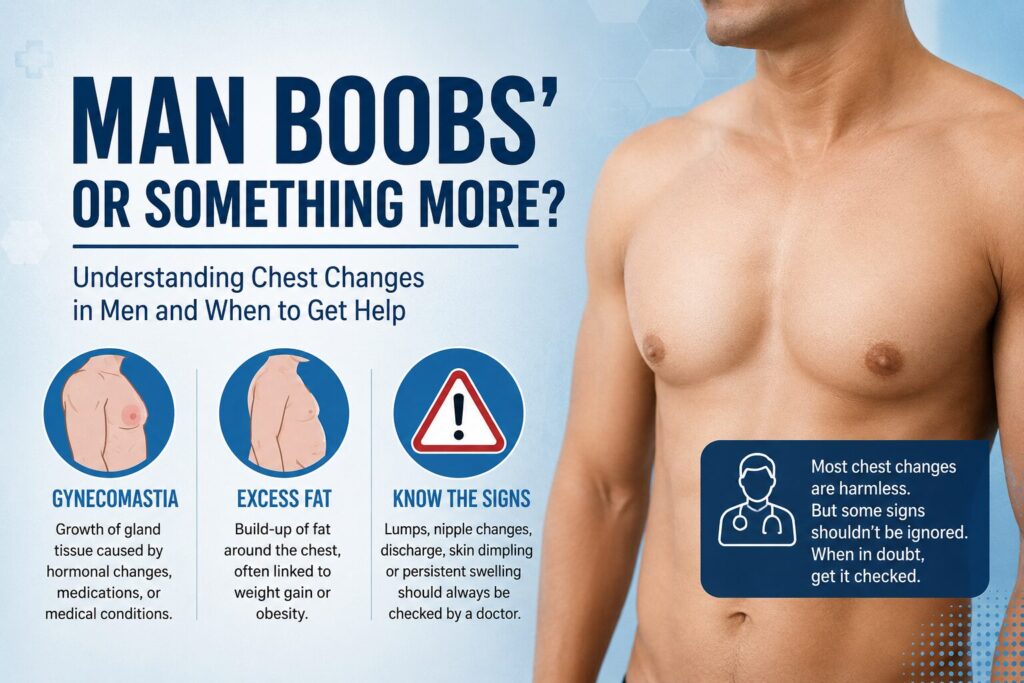
Many men notice changes in their chest at some point in life, but not every change means something serious. In fact, online searches for “man boobs” now top 300,000 per month, while interest in male breast cancer has risen dramatically over the past year.
According to experts, understanding the difference between common breast enlargement and a condition that needs medical attention can help men avoid unnecessary worry—or catch a problem early.
What Causes “Man Boobs”?
There are two main reasons men develop a larger chest.
Gynecomastia
Gynecomastia is the growth of actual breast gland tissue. It can occur because of:
- Hormonal changes
- Puberty
- Aging
- Certain medications
- Some medical conditions
This condition is common and is usually benign.
Pseudogynecomastia
Pseudogynecomastia refers to excess fat in the chest rather than enlarged breast tissue. It’s most often associated with:
- Weight gain
- Obesity
- Lack of exercise
Unlike true gynecomastia, this type often improves with weight loss and regular exercise.
Can It Be Prevented?
While hormones aren’t always under our control, experts recommend several habits that may reduce the risk:
- Maintain a healthy weight
- Do strength training and cardio regularly
- Limit excessive alcohol
- Avoid anabolic steroids
- Review medications with your doctor if chest enlargement develops
- Treat medical conditions that affect hormone levels
Does It Mean Breast Cancer?
Usually not.
Male breast cancer accounts for only about 1% of all breast cancer cases, and most men with enlarged breasts do not have cancer.
Still, it’s important not to ignore new or unusual changes.
Warning Signs Men Shouldn’t Ignore
Schedule a medical evaluation if you notice:
- A new lump, especially on one side
- Bloody nipple discharge
- A nipple that suddenly turns inward
- Skin dimpling or puckering
- Persistent swelling
- Swollen lymph nodes under the arm
- Pain that stays in one specific area
Early evaluation is important because breast cancer in men is often diagnosed later than in women.
Breaking the Stigma
Health experts say the increase in online searches is actually encouraging. More men are asking questions about their health instead of ignoring symptoms out of embarrassment.
Knowing the difference between normal breast changes, gynecomastia, and the warning signs of cancer can help men make informed decisions and seek care when needed.
Bottom line: Most enlarged male breasts are not cancer, but any new, persistent, or unusual change deserves a conversation with your healthcare provider.
