

The Standards of Excellence in Luxury Jewelry
Diamond necklaces represent an enduring symbol of elegance and personal significance. These exquisite pieces are often chosen to mark life’s most cherished moments, becoming treasured heirlooms passed down through generations. Whether celebrating an anniversary, a graduation, or simply expressing personal style, a diamond necklace holds a special place in any jewelry collection.
For those seeking to acquire a truly remarkable diamond necklace in Tucson, navigating the diverse market can be an exciting journey. We understand the importance of making an informed decision when investing in such a significant item.
In this comprehensive guide, we will explore the essential aspects of selecting the perfect diamond necklace. We will delve into the critical factors of diamond quality, examine classic and contemporary styles, and highlight unique customization opportunities available. We will also touch upon the regional influences that make finding a diamond necklace in Tucson a distinctive experience. To ensure you find the perfect piece, it is wise to consult with a Trusted Tucson diamond jewelry expert who can guide you through the selection process. Join us as we uncover the artistry and allure behind these magnificent jewels.
When considering a diamond necklace, understanding the foundational principles of diamond grading is paramount. These quality standards not only dictate the beauty and brilliance of the gemstone but also significantly influence its investment value and overall desirability. Reputable jewelers in Tucson, like those found in the city’s vibrant jewelry scene, adhere to stringent certification processes to ensure transparency and trust in every purchase. Gemstone certification from independent laboratories provides an objective assessment of a diamond’s characteristics, offering peace of mind to discerning buyers.
The 4Cs of Diamond Grading
The universally accepted standard for evaluating diamond quality is known as the “4Cs”: Carat, Color, Clarity, and Cut. Each of these elements plays a crucial role in determining a diamond’s aesthetic appeal and market value.
- Carat Weight: This refers to the diamond’s weight, not its size. One carat is equivalent to 200 milligrams. While a larger carat weight often correlates with a higher price, it is essential to consider how it balances with the other Cs. A heavier diamond with poor cut or clarity may not appear as brilliant as a lighter, well-cut stone.
- Color Grades: Diamonds are graded on a color scale from D (colorless) to Z (light yellow or brown). Truly colorless diamonds (D-F) are rare and command the highest prices due to their exceptional brilliance. Near-colorless diamonds (G-J) offer excellent value, appearing colorless to the untrained eye, especially when set in white gold or platinum.
- Clarity Scale: Clarity measures the absence of inclusions (internal flaws) and blemishes (external imperfections). The clarity scale ranges from Flawless (FL) to Included (I1, I2, I3). While Flawless diamonds are exceedingly rare, most eye-clean diamonds (VS1, VS2, SI1, SI2) offer superb beauty without visible imperfections.
- Cut Precision: Often considered the most crucial of the 4Cs, the cut refers to how well a diamond’s facets interact with light. A superior cut maximizes a diamond’s brilliance, fire, and scintillation. This is distinct from the diamond’s shape (e.g., round, princess). A poorly cut diamond, regardless of its carat, color, or clarity, will appear dull.
Here are some popular diamond cuts often seen in necklaces:
- Round Brilliant: The most popular and brilliant cut, known for its exceptional sparkle.
- Princess: A square or rectangular cut with sharp, uncropped corners, offering modern appeal.
- Emerald: A rectangular step-cut with long, elegant facets that create a “hall of mirrors” effect.
- Asscher: A square step-cut, similar to emerald but with larger facets and a distinct octagonal outline.
- Oval: An elongated brilliant cut that offers similar sparkle to a round diamond but appears larger.
- Pear: A teardrop shape, combining the brilliance of a round with the elegance of a marquise.
- Cushion: A square or rectangular cut with rounded corners, resembling a pillow, known for its soft, romantic appeal.
Sourcing and Ethical Standards
The provenance of diamonds has become an increasingly important consideration for consumers. Today, buyers are more informed about the origins of their gemstones, leading to a greater demand for ethically sourced diamonds. This includes both natural diamonds, extracted from the earth, and lab-grown diamonds, created in controlled environments.
Natural diamonds, formed deep within the earth over billions of years, carry a unique allure and a sense of timeless history. Reputable jewelers ensure that their natural diamonds are sourced through channels that adhere to strict ethical and environmental standards, often participating in initiatives like the Kimberley Process to prevent the trade of conflict diamonds.
Lab-grown diamonds, on the other hand, offer an attractive alternative. These diamonds possess the identical chemical, physical, and optical properties of natural diamonds, differing only in their origin. They are often promoted for their perceived lower environmental impact and can be a more budget-friendly option, allowing for larger or higher-quality stones within a specific price range. For instance, a Signature EcoLove Diamond Dreams 8-1/3 CTW 100 Facet Centurion Lab Grown Diamond Bridal Set, which includes necklace options, was recently observed at $11,999.00, a significant reduction from its original price of $38,549.95. Similarly, an EcoLove 1 CTW Lab Grown Diamond Solitaire 18-inch Pendant in 18KT Gold Vermeil was available for $849.95, down from $1,749.95. These examples highlight the accessibility and value proposition of lab-grown alternatives.
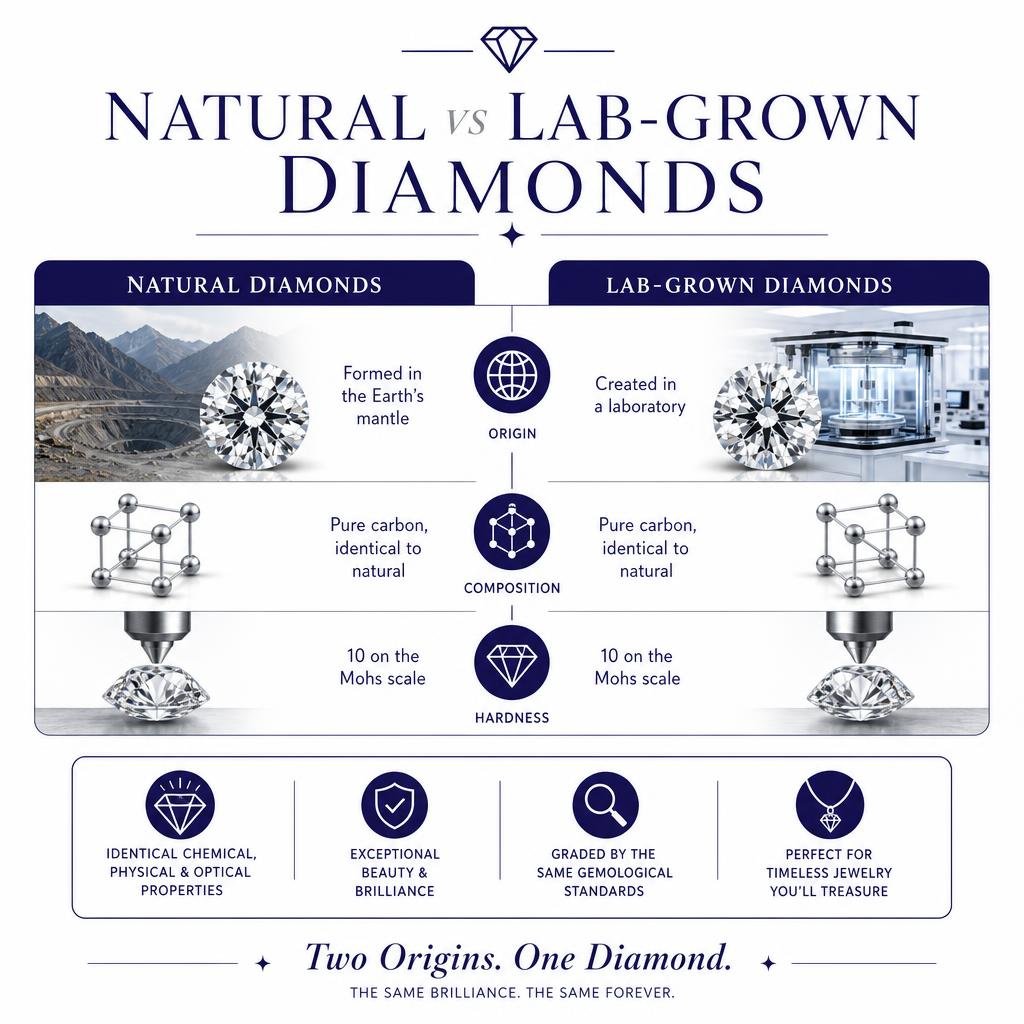
Feature Natural Diamonds Lab-Grown Diamonds Origin Formed in the Earth’s mantle Created in a laboratory Composition Pure carbon, identical to natural Pure carbon, identical to natural Hardness 10 on the Mohs scale 10 on the Mohs scale Optical Properties Identical brilliance, fire, and scintillation Identical brilliance, fire, and scintillation Rarity Finite resource, unique geological formation Can be produced on demand Price Point Generally higher Generally lower, often with significant discounts Environmental Impact Mining operations, but with increasing ethical standards Controlled environment, lower carbon footprint Certification GIA, AGS, IGI, etc. IGI, GCAL, GIA (for identification) Classic and Contemporary Diamond Necklace Styles
Diamond necklaces come in an astonishing array of designs, from timeless classics to cutting-edge contemporary pieces. Understanding these various styles and fashion trends can help you choose a necklace that not only complements your personal aesthetic but also offers versatility in styling. Many high-end jewelers offer a diverse selection. For example, a renowned establishment like Tiffany & Co. in Tucson – La Encantada provides an opportunity to explore a range of exquisite designs and experience luxury firsthand.
Solitaire Pendants as Essential Luxury Jewelry

The diamond solitaire pendant stands as an undisputed icon of elegance. Its beauty lies in its simplicity: a single, perfectly cut diamond set in a minimalist design, allowing the stone’s inherent brilliance to take center stage. This style is the epitome of everyday elegance, seamlessly transitioning from casual daytime wear to sophisticated evening events.
The single-stone setting is designed to maximize light exposure to the diamond, enhancing its sparkle. Solitaire pendants are available in various metal choices, including classic yellow gold, contemporary white gold, and romantic rose gold, each offering a distinct aesthetic. An 18-inch pendant, such as the EcoLove 1 CTW Lab Grown Diamond Solitaire, is a popular and versatile choice, resting gracefully just below the collarbone, making it suitable for a wide range of necklines.
Station and Multi-Stone Necklaces
Beyond the classic solitaire, station and multi-stone necklaces offer a different dimension of sparkle and design. These styles are perfect for those who appreciate continuous brilliance or prefer a more intricate look.
“Diamonds by the Yard” necklaces are a prime example of station necklaces. These feature multiple diamonds spaced evenly along a delicate chain, creating a continuous line of light that appears to float on the skin. The Phoenix Diamonds By The Yard Necklace, for instance, contains 18 Round Brilliant Cut Natural Diamonds, totaling approximately 1.22 carats, with G Color and VS-SI Clarity, showcasing the exquisite craftsmanship possible in this style. This type of necklace is incredibly versatile, ideal for layering with other chains or wearing on its own for understated glamour.
Multi-stone arrangements can also take the form of three-stone designs, symbolizing past, present, and future, or more elaborate clusters. The 14K White Gold 3-stone Pierced Diamond Large Rolo Chain Necklace, featuring 0.60 carat total weight of diamonds, exemplifies a contemporary multi-stone design. The rolo chain adds a distinctive texture, complementing the brilliance of the diamonds. These necklaces offer a dynamic visual appeal, often becoming focal points of an ensemble.
Custom Craftsmanship and Regional Influences
For those seeking truly unique expressions of personal style, custom craftsmanship offers an unparalleled opportunity to create bespoke luxury jewelry masterpieces. Tucson’s vibrant artisan community and specialized jewelers provide avenues for designing pieces that reflect individual tastes and regional aesthetics.
Designing Bespoke Luxury Jewelry Masterpieces

The journey of creating a custom diamond necklace is a deeply personal and rewarding experience. It begins with an artisan collaboration, where your vision is translated into a tangible design. Jewelers with in-house custom design studios, such as the Jared Foundry, empower customers to personalize every detail, from the choice of metals and gemstones to intricate design elements.
This process allows for the creation of custom settings that perfectly cradle your chosen diamonds, ensuring both security and optimal light performance. Personalized engraving can add a sentimental touch, transforming a beautiful necklace into a cherished heirloom. For those looking to refresh existing pieces, jewelry remodeling services can breathe new life into old treasures, incorporating new diamonds or redesigning settings to suit contemporary styles. The result is a one-of-a-kind piece that tells your unique story.
Regional Gemstones and Unique Accents
Tucson’s proximity to rich geological areas means that regional gemstones often find their way into local jewelry designs, adding a distinctive touch that celebrates the area’s natural beauty. Incorporating these unique accents with diamonds creates pieces that are not only luxurious but also deeply connected to the Southwest.
One such example is the Arizona amethyst, particularly those sourced from the iconic Four Peaks Mine. Known for its rich, perfectly purple hue, this gemstone is a stunning complement to diamonds. A One of a Kind 14K White Gold Arizona Amethyst & Diamond Necklace, priced at $6,950.00, showcases a brilliant diamond-cut Four Peaks Amethyst surrounded by a diamond halo, hanging from a refined diamond-accented chain. This piece is a gorgeous way to show love for Arizona and its unique natural treasures.
Another exquisite regional influence can be seen in pieces featuring chrysoprase accents. This vibrant apple-green gemstone, when paired with pave set white diamonds in 18K yellow gold, as seen in the MAOR Tucson Necklace priced at €4,631.95, creates a luxurious and sophisticated color contrast. These unique settings and combinations highlight the creativity and artistry available in Tucson’s jewelry market, offering options far beyond conventional designs.
Frequently Asked Questions About Diamond Necklaces
Investing in a diamond necklace is a significant decision, and naturally, many questions arise during the purchasing process. We aim to provide clear, concise answers to common consumer queries, offering a comprehensive guide to jewelry care and purchasing tips.
How do natural and lab-grown diamonds compare in value?
The comparison between natural and lab-grown diamonds in terms of value is a nuanced one. Natural diamonds, being a finite resource, have historically held strong long-term retention and resale value due to their rarity and geological origins. Their market value is influenced by global supply and demand, as well as the unique story of their formation over billions of years.
Lab-grown diamonds, while chemically and physically identical, are created in laboratories, allowing for a more controlled supply. This often translates to more accessible price points and significant discounts compared to their natural counterparts. For example, we noted an EcoLove 1 CTW Lab Grown Diamond Solitaire 18-inch Pendant priced at $849.95, originally $1,749.95, showcasing the potential for greater carat weight or higher quality within a similar budget. While lab-grown diamonds offer excellent immediate value and brilliance, their long-term retention and resale value are still evolving in the market. The choice often comes down to personal preference, budget, and ethical considerations.
What are the best practices for cleaning diamond necklaces?
Proper jewelry maintenance is crucial for preserving the sparkle and longevity of your diamond necklace. Diamonds, while durable, can accumulate oils, lotions, and dirt, diminishing their brilliance.
- Home Care: For routine cleaning, a gentle solution of warm water and mild dish soap is effective. Soak your necklace for 20-40 minutes, then gently scrub with a soft-bristled brush (like a soft toothbrush) to remove grime from around the diamond and setting. Rinse thoroughly under clean running water and pat dry with a lint-free cloth. Avoid harsh chemicals like bleach or abrasive cleaners.
- Professional Cleaning: We recommend professional cleaning at least once a year. Jewelers have specialized equipment, such as ultrasonic cleaners, that can safely remove stubborn dirt and restore your necklace’s original luster. Many Tucson jewelers offer complimentary cleaning services.
- Prong Inspection: During professional cleanings, jewelers will also conduct a crucial prong inspection. Prongs are tiny metal claws that hold the diamond in place. Over time, they can wear down or become loose, putting your diamond at risk. Regular inspections ensure that your diamond remains securely set.
How do I choose the right chain length for a pendant?
Selecting the appropriate chain length is essential for how a diamond pendant necklace will sit and complement your neckline. Chain styles and lengths vary widely, and understanding how they interact with different outfits and personal preferences is key.
- 16-inch (Choker/Collar): This length sits snugly around the base of the neck. It’s ideal for high necklines or for layering with longer necklaces.
- 18-inch (Princess): The most common and versatile length, an 18-inch chain typically rests just below the collarbone. It works well with most necklines and is a perfect everyday choice for a solitaire or small pendant. Many standard pendants, like the Phoenix Diamonds By The Yard Necklace, come with an 18-inch chain.
- 20-inch (Matinee): Falling a few inches below the collarbone, a 20-inch chain is suitable for business or casual wear and can complement lower necklines.
- 22-24 inch (Opera): This length often falls to the bust line or just below. It’s elegant for formal wear or over sweaters and turtlenecks.
- 30-36 inch (Rope): These long chains can be worn as a single strand or doubled for a layered look. They are typically reserved for more dramatic or bohemian styles.
Consider your typical wardrobe and the necklines you wear most often. A classic 18-inch chain is generally a safe and elegant choice for most diamond pendants, offering both comfort and style.
Conclusion
The journey to finding the perfect diamond necklace in Tucson is one filled with discovery, personal expression, and the pursuit of lasting beauty. From understanding the meticulous standards of diamond grading—the 4Cs—to exploring the origins of natural versus lab-grown diamonds, each step informs a more confident and meaningful purchase. We’ve delved into the timeless allure of solitaire pendants and the intricate charm of station and multi-stone designs, showcasing the breadth of styles available to suit every taste.
Tucson’s unique position also offers the exciting possibility of incorporating regional gemstones, such as Arizona amethyst or chrysoprase, into bespoke diamond pieces, creating jewelry that is as individual as it is exquisite. Whether you are drawn to the classic elegance of a renowned brand or the personalized touch of custom craftsmanship, the local market provides a rich tapestry of options.
Selecting a diamond necklace is about more than just acquiring a beautiful object; it’s about choosing a piece that resonates with your personal style, marks a significant moment, and becomes a cherished part of your story. With proper care and appreciation, your diamond necklace will not only maintain its dazzling brilliance but also serve as a lasting legacy, passed down through generations, forever sparkling with memories.
