
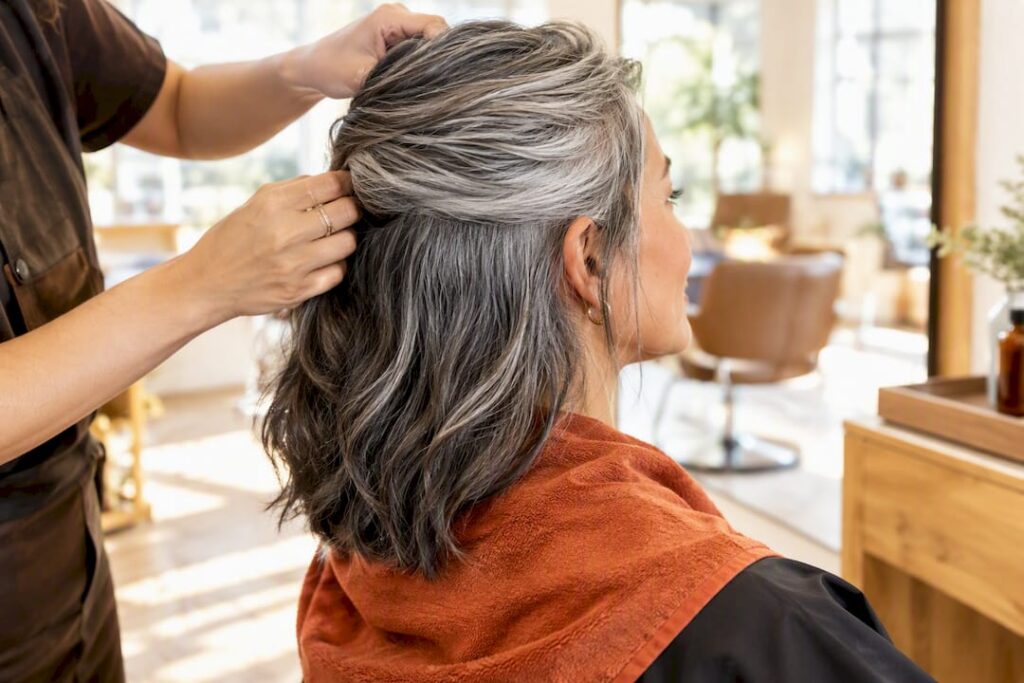
Most women transitioning to gray hair choose one of three routes: going cold-turkey, blending gradually with highlights and lowlights (the “quiet silver” method), or getting a shorter cut to speed things along. For shoulder-length hair, the full switch typically takes 6 to 12 months, with maintenance eventually shifting from root touch-ups to hydration and toning. If you want a softer, less noticeable grow-out, book a consultation with a colorist before you stop dyeing.
What Are the Main Approaches to a Gray Hair Transition?
The path you pick shapes everything, from your monthly budget to how you’ll feel looking in the mirror at month four. Here’s how the four most common approaches actually play out.
- Cold-turkey. You simply stop coloring. It costs nothing extra and requires zero salon appointments, but you’ll see a hard line between your natural gray roots and your old dyed color. Months three through eight tend to be the roughest stretch emotionally, since that’s when the demarcation is most visible.
- Gray blending, also called “quiet silver.” A colorist adds highlights, lowlights, or demi-permanent tint around your part and hairline to soften the line between old color and new gray. This is the technique Allure describes as the most seamless way to go gray, and it stretches the time between salon visits because the blend hides regrowth naturally.
- Stripping and retoning. A colorist removes your existing color in one or two sessions, then tones the whole head to match your natural gray faster than a slow grow-out. It’s quicker, but repeated stripping stresses the hair shaft, so colorists caution against overusing this method without pairing it with repair treatments.
- The big chop. Cutting hair short, sometimes into a pixie, removes most of the dyed length in one visit. It’s the fastest way to arrive at full gray, and some women find shorter cuts compress the visible transition to just three to six months. The tradeoff is living with short hair while you adjust.
None of these is objectively “best.” A busy schedule and a low tolerance for salon chairs point toward cold-turkey. A public-facing job might make blending the smarter call.
What Happens Month by Month During the Transition?
Growth rate matters more than most people realize. Hair grows about half an inch a month, so the math on when your roots meet your ends depends entirely on how much length you’re starting with.
- Months 0 to 3. Roots are visible but manageable. A deep side part, headbands, or scarves hide the line while you decide on a strategy. This is the window to book that first consultation if you’re leaning toward blending.
- Months 3 to 6. The demarcation line is at its most obvious, and this stretch is when confidence tends to dip the hardest. A strategic trim every six to eight weeks, plus blending highlights, keeps the contrast from looking accidental.
- Months 6 to 12. For many women with shoulder-length hair, this is the turning point where gray starts to outnumber the old color. Some opt for a shorter cut here to finish the job faster; others start noticing they’ve adjusted emotionally, too, with confidence climbing as the awkward phase gives way to a real turning point.
- Beyond 12 months. Long hair can take considerably longer to fully transition unless you cut it shorter along the way. Once you’re mostly or fully gray, maintenance becomes about occasional toning and keeping hair hydrated rather than fighting root growth.
Shorter styles simply move faster through this whole sequence, since there’s less old color left to grow out.
How Should You Care for Gray Hair During the Transition?
Gray hair behaves differently than pigmented hair. It’s typically drier and more porous, which means your old routine probably needs an update, not just a color change.
- Switch to a sulfate-free shampoo and conditioner for daily washing. Sulfates strip natural oils that gray hair already struggles to hold onto.
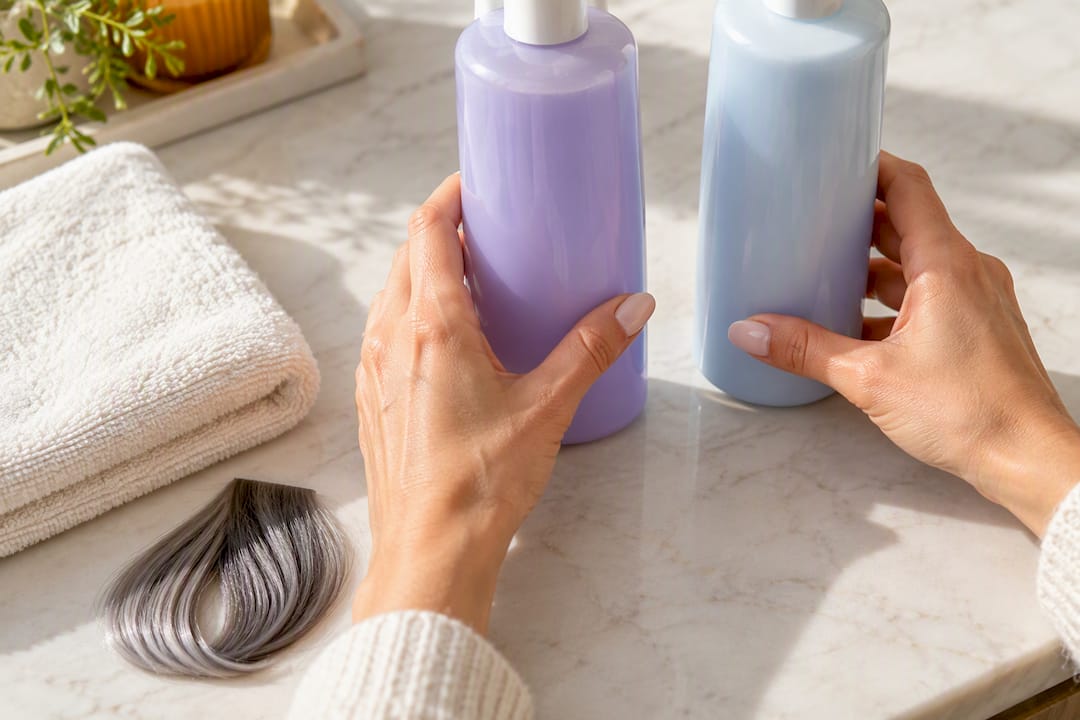
- Add a purple or silver toning shampoo, but use it sparingly. Overusing it can dull your color or deposit too much pigment, so once a week, or mixed with your regular shampoo, tends to work better than daily use.
- Deep-condition weekly with a hydrating mask to counter the extra porosity gray strands develop. A leave-in conditioner helps on days you skip the mask.
- Ask your colorist about an occasional gloss or toner if you notice yellow or brassy tones creeping in, especially if you swim or live somewhere with hard water.
- Use a clarifying or chelating treatment once a month if mineral buildup is dulling your shine.
Pro Tip: Alternate a moisturizing mask one week with a purple-toning wash the next. Doing both at once can leave gray hair overly matte; spacing them out keeps brightness and softness in balance.
If you’re unsure which toning product fits your hair, comparing purple and blue shampoo formulas before you buy saves you a wasted bottle.
How Do You Style Gray Hair to Look Intentional?
A few adjustments make the difference between looking like you’re “growing out a bad dye job” and looking like you planned this all along.
- Face-framing layers or curtain bangs soften the contrast between gray roots and darker ends better than a blunt, one-length cut.
- Swap warm blush and orange-toned lipstick for cooler berry or rose shades, which flatter silver tones instead of fighting them.
- Taupe and cool-gray eyeshadows read more polished against gray hair than warm bronze palettes.
- Jewel tones like emerald, sapphire, and deep plum make silver hair look rich rather than washed out; try them in scarves or statement jewelry if you’re not ready to overhaul your closet.
- A deep side part, loose braid, or textured wave disguises the demarcation line on days you don’t want to think about it.
When Should You See a Professional, and What Should You Ask?
A skilled colorist can shave months off the awkward phase, but only if you walk in with a clear plan.
Bring reference photos and say plainly whether you want a fast transition or a gradual blend. Ask which technique fits your hair, whether that’s a root smudge, babylights, or full French blending, and how many sessions and what budget that realistically involves. Pro colorists consistently recommend mapping the end goal first, then working backward into a technique, rather than guessing appointment by appointment.
- Ask if stripping your current color is safe for your hair’s condition, or if it’s too risky right now.
- Ask what repair treatments you’ll need if you’ve had years of processing.
- Confirm how often you’ll need toner refreshes and what to use at home between visits.
An Honest Note on the Emotional Side of Going Gray
There’s a stretch in every transition where you stop recognizing yourself in the mirror, and it’s usually not the actual gray that unsettles you. It’s the in-between. I’ve watched friends white-knuckle through months five and six, convinced they’d made a mistake, only to come out the other side prouder of their hair than they’d been in years.
The women who handle it best treat it like any other project: consult a stylist early, build a small product kit you trust, and give yourself permission to feel awkward for a while. That patience pays off. For more on aging with style rather than against it, ageless glamour is very much having a moment.
— Stacy Geisinger
Where to Start Building Your Gray Hair Care Kit
Stacyknows built its Beauty Secret Finds roundup for exactly this moment: when you know you need a hydrating mask and a decent purple shampoo but don’t want to gamble $30 on the wrong one. Selections in such roundups are editorial choices, and brand partnerships may be disclosed plainly.

If you’re past the product stage and thinking about the bigger picture, our Beauty Over 50 guide covers the styling and skincare shifts that pair well with going gray. Start with the roundup, pick two or three products that match what your hair actually needs right now, and give the routine six weeks before judging results.
Sources
- How to Transition to Gray Hair, According to Pro Colorists | Glamour
- Quiet Silver Is the Most Seamless Way to Go Gray | Allure
- How to transition dyed hair to gray (Good Housekeeping)
- The Grey Hair Transition Timeline: What – Art in Aging
FAQ
How Can I Transition to Gray Hair Gracefully?
The most graceful route for most women is gray blending, where a colorist adds highlights or lowlights to soften the line between dyed and natural color. Pairing that with regular trims and a hydrating haircare routine keeps the look intentional rather than accidental throughout the process.
What Does Gray Blending Typically Cost?
Cost varies widely by salon and how many sessions your hair needs, so there’s no single fixed price to quote. Ask your colorist for an estimate based on your hair length and how gradual you want the blend to be.
What Age Should You Start Transitioning to Gray Hair?
There’s no right age. Some women start in their late thirties as gray comes in naturally; others wait until their fifties or sixties. The decision comes down to readiness, not a number.
Can You Go Gray Without Looking Older?
Yes, and the details matter more than the color itself. Face-framing layers, cooler makeup tones, and jewel-toned clothing all help silver hair look deliberate and current rather than aging, and a well-timed haircut speeds up the transition so you’re not stuck in the awkward middle stage for long.
Recommended
- Beauty Over 50: Your Expert Guide to Glowing in 2026
- Women Over 50: Your Complete Health and Beauty Guide
- Purple Shampoo vs. Blue Shampoo: Which One Do You Need?
- Nobody Warned Me That Aging Would Change My Hair Too
