
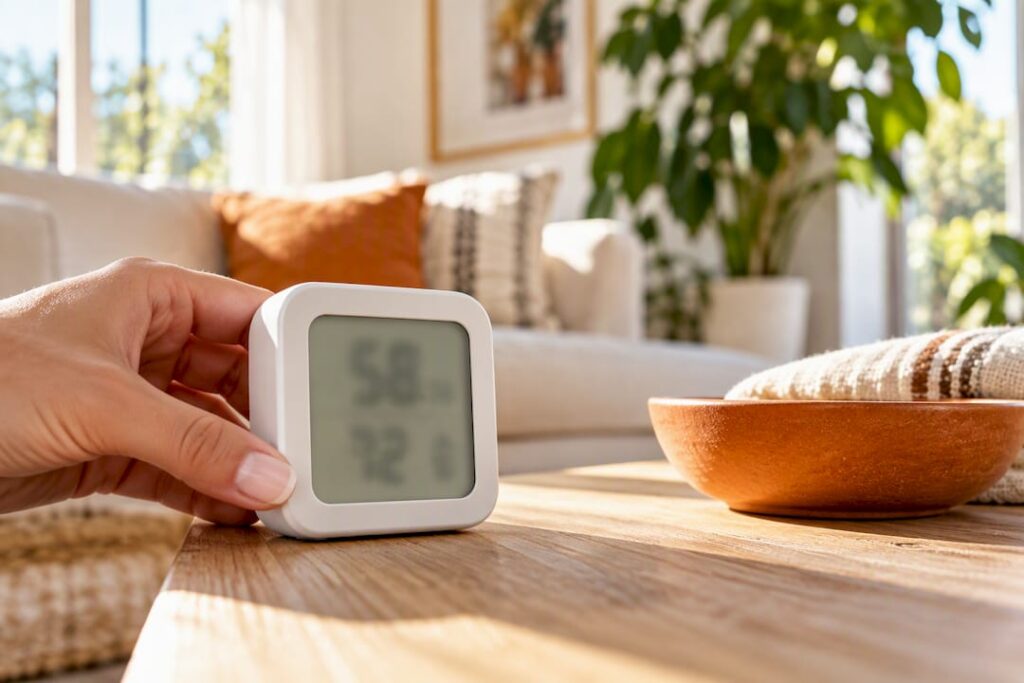
If your main problem is allergies, smoke, or dust, reach for an air purifier with a true HEPA filter. If it’s a dry throat, cracked skin, static shock, or wintertime humidity under 30%, a humidifier is the fix. Some homes genuinely need both. Grab a $10 hygrometer before you buy anything, and if you have asthma or a baby in the house, run your plan by a pediatrician or doctor first.
Air Purifier vs Humidifier: What a Purifier Actually Removes From Your Air
An air purifier pulls air through a filter and traps particles. It does not add or remove moisture. A true HEPA filter captures nearly all particles down to 0.3 microns, including most pollen, pet dander, dust, and fine particulate matter (PM2.5) that trigger allergies and asthma. Activated carbon layers, when included, grab odors and some gases, though they wear out faster than the HEPA layer and need more frequent swaps.
Two numbers matter more than any marketing claim: CADR (Clean Air Delivery Rate) and room size. A unit rated for a 150-square-foot bedroom will barely dent the air in an open-plan living room. Placement and run-time matter just as much as the filter itself. A randomized, placebo-controlled trial found HEPA purifiers cut bedroom PM2.5 substantially and measurably reduced medication use in adults with dust-mite allergic rhinitis after consistent use over six weeks.
Signs a purifier will help:
- You notice pet odor, wildfire smoke, or traffic pollution seeping in
- Allergy symptoms spike seasonally or near carpets and upholstery
- Someone in the house has asthma or COPD
The EPA’s guide to air cleaners is blunt about the ceiling here: no air cleaner removes every pollutant, so source control and ventilation still come first.
Air Purifier vs Humidifier: What a Humidifier Does for Dry-Air Symptoms
A humidifier adds moisture to the air. It does nothing to filter particles, dust, or allergens out of it. When relative humidity drops in winter, especially with forced-air heat running constantly, it shows up as dry sinuses, cracked lips, static-shocked doorknobs, and wood furniture that starts to creak and split.
Three main types exist, and they carry different contamination risks:
- Cool-mist ultrasonic or impeller models are quiet and energy-efficient but carry the highest risk of dispersing bacteria or mold if the tank isn’t cleaned, according to Mayo Clinic
- Evaporative humidifiers use a wick and fan, which naturally self-limits over-humidification
- Warm-mist/steam units boil water before releasing it, which kills some microbes but introduces burn risk
The EPA recommends keeping indoor relative humidity generally between 30% and 50%. Avoid using a humidifier if humidity is already high or condensation is visible on surfaces. That’s excess moisture looking for a place to grow mold, not a symptom of dry air.
How Air Purifiers and Humidifiers Affect Your Health Differently
These two devices solve opposite problems, and the clinical evidence backs different claims for each. Confusing them is the single most common mistake homeowners make when shopping for indoor air quality fixes.
Air purifiers have real trial data behind them. Beyond the allergic rhinitis study already mentioned, a randomized clinical trial on COPD patients found that people who consistently used portable HEPA cleaners saw measurable drops in respiratory symptoms and exacerbations. The catch is the word “consistently.” Benefits track directly with run-time and adherence, not the sticker on the box.
The 30% to 50% rule: EPA and Mayo Clinic both recommend indoor relative humidity to be maintained within this range to prevent dry-air symptoms and limit growth of dust mites and mold.
Humidifiers relieve genuine discomfort, sore throat, nosebleeds, dry cough, but the health risks run the other direction. Dirty tanks aerosolize whatever is growing in them, and cool-mist units are the worst offenders here. That’s a device-hygiene problem, not a reason to avoid humidifiers altogether.
Special-population notes worth flagging:
- Children and infants: stick to cool-mist humidifiers only, never hot steam
- Asthma sufferers: over-humidified rooms above 50% RH can worsen dust mite and mold exposure
- Immunocompromised household members: extra vigilance on humidifier cleaning schedules, since contaminated mist reaches the lungs directly
As Johns Hopkins Medicine notes, these devices serve genuinely different roles. Neither replaces the other.
Which Should You Choose? A Symptom-by-Symptom Decision Guide
Match the device to the specific problem in front of you, not to whatever’s on sale. Here’s how to sort it out room by room and symptom by symptom.
- Sneezing, itchy eyes, or a stuffy nose that flares near pets or dust → Air purifier. HEPA filtration is the tool built for particulates.
- Dry, cracked skin or a scratchy throat, especially in winter → Humidifier. This is a moisture deficit, not a filtration problem.
- Wildfire smoke, wood-burning stove smell, or heavy traffic pollution nearby → Air purifier, sized to CADR for the actual room, not the whole house.
- Static shocks, splitting wood furniture, or a hygrometer reading under 30% → Humidifier, ideally one with a built-in humidistat so it shuts off automatically.
- Both dry air and airborne allergens in the same room → Run both, but prioritize placement so neither blocks the other’s airflow.
- A nursery or child’s bedroom → Cool-mist humidifier only, paired with a smaller, quiet-mode purifier if allergies are a factor. Noise and burn safety outrank filtration power here.
- A single shared living space with mixed complaints → Start with whichever symptom is worse for the household, then reassess with a hygrometer after a week.
Budget shapes this too. A portable purifier covering one bedroom runs far less than whole-home HVAC filtration, and a small humidifier for one room is cheaper to run and easier to clean than a console unit trying to cover an entire floor.
Pro Tip: Buy the hygrometer before you buy the device. A $10 sensor tells you whether you actually have a humidity problem, an allergen problem, or both, so you’re not guessing with a $150 purchase.
Running an Air Purifier and Humidifier Together Without Growing Mold
Using both devices in one room is safe, and often the right call when you’ve got low humidity and airborne allergens at the same time. The key is sequencing and placement, not just plugging both in and walking away.
Set any humidifier with a built-in humidistat to stay in the 30% to 50% range, then confirm it with your own hygrometer rather than trusting the device’s internal reading. Keep the air purifier running continuously, especially during allergy season or while the humidifier is active, since moist air can make certain particles clump and settle rather than staying airborne for the purifier to catch.
- Place the purifier where air circulates freely, not wedged behind furniture or curtains
- Keep the humidifier’s mist stream away from the purifier’s intake vent
- Crack a window periodically for fresh air exchange, even in winter
- Pause the humidifier the moment you see condensation on nearby glass or feel the air turning damp
Good ventilation does more heavy lifting than most people assume. Running two machines in a sealed, stagnant room solves less than running one machine in a room that actually breathes.
The Maintenance Routine That Prevents Most Health Problems
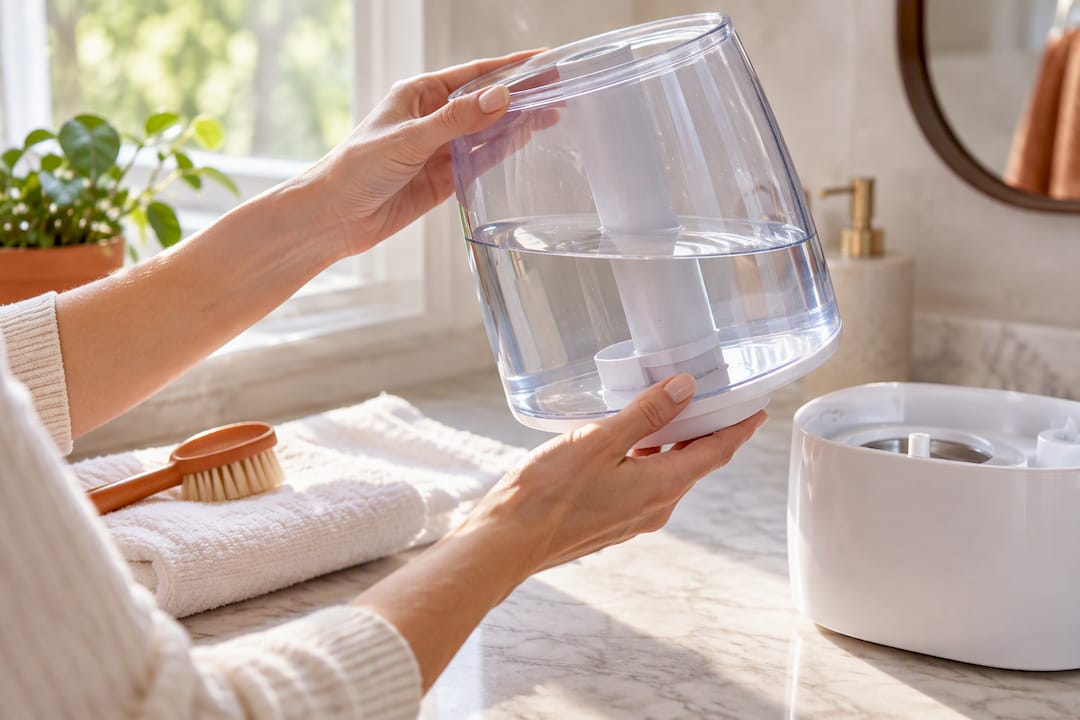
Most of the health risk tied to these devices doesn’t come from using them. It comes from skipping the cleaning schedule. The EPA’s care guidance is specific: empty and dry portable humidifier tanks daily, and scrub the reservoir every three days using a diluted solution, 3% hydrogen peroxide works when the manufacturer doesn’t specify otherwise.
- Use distilled or demineralized water in humidifiers to cut down on mineral “white dust” and scale buildup
- Replace purifier HEPA filters on the manufacturer’s schedule, and clean pre-filters monthly to extend their life
- Confirm any filter labeled “HEPA-type” is actually true HEPA; the terms are not interchangeable
- Watch for condensation, visible mold, or a fine white residue on furniture near the humidifier
Mayo Clinic recommends cool-mist humidifiers for kids’ rooms specifically to avoid burn risk from steam units, alongside the same daily-empty, regular-scrub routine.
Pro Tip: If seasonal allergy symptoms suddenly get worse after you start using a humidifier, check the tank before you blame pollen. A neglected reservoir can undo everything your purifier is doing.
What to Look for When You’re Actually Shopping
For a purifier, match CADR to your room’s square footage rather than trusting “covers up to X sq ft” claims at face value, and confirm true HEPA certification in the spec sheet, not just the product name. Factor in filter replacement cost and how easy it is to find replacements locally, since a cheap unit with expensive filters costs more over a year than a pricier one with accessible parts.
For a humidifier, a built-in humidistat is worth paying extra for, since it shuts off automatically once you hit your target range instead of relying on you to remember. Weigh tank size against refill frequency, and note the water type it recommends.
- Purifier: CADR matched to room size, true HEPA, carbon layer for odors, filter cost, noise level
- Humidifier: built-in humidistat, tank size vs. refill effort, evaporative vs. ultrasonic, water type required
The devices that get used consistently are usually the ones that are easiest to refill and clean, not the ones with the most features.
A Lifestyle-Minded Homeowner’s Honest Take
Pick the device that fixes today’s actual problem, then commit to its upkeep. A neglected humidifier can do more harm than good; a purifier left running quietly in the corner rarely does. When in doubt, measure first, guess second.
— Stacy Geisinger
More Home Comfort Reads on Stacyknows
Getting your indoor air right is one piece of a bigger healthy-home picture, and Stacyknows built its home and lifestyle coverage around exactly that kind of practical, no-fluff guidance instead of generic buying advice recycled from a spec sheet.

If moisture and mold are part of what’s driving your air quality concerns in the first place, our piece on crawl space repairs and healthier homes digs into the moisture sources most people never think to check. And if you’re working through a broader wellness refresh this year, not just your air but your routine, skin, and energy, our women over 50 health and beauty guide rounds up the same kind of measurement-first, no-guesswork advice you just read here. Start there, bookmark what’s useful, and come back for the next home-comfort checklist.
This article is general information, not a substitute for advice from a qualified doctor. Consult a qualified healthcare professional about your own circumstances before acting on anything here.
Sources
- Humidifiers: Ease skin, breathing symptoms – Mayo Clinic
- Effects of Air Purifiers on Patients with Allergic Rhinitis: a Multicenter, Randomized, Double-Blind, and Placebo-Controlled Study – PMC
- Guide to air cleaners in the home (EPA technical summary)
FAQ
Is a Humidifier or Air Purifier Better for Me?
It depends entirely on your symptom: allergies, smoke, or dust point to an air purifier, while dry skin, sore throat, or humidity readings under 30% point to a humidifier. Many households genuinely need both, just not always in the same room.
What Are the Downsides of Using an Air Purifier?
Air purifiers don’t add moisture, so they won’t help dry-air symptoms, and no unit removes every pollutant regardless of price, per EPA guidance. They also require ongoing filter costs and run best when sized correctly to the room, otherwise coverage falls short.
Should I Sleep With a Humidifier or an Air Purifier Running?
Either can run safely overnight, and the right choice again comes down to your symptom: a humidifier for dry throat or congestion, a purifier for allergens or smoke. If you run both, keep the humidifier’s mist away from the purifier’s air intake so it doesn’t clump particles before they can be filtered.
Can an Air Purifier Help With a Dry Throat?
Not directly. A dry throat is usually a moisture problem, and a purifier only filters particles rather than adding humidity. A humidifier paired with the EPA’s recommended 30% to 50% humidity range is the more direct fix.
Can I Use a Dehumidifier Instead of an Air Purifier?
No, they solve different problems entirely. A dehumidifier removes excess moisture to prevent mold and dust mites, while an air purifier filters particles like pollen, dander, and smoke out of the air regardless of humidity level.
Recommended
- DIY Troubleshooting for Common Air Conditioner Issues
- Emergency HVAC Situations: Signs You Should Call In HVAC Companies ASAP
- Tips for Choosing Energy-Efficient Windows
