
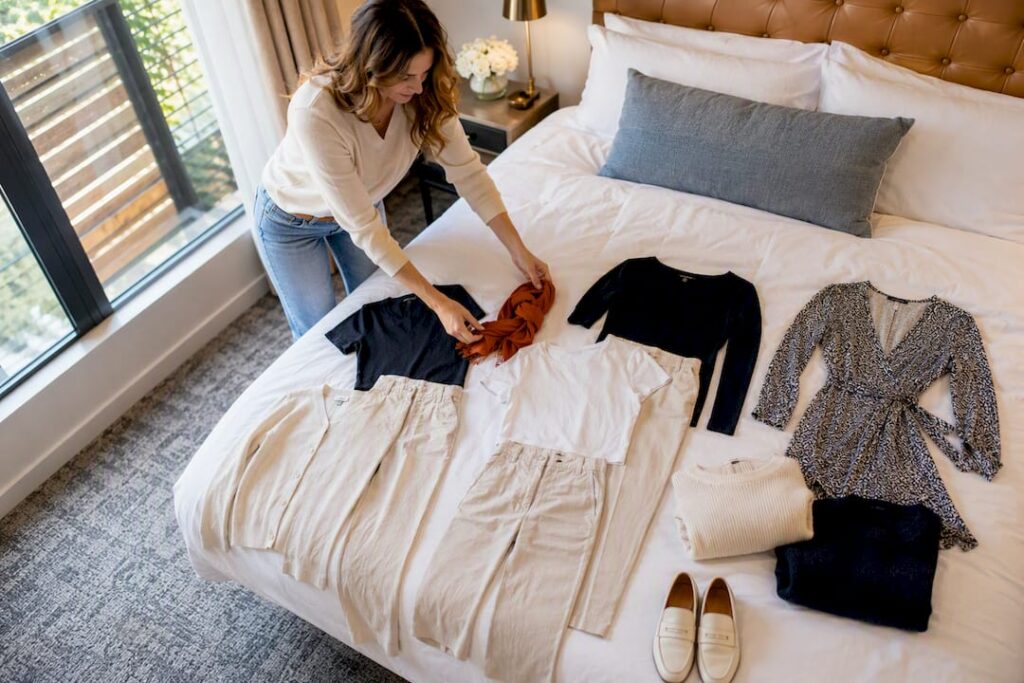
A travel capsule wardrobe is a small, coordinated set of clothes, usually 10 to 15 pieces, built around one neutral palette so every top pairs with every bottom. That coordination, not the item count, is what turns a handful of clothes into 10 or more outfit combinations that fit in a single carry-on. Do it right and you pack once, wear everything, and never touch a checked bag.
What Is a Travel Capsule Wardrobe, and Why the Counts Matter
Most women overpack because they pack for outfits, not for pieces. A travel capsule wardrobe flips that logic: you choose a small number of items that all talk to each other, and the outfits assemble themselves. For a one to two week trip, a practical piece count typically lands between 10 and 15 items, not counting underwear, socks, or sleepwear. That range isn’t arbitrary. It maps to how many days you’re gone and whether you’re planning a laundry stop along the way.
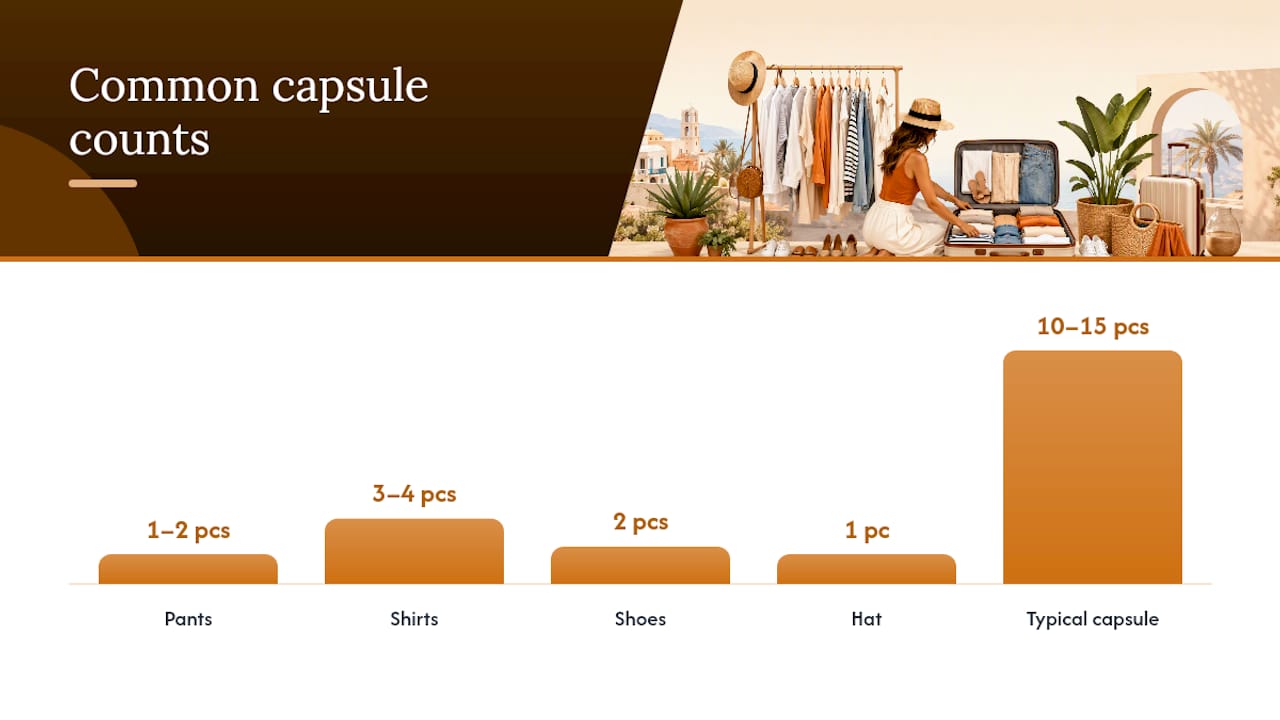
Here’s the part people miss: a 10-piece capsule with the right palette can outperform a 20-piece suitcase with none. A commonly used carry-on-friendly formula is 1 to 2 pants, 3 to 4 shirts, 2 pairs of shoes, and 1 hat, and it works because every shirt matches every pant. Coordination is the multiplier, not the closet.
Building your palette starts with three decisions:
- One core neutral that anchors most of your bottoms (black, navy, or a warm camel all work).
- One or two complementary neutrals for tops and layers (white, gray, or a soft blush).
- One accent color or print that shows up in exactly one or two pieces, so it reads intentional instead of random.
A palette built this way explains why 8 to 10 pieces can generate far more outfits than the math suggests at first glance. Every top goes with every bottom, every layer goes over every top, and the accent piece becomes your “going out” move without adding a second suitcase’s worth of options.
Palette discipline also solves a problem nobody talks about: decision fatigue on trip morning three, when you’re jet-lagged and just want to get dressed without thinking. A coordinated capsule means you can grab any two pieces blind and walk out looking pulled together. That’s the actual promise of a travel capsule wardrobe, not minimalism for its own sake, but fewer decisions and better outfits at the same time.
One more detail worth locking in early: wrinkle-resistant fabric matters as much as color. A 10-piece capsule built for a two-week trip leans on a coordinated palette of three neutrals plus one accent precisely because that combination survives suitcase compression and still looks fresh on arrival.
How To Build Your Travel Capsule Step By Step
Once your palette is set, building the capsule itself is a matter of filling categories in order, not grabbing favorites at random. Work through these in sequence and you’ll end up with a set where nothing is a dead weight item.
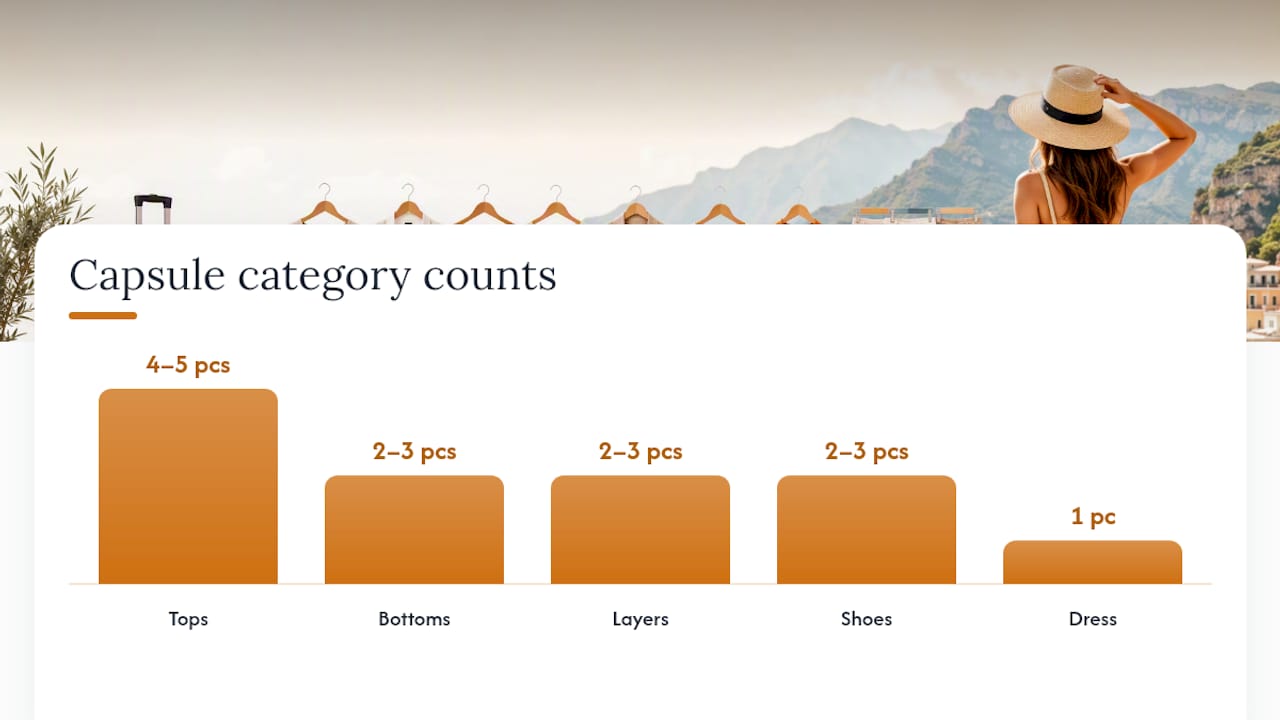
- Bottoms first (2 to 3 pieces). Choose one pair of pants, one pair of dark denim or travel-friendly trousers, and optionally a skirt or dress that works for evenings. Bottoms set the anchor color, so pick these before anything else.
- Tops next (4 to 5 pieces). Mix short sleeve, long sleeve, and one dressier option. Every top should work with every bottom you just chose. If it doesn’t, it doesn’t make the cut.
- Layers (2 to 3 pieces). A cardigan, a lightweight jacket, and possibly a blazer for anything business adjacent. Layers are your climate insurance and your outfit-changers.
- Shoes (2 pairs, occasionally 3). One walking shoe that can handle 10,000 steps and one dressier flat or low heel. A third pair only earns its space for a specific need, like a beach sandal or a real hiking boot.
- One dress. A single wrap or shirt dress that works belted, layered, or on its own does more outfit work per ounce than almost anything else you’ll pack.
- Accessories (a scarf, a belt, one statement piece of jewelry). These are what make a five-day rotation look like it wasn’t a five-day rotation.
The heuristic some travelers use to sanity check category counts is a version of the “5-4-3-2-1” rule: roughly five tops, four bottoms, three shoes, two jackets, one hat, then adjusted down based on trip length and whether laundry is part of the plan. Treat it as a starting scaffold, not a mandate. A three-day work trip needs far less than a three-week multi-city itinerary.
For every item you’re considering, run it through this four-part test before it goes in the suitcase:
- Does it pair with at least three other pieces already in the capsule?
- Can you wear it two or three times without it looking repeated (thanks to a scarf, layer, or shoe swap)?
- Does it resist wrinkling, or bounce back quickly if it does?
- Is it within your chosen palette, or is it the one approved accent piece?
If an item fails two or more of those questions, it’s a “leave it” no matter how much you love it at home. If it fails one, consider whether a quick alteration (hemming, a different color, swapping buttons) would fix it before your trip. This step-by-step process is also where reworking your own closet pays off. Before you buy anything new, it’s worth doing a real audit of what you already own to see how many of these categories you can already fill without a single purchase.
Pro Tip: Lay every candidate piece out on your bed before you pack, then physically pair each top with each bottom. If you can’t create at least six full outfits from what’s on the bed, your palette isn’t coordinated enough yet. Fix the palette before you fix the packing.
Packing Techniques That Keep a Carry-On Capsule Wrinkle-Free
The pieces matter, but how you pack them decides whether you arrive looking like you planned this or like you slept in a suitcase. The rules split cleanly by fabric type.
Roll soft, structured items; fold the rest. Knits, t-shirts, athletic wear, and anything jersey based roll well and take up less space than folding. Structured pieces, like blazers, button-down shirts, and anything with a stiff collar, hold their shape better folded flat, ideally between layers of tissue paper or inside a garment fold technique that keeps the crease points away from the fabric’s face.
Use a two-cube system. One packing cube holds tops and layers, the other holds bottoms and anything structured. Keep shoes and dense items (a toiletry bag, a folded belt, rolled socks) at the base of the suitcase near the wheels, where weight belongs. This isn’t just tidiness. A 13-piece carry-on capsule packed with cubes and organized by weight distribution is one of the more reliable ways to avoid checking a bag entirely, because cubes compress soft fabric and free up real inches you’d otherwise lose to loose folding.
Wear your bulkiest items on travel days. Your heaviest jacket, your densest jeans, and your bigger shoes should be on your body at the airport, not in your suitcase. This single habit, putting on the heaviest pieces instead of packing them, can cut your packed weight from those items by roughly a third, which is often the difference between a bag that zips easily and one you’re sitting on.
A few more moves that add up:
- Stuff empty shoes with rolled socks, a phone charger, or jewelry to use every cubic inch.
- Pack shoes in shower caps or produce bags so soles don’t touch clothing.
- Put your dressiest item on top, folded flat, so it comes out last and stays least disturbed.
- Save one packing cube’s worth of space empty for souvenirs or dirty laundry on the way home.
Pro Tip: If you’re torn between two similar tops, pack the one that rolls smaller. Volume, not weight, is usually what fills a carry-on first.
The Laundry Strategy That Lets You Pack Less for Longer Trips
Here’s the trick nobody tells you until you’ve already overpacked twice: the length of your trip should barely change your packing list if you plan a wash. Rewear plus one mid-trip laundry stop is a bigger lever on your suitcase size than any packing cube or folding hack. A two-week trip with one planned wash packs almost identically to a one-week trip with none.
That single laundry stop changes your math completely. Instead of packing 14 days of tops, you pack seven, wash midway, and repeat the rotation for the second half. Most hotels have either a laundry service or a sink, and even a budget-friendly laundromat visit costs less than checking a second bag both directions.
Fabric choice decides whether that plan actually works. Merino wool and technical synthetic blends resist odor, regulate temperature, and dry significantly faster than cotton, which is exactly what you need if you’re hand washing in a hotel sink overnight. Cotton holds moisture and takes a full day or more to dry; a merino t-shirt or a quick-dry travel top can go from wet to wearable in a matter of hours.
For the sink-wash itself:
- Hand wash with a travel-size packet of detergent or a dab of shampoo. It works in a pinch and every hotel has some.
- Roll the item in a towel and press firmly to wring out excess water before hanging. This alone cuts drying time dramatically.
- Hang near a fan, an open window, or the bathroom’s exhaust vent, never draped flat on a surface where air can’t circulate underneath.
- Wash at night so the piece has eight hours to dry undisturbed while you sleep.
Choosing merino wool or a quick-dry blend for a few key pieces gives you the flexibility to stretch a small rotation across a two-week trip without ever feeling like you’re wearing the same thing twice in a row.
Copy These Capsule Templates and Outfit Rotations
Theory is nice. What you actually want is a list you can screenshot. Here are two templates built for real trips, plus how the pieces recombine across a week.
Template 1: The 12-Piece City Capsule (fall or spring, 5 to 7 days)
- Dark straight-leg jeans
- Black tailored trousers
- White button-down shirt
- Striped or patterned long-sleeve top
- Black fitted tee
- Camel sweater
- Black cardigan
- Trench coat or lightweight jacket
- Wrap dress (navy or black)
- White sneakers
- Black ankle boots
- Neutral scarf
Template 2: The 13-Piece Warm-Weather Capsule (beach or resort, 7 to 10 days)
- Linen wide-leg pants
- Denim shorts
- White linen shirt
- Two tank tops (one solid, one striped)
- Lightweight midi dress
- Cover-up or kimono
- Swimsuit
- Light cardigan for air-conditioned restaurants
- Espadrille flats
- Leather sandals
- Straw hat
- Woven tote or crossbody bag
- Statement earrings
A seven-day rotation from the city capsule looks like this: Day 1, jeans with the white button-down and sneakers. Day 2, trousers with the striped top, cardigan, and ankle boots. Day 3, the wrap dress alone for dinner, scarf added for warmth. Day 4, jeans again with the black tee and trench, a completely different look from Day 1 despite reusing the pants. Day 5, trousers with the camel sweater. By Day 6 you’re mixing pieces you haven’t paired yet, like the striped top under the trench with jeans, and it still reads fresh because nothing has repeated in the exact same combination.
The accent pieces do the heavy lifting on formality. Swap sneakers for ankle boots and add the scarf, and a daytime outfit becomes dinner appropriate in under a minute. That’s the entire point of building a full capsule wardrobe around accessories that flex rather than clothes that don’t.
Shop the Capsule: What Is Actually on My LTK and ShopMy Right Now
The template works with what you already own, but if a category on your bed is empty, these are the exact pieces on my shelves right now. Every one of them plays nicely with a neutral palette and a carry-on.
- The dark jeans: AYR Yaya jeans ($285) – ShopMy
- The budget jeans: Express high-waisted cuffed palazzo jeans – LTK
- The white button-down: Carmine puff-sleeve button-up ($135) – LTK
- The striped top: Cezele striped top ($135) – LTK
- The camel crewneck: J.Crew tiny rollneck sweater ($138) – ShopMy
- The cashmere splurge: Ascent slouchy cable-knit ($428) – ShopMy
- The blazer (for the business-trip swap): Gabrielle tweed double-breasted blazer, The Noli Shop ($248) – ShopMy
- The walking sneakers: adidas Samba OG ($100) – ShopMy
- The quieter sneakers: Quince Italian leather low-profile ($94) – ShopMy
- The loafers: Ani ruched loafer ($278) – LTK
- The other loafers I like: Bibi Lou classic ruched ($170) – ShopMy
- The tote: Reformation Sofia tote ($648) – LTK
- The weekday tote: Alex Mill perfect weekday tote ($175) – ShopMy
- The belt: SHASHI Mia skinny belt ($108) – LTK
- The sunglasses: DIFF Hangtime ($79) – ShopMy
Still hunting the perfect trench, wrap dress and ankle boots for the shelf. For those, shop your closet first – you know the rules.
Affiliate note: these are my LTK and ShopMy links, so I may earn a commission if you buy through them, at no extra cost to you. I only link what I would actually pack.
Adjusting Your Capsule for Climate and Trip Type
A capsule built for a Chicago winter and one built for a Caribbean beach share almost nothing except the underlying method. What changes is fabric weight and which single-slot swaps you make.
Hot climate swaps: trade your wool sweater for a lightweight linen or cotton blend layer, swap ankle boots for sandals, and drop one long-sleeve top in favor of a second tank. Breathable natural fibers or moisture-wicking technical blends matter more than palette here, since you’ll be sweating through fabric more than wrinkling it.
Cold climate swaps: add one heavier layer (a real coat, not just a cardigan), swap sneakers for boots with actual tread, and consider merino base layers under everything else. Merino’s temperature regulation works both directions, keeping you warm without the bulk of heavier synthetic fleece.
Trip-specific single swaps:
- Business trip: swap the sundress for a blazer and add one more pair of tailored trousers.
- Active sightseeing: swap one dressy shoe for a second walking-friendly pair with better support.
- Beach trip: add a cover-up and swap the cardigan for a lighter kimono style throw.
A third shoe or an extra layer earns its spot only when the trip genuinely spans two climates, like a city stop followed by a coastal leg, or when a single activity (a hike, a black-tie dinner) can’t be handled by anything already in the capsule. Otherwise, resist the urge. The whole system breaks down the moment you start packing “just in case” pieces that don’t pair with anything else.
Stacy’s Rules for Packing Light Without Looking Like You Did
Three rules run through everything I recommend here. First, palette before pieces, always. Second, if it can’t do double duty (day to night, hot to air-conditioned), it doesn’t earn suitcase space. Third, plan the wash before you plan the outfits.
My favorite functional pieces are almost boringly simple: a wrap dress that photographs well in five different styling combinations, and one merino or merino-blend top that survives a sink wash overnight. Neither is flashy. Both do more outfit work than anything trendy.
For deeper reading, the complete capsule wardrobe breakdown covers year-round building beyond travel, and closet-shopping strategies will save you money before you buy a single new piece.
Why I Think Most Capsule Wardrobe Advice Overcomplicates It
Most capsule wardrobe content treats packing light like an aesthetic, all beige linen and 33-piece spreadsheets. That’s not how real trips work. You don’t need strict minimalism. You need a palette that pairs, a couple of pieces that rewear without looking repeated, and a plan for one laundry stop.
Where the conventional advice falls short is in pretending count is the goal. Ten pieces of unrelated clothing is worse than fifteen pieces built around one neutral and one accent. The number is a symptom of good coordination, not the cause of it.
If you take one thing from this guide, prioritize the palette conversation before you touch a suitcase. Buying a “travel capsule” off a checklist without adapting it to colors you already own and love is how women end up with clothes they never wear again after the trip. Build from your closet first. Add only what’s missing.
— Stacy Geisinger
Your Next Step: Turn This Into an Actual Packed Bag
Reading about capsule counts is one thing. Actually laying pieces on your bed and making the cuts is another, and that’s where most of us stall out. If you want the packing side handled first, our carry-on packing checklist built for up to two weeks walks through exactly what fits in one bag, so you can pair it with the templates above without any guesswork on luggage size.

If you’d rather build a wardrobe that works travel and everyday life at once, the 22-piece capsule wardrobe guide expands on the palette method here into a full closet system, not just a suitcase. And if the whole idea of organizing what you own (travel pile or not) feels like the bigger project, designing a closet that actually works for your real life is worth a look before your next trip prep turns into a bedroom floor covered in clothes.
For more of the styling side, that mix of what to wear and where to wear it, browse Stacyknows’ fashion and event coverage for ideas that extend past the suitcase and into the trip itself.
Sources
- Ultralight Packing List: How to Pack Light & Travel With 1 Bag
- How to Build a Travel Capsule Wardrobe – 2026 Pack Lightly
- 2-week international trip packing list: every essential
- How to Pack a Travel Capsule Wardrobe (Carry-On Only)
FAQ
How Many Pieces Should Be in a Travel Capsule Wardrobe?
Most one to two week trips work well with 10 to 15 pieces, not counting underwear and sleepwear, as long as everything shares one coordinated palette.
Do I Need to Buy New Clothes for a Travel Capsule Wardrobe?
No. Start by auditing what you already own for pieces that share a neutral palette; you can shop your existing closet before buying anything new.
What Fabrics Work Best for a Travel Capsule?
Merino wool and technical synthetic blends resist odor, regulate temperature, and dry faster than cotton, which makes them ideal for pieces you plan to hand wash and rewear.
Should I Roll or Fold My Clothes for a Carry-On Capsule?
Roll soft knits and jersey fabric to save space; fold structured pieces like blazers and button-down shirts to keep their shape.
How Do I Stretch a Small Capsule Across a Two-Week Trip?
Plan one mid-trip laundry stop and choose quick-dry, rewearable fabrics so a seven to ten day rotation can cover a full two weeks without extra pieces.
Can a Travel Capsule Wardrobe Fit in a Carry-On Only?
Yes. A roughly 13-piece capsule combined with packing cubes and wearing your bulkiest items (jacket, jeans, heavier shoes) on travel days is a reliable way to avoid checking a bag.
Recommended
- Carry On Only: Packing List to Fit Up to Two Weeks
- Don’t Travel Without This: The Emergency Kit That Saves Your Vacation
- Six Products, One Quart: Travel Skincare Routine for Busy Travelers
