
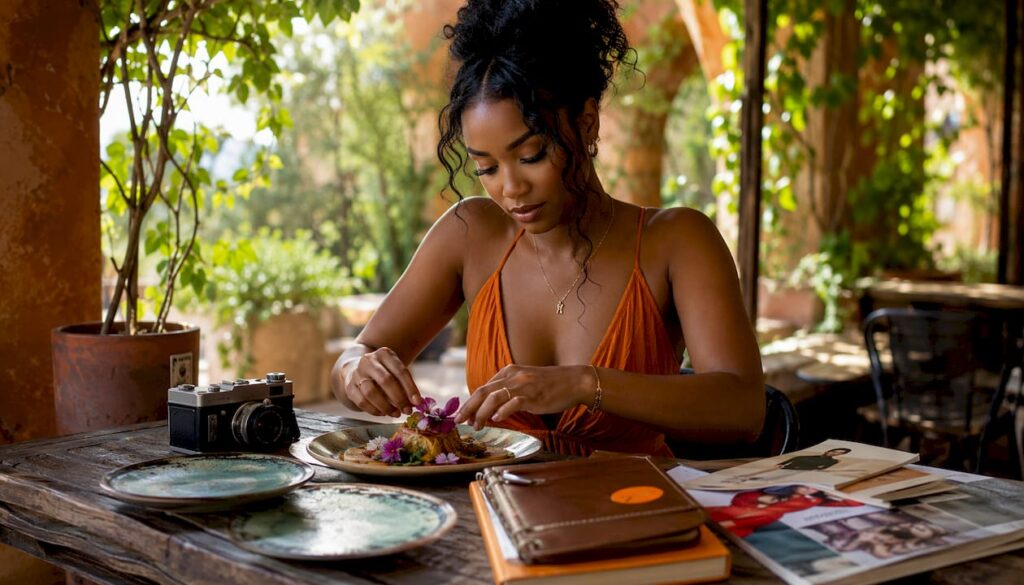
Food, Fashion, and Fun is a visual lifestyle where meals, style, and playful experiences intentionally overlap to create shareable moments. Think of it as the sweet spot where what you wear, what you eat, and where you show up all tell the same story. This article gives you exactly that: concrete examples to inspire you, styling tips for photos that actually pop, creators worth following, and a simple checklist to plan your own themed event.
Here’s your quick-start snapshot:
- Cultural insight: Restaurants and runways now speak the same visual language. A meal at the right table signals taste and identity just as clearly as an outfit does, especially among Gen Z.
- Photo tip: Match one color in your outfit to one element on the table. A terracotta linen top against a warm ceramic bowl reads as intentional, not accidental.
- Try this today: Style a single dish with a contrasting napkin and one fresh herb garnish, then photograph it from directly above. That’s a complete content moment.
Why food and fashion feel so natural together right now
The pairing isn’t new, but the momentum behind it is. Three forces are pushing food and fashion closer together: the experience economy, visual social culture, and identity signaling.
The experience economy shifted consumer desire away from owning things toward feeling things. Immersive dining is now designed to be memorable and shareable well beyond the food itself. Lighting, music, tableware, and service choreography all shape how guests remember an occasion. Restaurants are competing on atmosphere as much as on the menu.
Visual social culture did the rest. A single post can demonstrate identity whether the focus is an outfit or a dish. Food choices and venues function as status signals and cultural fluency markers, particularly for younger consumers who treat their feeds as curated self-portraits.
The historical thread runs from early 20th-century Parisian café culture, where artists and designers shared tables as a deliberate social performance, through the 1980s power-lunch era, and into the Instagram decade that made every meal a potential editorial. What changed most recently is the commercial layer: luxury fashion houses now open in-house restaurants and partner with celebrity chefs to extend dwell time and build emotional affinity with their customers.
Dining functions as a living brand showpiece. When a fashion house opens a restaurant, it transforms a retail visit into a longer, more intimate experience. The guest lingers, absorbs the brand’s palette and textures, and leaves with a feeling that no shopping bag alone could deliver.
Concrete ways the food and fashion world shows up
The intersection plays out across a surprisingly wide range of formats. Here are the ones you’re most likely to encounter or recreate:
- Fashion-house pop-up cafes: A brand opens a limited-run café that mirrors its current collection. Tableware echoes the season’s palette, the menu references the brand’s heritage, and every surface is photographable. Fashion-branded dining treats menus like a collection brief: seasonality, texture, and narrative shaped with the same rigor as a runway show.
- Chef-designer collaboration dinners: A chef and a designer co-create an evening where the food and the tablescape are conceived together. Guests dress to the theme. The result feels like attending a private show.
- Food-print apparel moments: Strawberry-print sundresses at a farmers market, pizza-slice earrings at a street food festival, or a cherry-motif tote at a winery. Food-themed fashion shows up in both street style and editorial contexts, and it photographs beautifully against food-forward backgrounds.
- Editorial table shoots: A styled flat lay or overhead tablescape treated like a fashion editorial. Props, flowers, ceramics, and a single hero dish are arranged with the same eye as a clothing spread.
- Marketplace and artisan stalls: Local food markets where vendors style their stalls with textiles, handmade signage, and seasonal color stories. Attending in a coordinated outfit turns the whole visit into content.
Pro Tip: Pick one sensory detail per post and repeat it across your feed. A recurring color, texture, or unusual service moment builds a recognizable aesthetic far faster than a mix of unrelated one-off images.

How to style food-forward photos: outfits, color, and composition
Start with occasion and composition, not calorie counts or nutrition claims. The most shareable food content presents dishes as formats and experiences, not as health data. A whipped cottage-cheese bowl with honey and walnuts is a moment. Lead with the visual, not the macros.

Color and texture coordination is where most people leave easy wins on the table. A few principles that hold up:
| Element | Do | Don’t |
|---|---|---|
| Outfit + tableware | Match one tone (warm terracotta, sage green, deep navy) | Wear busy prints that compete with the dish |
| Napkins + garnish | Echo a color from your clothing in the garnish | Use paper napkins in a styled shot |
| Background surface | Linen, wood, or stone for warmth | Stark white unless the dish has strong color contrast |
| Lighting | Natural side light, golden hour | Overhead fluorescent or direct flash |
2026 trend signals worth leaning on when planning your visuals or menu:
| Trend | Signal | Visual angle |
|---|---|---|
| Sweet-heat flavors | Chili-crisp formats surging | Deep red oils, dramatic drizzle shots |
| Cottage cheese formats | Rising demand for whipped bowls | Soft white textures, honey pour shots |
| Fiber-forward ingredients | Growing consumer interest | Earthy greens, grain textures, rustic ceramics |
| Theatrical tableside moments | ADM culinary outlook highlights “big-impact bites” | Smoke, sauce pours, dramatic plating |
Shot checklist for a complete content set:
- Hero dish (tight, overhead or 45-degree angle)
- Outfit detail (sleeve, accessory, or shoe against a food prop)
- Tablescape wide shot (full scene, styled)
- Candid reaction (mid-bite, mid-laugh, genuine)
For outfit formulas that translate well to food-forward settings, the 2026 fashion style guide on Stacyknows is a solid starting point.
U.S. creators and projects worth following right now
These accounts and features represent the clearest examples of the food-fashion-fun lifestyle in practice. Study their composition choices, caption style, and how they handle brand partnerships.
- @doingitforthefood (Instagram): A U.S.-based account built around the idea that showing up for a great meal is its own reward. Follow it for candid dining content, outfit-to-venue coordination, and the kind of genuine enthusiasm that outperforms polished studio shots every time.
- @foodfashionandfun (Instagram): The account that most directly names the intersection. It blends food styling, personal style, and event content in a format that reads like a lifestyle magazine brought to life. Study how captions connect the outfit to the occasion.
- Boomer Magazine’s “Flavorful Fashion” feature: An editorial piece that treats food motifs in clothing as a legitimate style category, not a novelty. It’s a useful reference for understanding how mainstream lifestyle media frames the food-fashion pairing for a broad audience.
- Byrdie’s food-themed fashion coverage: Tracks food-inspired jewelry, printed fabrics, and playful accessories as they move through street style and editorial contexts. Useful for spotting which food motifs are trending before they peak.
When you study these accounts, look at three things: how they frame the first frame of a video or the hero image of a post, how they write captions (story-first or list-first), and which brand partnerships feel native versus forced.
How brands can use dining as a creative platform
Dining builds something most marketing channels can’t: dwell time and emotional warmth in the same moment. A guest who sits for ninety minutes in a space shaped by a brand’s aesthetic absorbs far more than a customer who scrolls a product page for thirty seconds.
Three low-risk tests any brand or creator can run:
- Limited-time pop-up: A one-weekend café or tasting station tied to a product drop or seasonal moment. Measure social engagement and foot traffic, not revenue.
- Branded menu for a launch: Partner with a local chef to create three to five dishes that reflect the brand’s color story and ingredient philosophy. Serve it at a press or community event.
- In-store café day: Convert a retail corner into a café for a single afternoon. The goal is dwell time and email sign-ups, not food sales.
Luxury experiential dining as a brand strategy is covered in depth on Stacyknows for readers who want the broader context. Industry reporting consistently recommends piloting limited-time offerings before committing to long-term hospitality investments. Social engagement, press pickup, and email sign-ups are the three metrics worth tracking from day one.
How to plan a small food and fashion event
A themed dinner or pop-up doesn’t require a big budget. It requires a clear concept and a short checklist.
Core planning checklist:
- Concept: Name the aesthetic. “Terracotta harvest dinner” or “neon street food pop-up” gives every vendor a brief to work from.
- Venue: Look for spaces with natural light, interesting surfaces, and flexible layout. Rooftops, loft studios, and garden spaces photograph well and often rent affordably for a half-day.
- Menu and chef: A local chef or caterer who understands the visual brief is worth more than a technically superior one who plates without intention.
- Stylist or wardrobe brief: Send guests a two-line dress code tied to the concept. “Warm earth tones, no logos” is enough to unify a group photo.
- Photographer: Book someone who shoots food and people. A food-only photographer will miss the candid moments; a portrait photographer will miss the tablescapes.
- Permits and logistics: For outdoor or public-space events, check local permit requirements at least four weeks out. For private venues, confirm catering and alcohol rules in writing.
Timeline:
Six to eight weeks out: Lock the concept, venue, and chef. Brief the photographer and send the dress code to guests.

Two to three weeks out: Finalize the menu, source tableware and props, and confirm all vendor logistics. This is also the window to reach out to local artisans for handmade ceramics, florals, or textiles. Sourcing locally reduces waste and gives the event a story worth telling.
Day of: Allow two hours for setup before guests arrive. Shoot the empty tablescape first. Capture the food as it arrives. Shift to candid guest shots once the meal is underway. Music sets the pace throughout. Thoughtful music planning for private events can carry a dinner from a quiet opening to a lively close without a single awkward silence.
Budget posture:
- Low (DIY, under $1,000): Home or backyard setting, potluck-style menu, borrowed or thrifted props, a friend with a good camera. The concept does the heavy lifting.
- Medium (vendor partners): Rented venue, one hired vendor (chef or photographer), a small prop budget. Offset costs by inviting a local artisan to display work in exchange for the exposure.
- High (full curated experience): Professional venue, full vendor team, custom tableware, and a dedicated content creator. Treat it as a brand investment with measurable outputs.
For community-scale ideas, the community events guide on Stacyknows has practical low-budget formats that translate well to themed dining.
On sustainability: Ask your chef to build the menu around what’s in season locally. Use reusable or compostable tableware. Partner with a local florist who composts arrangements after events. These choices reduce waste and make the event’s story more compelling, both in person and online.
Why this intersection matters to Stacyknows
The food-fashion-fun space sits right at the heart of what Stacyknows covers: the moments where lifestyle, creativity, and community come together in ways that feel genuinely worth sharing. Covering this intersection means paying attention to how people express themselves through the experiences they choose, not just the products they buy. That’s the thread that runs through Stacyknows’ work on events, dining culture, visual storytelling, and style.
If you’re curious about the broader lifestyle picture, the beauty finds and lifestyle content on Stacyknows connects the same sensory, visual thinking to beauty, wellness, and personal style.
Sources and further reading
These are the sources that shaped this article, selected for depth and authority. Each one is worth bookmarking if you want to go further.
- Food & Fashion, FIT Museum: The academic and curatorial foundation for understanding food motifs as cultural commentary in fashion history. Start here for the deeper “why.”
- Is Niche Dining Fashion’s Next Frontier? — Vogue: The clearest mainstream editorial treatment of branded dining as a fashion-industry strategy. Useful for understanding the commercial logic.
- 2026 Global Culinary Trend Outlook — ADM: The practitioner-facing trend report behind the theatrical dining and big-impact bites claims in this article.
- Food Trends 2026 — Tastewise: Demand-signal data on the fastest-rising food formats. Useful for menu planning and content calendars.
- Top Restaurant Food Trends for 2026 — James Beard Foundation: James Beard Award-recognized chefs on what’s shaping dining culture this year. Grounded in real kitchen perspective, not just consumer data.
This article draws on both editorial reporting and practitioner insight. Where trend data is cited, the source and its scope are noted directly.
Recommended
- What Is a Foodie? Destinations, Trends, and Gifts – Stacyknows
- Chic Charity Nights That Double as Social Wins
- Food Blogger Tips: How to Build a Successful Blog – Stacyknows
- StacyKnows | Connecting Cool People to Cool Things – Stacyknows
