
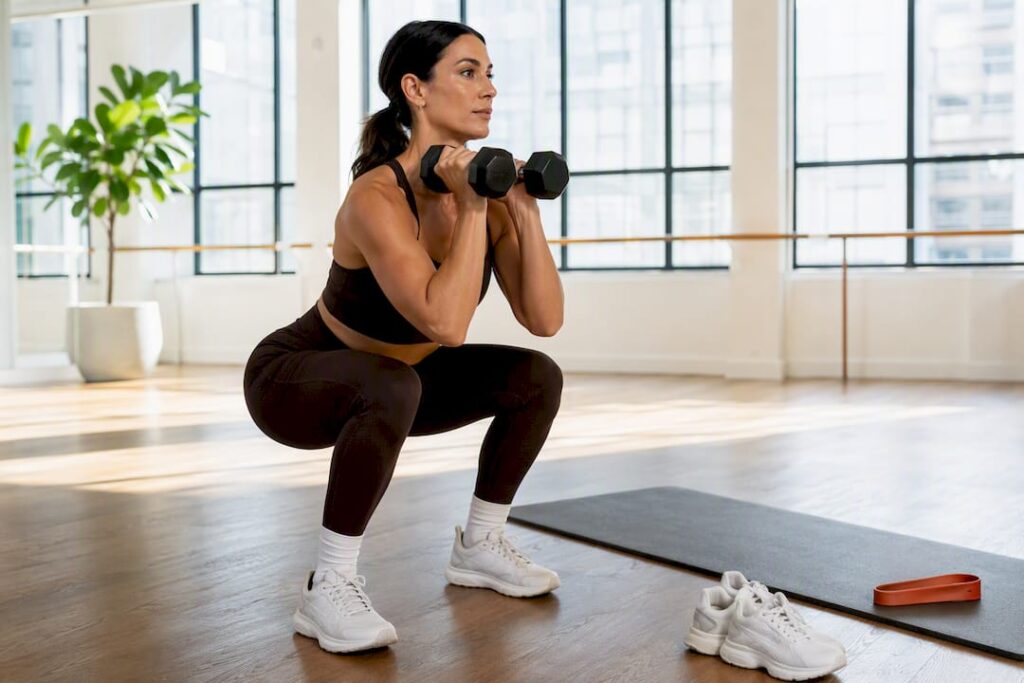
Cycle syncing workouts to your menstrual cycle is worth trying, but treat it as personalization, not a rulebook. Push harder in your follicular and ovulation phases, when energy and strength tend to peak, and pull back to gentler movement during your period and late luteal phase. If your cycle is irregular, you’re on hormonal birth control, or you have an underlying condition, check with your doctor before restructuring your training around it.
What Does Cycle Syncing Workouts Actually Look Like By Phase?
Your hormones swing from week to week, and that swing changes how your body responds to a hard set of squats or a 5K tempo run. Cycle syncing workouts means matching your training load to those four phases instead of running the same routine every single week regardless of how you feel.
Menstrual phase (roughly days 1 to 5). This is your lowest hormone point, and a lot of women feel drained, crampy, or just flat. Aim for a few sessions this week, and keep them gentle: walking, restorative yoga, light mobility work, or an easy swim. If you genuinely feel strong, there’s no rule against a moderate session, but this isn’t the week to chase a personal record.
Follicular phase (the days after your period leading up to ovulation). Estrogen starts climbing, and most women notice better energy, sharper focus, and improved tolerance for harder training. This is your window for progressive overload: add weight to your lifts, extend your HIIT intervals, build running volume. Your body recovers faster here, so back to back training days are usually more manageable.
Ovulation (the day you ovulate). Estrogen peaks and testosterone gets a brief boost, which is often when women feel their strongest and most explosive. Cleveland Clinic’s guidance points to this window, alongside the follicular phase, as the best time for higher intensity training like heavy lifting or sprint work. It’s a reasonable time to attempt a lift PR or a hard interval session, though ligament laxity rises slightly around ovulation, so warm up properly before anything explosive or high impact.
Luteal phase (the days after ovulation until your next period). This one has two distinct halves. Early luteal, progesterone rises gradually and most women can still train at a solid, moderate intensity. Late luteal is a different story: progesterone and estrogen both drop, basal body temperature climbs, and workouts that felt easy two weeks ago can suddenly feel much harder. That’s not in your head. The temperature shift raises perceived effort and pushes your body to burn more fat for fuel, which changes how a session feels even when your fitness hasn’t changed at all.
Common modifications by symptom:
- Bloating or cramping: swap heavy compound lifts for lower impact strength work or resistance bands.
- Low energy or brain fog: shorten your session rather than skipping it entirely.
- Poor sleep: drop one high intensity day and add a walk instead.
- Joint sensitivity near ovulation: extend your warmup and avoid maxing out on unfamiliar movements.
Pro Tip: If a session feels harder than usual and you’re in late luteal, don’t assume you’re losing fitness. Log the date, finish a lighter version of the workout, and compare notes next cycle before you change anything permanently.
How Do You Start Tracking Your Cycle For Workouts?
You don’t need a lab test to start cycle syncing workouts. You need a record of what your body actually does, and a little patience before you act on it.
- Pick a tracking method. A basic calendar works, but a symptom log or a period-tracking app captures more useful detail: energy level, sleep quality, flow, mood, and how a workout felt (its RPE, or rate of perceived exertion, on a 1 to 10 scale).
- Log for one to two full cycles before changing anything. Tracking your pattern for one to two cycles reveals your personal rhythm, which almost never matches a textbook 28-day model exactly.
- Map your current program onto what you find. If your hardest lifting day already falls in what turns out to be your late luteal week, that’s useful information. Move it, don’t overhaul the whole week.
- Adjust one variable at a time. Shift intensity first, then volume, then exercise selection. Small changes are easier to evaluate and easier to stick with.
If you’re on hormonal contraception or your cycle is irregular, calendar-based syncing won’t give you much to work with, since the hormone fluctuations a natural cycle produces are blunted or absent. Cleveland Clinic recommends tracking by symptoms and energy instead of dates in that case: log how you feel each day and train around that pattern rather than a theoretical phase.
What Does The Research Actually Support?
The honest answer: less than most wellness content implies, though there’s a real signal worth acting on.
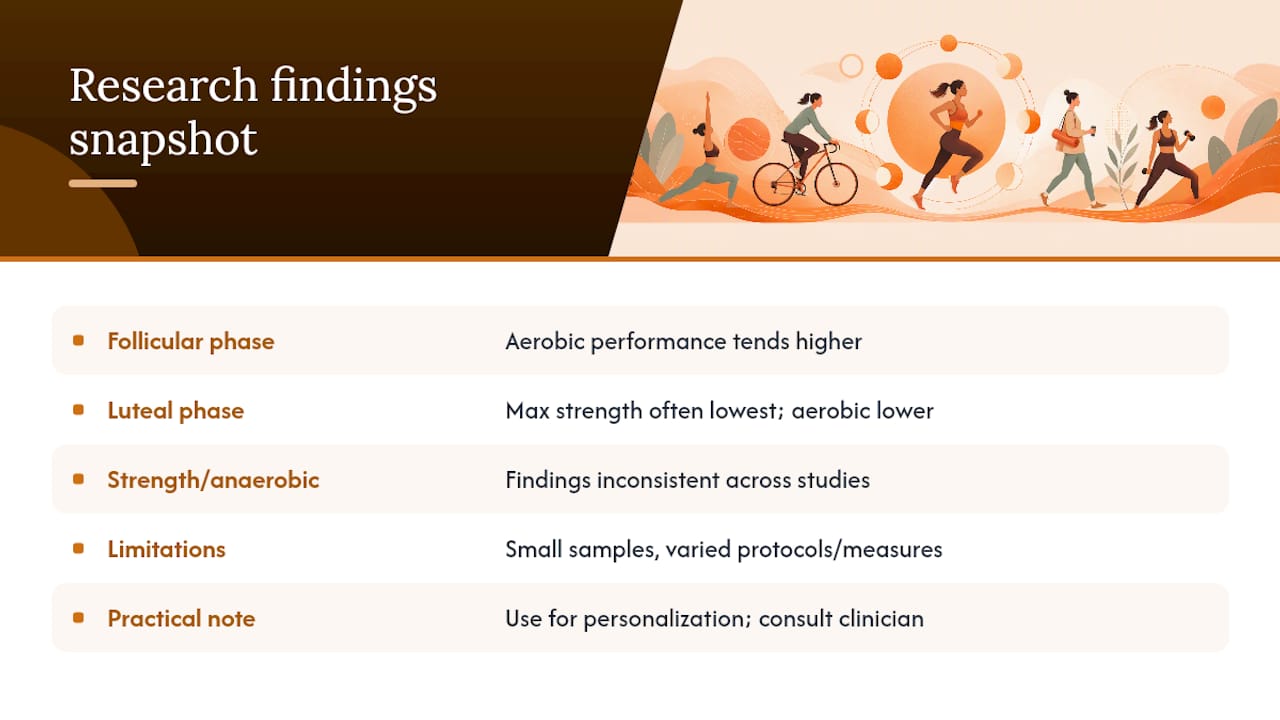
A 2025 narrative review pulling together multiple studies found that aerobic performance tends to run higher during the follicular phase than the luteal phase, and that maximum strength is often lowest during the luteal phase, though the effect size and consistency vary a lot between studies.
That’s the strongest evidence-backed pattern in the current literature, and it lines up with what Cleveland Clinic recommends in practice. Strength and anaerobic performance findings are far less consistent across studies. Small sample sizes, inconsistent testing protocols, and wide variation in how researchers measure “performance” all make it hard to draw universal rules about lifting heavy during any specific week.
That’s likely to shift. Journalism coverage of the field notes that trials testing periodized, cycle-based training are underway or wrapping up, and their results could sharpen guidance on whether training by phase actually improves outcomes over time. Until then, treat cycle syncing as a personalization tool, not a guarantee. If you have PCOS, endometriosis, amenorrhea, or any condition affecting your cycle, talk to a clinician before restructuring training around phase, since the general patterns above may not apply to you.
What Does A 4-Week Cycle Syncing Plan Look Like?
Here’s a template built around a standard 28-day cycle. Adjust the day counts if yours runs shorter or longer, since the phase, not the calendar date, is what matters.
- Week 1, menstrual: A few gentle sessions such as walking, mobility work, restorative yoga, or light swimming.
- Week 2, follicular: Multiple sessions with rising intensity. Gradually add load to lifts, extend HIIT intervals, build running mileage.
- Week 3, ovulation: One or two peak sessions. This is your window for a heavy lift attempt or a hard interval workout, with a thorough warmup.
- Week 4, luteal: Early luteal, maintain moderate training. Late luteal, taper intensity and lean on recovery work like foam rolling, easy cardio, or yoga.
If your goal is strength, keep your heaviest lifting concentrated in weeks 2 and 3, and use week 4 for accessory and mobility work. If endurance is the priority, build your longest run or ride in week 2, and treat week 3 as a tune-up rather than a max effort.
Stacy’s Perspective: Realistic Tips For Real Life
I didn’t overhaul my whole routine. I made one change first, protecting rest days during my period instead of white-knuckling through spin class. Consistency matters more than precision here: keep your weekly structure the same, just dial intensity up or down. If you’re navigating bigger hormonal shifts, my perimenopause routine changes might sound familiar.
Eating And Recovering Right For Each Phase
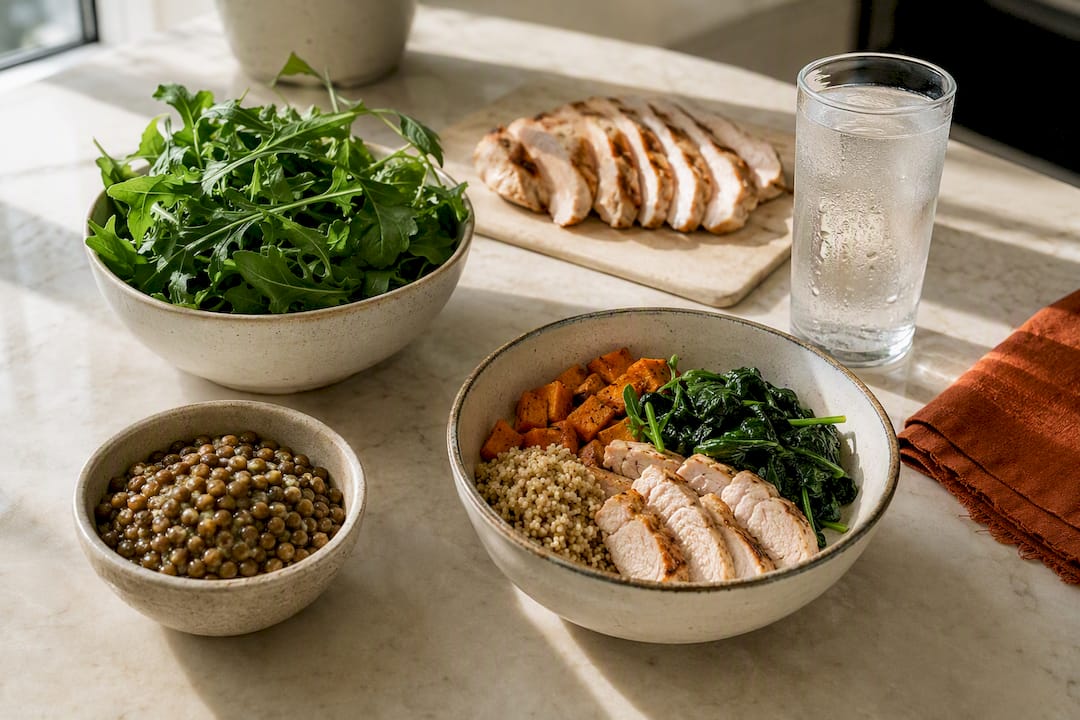
Nutrition and hydration matter just as much as the workouts themselves, and they should shift alongside training load. During your period, iron losses go up, so leafy greens, lentils, or lean red meat help offset that, along with steady water intake to counter bloating. In the follicular phase, when you’re pushing intensity, prioritize enough protein to support the extra training stress, something worth pairing with smart supplement choices like the ones covered in Stacyknows’s guide to creatine for women. Around ovulation, keep hydration high since body temperature runs slightly warmer. In the luteal phase, cravings often spike as progesterone rises. That’s your body asking for more calories, not a willpower failure, and pairing smaller, more frequent meals with complex carbs tends to work better than restriction. If sustainable fat loss is part of your goal, Stacyknows’s weight loss strategies guide covers how to do that without fighting your own hormones.
Staying consistent through four different hormonal weather patterns is the real challenge, more than picking the right exercises. Motivation naturally dips in late luteal and during your period, and that’s expected, not a sign you’re falling off track. Giving yourself permission to plan lighter, shorter sessions during those windows instead of skipping entirely can help protect momentum better than an all-or-nothing mindset. Rotating in a favorite class, a friend’s walking date, or an outdoor session when motivation is low can be helpful. The goal is showing up in a form that fits the day, not matching last week’s output.
Cycle syncing also needs to flex around your actual fitness level and goals. Beginners get more benefit from focusing on consistency across all four phases before fine-tuning intensity by week. Advanced lifters or runners chasing a specific event may want to time peak training blocks around follicular and ovulation weeks deliberately, using luteal weeks as built-in deload periods. Either way, the framework bends to fit your training age and goals. It isn’t a fixed script everyone follows the same way.
— Stacy Geisinger
Want More Realistic Wellness Ideas From Stacyknows?
If you’re the type who wants fitness advice that fits into an actual week, not a fantasy one, Stacyknows built its wellness coverage around exactly that. You’ll find practical takes on what’s worth your time and what to skip, starting with our breakdown of current fitness trends worth trying, plus deeper dives on supplements and hormone transitions for anyone building out a fuller routine.

Cycle syncing works best as one piece of a bigger picture, alongside good nutrition, honest recovery habits, and realistic expectations about what any given week can hold. Stacyknows covers all of it, from sustainable weight loss approaches to beauty and lifestyle finds that make the rest of your routine easier to stick with. Subscribe to Stacyknows or browse our lifestyle and wellness coverage for more ideas you can actually use this month, not just someday.
This article is general information, not a substitute for advice from a qualified doctor. Consult a qualified healthcare professional about your own circumstances before acting on anything here.
Sources
- Narrative review: menstrual cycle effects on exercise performance (2025)
- Nutrition and Exercise Throughout Your Menstrual Cycle — Cleveland Clinic
- Cycle-based workouts: what the science actually supports for women | Miami Herald
FAQ
Does Cycle Syncing Actually Work?
The evidence is mixed but not empty: a 2025 narrative review found real patterns in aerobic performance and strength across phases, though effects vary between individuals, so it works best as a personalization tool rather than a guaranteed formula.
What Is The 3-3-3 Rule For Workouts?
This isn’t a cycle syncing concept, and definitions of it vary widely across fitness content, so there’s no single agreed-upon version worth stating as fact here.
How Long Does It Take To See Results From Cycle Syncing?
Give it one to two full cycles just to learn your personal pattern before expecting noticeable changes, then another six to eight weeks after adjusting your program to judge whether the changes are actually helping.
Is There A Workout App That Can Help Me Sync My Cycle?
Several period-tracking apps now include workout guidance, and Cleveland Clinic recommends pairing whichever app you use with your own symptom log for the most accurate picture of your pattern.
What Should I Do If My Cycle Is Irregular?
Track your symptoms and energy day to day instead of relying on calendar dates, and talk to a clinician if irregularity is new, sudden, or paired with other symptoms.
Recommended
- Navigating Perimenopause? Here’s What I Added to My Morning Routine
- Should You Work Out Fasted of Fed
- What’s In, What’s Out, and What Actually Works Now in Fitness
