

Women over 50 represent a generation rewriting what midlife looks and feels like. Age 50 marks real hormonal and metabolic shifts, including the menopause transition, that change how your body responds to food, exercise, and skincare. The good news is that these changes are manageable. With the right habits, this decade becomes one of the most confident and self-aware of your life. This guide covers the fitness routines, nutrition strategies, skincare adjustments, preventive screenings, and mental wellness practices that actually move the needle.
What are the best exercise routines for women over 50?
The 150-minute weekly target for moderate aerobic activity is the medical standard for women in this age group. That breaks down to 30 minutes of brisk walking, swimming, or cycling five days a week. It is achievable, and the payoff is significant.

Strength training deserves equal attention. Bone mineral density declines fastest during perimenopause and early post-menopause, making resistance work two to three times weekly a non-negotiable for skeletal health. Lifting weights or using resistance bands preserves muscle mass, supports your metabolism, and protects your joints as estrogen levels fall.
Balance training is the piece most women skip, and it matters more than most realize. Exercises like single-leg stands, yoga, and tai chi reduce fall risk and support long-term independence. Adding just 10 minutes of balance work to your existing routine creates a meaningful protective effect over time.
Here are the four movement categories to build your weekly routine around:
- Aerobic exercise: Walking, swimming, dancing, or cycling for at least 150 minutes weekly
- Strength training: Free weights, resistance bands, or bodyweight exercises at least 2 days weekly
- Balance work: Yoga, tai chi, or single-leg exercises to reduce fall risk
- Flexibility: Stretching or Pilates to maintain range of motion and reduce stiffness
Pro Tip: Start strength training with a certified personal trainer for two or three sessions. Learning correct form early prevents injury and makes every future workout more effective.
How should women over 50 adjust their diets for heart and bone health?
The menopause transition signals a clear need to shift toward a lower-sodium, plant-forward diet with increased protein. Estrogen decline raises cardiovascular risk, which means what you eat directly affects your heart in ways it did not a decade ago.
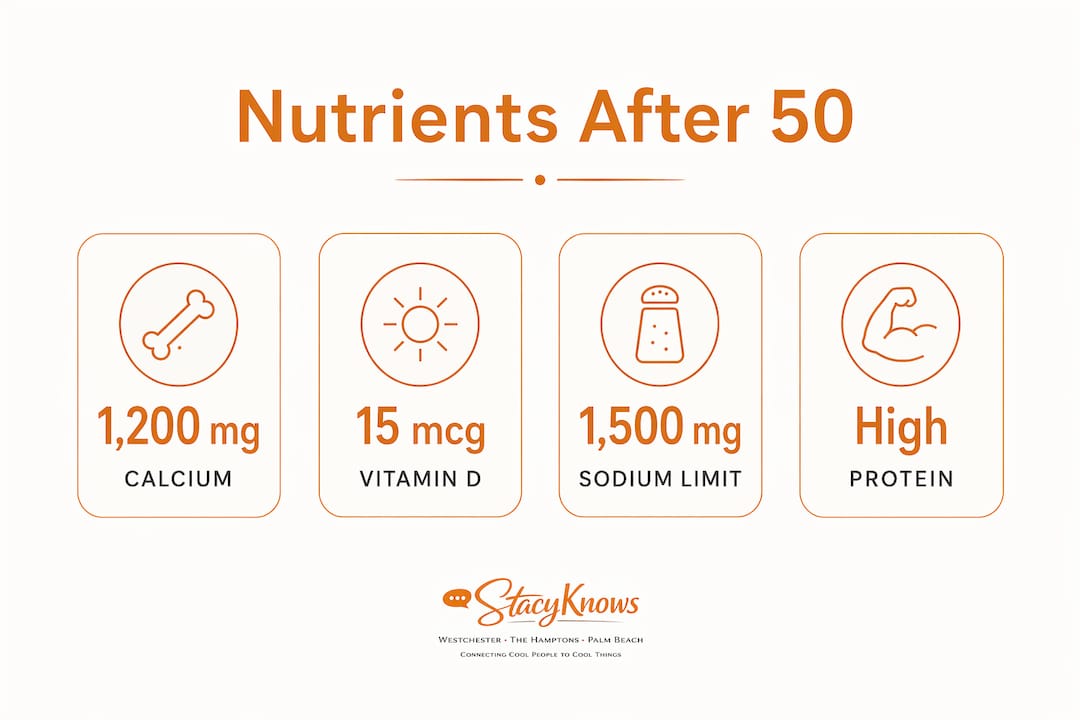
Sodium is the first number to watch. Cedars-Sinai recommends limiting sodium to 1,500 mg daily after 50 to protect against rising blood pressure and cardiovascular risk. That is lower than the general adult recommendation, and it requires reading labels on packaged foods, sauces, and restaurant meals.
Calcium and vitamin D work as a team for bone protection. Women over 50 need 1,200 mg of calcium daily, up from 1,000 mg before menopause. Pair that with adequate vitamin D, since your body cannot absorb calcium effectively without it.
| Nutrient | Daily Target After 50 | Best Food Sources |
|---|---|---|
| Calcium | 1,200 mg | Dairy, fortified plant milk, leafy greens |
| Sodium | Max 1,500 mg | Limit processed and packaged foods |
| Protein | 1.0–1.2 g per kg body weight | Chicken, fish, legumes, eggs |
| Fiber | 21 g | Whole grains, beans, fruits, vegetables |
| Vitamin D | 600–800 IU | Fatty fish, fortified foods, sunlight |
Fiber and antioxidants round out a strong midlife diet. Whole grains, berries, leafy greens, and legumes reduce inflammation and support gut health. Hydration also becomes more critical after 50, since the thirst response weakens with age. Aim for at least eight cups of water daily, and consider foods like cucumber, watermelon, and broth-based soups to supplement fluid intake.
What skincare and beauty adjustments work best for mature skin?
Post-menopause skin loses collagen, retains less moisture, and becomes thinner and more prone to fine lines. These are biological facts, not flaws. The right routine addresses them directly without requiring a 12-step regimen.
A simple mature skincare routine built around four core steps delivers the most visible results: a gentle cleanser, a rich moisturizer, broad-spectrum SPF 30 or higher every morning, and a retinoid at night. Retinoids, the vitamin A derivatives found in both prescription and over-the-counter products, stimulate collagen production and accelerate cell turnover. They are the most research-backed ingredient for visible anti-aging results.
Exfoliation matters, but gentleness matters more. Chemical exfoliants like lactic acid or glycolic acid work better than physical scrubs on mature skin, which is more fragile and reactive. Use them once or twice a week, not daily.
For beauty and fashion, fit and timeless silhouettes outperform trend-chasing every time. Stylists consistently recommend V-necks, structured blazers, and well-tailored trousers as the foundation of a wardrobe that flatters changing body shapes. You can find deeper guidance on building a wardrobe that works for this stage of life at Stacyknows.
Key skincare and beauty habits to prioritize:
- SPF daily: Sunscreen is the single most effective anti-aging product available
- Retinoids at night: Start with a low concentration and build up gradually
- Rich moisturizer: Look for hyaluronic acid, ceramides, or shea butter in the formula
- Gentle exfoliation: Lactic acid once or twice weekly keeps skin bright without irritation
- Makeup adjustments: Cream formulas sit better on mature skin than powder-heavy products
Pro Tip: Apply moisturizer to slightly damp skin right after cleansing. This locks in hydration more effectively than applying it to dry skin, and the difference is noticeable within a week.
Which preventive health screenings should women over 50 prioritize?
Preventive care is where aging well is won or lost. Many of the conditions that become serious in your 60s and 70s are detectable and manageable in your 50s, if you know what to screen for.
The core annual screenings recommended for women over 50 include:
- Annual physical exam: Full body check with blood pressure, weight, and general health review
- Breast exam and mammogram: Annual or biennial depending on personal risk factors
- Skin check: Full-body dermatology exam to catch early signs of skin cancer
- Bone density scan (DEXA): Baseline at 50, then as recommended based on results
- Colonoscopy: Every 10 years starting at 45, or more frequently with family history
Beyond the standard list, comprehensive lab panels covering inflammation markers like C-reactive protein, insulin levels, and vitamin D give a much clearer picture of silent health risks. Standard annual bloodwork often misses these. Asking your doctor to include them is a straightforward step that pays off.
| Screening | Frequency | Why It Matters After 50 |
|---|---|---|
| Mammogram | Annual or biennial | Breast cancer risk rises with age |
| DEXA scan | Baseline at 50, then as needed | Bone loss accelerates post-menopause |
| Blood pressure check | Every visit | Cardiovascular risk increases after estrogen decline |
| Cholesterol panel | Every 5 years or more often | Heart disease is the leading cause of death in women |
| Blood glucose / HbA1c | Every 3 years | Metabolic changes raise type 2 diabetes risk |
Annual physical exams and skin checks are the baseline, not the ceiling. Women who advocate for comprehensive testing consistently catch issues earlier and have more treatment options available.
How can women over 50 nurture mental wellness and social connection?
Midlife brings a level of self-knowledge that younger decades rarely offer. Many women describe their 50s as the first time they feel genuinely comfortable in their own skin. That clarity is real, and it is worth protecting.
Menopause and chronic disease can affect mental health in ways that are often dismissed as “just hormones.” Mood changes, anxiety, and disrupted sleep deserve the same medical attention as physical symptoms. Talking to your doctor about these experiences is not overreacting. It is good health management.
Social connection and stress management practices like meditation directly improve emotional health outcomes in women over 50. Loneliness carries measurable health risks, comparable to smoking in some studies. Staying connected to friends, community groups, or interest-based clubs is not a luxury. It is preventive care.
Practical ways to protect your mental wellness:
- Prioritize sleep: Aim for 7–9 hours nightly. Menopause-related sleep disruption is treatable, not inevitable.
- Practice meditation or mindfulness: Even 10 minutes daily reduces cortisol and improves mood stability
- Maintain sexual health: Intimacy remains important and changes after menopause are manageable with open conversations with your doctor
- Build your support network: Regular contact with close friends or a therapist reduces anxiety and depression risk
- Invest in personal wellness: Resources on personal wellness and premium experiences can help you find what genuinely restores you
What I’ve learned about thriving after 50
The cultural story around aging is shifting, and I think it is shifting in the right direction. The old narrative told women to “age gracefully,” which usually meant quietly and without complaint. The new one says: know your body, advocate for yourself, and stop apologizing for wanting to feel good.
What I have seen, both in conversations with women navigating this decade and in the research, is that the women who thrive after 50 are not the ones chasing youth. They are the ones who get curious about what their bodies actually need now, not what worked at 35. They ask better questions at the doctor’s office. They build wardrobes around fit instead of trends. They treat sleep and social connection as health priorities, not indulgences.
The hardest shift is accepting that some things genuinely change, while refusing to accept that decline is the only story. Your metabolism changes. Your skin changes. Your emotional needs change. None of that means you settle. It means you adapt, and adaptation is a skill that gets sharper with age. The link between lifestyle and skin health alone shows how much agency you still have over how you look and feel.
Fifty is not a finish line. It is a recalibration point. Use it.
— Stacy
Beauty and wellness picks curated for you
Stacyknows has done the research so you do not have to sort through the noise. The beauty secret finds collection is curated specifically with mature skin, changing bodies, and real-life budgets in mind.

From skincare products that actually address dryness and fine lines to wellness tools that support sleep and stress management, every pick reflects what works at this stage of life. Stacyknows also covers global beauty secrets that American women are only beginning to discover, from Japanese skin rituals to Mediterranean diet habits that show up in the mirror. If you are ready to invest in yourself with the same intention you bring to everything else, this is a good place to start.
FAQ
How much exercise do women over 50 need weekly?
Women over 50 need 150 minutes of moderate aerobic exercise weekly plus strength training on at least two days. Balance exercises should also be included to reduce fall risk.
What calcium intake is recommended after menopause?
Post-menopausal women need 1,200 mg of calcium daily, up from 1,000 mg before menopause. Pairing calcium with adequate vitamin D is necessary for proper absorption.
Which skincare ingredients work best for mature skin?
Retinoids, hyaluronic acid, ceramides, and broad-spectrum SPF are the most effective ingredients for mature skin. Retinoids stimulate collagen production, while SPF prevents further UV-related damage.
What health screenings should women over 50 get annually?
Annual physicals, breast exams, skin checks, and bone density scans are the core screenings recommended starting at 50. Comprehensive blood panels including inflammation and vitamin D markers add an important layer of insight.
How does menopause affect mental health?
Menopause can trigger mood changes, anxiety, and sleep disruption that directly affect mental well-being. Early attention and community support consistently improve outcomes, so discussing symptoms with a doctor is the right first step.
Recommended
- Fashion Over 50: Build a Wardrobe That Works for You – Stacyknows
- Beauty Secrets Women Around the World Swear By That Americans Haven’t Fully Discovered Yet – Stacyknows
- How To Combat Oxidative Stress for Youthful Skin
- Navigating Perimenopause? Here’s What I Added to My Morning Routine – Stacyknows
