

The best shopping finds right now span five major platforms, four product categories, and a growing mix of AI-assisted discovery tools that make it easier than ever to land something genuinely worth buying. Whether you’re hunting for a beauty steal on Amazon, a handmade home piece on Etsy, or a tech gadget at Target, the curated picks below cut through the noise so you don’t have to.
Here’s a quick look at what’s trending across categories in 2026:
- Beauty: Skin barrier serums, tinted SPF moisturizers, and scalp care tools on Amazon and Target
- Home: Earthy ceramic cookware, linen throw blankets, and minimalist storage on Etsy and Walmart
- Tech: Compact portable chargers, AI-integrated earbuds, and smart home plugs at Target and Amazon
- Outdoor: Packable daypacks, insulated tumblers, and solar-powered lanterns at Walmart and Nordstrom
- Fashion: Quiet luxury basics, vintage-inspired accessories, and elevated loungewear across all five platforms
- Gifts: Personalized keepsakes, novelty kitchen gadgets, and artisan candles from Etsy and niche Shopify stores
These categories reflect what shoppers are actually clicking on and buying, not just what brands are pushing. The platforms doing the most work right now are Amazon, Walmart, Etsy, Target, and Nordstrom, each with its own sweet spot for discovery.
What are the top trending shopping finds right now?
The product categories generating the most buzz in 2026 share one thing: they solve a real problem or spark a genuine feeling, not just a trend cycle.

Tech gadgets lead the charge. Compact MagSafe-compatible chargers, noise-canceling earbuds under $80, and smart plugs that work with Google Home and Amazon Alexa are flying off virtual shelves. Amazon’s product pages for these items often show verified purchase counts, which signals real demand rather than manufactured hype.
Beauty finds are having a moment rooted in function. Shoppers are gravitating toward products with fewer ingredients and clearer claims. Target’s beauty section has become a reliable source for dermatologist-recommended brands at accessible prices, while Nordstrom carries prestige options with the added benefit of a generous return policy.
Home and decor finds are leaning earthy and tactile. Think hand-thrown ceramic mugs, woven wall hangings, and beeswax candles. Etsy remains the go-to for these because the items come directly from makers, not middlemen. Walmart, meanwhile, has quietly built out a solid home section with affordable linen-look bedding and storage solutions that photograph well and hold up in real life.
Outdoor gear is where Walmart and Amazon compete hardest on price. Packable rain jackets, collapsible water bottles, and solar lanterns for camping are perennial bestsellers, but 2026 has added a wave of solar-powered gear that appeals to both campers and urban apartment dwellers.
Here are a few standout picks worth knowing about:
- Amazon: Anker MagSafe charger pads, CeraVe Hydrating Cleanser (consistently top-rated), and Echo Pop smart speakers
- Walmart: Better Homes & Gardens linen throw blankets, Mainstays storage cubes, and Ozark Trail insulated tumblers
- Etsy: Hand-poured soy candles, custom name necklaces, and vintage-style ceramic planters
- Target: Threshold linen bedding, Goodfellow & Co. basics, and Native deodorant bundles
- Nordstrom: Madewell denim, Barefoot Dreams loungewear, and Tatcha skincare sets
How do expert-curated deals and seasonal timing save you money?
The best deals aren’t random. They follow a rhythm, and knowing that rhythm is half the battle.
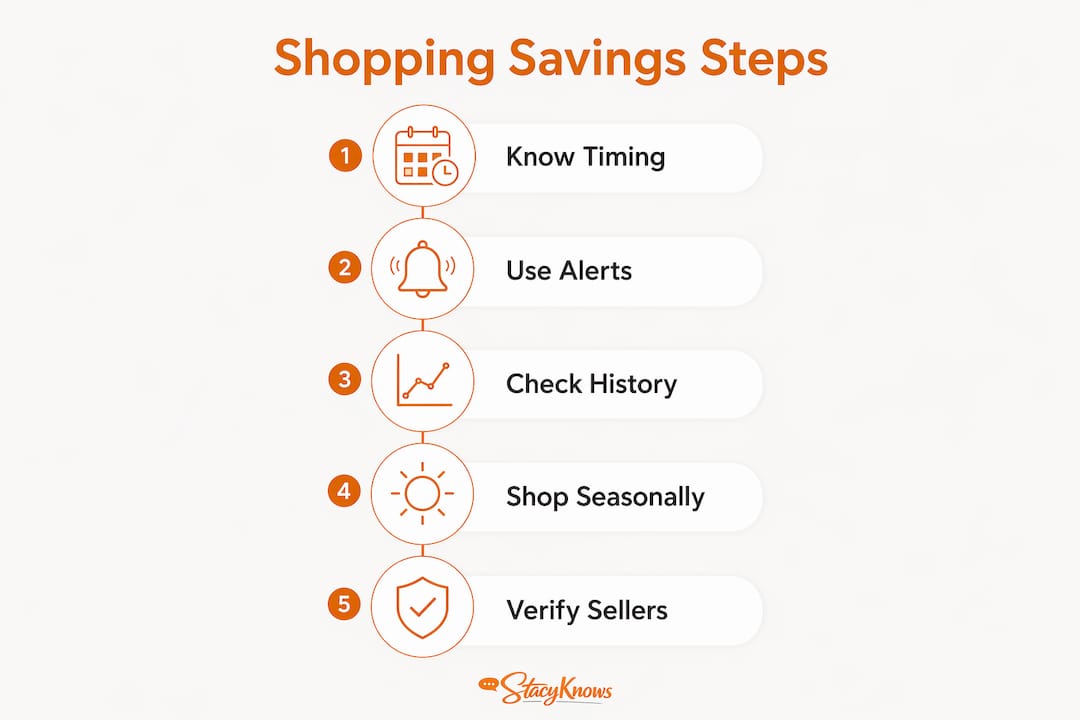
Consumer Reports curates verified product deals tested by its editorial team, which means the savings are real and the products have been independently evaluated. That combination of editorial curation and testing is rare, and it’s the standard worth holding other deal sources to.
Seasonally, the biggest windows for genuine savings fall around major retail events: post-holiday clearance in January, back-to-school in July and August, and the October pre-holiday push. Black Friday and Prime Day get the most attention, but the deals immediately after those events often run deeper because retailers are clearing inventory rather than driving traffic.
For fashion and beauty specifically, end-of-season sales at Nordstrom and Target can significantly reduce prices on items that were full-price just weeks earlier. The Nordstrom Anniversary Sale in July is particularly reliable for beauty and home finds. Stacyknows has tracked Fourth of July sales across fashion, beauty, and home that consistently surface deals worth bookmarking.
Pro Tip: Set a price-drop alert using Google Shopping or Amazon’s built-in “Track price” feature before a sale event. You’ll know instantly whether the “sale” price is actually lower than the item’s 90-day average, or just retailer theater.
Spotting fake deals takes one extra step: check the price history. Tools like CamelCamelCamel (free, for Amazon) show you a product’s full price timeline so a “30% off” badge doesn’t fool you when the item was at that price two weeks ago.
How do you discover unique and niche shopping finds?
The most interesting products rarely show up on the first page of a generic search. Getting to them requires a slightly different approach.
AI tools have changed this in a meaningful way. Tools like ChatGPT, Google Gemini, and Perplexity now use conversational prompting to refine product searches with real specificity. Instead of typing “running shoes,” you ask for “waterproof road running shoes for wide feet under $150.” The more constraints you give, the more useful the output. The same logic applies to gift hunting: defining the person, the occasion, and any delivery or budget limits produces results that a generic keyword search simply cannot.
Image recognition adds another layer. Uploading a photo of a product you admire to an AI tool lets it analyze visual traits like color palette, material, and craftsmanship style, then generate search terms you’d never have thought to type. This is especially useful for finding artisan or vintage items where the “vibe” is clear but the words aren’t.
At thrift stores and secondhand markets, Google Lens does something similar in real time. Point it at a piece of jewelry or a jacket, and it identifies brands and price history instantly. A Portland teenager used exactly this kind of sharp-eyed secondhand shopping to find a Wilt Chamberlain warm-up jacket at Goodwill for $3.07 that Sotheby’s later valued between $150,000 and $250,000.
Concrete tactics that actually work:
- Use Etsy’s filter tools with hyper-specific keywords (“hand-thrown terracotta planter, 6 inch”) rather than broad category terms
- Attend local craft fairs and artisan markets. The best discovery strategy blends online speed with the tactile, community experience of in-person markets
- Browse Shopify-powered independent stores, which often carry items unavailable on major marketplaces
- Ask AI to build a themed wishlist with constraints (“10 items for a cozy reading nook, total under $75”) rather than hunting for single products
- For trending kids toys and novelty gifts, niche expert guides surface options that big-box search results bury
Pro Tip: When you’re stuck on a gift idea, upload an image of the recipient’s aesthetic (their Instagram grid, a photo of their living room) to an AI tool and ask it to generate search terms. You’ll get category names and keywords you’d never have guessed, which opens up entirely new product neighborhoods.
How do you make the most of your shopping finds experience?
Finding something great is only half the equation. Knowing whether it’s actually worth buying takes one more pass.
AI-curated shopping lists tend to favor popular or well-indexed products, which means newer or smaller-brand options sometimes get filtered out. Treating AI as a research assistant rather than a final authority keeps you from missing genuinely better alternatives. A quick manual search after an AI shortlist takes two minutes and often surfaces something the algorithm missed.
Seller credibility matters more on marketplaces than on brand-direct sites. On Etsy, look for shops with consistent reviews across multiple product types, not just one viral listing. On Amazon, filter for “verified purchase” reviews and read the three-star ones first. They tend to be the most honest, catching real flaws without the emotional charge of a one-star complaint.
AI-generated carts need a final human check before checkout. Shipping fees, color or size options, and customization details are the most commonly missed items. A 30-second review of your cart catches the kind of errors that lead to returns.
Practical steps before you buy:
- Check return policies directly on the retailer’s site. AI assistants sometimes carry outdated policy summaries
- Read the warranty terms for any tech purchase over $50. Many items sold on Amazon by third-party sellers carry no manufacturer warranty
- Use Fakespot (fakespot.com) to grade review quality on Amazon and Walmart listings before committing
- Compare prices across platforms for the same item. A product listed on Amazon may be cheaper directly through the brand’s Shopify store
- Look at shipping origin for Etsy and marketplace items. Domestic sellers typically offer faster, more reliable delivery and easier returns
Stacy’s honest take on shopping finds in 2026
The thing that strikes me most about shopping right now is how much the discovery layer has improved, and how little that changes the fundamental challenge of buying well. AI tools are genuinely useful for surfacing options you’d never find on your own. But the moment you stop applying your own judgment, the experience gets worse, not better.
The platforms that earn repeat visits are the ones with real editorial curation behind them. Consumer Reports testing products before recommending them. Etsy sellers who photograph their work honestly and respond to questions. Target’s in-house brands, which have quietly become some of the best value in American retail. These aren’t flashy, but they’re reliable.
What I keep coming back to is the secondhand angle. The stories of a $3.07 Goodwill jacket worth a quarter million dollars aren’t flukes. They’re the result of someone paying attention, knowing what to look for, and using the tools available to verify what they found. That combination of curiosity and verification is the same skill that makes any shopping find worth having, whether it’s a $12 Etsy candle or a vintage piece that turns out to be something special.
If you’re looking for beauty finds specifically, Stacyknows has a curated collection of beauty secret finds that goes deeper than the usual roundup. And if you’re curious about online purchasing trends shaping how we all shop now, that context makes the current moment feel a lot less overwhelming.
Shop with intention. Verify before you buy. And never underestimate a good thrift store.
Recommended
- The Nordstrom Anniversary Sale Is Finally Here! These Are My Top Picks for 2026 – Stacyknows
- The Best Fourth of July Sales of 2026: My Favorite Fashion, Beauty & Home Deals – Stacyknows Best Fourth of July Sales 2026 | Fashion, Beauty & Home
- Fashion Trends 2026: Style Formulas That Actually Work – Stacyknows
- Ways To Shop Your Closet This Season
