
Being over 50 is, above all, a strategic moment. Harvard Health frames the 50s as the decade to “tip the odds” in your favor — the window where targeted choices in strength, nutrition, sleep, and preventive care pay dividends for the next 30 years.
Here is what to do first:
- Schedule a primary-care checkup this month and ask specifically about your screening gaps.
- Start two strength sessions per week — even 20 minutes of bodyweight moves counts.
- Add protein intentionally at every meal, aiming for a moderate amount of protein per sitting.
- Review your screening calendar (colorectal, blood pressure, cholesterol, bone density if applicable).
- Protect your sleep by setting a consistent bedtime and dimming screens an hour before.
- Reconnect socially — text one friend today and schedule something standing.
Pro Tip: Don’t try to change everything at once. Pick one item from this list and make it non-negotiable for two weeks before adding the next.
What does “over 50” actually mean today?
Fifty is a pivot point, not a finish line. Medically, it marks the age when certain screenings become standard, when muscle loss (sarcopenia) begins to accelerate, and when hormonal shifts alter bone density and metabolism. Culturally, though, the story is richer. Aging is finally having its moment — and the evidence is everywhere.
Forbes runs an annual “50 Over 50” list celebrating women who launched companies, won elections, broke records, and reinvented careers after their 50th birthday. The YouTube channel Over 50 So What! has built a loyal audience around the idea that this decade is for living fully, not winding down. The blog and Facebook community Chic Over 50 shows daily that personal style, confidence, and self-expression don’t have an expiration date.
Psychologist Ilene Berns-Zare, writing in Psychology Today, encourages people in midlife to adopt a growth mindset as a core lever for flourishing. The research backs her up: purpose, social connection, and continued learning are among the strongest predictors of healthy aging. Stacyknows covers this shift in depth in why aging is finally having its moment.
What does a good fitness routine look like for adults over 50?
The target is straightforward: Stanford Medicine recommends strength and power training, balance work, and at least 150 minutes of moderate aerobic activity per week as the foundation for successful aging. That’s about 30 minutes on five days — a walk, a swim, a bike ride, or a dance class all count.
Weekly movement targets:
- 150 minutes of moderate aerobic activity (brisk walking, cycling, water aerobics)
- 2 strength sessions targeting major muscle groups
- 2–3 balance drills woven into daily life (standing on one leg while brushing teeth, heel-to-toe walking)
- Daily flexibility work — even 5 minutes of gentle stretching after waking up
Stanford also highlights that the ability to stand on one leg for 10 seconds is a simple, real-world predictor of lower fall risk and better outcomes as you age. It takes 30 seconds a day to practice.
Beginner block (20 minutes, twice a week):
- Chair squats — 2 sets of 10 (sit and stand from a sturdy chair)
- Wall push-ups — 2 sets of 10
- Seated resistance-band rows — 2 sets of 12
- Single-leg stand — 30 seconds each side
- Calf raises holding a counter — 2 sets of 15
Intermediate block (30 minutes, twice a week):
- Bodyweight squats — 3 sets of 12
- Push-ups (floor or incline) — 3 sets of 10
- Resistance-band deadlifts — 3 sets of 12
- Step-ups onto a low step — 3 sets of 10 each leg
- Plank hold — 3 rounds of 20–30 seconds
- Balance beam walk (tape a line on the floor) — 2 passes
Pro Tip: If you have a chronic condition like osteoporosis, arthritis, or heart disease, check with your clinician before starting a new program. Most conditions have a safe exercise modification — the answer is rarely “don’t move at all.”
Always warm up for 5 minutes (light walking, arm circles, gentle hip rotations) and cool down with slow stretching. Tracking your sessions in a simple notebook or a free app like Apple Health or Google Fit helps you see progress that feels invisible week to week.
What should you eat in your 50s for muscle, bones, and brain health?
Protein is the headline nutrient after 50, and most Americans eat too little of it too late in the day. The practical guideline from Stanford Medicine is 1.0–1.3 grams of protein per kilogram of body weight daily, spread across meals. For a 150-pound adult (about 68 kg), that works out to roughly 68–88 grams per day — or 20–30 grams per meal across three meals.
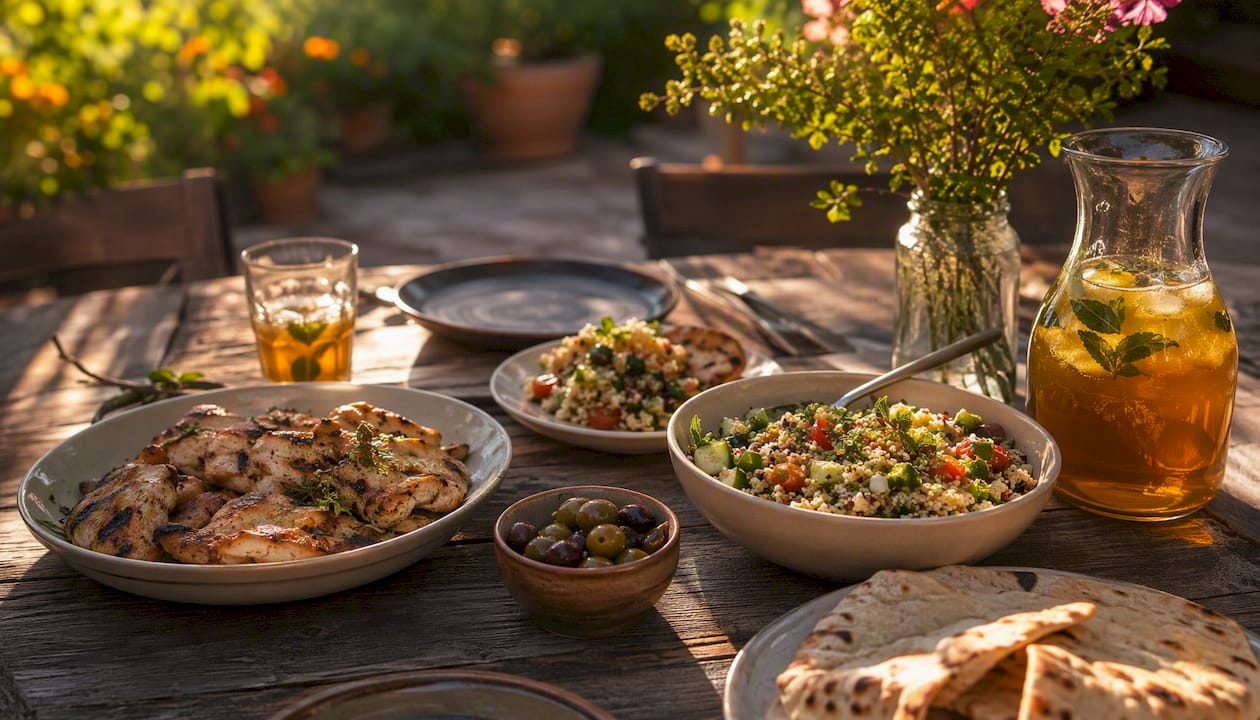
The NIDDK recommends nutrient-dense foods and a variety of activity types, emphasizing that what you eat and how you move are inseparable after 50. A Mediterranean-style pattern — olive oil, fish, legumes, vegetables, whole grains, and moderate dairy — consistently shows up in the research as the strongest dietary framework for heart and brain health.
Three-day mini sample menu:
| Day | Breakfast | Lunch | Dinner |
|---|---|---|---|
| Day 1 | Greek yogurt (20g protein) + berries + walnuts | Grilled salmon salad with olive oil dressing | Lentil soup + whole-grain bread + side salad |
| Day 2 | Two eggs + whole-grain toast + sliced avocado | Turkey and hummus wrap + baby carrots | Baked chicken thigh + roasted vegetables + quinoa |
| Day 3 | Cottage cheese (15g protein) + fruit + flaxseed | Tuna over mixed greens + olive oil | Shrimp stir-fry with broccoli + brown rice |
Bone health and supplements:
The NIH Office of Dietary Supplements provides clear guidance on calcium needs for older adults. Food sources — dairy, fortified plant milks, leafy greens, canned salmon with bones — should come first. Supplements fill gaps when diet falls short, but more is not better; excess calcium from supplements carries its own risks.
- Vitamin D: supports calcium absorption; blood levels worth checking at your next physical.
- Calcium: aim for food sources first; discuss supplementation with your provider if you’re consistently short.
- Vitamin B12: absorption declines with age; a supplement or B12-fortified foods are often recommended after 50.
Heart- and brain-friendly food swaps:
- Swap butter for olive oil in cooking.
- Replace white rice with farro, barley, or quinoa a few times a week.
- Add fatty fish (salmon, sardines, mackerel) twice a week for omega-3s.
- Choose dark leafy greens (spinach, kale, arugula) over iceberg lettuce.
- Snack on a small handful of walnuts instead of crackers.
What screenings do you need after 50? A U.S. checklist
Preventive care is where the 50s really pay off. Most of the conditions that cause serious problems later are detectable — and often reversible — when caught early. The table below reflects general U.S. guidance; your clinician will personalize intervals based on your history.
| Screening | Who / when | Typical interval |
|---|---|---|
| Blood pressure | All adults | Every 1–2 years (annually if elevated) |
| Cholesterol (lipid panel) | All adults 50+ | Every 4–6 years; more often with risk factors |
| Blood glucose / diabetes | All adults over 50 | Every 3 years if normal; annually if prediabetic |
| Colorectal cancer | All adults over 50 | Every 10 years (colonoscopy); other options available |
| Mammography | Women over 50 | Every 1–2 years (discuss timing with your provider) |
| Bone density (DEXA) | Women 65+; earlier if risk factors | Every 2 years or as directed |
| Lung cancer (low-dose CT) | Adults 50–80 with 20+ pack-year smoking history | Annually if eligible |
| Vision and hearing | All adults 50+ | Every 1–2 years |
| Dental exam | All adults | Every 6 months |
Questions to bring to your next appointment:
- “Are all my vaccines current, including shingles, pneumococcal, and the updated flu shot?”
- “Should I be monitoring my blood pressure at home between visits?”
- “Is there anything in my current medications that should be reviewed or adjusted?”
- “Am I due for any screenings I might have missed?”
MedlinePlus offers a reliable, plain-language overview of healthy-aging behaviors and community resources that can help you prepare for these conversations.
How do social connection and purpose protect your brain after 50?
The research here is less ambiguous than most people expect. Social isolation in midlife and beyond raises the risk of cognitive decline, depression, and early mortality. Staying connected isn’t a nice-to-have — it functions more like a biological necessity, especially once work-based social networks start to thin out.
Psychology Today reports that volunteering and purposeful social engagement are strongly linked to better self-reported health and reduced loneliness risk. The mechanism seems to be a combination of cognitive stimulation, emotional regulation, and the simple act of feeling needed.
Brain-supporting activities worth adding:
- Learning a new language or instrument (novel skill acquisition is one of the strongest cognitive stimulants)
- Complex social games: bridge, chess, competitive trivia
- Volunteering in a role that requires problem-solving, not just physical help
- Book clubs, writing groups, or community theater
- Teaching or mentoring — explaining things to others deepens your own understanding
The 50–65 window is a good time to build what some researchers call a “purpose portfolio” — a mix of relationships, contribution, and health habits that sustains meaning and function for decades. Losing a work-based friendship network at retirement is a real risk; proactively scheduling standing social commitments before that happens is far easier than rebuilding from scratch afterward.
A simple social starter checklist:
- Text one person you’ve been meaning to reconnect with — today.
- Find one recurring local activity (a walking group, a class, a volunteer shift) and commit to three sessions.
- Look into social events and meetups for adults 55+ in your area.
- Schedule a standing monthly dinner or call with a small group of friends.
Style, career reinvention, and the role models rewriting what 50+ looks like
Forbes’ annual “50 Over 50” list has quietly become one of the most-cited arguments against the idea that ambition has an age limit. The list has featured women who became first-time CEOs, published debut novels, ran for office, and launched nonprofits — all after 50. The pattern across those profiles is consistent: the second act tends to be more intentional, more values-driven, and often more satisfying than the first.
Chic Over 50 (blog and Facebook community) takes a similar approach to personal style — the premise being that dressing well after 50 is about proportion, comfort, and confidence, not about hiding or compensating. A few principles that show up consistently:
- Invest in fit over brand; a well-tailored basic beats an expensive ill-fitting piece every time.
- Prioritize fabrics that move and breathe — linen, cotton, ponte — especially for active days.
- A signature color or silhouette simplifies getting dressed and builds a recognizable personal style.
- Skincare and grooming matter more than makeup quantity; a good moisturizer and SPF do more than a full face of coverage.
For deeper style guidance, Stacyknows has a full fashion over 50 wardrobe guide and a dedicated beauty over 50 resource covering skincare, color, and confidence.
Career reinvention is equally common. The 50s often bring a clearer sense of what you actually want from work — and the experience to pursue it. Consulting, freelancing, nonprofit leadership, and encore entrepreneurship are all paths that people over 50 pursue with real success.
How much does fitness and healthy living cost after 50?
The honest answer: it can cost almost nothing, or it can cost a lot. The outcomes don’t scale linearly with the price tag.
| Option | Typical monthly cost | What you get |
|---|---|---|
| Self-guided (walking, bodyweight, free YouTube) | — | Flexibility; requires self-motivation |
| Community center or YMCA | $30–$60 | Pool, classes, equipment, social contact |
| Streaming fitness subscription | $10–$30 | Guided workouts on demand; no commute |
| Group fitness studio (yoga, Pilates, cycling) | $80–$150 | Instruction quality; community; accountability |
| Personal trainer (1–3 sessions/week) | $150–$400 | Customized programming; fastest results |
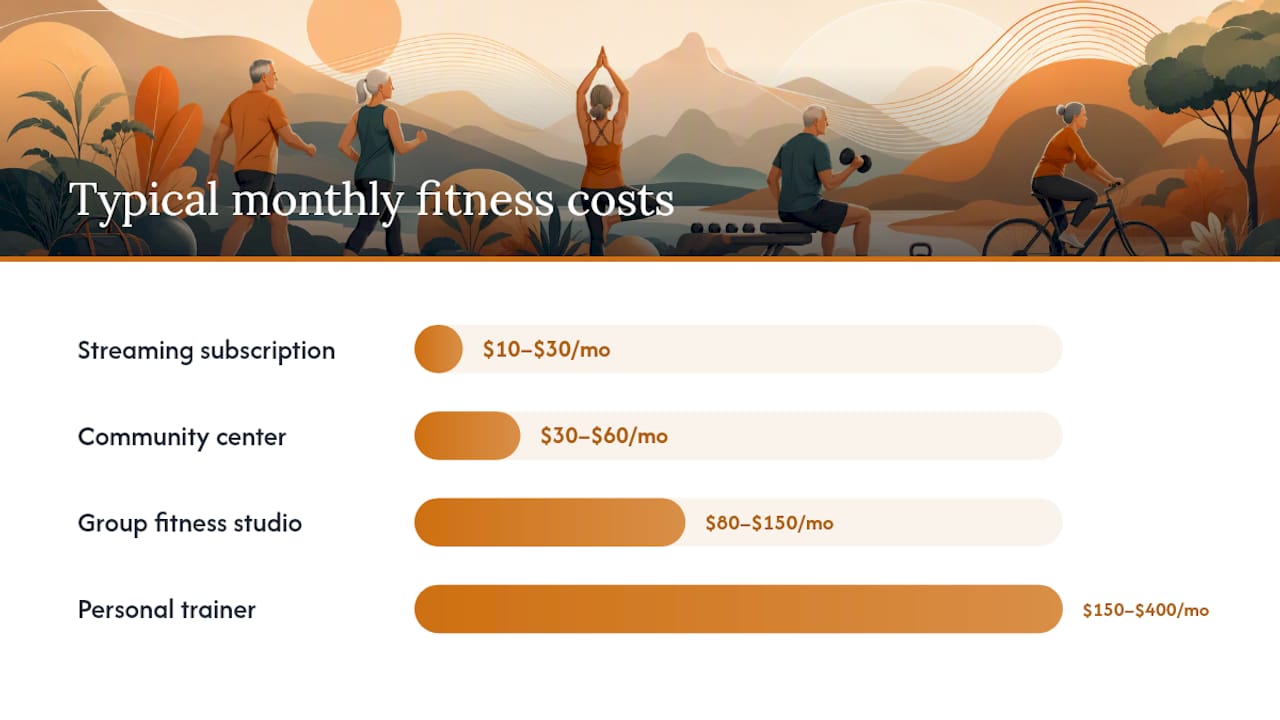
A $25 set of resistance bands and a pair of walking shoes gets you most of the physiological benefit of a gym membership, especially in the first year. The real value of paid options is accountability and social connection — both of which matter enormously for consistency.
For a broader look at balancing accessible and premium wellness choices, Stacyknows covers investing in personal wellness at different price points.
Low-cost ways to start:
- Walk 20–30 minutes daily — free, joint-friendly, and genuinely effective for cardiovascular health.
- Check your local library for free fitness classes and wellness programs.
- Search for active adult activities near you through community event platforms.
- Use free YouTube channels for guided strength and yoga sessions.
- Ask your health insurer about Silver Sneakers or similar fitness benefits — many Medicare Advantage plans include them at no extra cost.
A beginner-friendly 7-day starter plan for adults over 50
This plan is designed to be testable, not perfect. The goal is to finish the week having moved more, slept better, eaten more protein, and made one social connection. That’s it.
- Monday: 25-minute brisk walk + drink an extra glass of water with each meal.
- Tuesday: Beginner strength block (20 minutes, see the routine above) + set a consistent bedtime for the rest of the week.
- Wednesday: 20-minute walk + add one protein-rich food to lunch (eggs, Greek yogurt, legumes, fish).
- Thursday: Rest or gentle stretching (10 minutes of slow yoga or mobility work) + text or call one friend.
- Friday: Beginner strength block (20 minutes) + swap one refined-carb snack for nuts or fruit.
- Saturday: 30-minute walk or light activity you enjoy (gardening, swimming, dancing) + plan one social commitment for next week.
- Sunday: Rest + review: what felt good? What was hard? Adjust one thing for next week.
What to track this week:
- Number of days you moved for 20+ minutes
- Whether you hit 20–30g protein at each meal (rough estimate is fine)
- Bedtime consistency (within 30 minutes of your target)
- One social interaction you initiated
Pro Tip: If a day goes sideways, don’t restart the whole week — just pick up the next day. Consistency over seven weeks matters far more than perfection over seven days.
Safety note: if you experience chest pain, dizziness, or joint pain that persists after exercise, stop and check with your clinician before continuing. Most people over 50 can exercise safely; the key is starting at a level that feels manageable and progressing gradually.
Where can you find trusted health information as an adult over 50?
Not all health information online is created equal. These sources are reliable, free, and specifically relevant to adults over 50 in the United States.
| Resource | What it covers | Best for |
|---|---|---|
| National Institute on Aging (NIA) | Healthy aging research, disease prevention, cognitive health | Deep dives into aging science |
| Harvard Health | Evidence-based health goals for the 50s and beyond | Goal-setting and health strategy |
| Stanford Medicine | Habits for successful aging in the 60s and 70s | Exercise and nutrition frameworks |
| MedlinePlus | Plain-language overviews of conditions and healthy aging | Quick, reliable reference |
| Healthline | Practical tips on exercise, sleep, diet, and social health | Accessible how-to guidance |
| NIH Office of Dietary Supplements | Calcium, vitamin D, B12, and supplement guidance | Nutrition and supplement decisions |
| Mayo Clinic | Body changes, prevention strategies, symptom guidance | Practical clinical context |
Finding local options:
- Search your local YMCA, community center, or parks and recreation department for senior fitness programs.
- Ask your primary-care provider for a referral to a physical therapist or certified fitness professional if you have specific limitations.
- When evaluating online fitness programs, look for instructors with credentials like ACE, NASM, or ACSM certification, and check whether the program includes modifications for common conditions.
For ongoing motivation, the YouTube channel Over 50 So What! offers relatable, real-life content from people living actively in their 50s and beyond. The Chic Over 50 community on Facebook is a warm, active space for style and lifestyle conversation.
This article is general health information, not medical advice. Confirm screening schedules and exercise plans with your own clinician or a qualified health professional.
Why the 50s deserve more credit than they get
There’s a tendency in health content to treat the 50s as a damage-control decade — a time to slow losses and manage decline. That framing is both inaccurate and unhelpful.
The evidence from Harvard, Stanford, and the NIA points in a different direction. The choices you make in your 50s have an outsized effect on your 70s and 80s. Muscle built now is muscle that prevents falls later. Friendships maintained now are the social infrastructure that protects cognitive health later. Screenings completed now catch problems when they’re still manageable.
What the Forbes “50 Over 50” list, the Chic Over 50 community, and the Over 50 So What! channel all share is a refusal to treat this decade as a footnote. They treat it as a beginning. The research, honestly, supports that view. The 50–65 window is genuinely a setup phase — not for retirement, but for the most intentional, connected, and purposeful stretch of your life.
The practical implication is simple: don’t wait for a health scare to start strength training, or a retirement party to think about social connection. The readers who get the most out of their 50s are the ones who treat it as a launch pad, not a landing strip.
For more on the women’s health and beauty journey after 50, Stacyknows has a full guide worth bookmarking.
Stacyknows curated guides for readers over 50
Stacyknows has spent years building guides that go beyond generic advice — curated specifically for readers who want real, tested, and honest recommendations. For readers over 50, the most useful starting points are the beauty over 50 expert guide, which covers skincare, color, and confidence with specificity, and the practical wellness tips roundup that pairs well with the nutrition and fitness sections above. If weight management is on your mind, the sustainable weight loss strategies guide takes an evidence-based, non-punishing approach. Browse any of those guides for your next concrete step — each one is written with the same directness you found here.
Sources and further reading
The claims in this article draw from a set of primary and institutional sources. Here is a brief annotation of each.
| Source | What it covers | Why it’s reliable |
|---|---|---|
| Harvard Health | Health goals for the 50s; strategic framing for long-term wellness | Harvard Medical School editorial standards |
| Stanford Medicine | Five habits for aging well; protein and balance guidance | Peer-reviewed research summaries from Stanford faculty |
| National Institute on Aging (NIA) | Muscle mass, longevity, and healthy-aging research | U.S. federal research institute on aging |
| Mayo Clinic | Body changes at midlife; bone and muscle mitigation strategies | Major academic medical center; clinician-reviewed content |
| NIDDK (NIH) | Nutrition and physical activity for older adults | National Institute of Diabetes and Digestive and Kidney Diseases |
| MedlinePlus | Healthy-aging overview; community resources | U.S. National Library of Medicine |
| NIH Office of Dietary Supplements | Calcium consumer guidance; supplement safety | Federal supplement research office |
| Psychology Today | Social connection, volunteering, and midlife flourishing | Peer-reviewed and clinician-authored content |
| Healthline | Practical tips on exercise, sleep, diet, and social health for older adults | Medically reviewed by licensed clinicians |
Additional reading:
- Beyond the milestone: Health goals for your 50s onward – Harvard Health
- Five healthy habits for successfully aging in our 60s and 70s — and beyond – Stanford Medicine
- What do we know about healthy aging? – National Institute on Aging (NIA)
- Aging: What to expect – Mayo Clinic
- Health tips for older adults – NIDDK
- Healthy aging – MedlinePlus
- 3 keys to optimal living in the second half of life – Psychology Today
- Calcium – Office of Dietary Supplements (NIH)
- Older adult health tips: Improve exercise, sleep, diet, and more – Healthline
Recommended
- Women Over 50: Your Complete Health and Beauty Guide – Stacyknows
- Beauty Over 50: Your Expert Guide to Glowing in 2026 – Stacyknows
- Fashion Over 50: Build a Wardrobe That Works for You – Stacyknows
- Elevate Your Lifestyle: Investing in Personal Wellness and Premium Experiences – Stacyknows
