

Understanding In-Home Adult Day Care and Senior Care & Support
The landscape of senior care is continually evolving, with a growing emphasis on options that allow individuals to maintain their independence and comfort within their own homes. Among these, in-home adult day care stands out as a flexible and person-centered solution. It represents a significant shift from traditional models, offering tailored support that integrates seamlessly into a senior’s daily life. For families exploring various care options, understanding the nuances of services like those offered by providers specializing in comprehensive senior in-home and day care can be incredibly beneficial.
Defining In-Home Adult Day Care
In-home adult day care is a specialized service designed to provide structured activities, socialization, and supervision for seniors directly within their residence. Unlike facility-based adult day centers where participants travel to a dedicated location, in-home adult day care brings these services to the senior. This model is particularly beneficial for individuals who may have physical disabilities, cognitive decline, or simply prefer the familiarity of their home environment. The core aim is to offer engaging therapeutic activities, ensure safety, and provide companionship, enriching the senior’s day and offering respite to family caregivers. These programs often focus on maintaining cognitive function, encouraging physical activity, and fostering social interaction, all within a personalized setting.
Traditional Centers vs. In-Home Senior Care & Support
The distinction between traditional adult day centers and in-home senior care models is crucial for families making informed decisions. Traditional adult day centers, as highlighted by various sources, offer a communal setting where seniors participate in group activities, receive health services, and enjoy social interaction. In 2020, for instance, approximately 4,100 adult day care centers across the U.S. served over 257,400 participants, demonstrating their widespread presence. These centers often operate during typical business hours, providing a structured environment away from home.
In contrast, in-home adult day care prioritizes the comfort and familiarity of the senior’s personal space.
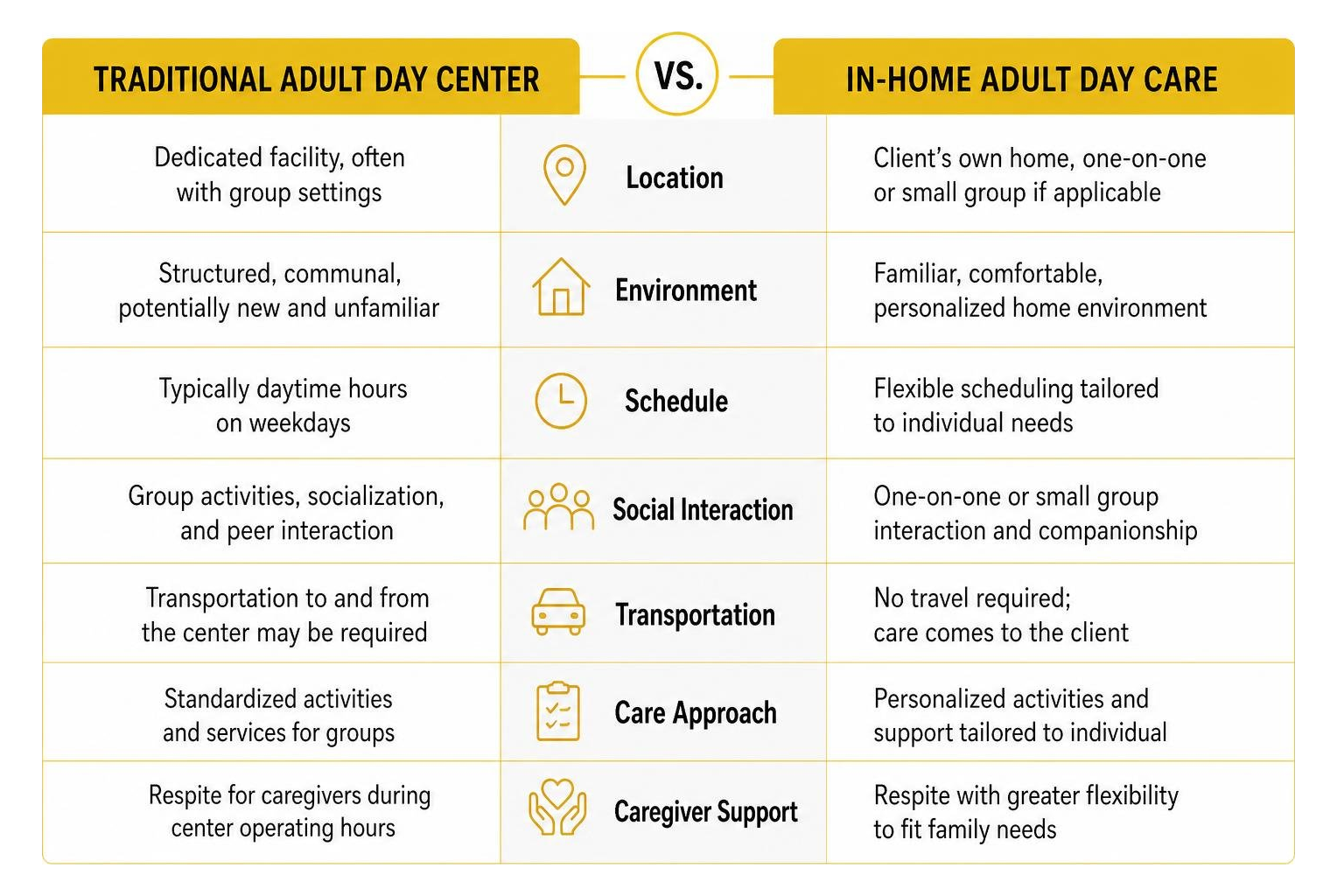
Here’s a comparison of key aspects:
Feature Traditional Adult Day Center In-Home Adult Day Care Location Dedicated facility, often with group settings Client’s own home, one-on-one or small group if applicable Environment Structured, communal, potentially new and unfamiliar Familiar, comfortable, personalized home environment Socialization Group activities, interaction with many peers Individualized companionship, one-on-one activities, controlled social interaction Flexibility Fixed hours, transportation often provided or arranged Highly flexible scheduling, tailored to family’s needs Personalization Group-oriented activities, some individual care Highly personalized care plans, activities based on individual preferences Staffing Ratios Varies, often higher staff-to-participant ratios Typically one-on-one or very low staff-to-client ratio, ensuring focused attention Transportation Often a service provided by the center No travel required for the senior, care comes to them Comfort May require adjustment to a new environment Maximizes comfort and minimizes disruption by staying home Wandering Risk Managed within a secure facility Managed within the home, potentially with additional safety measures for those with wandering risk While traditional centers can be excellent for those who thrive in group settings, in-home care offers distinct advantages for individuals who may find new environments overwhelming, have specific mobility challenges, or prefer a quieter, more personalized approach. It allows for highly customized care plans, ensuring that every activity and interaction is tailored to the senior’s unique needs and preferences. For comprehensive support that encompasses both in-home assistance and day programs, families might look into options like those provided by Aspen senior in-home and day care, which often blend elements of both approaches to offer flexible solutions.
Who is a Good Candidate for In-Home Day Services?
In-home adult day care is not a one-size-fits-all solution, but it is an ideal fit for a specific demographic of seniors and their families. We find that good candidates often include:
- Individuals with early to moderate cognitive impairment: Seniors experiencing cognitive decline, such as early-stage dementia, often benefit from structured routines and familiar surroundings. The personalized attention in their own home can help manage behavior, reduce confusion, and provide consistent brain stimulation. More than half of older attendees at adult day care facilities, generally, have cognitive impairment, underscoring the need for specialized support in this area.
- Seniors with mobility challenges: For those who find it difficult or exhausting to travel to a facility, in-home care eliminates the logistical hurdles. Whether it’s managing incontinence care, assisting with mobility, or simply navigating their own home, having a caregiver present ensures safety and comfort.
- Individuals prone to social withdrawal or anxiety in new settings: Some seniors become anxious or withdrawn in unfamiliar group environments. In-home care provides companionship and engaging activities without the pressure of a large group, fostering a sense of security and belonging.
- Those requiring highly personalized attention: Seniors with complex medical needs, specific dietary restrictions, or unique behavioral patterns benefit from one-on-one care that can be difficult to achieve in a group setting.
- Families experiencing caregiver burnout: When family caregivers need a break to work, run errands, or simply rest, in-home adult day care provides reliable, professional supervision. This allows caregivers to address their own needs, reducing stress and preventing caregiver burnout, which is a common challenge.
This model ensures that seniors receive the necessary support to thrive while maintaining their cherished home environment, offering peace of mind to their loved ones.
Key Services Provided by In-Home Care Programs

The array of services offered by in-home adult day care programs is designed to be comprehensive, addressing not only the physical needs of seniors but also their cognitive, social, and emotional well-being. These services are typically delivered by trained professionals who work within a personalized care plan developed in collaboration with the senior and their family. From daily living assistance to specialized dementia support and health monitoring, the goal is to provide holistic care that supports aging in place.
Daily Living Assistance and Companionship
At the heart of in-home adult day care is the provision of daily living assistance, which encompasses a wide range of practical support. Caregivers assist with personal care tasks such as bathing, grooming, and dressing, ensuring dignity and comfort. Beyond physical assistance, companionship is a cornerstone of these programs. Caregivers engage seniors in recreational activities, conversation, and hobbies, combating feelings of isolation and loneliness. This can include:
- Meal Preparation: Ensuring seniors receive nutritious meals tailored to their dietary needs and preferences. This often includes assistance with eating.
- Light Housekeeping: Maintaining a clean and safe living environment, which might involve tidying common areas, laundry, or organizing.
- Errand Running: Assisting with grocery shopping, picking up prescriptions, or other essential errands.
- Engaging Activities: Participating in hobbies, reading aloud, playing games, or going for short walks, all designed to keep the senior mentally and physically active.
These services not only support the senior’s physical well-being but also foster a sense of purpose and connection, which is vital for overall quality of life.
Specialized Dementia and Memory Support
For seniors living with cognitive impairments like dementia, in-home adult day care offers specialized support tailored to their unique challenges. Caregivers receive training in dementia care techniques, enabling them to provide effective and compassionate support. This includes strategies for:
- Brain Stimulation: Engaging seniors in memory exercises, puzzles, storytelling, and other cognitive activities to help maintain mental acuity and slow cognitive decline.
- Behavior Management: Understanding and responding to challenging behaviors associated with dementia, such as agitation or confusion, with patience and appropriate interventions.
- Wandering Prevention: Implementing safety measures within the home to minimize the risk of wandering, ensuring the senior’s security.
- Sensory Activities: Utilizing music, art, tactile objects, and other sensory-based approaches to engage individuals and evoke positive responses.
Many in-home care providers ensure their staff are trained in dementia issues, often aligning with best practices recommended by organizations like the Alzheimer’s Association. This specialized approach ensures that individuals with dementia receive the focused care they need in a familiar and comforting environment.
Health Monitoring and Medical Coordination
While in-home adult day care primarily focuses on non-medical support, it often plays a crucial role in health monitoring and coordinating with medical services. Caregivers can assist with medication management, ensuring seniors take their prescriptions accurately and on schedule. They may also perform basic health checks and report observations to family members or healthcare providers. This can involve:
- Blood Pressure and Blood Sugar Tracking: Monitoring vital signs and blood sugar levels, especially for seniors with chronic conditions like hypertension or diabetes.
- Therapy Exercises: Assisting seniors with physical or occupational therapy exercises prescribed by a professional, helping to maintain mobility and strength.
- Coordination with Medical Professionals: Facilitating communication between the family, primary care physicians, specialists, and other home health services (e.g., physical therapy, skilled nursing, hospice care). This ensures a cohesive approach to the senior’s overall health.
- Medical Equipment Setup and Maintenance: Assisting with the proper use and upkeep of medical devices or assistive technologies within the home.
This level of integrated care helps seniors manage their health effectively, preventing complications and ensuring they receive timely medical attention when needed.
The Benefits of In-Home Care for Seniors and Caregivers

The advantages of in-home adult day care extend far beyond mere supervision, creating a positive impact on both the seniors receiving care and their dedicated family caregivers. This model fosters a supportive environment that enhances quality of life for aging adults while providing much-needed respite and peace of mind for those who care for them.
Enhancing Quality of Life for Aging Adults
For seniors, the ability to age in place—remaining in their familiar surroundings—is often deeply cherished. In-home adult day care directly supports this desire by bringing professional care and engaging activities into their home. This contributes significantly to their overall well-being in several ways:
- Independence Preservation: By assisting with daily tasks and providing support, in-home care helps seniors maintain a sense of autonomy and control over their lives, rather than adapting to a new institutional environment.
- Mental Stimulation: Personalized activities, brain games, and social interaction with a dedicated caregiver help keep the mind active, potentially slowing cognitive decline and reducing feelings of boredom or apathy. A 2017 review of research indicated that adult day care programs provide health-related, social, psychological, and behavioral benefits for participants, particularly those with dementia.
- Reduced Depression and Isolation: Consistent companionship and engaging activities combat loneliness and social isolation, which are significant concerns for many seniors. This personalized attention can lead to a more positive outlook and reduced symptoms of depression.
- Personalized Attention: Unlike group settings, in-home care offers one-on-one focus, allowing caregivers to tailor activities and support precisely to the senior’s preferences, mood, and capabilities on any given day.
- Familiar Environment: Staying in their own home minimizes stress and confusion, especially for those with cognitive impairments, as they are surrounded by cherished memories and routines.
In-home adult day care helps seniors live more fulfilling, comfortable, and dignified lives as they age.
Alleviating Caregiver Burnout and Stress
Family caregivers often bear a heavy burden, balancing their loved one’s needs with their own personal and professional responsibilities. In-home adult day care provides invaluable support, acting as a crucial respite care solution that can significantly alleviate caregiver burnout and stress:
- Peace of Mind: Knowing that a trained and compassionate professional is caring for their loved one allows caregivers to attend to work, appointments, or personal needs without constant worry.
- Employment Balance: For working caregivers, in-home adult day care provides a reliable solution during work hours, enabling them to maintain their employment without compromising their loved one’s safety or well-being.
- Improved Sleep Patterns: A 2021 study showed that adult day care can lead to better sleep quality for both dementia patients and their caregivers on nights before attendance. This highlights the profound impact of scheduled breaks on caregiver well-being.
- Reduction in Role Overload: Caregivers often juggle multiple roles. Delegating daytime care to professionals reduces the feeling of being overwhelmed and allows them to recharge, improving their overall health and relationships.
- Guilt Reduction: Many caregivers experience guilt when taking time for themselves. In-home adult day care provides a structured, beneficial activity for the senior, transforming “time off” for the caregiver into a positive experience for both parties.
By offering this essential support, in-home adult day care helps families sustain their caregiving efforts over the long term, preventing exhaustion and fostering healthier, more balanced lives for everyone involved.
Navigating Costs, Licensing, and Provider Selection
Choosing the right in-home adult day care provider involves careful consideration of several practical aspects, including financial implications, regulatory compliance, and the qualifications of the care team. Understanding these elements is key to making an informed decision that best suits your loved one’s needs and your family’s circumstances.
Understanding the Cost of Care and Payment Options
The cost of in-home adult day care can vary significantly based on location, the intensity of services, and the number of hours required. While the median cost of adult day care across the U.S. is approximately $1,690 a month, or $78 per day (as of 2021), in-home rates can differ. It’s important to discuss specific pricing with providers, as some may offer sliding scale fees based on income.
Payment options for in-home adult day care are diverse:
- Private Pay: Many families pay for services directly out-of-pocket.
- Long-Term Care Insurance: If your loved one has a long-term care insurance policy, it may cover a portion or all of the costs for in-home adult day care services. Review the policy details carefully.
- Medicaid Waivers: Medicaid, a state and federal program for low-income individuals, may cover in-home adult day care costs in some states through specific waiver programs. Eligibility criteria vary by state, often requiring very low income and few assets.
- Veterans Affairs (VA) Benefits: Eligible veterans and their spouses may qualify for VA benefits, such as the Aid and Attendance program, which can help cover the costs of in-home care.
- Area Agencies on Aging (AAAs): These local organizations can provide information on state and local funding programs, grants, or subsidies that might be available to help offset costs.
- Medicare Limitations: Generally, Medicare does not cover long-term custodial care, including most in-home adult day care services. It typically covers only medically necessary skilled nursing care or therapy services for a limited period.
When discussing costs, inquire about all-inclusive rates versus hourly charges, minimum attendance requirements, and any additional fees for specialized services or transportation.
Licensing, Regulations, and Staff Qualifications
Ensuring the safety and quality of in-home adult day care requires understanding the regulatory landscape and staff credentials. Licensing and regulatory requirements for in-home adult day care providers can vary by state and even by locality. We always recommend verifying that any potential provider is properly licensed and adheres to all state-mandated guidelines.
Key qualifications and training to look for in in-home adult day care staff include:
- State Licensing: Confirm the provider holds all necessary state licenses for operating an in-home care service.
- Background Studies: All staff should undergo thorough background checks, including criminal history and abuse registries, to ensure the safety of your loved one.
- Certified Nursing Assistants (CNAs) or Home Health Aides (HHAs): Many caregivers hold these certifications, indicating foundational training in personal care, health monitoring, and emergency procedures.
- Registered Nurse (RN) or Licensed Practical Nurse (LPN) Oversight: For services involving medication management or more complex health monitoring, ensure there is appropriate nursing oversight.
- Dementia-Specific Training: Given that a significant portion of seniors requiring day care have cognitive impairment, specialized training in dementia care, behavior management, and communication techniques is crucial. This training helps staff effectively support individuals with Alzheimer’s and other forms of dementia.
- First Aid and CPR Certification: Essential for handling emergencies.
A reputable provider will be transparent about their licensing, training programs, and staff qualifications, providing peace of mind that your loved one is in capable hands.
How to Choose the Right In-Home Senior Care & Support Provider
Selecting the ideal in-home adult day care provider is a critical decision. We advise families to approach this process systematically, focusing on compatibility, quality of care, and logistical fit.
Here are key steps and considerations:
- Conduct Personalized Assessments: A quality provider will begin with a thorough assessment of your loved one’s needs, preferences, and health status. This helps create a truly personalized care plan.
- Inquire About Staff-to-Client Ratios: While in-home care is often one-on-one, understand how the provider manages backup staff or if a team approach is used for certain situations.
- Review Emergency Protocols: Ask how the provider handles medical emergencies, unexpected situations, or staff absences. Clarity on these procedures is vital for safety.
- Check References and Testimonials: Speak to other families who have used their services. Online reviews and testimonials can also offer valuable insights.
- Understand Communication Practices: How will you be kept informed about your loved one’s day? What are the channels for feedback or concerns?
- Discuss Trial Periods or Visits: Some providers may offer a trial period or initial visits to ensure a good fit between the senior and the caregiver.
- Evaluate Care Plan Updates: A good provider will regularly review and update the care plan as your loved one’s needs evolve.
- Consider Cultural and Language Compatibility: If important to your loved one, inquire about caregivers who share similar cultural backgrounds or speak a preferred language.
By diligently researching and asking the right questions, you can find a provider that offers compassionate, high-quality in-home adult day care, providing excellent support for your loved one and invaluable respite for your family.
Frequently Asked Questions about In-Home Care
How does in-home adult day care support aging in place?
In-home adult day care is fundamentally designed to support aging in place by delivering comprehensive care services directly to a senior’s home. This model allows individuals to remain in their familiar environment, surrounded by their personal belongings and memories, rather than having to relocate to a facility. By providing structured activities, companionship, supervision, and assistance with daily living tasks, it addresses many of the challenges that might otherwise necessitate a move. It helps maintain a senior’s routine, reduces the stress of adapting to new surroundings, and fosters a sense of independence and dignity. This support delays the need for more intensive, institutional care, such as nursing home placement, by ensuring safety, engagement, and well-being within the comfort of home.
Can in-home day care be coordinated with other medical services?
Absolutely. One of the significant advantages of in-home adult day care is its flexibility and ability to integrate with a broader spectrum of home health and medical services. Care providers can work closely with families to coordinate schedules and care plans with visiting nurses, physical therapists, occupational therapists, speech therapists, and even hospice care. This coordination ensures that all aspects of a senior’s health are addressed comprehensively. For instance, an in-home caregiver can remind a senior about therapy appointments, assist with prescribed exercises between therapist visits, monitor vital signs for a visiting nurse, or facilitate communication between different healthcare providers. This integrated approach creates a seamless care experience, optimizing health outcomes and reducing the burden on family caregivers to manage multiple appointments and services.
What is the difference between an Adult Day Program (ADP) and Adult Day Health Care (ADHC)?
The primary distinction between an Adult Day Program (ADP) and Adult Day Health Care (ADHC) lies in the level of medical and therapeutic services provided.
- Adult Day Program (ADP): These programs primarily focus on social activities, companionship, and general supervision. They offer a safe and engaging environment for seniors who need social interaction and light assistance but do not require extensive medical monitoring or skilled nursing care during the day. Services typically include recreational activities, meals, and personal care assistance.
- Adult Day Health Care (ADHC): ADHC programs offer a higher level of medical and therapeutic services in addition to social activities. They are designed for seniors with more complex health needs, chronic conditions, or significant cognitive impairments. ADHC often includes on-site nursing care, medication management, physical therapy, occupational therapy, speech therapy, and health monitoring (e.g., blood pressure checks, blood sugar monitoring). These programs are often regulated more strictly due to the medical nature of their services.
While both aim to provide daytime care and caregiver respite, ADHC caters to individuals requiring a more clinical and rehabilitative focus, whereas ADP emphasizes social engagement and general support.
Conclusion
The journey of caring for aging loved ones is deeply personal and often challenging. As we’ve explored, in-home adult day care emerges as a compassionate and highly effective solution that champions the dignity in aging and supports the desire for aging in place. By offering tailored care solutions directly within the comfort and familiarity of a senior’s home, this model provides invaluable benefits, from enhancing mental stimulation and preserving independence for seniors to offering crucial respite and reducing stress for family caregivers.
We believe that understanding the nuances of in-home adult day care, its comprehensive services, cost considerations, and regulatory standards empowers families to make informed decisions. Coordinating these services with other home health or medical care creates a holistic support system, ensuring that seniors receive the best possible care while maintaining their quality of life. In-home adult day care is more than just a service; it’s a pathway to sustainable caregiving, fostering well-being for everyone involved and strengthening the fabric of family life.
