The 10 easiest community events to run right now, and who each one fits best:
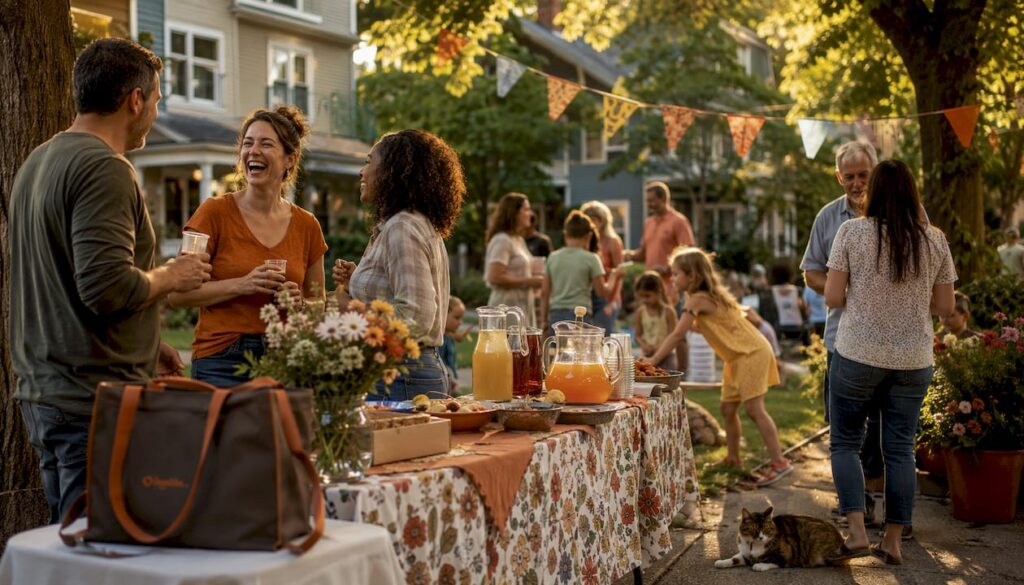
- Block party (best for: immediate neighbors on a single street or cul-de-sac). This week: knock on 10 doors, pick a date 6 weeks out.
- Neighborhood potluck dinner (best for: apartment buildings, HOAs, tight-knit blocks). This week: create a sign-up sheet and book a common room.
- Community cleanup day (best for: civic groups, neighborhood associations, first-time organizers). This week: contact your parks department for a free permit and supply kit.
- Outdoor movie night (best for: families with kids, mixed-age neighborhoods). This week: price projector rentals and scout a flat lawn or parking lot.
- Farmers market or pop-up vendor fair (best for: business districts, neighborhood associations). This week: email 5 local vendors and check your city’s temporary vendor permit requirements.
- Nonprofit resource fair (best for: diverse urban neighborhoods with service gaps). This week: reach out to 3 local nonprofits about tabling.
- Monthly concert series (best for: parks departments, civic organizations with recurring budgets). This week: contact a local musician or booking contact for availability.
- 5K fun run or walk (best for: fitness-focused groups, school PTAs, fundraising committees). This week: map a safe 3.1-mile route and check road-closure permit requirements.
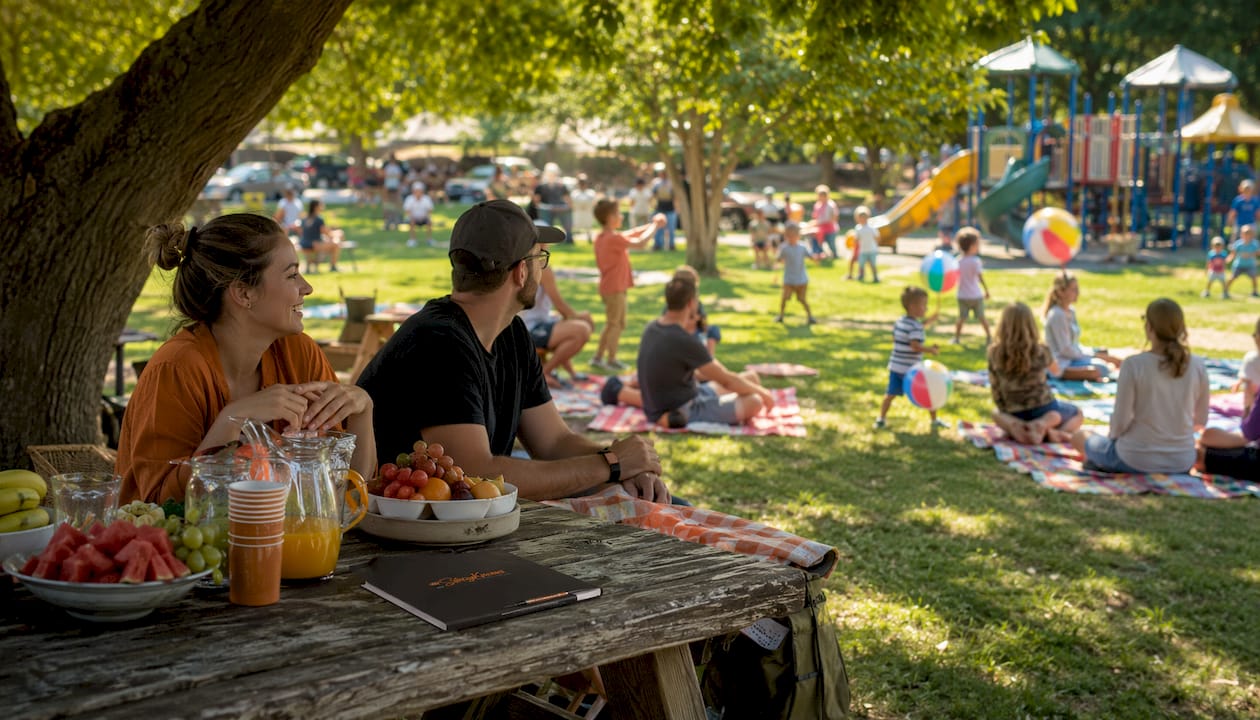
- Community picnic with games (best for: families, multi-generational neighborhoods). This week: reserve a park shelter and draft a simple games list.
- Volunteer restoration day (best for: environmental groups, conservation-minded neighborhoods). This week: contact a local conservation district or land trust about a partnership.
Before committing to any of these, run through this quick viability check:
- Space confirmed? You have a venue or permit application in progress.
- Volunteers lined up? You have at least 3 committed helpers for a micro-event, 10+ for anything neighborhood-scale.
- Basic budget set? You know your floor (free) and ceiling, and you have at least one funding source (donations, sponsors, or ticket sales).
What kinds of community events actually work for your goals?
Not every gathering fits every neighborhood. The format that works for a tight urban block looks nothing like what works for a citywide festival. Here is a breakdown by goal and scale, so you can match the idea to your situation quickly.
Bring neighbors together (social connection)
Block parties and potlucks are the lowest-barrier entry point. A block party needs a street closure permit, a few folding tables, and willing neighbors. A potluck needs almost nothing except a shared space. Shared meals are one of the most reliably effective ways to build social bonds across groups that might not otherwise interact.
Monthly concert series sit one rung up in effort but pay off over time. The Bynum Front Porch series in North Carolina is a good model: a recurring outdoor music event that draws consistent attendance because neighbors know exactly when and where to show up. Recurring formats build the kind of predictable rhythm that one-off events simply cannot replicate.
Raise money (fundraising)
5K runs, silent auctions, and benefit concerts are the workhorses of community fundraising. A 5K is particularly good for first-time fundraising organizers because the costs are low (route marking, timing chips are optional, water stations) and the format is self-explanatory to participants. Silent auctions pair well with an existing event like a picnic or dinner, adding a revenue layer without requiring a separate gathering.
For something with more social cachet, charity nights that combine a ticketed dinner with live music and a cause can pull in both donations and new community members who might not show up for a standard fundraiser.
Serve community needs (civic/volunteer)
Nonprofit resource fairs are underused and genuinely impactful. Chesterfield County’s resource fair connects residents with dozens of organizations in a single afternoon, giving people access to health services, housing support, and social programs they might never have found on their own. The format is simple: tables, signage, and partner organizations who do most of the content work themselves.
Volunteer restoration days at local parks or nature preserves serve a dual purpose. Participants get the satisfaction of visible, tangible work, and the site gets labor it often cannot afford to hire. Partnering with a conservation district or land trust, as Grassroots Ecology does at Foothills Nature Preserve, means the organizing infrastructure is already in place.
Celebrate culture and identity
Cultural festivals and heritage fairs scale from a single-block celebration to a citywide event. At the micro end: a street-level food and music afternoon featuring one cultural tradition. At the citywide end: a multi-stage festival with vendors, performers, and nonprofit tables. Troy, NY’s Unity in the Community grew from its first year to a multi-hour event at Riverfront Park combining vendors, music, and nonprofit resources — a model any mid-size city can adapt.
Family and kid-friendly
Community picnics with games, rides, and music are the most universally appealing format. The Brookville Community Picnic in Ohio runs midday to evening, covering rides, games, music, and fireworks — a full-day structure that gives families a reason to stay rather than drop in and leave.
Outdoor movie nights are a close second. They require minimal programming skill, the setup is repeatable, and they work for ages 5 to 85.
Quick comparison by outcome
| Event type | Community engagement | Fundraising potential | Volunteer needs | Permitting complexity |
|---|---|---|---|---|
| Block party | High | Low | Low (a handful) | Low–Medium |
| Potluck dinner | High | None | Very low (a few) | None–Low |
| Nonprofit resource fair | High | Low | Medium (several) | Low |
| 5K fun run | Medium | High | Medium (a moderate number) | Medium–High |
| Cultural festival | Very high | Medium | High (a large number) | High |
| Monthly concert series | High | Low–Medium | Low (several) | Low–Medium |
| Community picnic | Very high | Low | Medium (around ten) | Low–Medium |
| Volunteer cleanup day | Medium | None | Low (several) | Low |
| Silent auction/benefit night | Medium | High | Medium (several) | Low |
| Outdoor movie night | High | Low | Low (a few) | Low |
How do you plan a community event from scratch?
The difference between a smooth event and a chaotic one usually comes down to lead time and role clarity, not budget. Here is a sequential checklist that takes you from idea to event day.
- Write your one-sentence goal (around ten weeks out). “We want 75 neighbors to meet each other at a free block party on September 13.” That sentence sets your success metric before you spend a dollar.
- Confirm your venue (8–10 weeks out). Contact your city’s parks department or municipal events office. Ask about availability, permit requirements, and any site-specific rules (amplified sound, alcohol, open flame).
- Set your budget (8 weeks out). Core expense categories: venue/permit fees, equipment rental (tables, chairs, tent, sound), food and beverages, printing and signage, insurance, and a several% contingency. Set your income target from ticket sales, sponsorships, or donations to cover costs.
- Assign roles (7–8 weeks out). Every event needs an overall organizer, a site lead (day-of point person), a logistics coordinator, a volunteer coordinator, and a cleanup lead. For events over 200 attendees, add a safety/first aid liaison.
- Apply for permits and insurance (6–8 weeks out). See the permits section below for specifics. Do not skip this step or leave it to the last two weeks.
- Recruit volunteers (6 weeks out). Post on your neighborhood association site, local Facebook groups, Nextdoor, and any relevant nonprofit partner channels. Be specific: “We need 8 people for 4 hours on Saturday morning.”
- Launch promotion (4–6 weeks out). Hit municipal calendars, neighborhood newsletters, social platforms, local press, and physical flyers simultaneously. The neighborhood events calendar approach — listing on every local platform at once — consistently outperforms single-channel promotion.
- Confirm vendors, partners, and entertainment (3–4 weeks out). Get everything in writing. Confirm load-in times, power needs, and any vendor insurance requirements.
- Send a final logistics brief to all volunteers (1 week out). Include the run-of-show, parking plan, emergency contacts, and their specific role assignments.
- Execute and document (day of). Assign one person to take photos and track attendance. You will need both for your follow-up and for planning next year’s event.
Sample mini-timeline: 8 weeks to event day
| Week | Key actions |
|---|---|
| Week 8 | Finalize goal, scout venue, start permit application |
| Week 6 | Confirm venue, submit permits, open volunteer sign-ups |
| Week 4 | Launch promotion, confirm vendors and partners |
| Week 2 | Finalize run-of-show, send volunteer brief |
| Week 1 | Confirm headcount, prep supplies, brief site lead |
| Day of | Setup, gates open, run program, teardown, document |
Pro Tip: Divide the organizer role into two tracks from the start: one person owns logistics (permits, vendors, setup), and a separate person owns people (volunteers, partners, promotion). Mixing both into one role is where burnout happens.
How do you promote your event and get partners on board?
Promotion that reaches the right people is more valuable than promotion that reaches the most people. A neighborhood gathering announced only on Instagram will miss the 60-year-old residents who are often the most reliable attendees.
Promotion channels that actually work
- Municipal event calendars — free, trusted, and checked by residents who are already looking for local things to do.
- Neighborhood association websites and newsletters — Greater Mattapan Neighborhood Council publishes a rolling calendar of family nights, fitness series, and volunteer opportunities; getting listed there reaches an already-engaged audience.
- Nextdoor and local Facebook groups — high reach within a defined geography, especially for events within a 2-mile radius.
- Local press and community blogs — a short press release sent 3–4 weeks out often earns a free listing or brief feature.
- Physical flyers — still effective at laundromats, libraries, coffee shops, and community bulletin boards, especially for reaching residents who are not online.
- Partner networks — when a nonprofit or school promotes your event to their list, you reach people who already trust that organization.
For broader reach, local influencer outreach can extend your event’s visibility to audiences that neighborhood channels alone won’t touch.
Partner types and what to offer them
Approach nonprofits, schools, local businesses, neighborhood associations, and faith communities. What they get: visibility, a table or booth, co-branding on materials, and access to your attendees. What you get: their promotional reach, volunteer support, and credibility.
Sample partner pitch (adapt for your outreach):
“Hi [Name], we’re organizing a free community picnic for [Neighborhood] residents on [Date] at [Location], expecting [X] attendees. We’d love to offer [Your Organization] a free table to connect with neighbors and share your resources. In return, we’re asking partners to promote the event to their networks and provide 2 volunteers for setup. Would you be open to a quick call this week?”
Pro Tip: Track RSVPs separately from walk-up attendance. The gap between the two tells you which promotion channels drove committed interest versus casual discovery — and that data shapes your next event’s outreach budget.
What permits, insurance, and safety steps do you actually need?
Skipping the operational groundwork is the fastest way to turn a good event into a stressful one. Experienced organizers report that unclear rules and last-minute parking problems cause more attendee frustration than any programming issue. Get these steps done early.
Who to contact and what to ask
- Municipal events office or parks department — ask about special event permits, park reservation fees, noise ordinance hours, and amplified sound rules.
- Health department — required if you are serving food, especially from temporary vendors. Ask about temporary food handler permits and handwashing station requirements.
- Fire marshal — required for events with tents over a certain square footage, open flame, pyrotechnics, or large crowd capacities. Thresholds vary by city.
- Police or traffic department — required for street closures, road races, or any event that affects vehicle traffic.
- Alcohol control board — required if alcohol will be served or sold. Rules vary significantly by state and municipality.
Safety and accessibility checklist
- Designate a first aid station with a trained volunteer or contracted EMT for events over 100 attendees.
- Map parking in advance and publish it in all promotional materials. Parking confusion is the single most common day-of complaint.
- Confirm ADA-accessible routes from parking to the event site, including ramp access and accessible restrooms.
- Plan crowd flow with clear entry and exit points, especially for events in enclosed or fenced spaces.
- Place waste and recycling stations every 50–75 feet in high-traffic areas.
- Brief all volunteers on emergency procedures, including the location of the first aid station and the contact for the site lead.
- Create sensory-friendly spaces (quieter zones, reduced stimulation areas) for events that include children or neurodiverse attendees.
Insurance basics
General liability insurance is standard for public events and typically covers bodily injury and property damage claims. Many venues require proof of coverage before they will confirm your booking. If you are working with vendors, require each one to provide a certificate of insurance naming your organization as an additional insured. For outdoor event safety specifics, coverage minimums and vendor requirements vary by event size and venue type, so confirm with your insurer directly.
What does a solid event-day run of show look like?
A run of show is simply a time-blocked schedule with role assignments. Without one, volunteers improvise, and improvisation at 7:00 AM during setup rarely goes well.
Sample run-of-show table
| Time block | Activity | Role responsible |
|---|---|---|
| 3 hours before gates open | Venue setup: tables, signage, power, waste stations | Logistics lead + 4 volunteers |
| — | Vendor load-in and check-in | Site lead |
| — | Volunteer briefing, walkthrough, radio check | Organizer |
| Gates open | Welcome, check-in flow, information table active | Check-in team (a few people) |
| First hour | Opening programming (music, remarks, activities) | Emcee / program lead |
| Mid-event | Main activities, vendor fair, games | All volunteers at stations |
| 1 hour before close | Wind-down programming, raffle or closing remarks | Emcee |
| Close | Attendee exit, vendor teardown begins | Site lead |
| Post-close | Full cleanup, waste removal, equipment return | Cleanup crew (a few people) |
Arrival and check-in flow
Bottlenecks at entry frustrate attendees before the event even starts. Use at least one check-in station per 75 expected attendees. Pre-registration via a free tool like Eventbrite or a Google Form speeds the process significantly. Have a clear “walk-up” lane separate from the pre-registered lane.
Essential day-of supplies
- Printed signage (directional, parking, activity schedules)
- Two-way radios or a group text thread for volunteer communication
- Extension cords and a power strip inventory
- First aid kit at a marked, staffed station
- Lost and found box at the information table
- Extra zip ties, tape, and a basic tool kit for last-minute setup fixes
Realistic event durations
| Event type | Typical start | Typical end | Total duration |
|---|---|---|---|
| Community picnic | 12:00 PM | 8:00 PM | 8 hours |
| Block party | 2:00 PM | 8:00 PM | 6 hours |
| Outdoor movie night | — | — | 3 hours |
| 5K fun run | 8:00 AM | 12:00 PM | 4 hours |
| Nonprofit resource fair | 10:00 AM | 2:00 PM | 4 hours |
| Volunteer cleanup day | 9:00 AM | 1:00 PM | 4 hours |
The Brookville Community Picnic runs midday to evening with rides, games, music, and fireworks — a useful benchmark for family-focused events that want to hold attendance through the evening.
Post-event follow-up checklist
- Send thank-you messages to all volunteers within 24 hours.
- Email a short feedback survey (a few questions) to registered attendees within 48 hours.
- Document final attendance count, funds raised, and any incidents.
- Share photos on your neighborhood channels and tag partner organizations.
- Schedule a debrief with your core team within one week while details are fresh.
What actually makes people feel connected at a community gathering?
Atmosphere and frequency matter as much as programming. You can book a great band and still end up with a crowd of strangers who leave without speaking to anyone. The difference is usually in the physical setup and the event’s place in a recurring calendar.
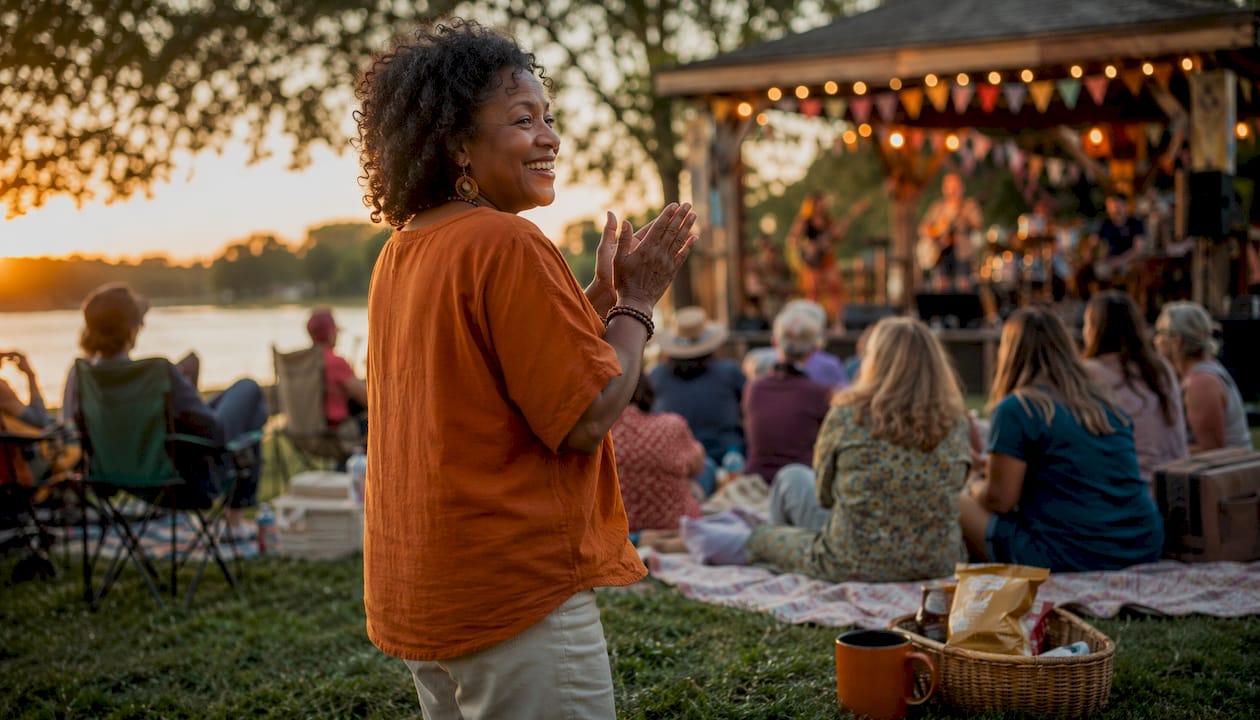
Research from the University of Oxford shows that communal eating is one of the most effective ways to build social bonds across groups. Events that center food, even informally, tend to generate more genuine interaction than those focused purely on performance or structured activity. Add relaxed seating and you give people a reason to stay and talk.
The same principle applies to outdoor settings. Time spent outside in green spaces is associated with improved mood and reduced stress, which means attendees arrive at an outdoor gathering already more open to connection than they would be indoors.
Civic leaders behind events like Unity in the Community in Troy, NY, emphasize that neutral-ground events with music and food reduce social barriers and encourage brief but meaningful connections. The key word is “neutral.” A park or a closed street belongs to everyone equally, which lowers the psychological cost of showing up.
Small, recurring events build deeper social capital than one-off mega-events because they become part of residents’ routines. When neighbors know that the first Friday of every month means live music in the park, they plan around it. That predictability is what turns an event into a community institution.
Pro Tip: Create a “backyard” aesthetic in public spaces: lawn chairs instead of bleachers, string lights instead of stadium lighting, and a designated area where kids can run freely. When a public park feels like someone’s living room, neighbors linger. That lingering is where real connection happens.
Partnering with local entities, including nonprofits, conservation districts, and neighborhood associations, both shares the workload and ensures programming addresses what residents actually need, whether that’s health resources, environmental stewardship, or simply a reason to leave the house on a Saturday. Chesterfield County’s resource fair demonstrates how a single afternoon event can connect residents with dozens of organizations they would never have sought out individually.
What outdoor and seasonal ideas should you consider?
Outdoor events have a natural energy that indoor gatherings rarely match. Fresh air, open space, and the absence of walls make people more relaxed and more willing to linger. But seasonal timing shapes everything from attendance to logistics.
Spring (March–May)
Spring is ideal for garden tours, cleanup days, and farmers markets. The weather is mild, residents are restless after winter, and the timing aligns with Earth Day (April 22) if you want a built-in promotional hook. Garden tours, like the Beaumont-Wilshire neighborhood’s five-garden tour with art-for-sale components, are low-cost and high-engagement. Cleanup days benefit from the natural motivation to refresh outdoor spaces after winter.
One consideration: spring weather is unpredictable. Always have a rain plan, whether that’s a tent, a postponement policy, or an indoor backup. Communicate it clearly in your promotional materials.
Summer (June–August)
Summer is peak season for outdoor community gatherings. Block parties, picnics, concert series, and festivals all thrive in warm weather. The Caramoor summer season in Westchester runs over a notable number of performances during summer, demonstrating how a recurring summer calendar builds audience loyalty across an entire season.
Heat management matters. Provide shade, water stations, and sunscreen reminders in your event communications. Schedule high-energy activities for morning or evening, not midday. For family events, a midday-to-evening window like the Brookville Community Picnic’s 12:00 PM–8:00 PM structure gives families flexibility without forcing an early-morning commitment.
For tips on making outdoor gatherings feel special beyond the basics, the outdoor event planning guide at Stacyknows covers ambiance and vendor coordination in practical detail.
Fall (September–November)
Fall is underrated for community events. Cooler temperatures make long outdoor gatherings comfortable, and the harvest aesthetic (pumpkins, cider, warm lighting) creates an atmosphere that practically designs itself. Harvest festivals, apple-picking outings, and neighborhood yard sales all perform well in September and October.
Permit timelines can be tighter in fall because municipal offices are often processing summer event paperwork simultaneously. Submit applications at least 8 weeks out. Also, daylight shortens quickly after the fall equinox, so plan your end time accordingly or budget for lighting.
Winter (December–February)
Winter outdoor events require more logistical effort but can be memorable precisely because they are unexpected. Holiday markets, ice skating gatherings, and lantern walks work well when organizers provide warmth (fire pits, hot drinks, heated tents) and keep the duration short (a few hours maximum).
Community centers are a practical alternative when winter weather makes outdoor events impractical. Many offer affordable rental rates for community organizations and already have the infrastructure (tables, chairs, kitchen access, parking) that outdoor events require you to bring in separately.
Seasonal considerations that apply year-round
- Noise ordinances vary by season in some municipalities. Check local rules before booking amplified sound.
- Permit lead times are longer in summer (peak season) and shorter in winter. Plan accordingly.
- Volunteer availability drops in late November and December. Recruit earlier than you think you need to.
- For troubleshooting weather and logistics challenges specific to outdoor formats, the outdoor event challenges guide at Stacyknows covers contingency planning in depth.
A host’s honest perspective on what nobody tells you
The first time you organize a local gathering, you will almost certainly over-plan the programming and under-plan the parking. That is not a criticism. It is just what happens when you care more about the experience than the logistics. The experience is why you are doing it. But the parking is why people leave angry.
The fix is simple once you know it: document your parking plan, your waiver process, and your site rules before you launch promotion. Not after. Experienced organizers consistently report that operational clarity before the event reduces day-of problems more than any entertainment upgrade. A neighbor who can’t find parking will remember that. A neighbor who found a spot easily and had a good time will come back.
The other thing nobody tells you: small, recurring events are more powerful than big one-off productions. A monthly front-porch concert that draws 40 people consistently does more for neighborhood connection than a single festival that draws 400 once. The 40 people start recognizing each other. They bring friends. They show up even when the weather is marginal because it’s become part of their routine. That’s the goal. Not the headline number.
So pick one idea from this article. Put a date on the calendar this month. Keep it small enough that you can actually pull it off with the volunteers you have right now. Then do it again.
Recommended
- How To Make Your Next Outdoor Private Event Special – Stacyknows
- Visiting Friends: How To Be a Good House Guest
- Helpful Tips for Taking Your Event to the Next Level
- Making Milestones Magical: Tips for Teen Celebrations – Stacyknows
