
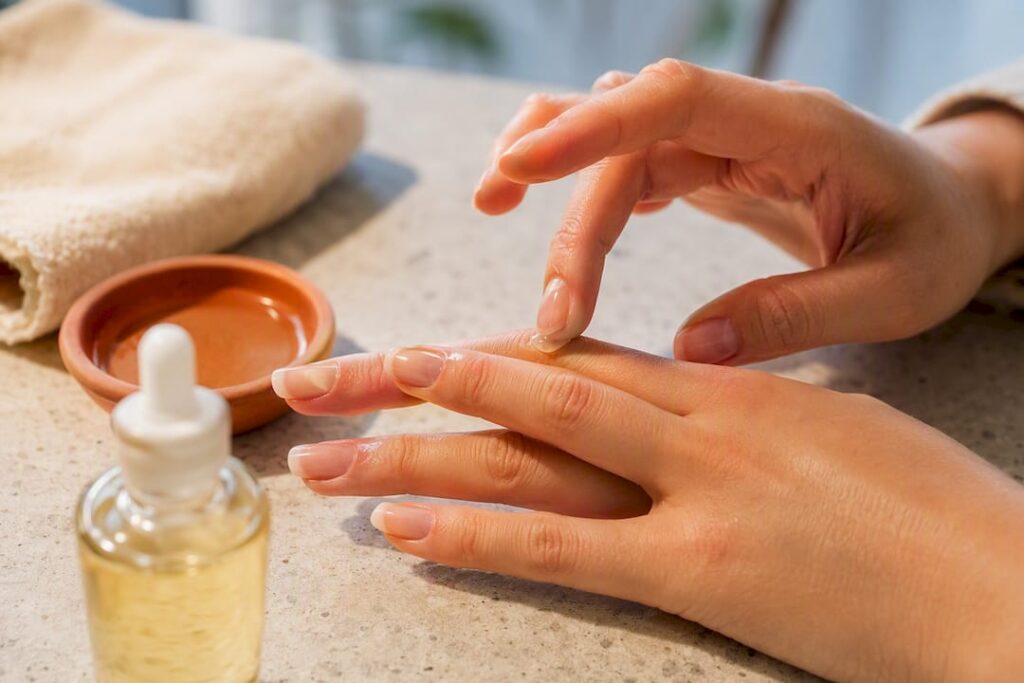
The fastest way to fix brittle, peeling nails is a three-part routine: a bond-building serum applied daily, a protective base or top coat worn between manicures, and nightly cuticle oil to lock in moisture. Start with a serum like OPI Repair Mode or ORLY Nail Rescue, layer a strengthening base coat such as CND RescueRXx underneath polish, and give it four to eight weeks before judging results. Nails grow slowly, so consistency matters more than any single product.
What Is Nail Strength Repair, and Why Do Nails Get Brittle?
Nail strength repair refers to treating and rebuilding the keratin structure of the nail plate rather than just masking damage with polish. Brittle nails usually come from one of two directions: too much moisture (soaking, dishwashing, frequent hand washing) or too little (harsh removers, low humidity, aggressive filing). Both strip the layers of keratin that hold the nail plate together, leaving it prone to splitting, peeling, and breaking at the tip.
Mayo Clinic frames the fix around a few consistent habits: moisturize regularly, limit water exposure, wear a protective layer, and talk to a healthcare provider about supplements if the problem persists. That’s the medical baseline. The product layer, and where testers have actually seen results, is where most people get stuck.
The Best Nail Strengtheners, Compared
Different products solve different problems. A serum penetrates and repairs; a hardener locks nails in place temporarily; an oil feeds the surrounding skin and cuticle so the nail plate doesn’t dry out. Here’s how six of the most-tested options break down before you commit to one.
- OPI Repair Mode Bond Building Nail Serum: built around a bond-building complex the brand says targets damaged keratin structure directly, with a short twice-daily course for rapid improvement.
- ORLY Nail Rescue Bond Repair Serum: a tester favorite for immediate post-gel or post-acrylic protection, with a fast-drying finish that fits into a normal morning routine.
- Olive & June Advanced Nail Strengthener: plant-derived ingredients like celery seed extract condition the surface and specifically target peeling.
- CND RescueRXx: a protein-enriched base and top coat meant for daily layering rather than an intensive fix, which makes it a good maintenance step once nails have improved.
- Duri Rejuvacote 1 Nail Strengthener (and the reformulated Rejuvacote MVP): a long-running drugstore staple built for daily, cumulative strengthening rather than one-time repair.
- Nail Tek Intensive Therapy 2: positioned for nails that are already peeling or splitting, designed to reinforce the nail plate layer by layer with continued wear.
| Product | Form | Best for | Key ingredients | Application | Price range | US availability |
|---|---|---|---|---|---|---|
| OPI Repair Mode | Serum | Keratin-damaged, peeling nails | Bond-building Ulti-Plex complex | Short course, twice daily | $$ | Salons, opi.com, national retailers |
| ORLY Nail Rescue | Serum | Post-gel/acrylic protection | Bond repair complex | Daily | $$ | Drugstores, beauty retailers |
| Olive & June Advanced | Serum | Peeling, surface conditioning | Celery seed extract | Daily | $ | Target, olive&june.com |
| CND RescueRXx | Base/top coat | Daily protective layering | Hydrolyzed proteins | Daily, under polish | $$ | Salons, beauty supply stores |
| Duri Rejuvacote 1 | Base/top coat | Long-term nourishment | Protein blend | Daily, layered coats | $ | Drugstores, Amazon |
| Nail Tek Intensive Therapy 2 | Base/top coat | Splitting, peeling nails | Protein, calcium | Daily until improved | $ | Salons, beauty supply stores |
Beyond this shortlist, several other formulas show up consistently in tester roundups for specific problems. ISDIN Si-Nails leans on a silicon-based formula aimed at nail growth support. OPI Nail Envy Original Nail Strengthener remains a salon-standard hardener for nails that need rigid, short-term reinforcement before an event. Sally Hansen Advanced Hard As Nails Strengthener and Ella+Mila Nail Strengthener both sit at accessible price points for everyday maintenance. CND RescueRxx Daily Keratin Treatment doubles down on the keratin angle in a lighter daily form. JINsoon HyperRepair Nail Oil and Tenoverten The Rehab work as oil-based nourishment for the surrounding cuticle. Nailtiques Formula 2 Protein Treatment and Deborah Lippmann Hard Rock Nail Strengthener are older, protein-forward formulas still favored by people with chronically thin nails. Londontown Kur Nail Hardener & Base Coat rounds things out as a hardener built to double as a base under polish.
Byrdie’s testing found that protein-enriched formulas and bond-building serums protected nails almost immediately, but visible strengthening and reduced peeling only showed up after several weeks of consistent use. That timeline is the part most people skip past.
How to Use These Treatments: A 4-Week Repair Routine
Nails don’t respond to product switching. They respond to repetition. Here’s the sequence that gives a serum or hardener the best chance to work.
- Prep clean, dry nails. Skip cuticle trimming. Dermatologists recommend leaving the cuticle intact because it seals the nail matrix against infection, and cutting it just creates a new entry point for bacteria.
- Apply your serum first, every morning. A bond-building serum like OPI Repair Mode or ORLY Nail Rescue needs direct contact with the nail plate, so apply it before any polish or coat.
- Layer a base coat over bare or polished nails. CND RescueRXx or Duri Rejuvacote go on daily, building thickness over one to two weeks.
- Do a nightly oil “slugging” step. Massage a nourishing oil, such as JINsoon HyperRepair, into the cuticle and nail plate before bed, then let it absorb overnight. This occlusive approach helps severely dry nails hold onto moisture far better than a quick daytime swipe.
- Track progress weekly, not daily. Photograph nails at the same angle once a week. Real change shows up in new growth at the cuticle line, not in the damaged tips.
- Reassess at week four. If peeling has slowed and new growth looks smoother, keep going. If nothing has changed, the formula might not match your specific problem, so switch categories (serum to hardener, or vice versa) rather than switching brands within the same category.
Pro Tip: Keep a base coat on at all times, even between manicures. Bare nails exposed to daily friction and water lose progress faster than polished ones.
What to Look for (and Avoid) on Ingredient Labels
The label tells you whether a product repairs or just disguises damage. Look for hydrolyzed wheat or soy protein, keratin, and calcium, which support the nail’s internal structure over time. Moisturizing oils like jojoba or vitamin E address the surrounding skin, which matters because dry cuticles pull moisture straight out of the nail plate.
Hardeners and treatments do different jobs, and mixing up which one you need is the most common mistake. A hardener forms a rigid protective shell for short-term relief; a treatment or serum penetrates the nail to support long-term repair. If your nails are actively splitting right now, you want the short-term shell. If you’re rebuilding over months, you want the penetrating treatment.
Some hardeners lean on older crosslinking chemistry that can backfire.
- Formaldehyde and formaldehyde resin: harden nails temporarily but dry them out with repeated use, worsening brittleness.
- Toluene: a solvent linked to irritation with regular exposure.
- DBP (dibutyl phthalate): a plasticizer flagged in Mayo Clinic’s guidance on ingredients to avoid.
- Camphor: another older hardening agent that can dry the nail plate over time.
Mayo Clinic specifically names these as ingredients to avoid because they tend to exacerbate the exact brittleness they’re marketed to fix. Newer formulas from brands like OPI, ORLY, and Olive & June have shifted toward protein- and bond-building chemistry to sidestep this problem. This shift is part of why editorial reviewers increasingly favor them over old-school hardeners for anything beyond a one-week fix.
Daily Habits, Diet, and Supplements That Support Stronger Nails
Topical treatment only works as fast as your habits allow. Water exposure is the biggest hidden saboteur. Dishwashing, long showers, and frequent hand sanitizer use all strip the same oils your serum is trying to restore.
- Wear rubber gloves for dishes and cleaning, especially in the first four weeks of a repair routine.
- Limit hand soaking (baths, pools, dishwashing) to under 15 minutes where possible.
- Skip acetone-based polish removers, which dehydrate the nail plate; use acetone-free formulas instead.
- Reapply hand cream after every hand wash or sanitizer use, not just at bedtime.
Diet plays a supporting role, not the leading one. Adequate protein and iron intake matter because nails are made almost entirely of keratin, a protein structure that needs raw material to rebuild. Cleveland Clinic notes that biotin supplementation can help people who are actually deficient, but because nails grow slowly, noticeable improvement usually takes several weeks of consistent use, not days. If you’re already eating a varied, protein-sufficient diet, adding biotin on top likely won’t accelerate results much further.
Hydration matters more than most people expect. Dry indoor air in winter months pulls moisture from nails just as fast as water exposure does, which is exactly when nightly oil slugging earns its place in the routine. Pair the habits above with your chosen serum or base coat, and you’re giving the product the best possible environment to work.
For more on the daily-habit side of beauty upkeep, our guide to practical wellness tips covers the broader lifestyle patterns that show up in skin and nail health alike.
When Should You See a Dermatologist About Brittle Nails?
Most brittle nails respond to consistent topical care and habit changes within a couple of months. Some signs mean it’s time to stop self-treating and get evaluated.
- Sudden changes in nail color, shape, or thickness with no obvious cause.
- Discoloration (yellow, green, or dark streaks) that doesn’t grow out with the nail.
- Pus, swelling, or significant pain around the nail fold.
- Splitting or peeling that persists past two to three months of consistent treatment.
A dermatologist may check iron levels or thyroid function, since both deficiencies show up in nail texture, and can run a KOH prep or fungal culture if infection is suspected; for more on underlying causes and treatments, see Tyndt hår: årsager, behandlinger og anti-aging tilskud. For confirmed fungal or inflammatory causes, prescription-strength topical agents work faster and more reliably than any over-the-counter serum. Mayo Clinic recommends involving a healthcare professional once brittleness looks like a symptom of something else rather than ordinary wear and tear.
Why Trust This Guide?
This roundup combines three types of evidence: product-testing signals from outlets that run multi-week trials, dermatologist-backed guidance from Mayo Clinic and Cleveland Clinic on causes and safe ingredients, and manufacturer application data for products like OPI Repair Mode where brand-published instructions matter for correct use. We cross-check ingredient claims against clinical sources rather than repeating marketing copy verbatim.
Some links in this guide are affiliate links, which may earn Stacyknows a small commission at no extra cost to you. That never changes which products make the list. For nail changes that look medical rather than cosmetic, see a dermatologist rather than relying on any article, including this one. For more of our testing-informed picks, our beauty reviews hub and hair loss guide apply the same standard.
The Uncomfortable Truth About “Nail Strengthener” Marketing
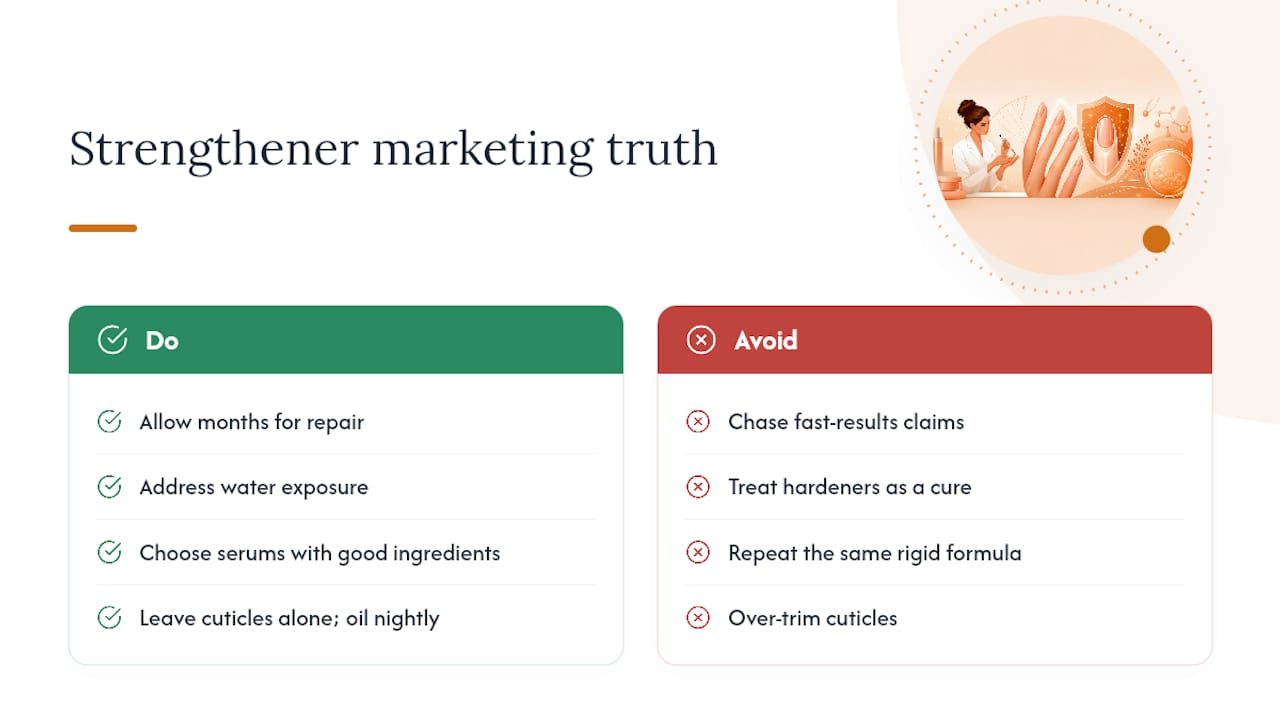
Most nail strengthener marketing sells speed. Real nail repair sells patience, and that’s a harder thing to put on a bottle. The instinct to reach for a hardener the moment a nail splits makes sense, but a hardener is a splint, not a cure. If you keep reaching for the same rigid formula month after month without addressing water exposure or ingredient quality, you’re maintaining damage, not fixing it.
The bigger blind spot: people treat nails and cuticles as separate problems. They aren’t. A dry, over-trimmed cuticle undermines even the best bond-building serum, because the nail plate draws moisture from the tissue around it. If I had to pick one habit change over any product on this list, it would be leaving cuticles alone and keeping them oiled nightly. Everything else, including the serum you pick, works better once that’s in place.
— Stacy Geisinger
Curated picks and where to find them
Testing every serum, base coat, and oil on this list yourself would take months you probably don’t have. This guide fills the gap with curated, tested product selections without the trial-and-error cost of buying five formulas to find the one that fits your specific nail problem.

The Beauty Secret Finds page rounds up treatments, tools, and routines vetted against dermatologist and testing sources cited throughout this guide, to help avoid guessing which serum matches your peeling, splitting, or brittleness pattern. Pair that with the full beauty reviews archive for longer, honest breakdowns before you buy. Start with the Beauty Secret Finds page, pick the treatment that matches your specific nail issue, and give it the four weeks this guide recommends.
Sources
- Brittle Nails: Causes and Treatment Tips — Cleveland Clinic
- Fingernails: Do’s and don’ts for healthy nails — Mayo Clinic
- The 10 Best Nail Strengtheners to Fix Brittle, Peeling … — Byrdie
- Shop Repair Mode™ Bond Building Nail Serum | OPI®
Recommended
- Beauty Secrets Women Around the World Swear By That Americans Haven’t Fully Discovered Yet
- Beauty Reviews: Pick Products That Match Your Skin
