

Peptides are short chains of amino acids, typically 2 to 50 units long, that act as the body’s essential signaling molecules. They are not the same as proteins, which are longer chains that form structural tissue. Peptides work more like messages, telling your cells what to do and when. You already know some of them by name. Insulin is a peptide. So is GLP-1, the hormone behind some of the most talked-about weight loss drugs of the decade. Understanding what peptides are and how they work helps you cut through the noise around supplements, skincare, and wellness trends.
What are the main types of peptides?
Peptides are classified by both length and function. A dipeptide contains just two amino acids. An oligopeptide holds between 3 and 20. A polypeptide stretches beyond 20, approaching protein territory. That distinction matters because length affects how a peptide behaves in the body and how well it absorbs through skin or the gut.
Beyond length, the more useful distinction is between endogenous and synthetic peptides. Endogenous peptides are made naturally by your body. Synthetic peptides are built in a lab, often modified for better stability or absorption. Lab-modified peptides may behave differently from their natural counterparts, which is why their effects and risks are not always predictable.

Here is a breakdown of the main categories you will encounter:
| Peptide Type | Examples | Regulatory Status |
|---|---|---|
| FDA-approved drugs | Insulin, semaglutide, tirzepatide | Fully approved, clinically tested |
| Cosmetic peptides | GHK-Cu, palmitoyl pentapeptides, Argireline | Cosmetic use, limited clinical trials |
| Wellness supplements | Collagen peptides | Generally recognized as safe |
| Experimental peptides | BPC-157, TB-500, Melanotan II | Not FDA-approved, animal data only |
The FDA-approved category is where the science is strongest. Insulin has decades of clinical use. GLP-1 agonists like semaglutide and tirzepatide are peptide-based medications with robust human trial data behind them. Experimental peptides like BPC-157 and TB-500 are a different story entirely, and we will get to that.
Pro Tip: If you see a peptide marketed online without an FDA approval number or peer-reviewed human trial data, treat it as experimental until proven otherwise.
How do peptides work inside the body?
Peptides function as biological messengers. They bind to specific receptors on cell surfaces, triggering a response. Think of it like a key fitting a lock. The peptide is the key, and the receptor is the lock. When the right peptide meets the right receptor, it sets off a chain of events inside the cell.
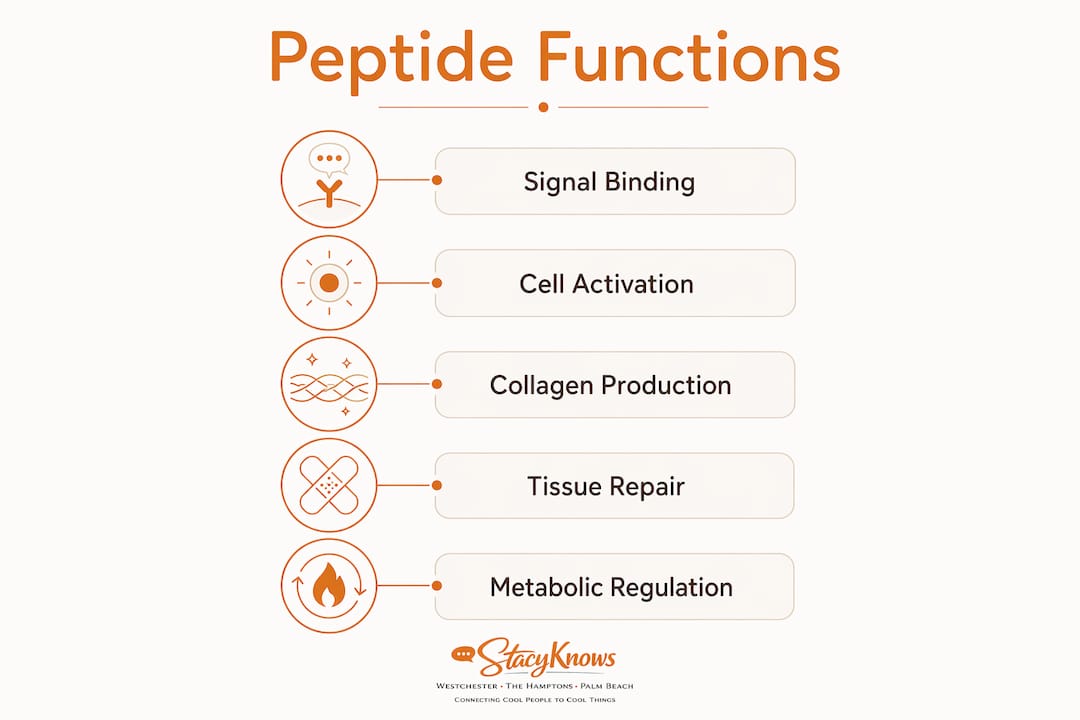
Peptides play roles in tissue repair, immune regulation, neuroprotection, and metabolic control. Their small size is actually a therapeutic advantage. They penetrate tissue efficiently, bind receptors quickly, and clear the body fast. That rapid clearance reduces the risk of buildup and systemic side effects compared to larger drug molecules.
Here are some of the most well-documented physiological roles:
- Hormone regulation: Insulin controls blood sugar. GLP-1 signals satiety and slows gastric emptying.
- Tissue repair: Certain peptides accelerate wound healing and collagen production.
- Immune modulation: Some peptides help regulate inflammatory responses.
- Neuroprotection: Peptides like oxytocin and vasopressin influence brain function and mood.
Collagen peptides deserve a specific mention here. When you take oral collagen peptides, your digestive system breaks them into smaller fragments. Those fragments circulate in the bloodstream and appear to stimulate fibroblasts, the cells that produce collagen in your skin. This is why oral collagen supplements show better evidence for skin elasticity than most topical creams. The delivery route genuinely matters.
What are the benefits and risks of peptides?
The benefits of peptides range from clinically proven to speculative, depending on which peptide you are talking about. That range is wide, and collapsing it into one category is a mistake a lot of wellness content makes.
On the proven end, the numbers are striking. Tirzepatide achieves a mean body weight reduction of 22.5% over 72 weeks in clinical trials. Semaglutide delivers 14.9% weight loss over 68 weeks. These are not supplements. They are prescription drugs with years of human data behind them. For people managing obesity or type 2 diabetes, these peptide medications have genuinely changed outcomes. You can read more about the metabolic picture at Stacyknows in this piece on GLP-1 and long-term health.
The wellness peptide market is a different world. Most peptides marketed online, including BPC-157, TB-500, and Melanotan II, have no human clinical trial data. Their evidence base comes from animal studies and anecdotal reports. That does not mean they do not work. It means we do not know yet.
“Many wellness peptides lack standardized dosing and human safety data, making unregulated usage genuinely risky.” — MIT Technology Review, 2026
The risks worth knowing about:
- Dosage inconsistency: Without standardized manufacturing, the amount in a product may not match the label.
- Unknown long-term effects: Animal data does not reliably predict human outcomes.
- Contamination risk: Especially with injectable or self-reconstituted peptide powders.
- Drug interactions: Peptides that affect hormones or immune function can interfere with existing medications.
The quality of evidence varies widely across the peptide category. Some are backed by decades of human data. Others are backed by a handful of rat studies and a Reddit thread. Knowing the difference protects you.
How are peptides used in skincare?
Peptides in skincare work by signaling skin cells to produce more collagen, slow the breakdown of existing collagen, or relax facial muscles. The three most studied cosmetic peptides are GHK-Cu (copper peptide), palmitoyl pentapeptides, and Argireline.
| Peptide Ingredient | Primary Claimed Benefit | Evidence Level |
|---|---|---|
| GHK-Cu (copper peptide) | Collagen synthesis, wound healing | Moderate clinical evidence |
| Palmitoyl pentapeptides | Reduces fine lines, firms skin | Some clinical support |
| Argireline | Relaxes facial muscles, reduces wrinkles | Limited human trials |
| Oral collagen peptides | Improves skin elasticity | Good clinical support (8–12 weeks) |
Topical peptides like GHK-Cu show moderate clinical evidence for skin benefits. Oral collagen peptides, taken at 5–15g daily for 8–12 weeks, show consistent improvements in skin elasticity across multiple studies. That oral route outperforms most topical serums because the peptides reach skin cells through the bloodstream rather than trying to penetrate the skin barrier from the outside.
One thing worth knowing: peptide serums work best when paired with delivery-enhancing treatments. Microneedling, for example, creates micro-channels in the skin that allow topical peptides to penetrate more effectively. Stacyknows has covered how FDA-authorized microneedling fits into modern skincare routines.
Pro Tip: When buying a peptide serum, check that the peptide appears in the first half of the ingredient list. If it is buried near the bottom, the concentration is likely too low to do much.
What should you know before buying peptides?
Buying peptides safely starts with one question: is this product FDA-approved, or is it sold as a supplement or research chemical? The answer changes everything about how you should approach it.
Here is a practical framework for evaluating any peptide product:
- Check the FDA database. Approved peptide drugs like insulin, semaglutide, and tirzepatide are listed. If your product is not there, it is not a drug.
- Look for third-party testing. Reputable supplement brands use independent labs to verify purity and dosage. Look for a certificate of analysis.
- Avoid DIY injectable kits. Self-reconstituting peptide powders carry real contamination and dosage risks. Many are sold as “research chemicals” specifically to avoid regulation.
- Talk to a doctor before using injectables. Any peptide you inject bypasses your body’s natural filtration systems. Medical supervision is not optional here.
- Buy from licensed pharmacies. For prescription peptide medications, a licensed pharmacy is the only safe source.
Many peptides sold online are labeled as research chemicals to sidestep FDA oversight. That label is a signal, not a reassurance. It means the product has not been reviewed for human safety. If you are curious about how investigational drugs reach consumers, Stacyknows has a useful explainer on programs expanding drug access.
Pro Tip: For oral collagen peptides, marine-sourced hydrolyzed options tend to have smaller peptide fragments and better bioavailability than bovine sources. Look for “hydrolyzed” on the label.
My honest perspective on the peptide trend
I have watched the peptide conversation explode over the past few years, and my honest reaction is: the excitement is partly justified and partly a marketing machine running ahead of the science.
The FDA-approved peptides, insulin, GLP-1 agonists, and a handful of others, represent genuinely remarkable medicine. The results from tirzepatide trials are the kind of numbers that change clinical practice. That is real. But the wellness industry has borrowed the word “peptide” and attached it to products that share almost nothing with those drugs except the category name.
What I find most interesting is how the protein and peptide supplement conversation keeps circling back to the same tension: the body is sophisticated, and throwing more of a signaling molecule at it does not always produce the effect you want. Peptides are not passive nutrients. They are active signals. Getting the dose, delivery method, and target right matters enormously.
My advice is to stay curious but stay grounded. Oral collagen peptides have solid evidence and low risk. Cosmetic peptide serums are worth trying if the formulation is good. Injectable experimental peptides without medical supervision are a different category entirely, and the risk-reward math does not favor casual use. The lights have not dimmed on peptide research. If anything, the science is just getting started. But that means waiting for better data is a reasonable choice, not a missed opportunity.
— Stacy
Discover peptide-based beauty products at Stacyknows
Sorting through peptide products on your own can feel overwhelming. Stacyknows has done a lot of that work for you.

The Stacyknows Beauty Secret Finds page is a curated collection of beauty and wellness products that actually deliver results, including peptide-based serums, oral collagen supplements, and skincare worth your money. Every pick is chosen with real readers in mind, not just trending ingredients. If you want to explore what the global beauty world is doing with peptides and beyond, the Stacyknows guide to beauty secrets from around the world is a great place to start. You deserve products that work, and Stacyknows helps you find them.
FAQ
What is the simple peptide definition?
A peptide is a short chain of amino acids, typically 2 to 50 units long, linked by peptide bonds. Peptides are smaller than proteins and function primarily as signaling molecules in the body.
How do peptides differ from proteins?
Peptides contain fewer than 50 amino acids, while proteins are longer chains that typically fold into complex three-dimensional structures. Proteins form structural tissue; peptides act more like chemical messages.
Are peptides in skincare actually effective?
Topical peptides like GHK-Cu show moderate clinical evidence for skin benefits, while oral collagen peptides have stronger evidence for improving skin elasticity over 8–12 weeks. Results depend heavily on the specific peptide, its concentration, and how it is delivered.
Are wellness peptides like bpc-157 safe to use?
Most wellness peptides sold online lack human clinical trial data and are classified as experimental. Without standardized dosing or regulatory oversight, their safety in humans is not established.
What are the most proven peptide benefits?
FDA-approved peptide drugs deliver the strongest evidence. Tirzepatide produces 22.5% mean weight loss over 72 weeks, and insulin has managed diabetes safely for over a century. Oral collagen peptides also have solid support for skin elasticity improvements.
Recommended
- FDA Legally Authorized Microneedling as a Skin Treatment – Stacyknows
- Top 5 Benefits of Facial Plastics – Stacyknows
- What You Should Know About Compounding Pharmacies – Stacyknows
- Why Is My Entire Feed Suddenly About Creatine? And Should Women on GLP-1s Actually Be Taking It? – Stacyknows Why Women on GLP-1s Are Suddenly Talking About Creatine
