
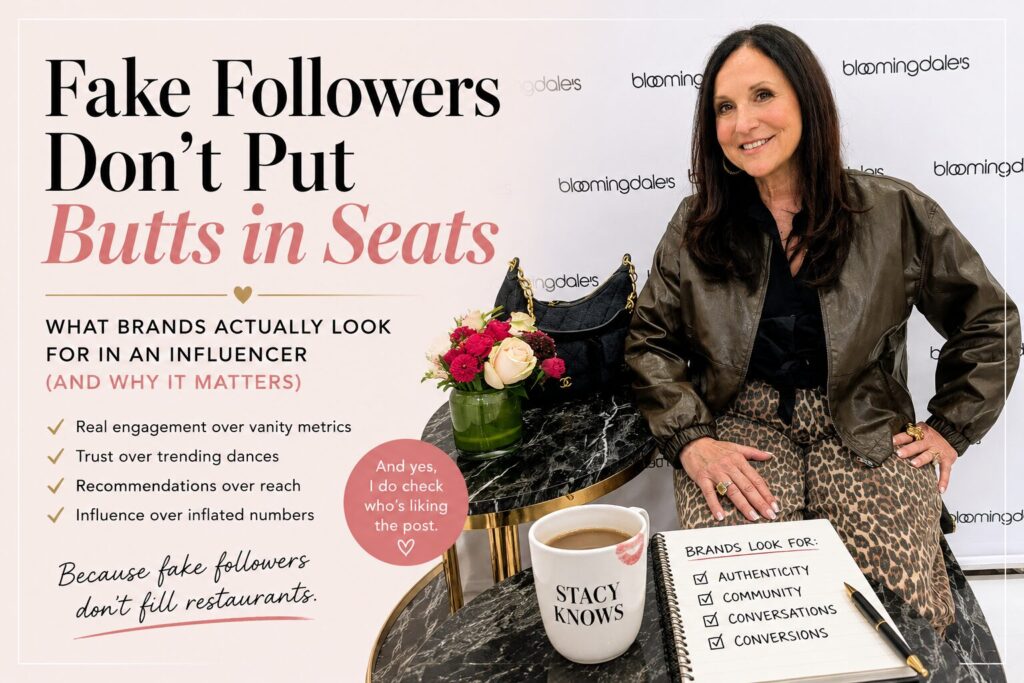
I’ve been wondering when social media platforms — and honestly brands too — were finally going to catch on to something that has always seemed incredibly obvious to me.
Fake followers don’t fill restaurants.
They don’t sell tickets.
They don’t get women to book the facial.
They don’t convince someone to try the martini.
And they definitely don’t build trust.
For years, social media became this giant numbers game.
Follower counts.
Likes.
Views.
And somewhere along the way, brands forgot to ask the most important question:
“Does this person actually influence people?”
Because there’s a huge difference between getting attention and getting action.
Honestly, I see creators with enormous followings all the time and think:
Okay… but would anyone actually take their recommendation seriously?
Just because someone can dance on camera doesn’t mean I trust their opinion about creatine, supplements, skincare, or wellness.
Although honestly?
I absolutely wish I could dance like some of them.
Entertainment and influence are not always the same thing.
Sure, some creators are amazing performers. Some people are naturally funny, gorgeous, stylish, or incredibly talented on camera.
But trust?
That’s a completely different skill set.
Real influence happens when people believe:
“She actually tried this.”
“She would tell us if it was terrible.”
“She has taste.”
“She knows what she’s talking about.”
“She sounds like my smart friend.”
That’s why I think the influencer industry is changing again.
Instagram’s newest features and growing emphasis on DMs, shares, saves, and private engagement tell me the platforms are finally recognizing what many of us already knew:
The real conversations happen privately.
And honestly, this is something Rebecca from Standupfoodie and I have talked about for YEARS.
Long before Instagram started publicly emphasizing shares, saves, DMs, and private engagement, we already knew the real conversations were happening somewhere else.
Because women don’t just “like” things.
We send them to each other.
Rebecca and I are constantly texting each other posts, restaurant Reels, beauty treatments, ridiculous influencer campaigns, and local spots that suddenly have suspiciously perfect engagement.
We constantly joke that the real engagement isn’t in the comments section anymore — it’s happening in group chats between women deciding where to eat, what to buy, where to travel, what facial to try, and whether the place is actually worth leaving the house for.
Because when someone sends your post to a friend, that’s meaningful.
That’s:
“We should go here.”
“You would love this.”
“This reminded me of you.”
“Should we book this?”
“I trust her recommendations.”
And speaking of fake engagement…
One of my favorite hobbies — honestly maybe my favorite party game at this point — is clicking on the people liking viral influencer posts.
Please tell me I’m not the only one who does this.
I’ll see some restaurant Reel with wildly inflated engagement and think:
Hmmmmm.
Then I start clicking.
And suddenly I’m looking at accounts with:
– 1 follower
– no profile photo
– zero posts
– following 7,500 people
– somehow liking a random steakhouse Reel from 3,000 miles away
Yes.
I’m SURE those likes are completely authentic.
Nothing screams “genuine local restaurant enthusiast” quite like an empty account named something like @Jenny458992 supporting a seafood tower in Westchester from another continent.
Honestly, brands cannot be this lazy.
Or maybe some of them still are.
Because it takes about 30 seconds to spot the difference between a creator with inflated vanity metrics and someone with a genuinely engaged audience.
The smartest brands are no longer just looking at follower counts.
They’re looking for creators who:
– move people to action
– create conversations
– drive bookings and sales
– have loyal communities
– get shares and saves
– have audiences that actually spend money
And honestly, this is especially true for women over 35.
We are constantly influencing each other.
We text restaurant recommendations.
We send beauty treatments.
We share travel ideas.
We warn each other about bad products.
We discuss doctors, skincare, diets, dating, Broadway shows, hotels, jeans, supplements, and martinis like it’s a part-time job.
That’s real influence.
Not bots.
Not fake engagement.
Not random viral dancing videos with zero connection to the product being sold.
And I think audiences are becoming smarter too.
People want personality now.
Humor.
Taste.
Honesty.
Someone who feels relatable.
Not someone reading a script while holding a supplement container they’ll never use again after the campaign ends.
I started blogging long before influencing became a business. Back when people literally asked:
“What’s a blog?”
And maybe that’s why I still believe the most valuable thing a creator can have isn’t a million followers.
It’s credibility.
Because fake followers don’t put butts in seats.
Trust does.
