

The simplest weekly body exfoliation routine that actually works: dry brush before your shower, soak in warm water for a few minutes, apply your chosen scrub or chemical exfoliant, rinse thoroughly, then moisturize while your skin is still slightly damp.
The weekly ritual in brief: Dry brush (optional) → warm shower or soak → scrub or AHA/BHA product → rinse → moisturize within 60 seconds → sunscreen the next morning on exposed areas.
To get started, you need just a few things:
- A soft-bristle body brush or exfoliating mitt (for mechanical days)
- A gentle sugar or salt scrub, OR a leave-on AHA/BHA product (not both on the same day)
- A rich body moisturizer
- SPF for the following morning
Frequency verdict: Once a week is the right starting point for most people. Dry or sensitive skin may do better every 10–14 days; oily or acne-prone skin can sometimes handle twice weekly chemical exfoliation. Skip any session if your skin is sunburned, broken, or actively irritated, and always patch-test a new active on a small area for 24–48 hours before going full-body.
What does body exfoliation actually do for your skin?
Exfoliation is the process of removing dead skin cells from the surface of your body. Your skin naturally sheds those cells every 28–40 days or so, but that cycle slows as you get older, and dead cells can pile up, leaving skin looking dull, feeling rough, or trapping hairs beneath the surface.
There are two broad approaches, as Harvard Health explains: mechanical exfoliation physically scrubs cells away through abrasion, while chemical exfoliation uses acids or enzymes to dissolve the bonds holding dead cells together. Both work. The difference is in how much control you have and how much friction your skin can tolerate.
The benefits go beyond texture. Regular exfoliation helps your body lotion absorb more deeply, reduces the appearance of ingrown hairs, supports a more even skin tone, and makes self-tanner apply far more smoothly. For anyone dealing with keratosis pilaris (those small, rough bumps on the upper arms or thighs), consistent exfoliation is one of the few at-home strategies that genuinely helps.
Physical vs. chemical exfoliation: which one should you use?
Understanding the difference between these two methods helps you pick the right tool for each body area, and avoid the kind of over-scrubbing that leaves skin raw.
Mechanical (physical) exfoliation uses friction: scrub particles, a brush, a mitt, or a pumice stone physically buff away dead cells. It’s immediate and satisfying, but it’s also easier to overdo. Dermatologists note that physical scrubs can cause micro-tears when pressure is too high, especially on thinner skin like the chest or neck.
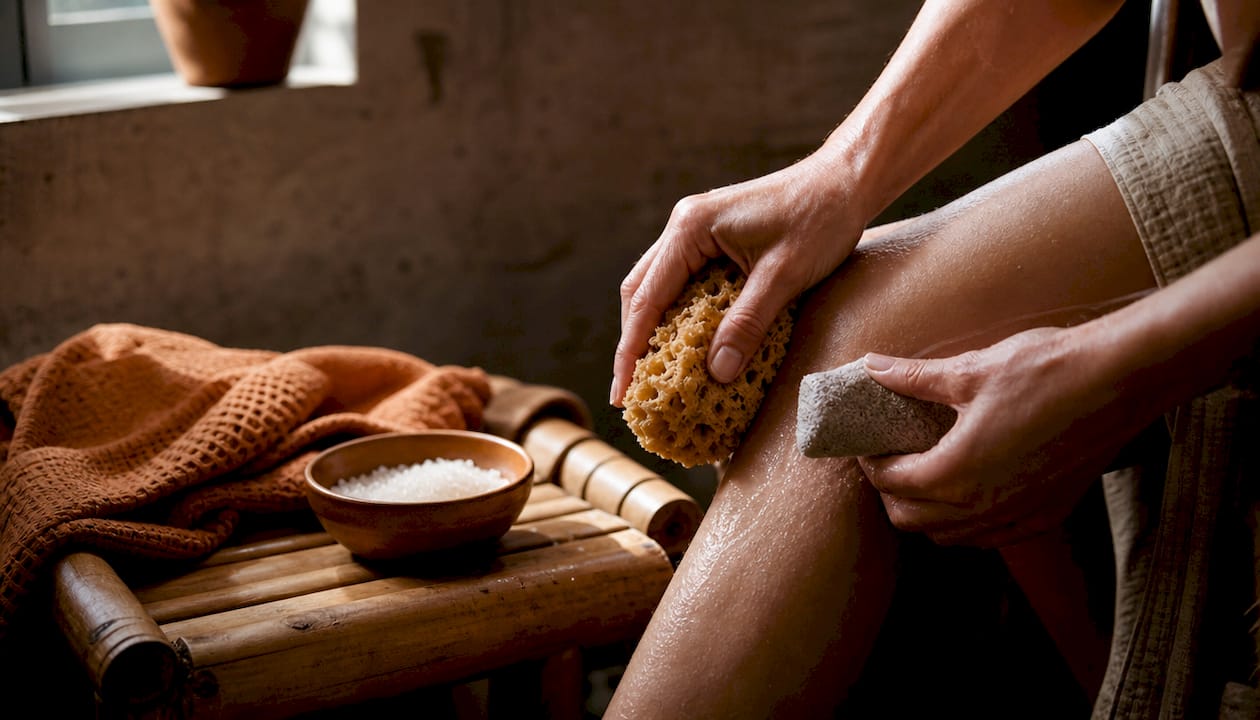
Chemical exfoliation uses acids or enzymes. AHAs (alpha-hydroxy acids like glycolic and lactic acid) work on the surface and are great for dry, dull, or uneven skin. BHAs (beta-hydroxy acids, mainly salicylic acid) are oil-soluble, so they penetrate into pores, making them the better choice for body acne and congested skin. Enzyme exfoliants (papain from papaya, bromelain from pineapple) are the gentlest option and work well for sensitive skin.
| Method | Best for | Risk level | Best body areas |
|---|---|---|---|
| Sugar scrub | Normal to dry skin | Low to moderate | Legs, arms, torso |
| Salt scrub | Rough, callused areas | Moderate | Feet, elbows, knees |
| AHA (lactic, glycolic) | Dull, dry, KP-prone skin | Low (leave-on) | Arms, thighs, chest |
| BHA (salicylic) | Acne-prone, oily skin | Low to moderate | Back, chest, shoulders |
| Enzyme exfoliant | Sensitive skin | Very low | Full body |
| Pumice / foot file | Thick calluses | Moderate | Feet only |
Pro Tip: Combine methods by area, not by day. Use a gentle dry brush or sugar scrub on thick-skinned areas like feet and elbows, then apply a leave-on lactic acid lotion to KP-prone arms or rough thighs on the same evening. Just don’t layer a physical scrub and a strong acid on the same patch of skin.
How to do a full-body exfoliation routine, step by step
This is the routine. Follow it in order the first time, then adjust based on how your skin responds.
-
Dry brush (optional, 2–3 minutes before your shower). Use a natural-bristle body brush with long strokes moving toward your heart. Start at your feet and work upward. Keep pressure light — you’re not sanding wood. Skip this step if your skin is sensitive or reactive.
-
Step into a warm shower or bath and soak for 3–5 minutes. Warm water (not hot) softens the skin and opens things up so your exfoliant can work more effectively. Hot water strips the skin barrier, so resist the urge to crank the heat.
-
Apply your mechanical exfoliant if using one. Scoop a small amount of sugar or salt scrub onto damp skin. Use gentle circular motions and spend about 30–60 seconds per area. Light-to-moderate pressure is enough. Rinse-off scrubs work best here — the correct sequence is always soften, scrub, rinse, then moisturize.
-
Apply your chemical exfoliant if using one. For rinse-off chemical products (like a salicylic acid body wash), apply, let it sit for 60–90 seconds, then rinse. For leave-on AHA lotions or serums, apply these after your shower on towel-dried skin, not in the shower. Don’t combine a physical scrub and a strong chemical exfoliant in the same session.
-
Shaving note. Shave after exfoliating, not before. Exfoliation lifts hairs and removes the dead-cell layer that can trap them, so you get a closer shave with less irritation. If you’ve used a strong chemical exfoliant (glycolic acid at higher concentrations, for example), wait at least 24 hours before shaving that area.
-
Rinse, pat dry, and moisturize within 60 seconds. Slightly damp skin absorbs moisturizer far better than completely dry skin. Use a body lotion or cream with ceramides, shea butter, or hyaluronic acid. The next morning, apply SPF to any exposed areas — chemical exfoliants increase photosensitivity.
How often should you exfoliate each body area?
Healthline’s frequency guidance is a useful starting point: normal skin generally tolerates 2–3 sessions per week, dry or sensitive skin does better at once weekly or less, and oily or acne-prone skin may handle more frequent chemical exfoliation. The key word is start — begin conservatively and only increase if your skin shows no irritation after two weeks.
Different body areas also have different tolerances. Feet are tough and can handle more frequent, more aggressive exfoliation. The chest and neck are thin-skinned and need a lighter touch.
| Body area | Recommended frequency | Notes |
|---|---|---|
| Legs | 1–2x per week | Sugar scrub or lactic acid lotion |
| Arms (KP-prone) | 2–3x per week (chemical) | Leave-on AHA or urea; gentle physical 1x |
| Chest / décolletage | 1x per week | Chemical preferred; avoid abrasive scrubs |
| Back (acne-prone) | 2–3x per week (BHA wash) | Salicylic acid body wash; no harsh scrubs |
| Knees / elbows | 1–2x per week | Salt scrub or pumice; these areas can handle more |
| Feet | 2–3x per week | Pumice or foot file; finish with occlusive cream |
One practical rule: if you use a physical scrub on Monday, use a chemical leave-on on Wednesday or Thursday. Spacing them out protects your skin barrier and gives cells time to recover.
Choosing the right exfoliant products and ingredients
The ingredient list tells you more than the label does. Here’s what to look for, and what each ingredient actually does.
AHAs (glycolic acid, lactic acid) work on the skin’s surface by loosening the bonds between dead cells. Lactic acid is gentler and more hydrating, making it the better pick for dry or sensitive skin.
BHA (salicylic acid) is oil-soluble, which means it gets into pores.
Urea is underrated. It’s particularly useful for keratosis pilaris.
Physical particles vary in how rough they are. Sugar dissolves as it contacts warm water, which naturally limits how abrasive it gets. Salt stays gritty longer and is better for tougher areas. Jojoba beads are the gentlest physical option, with a round shape that reduces the risk of micro-tears.
U.S. product examples by concern:
- Keratosis pilaris: First Aid Beauty KP Bump Eraser (10% AHA blend) and Naturium KP Body Scrub & Mask both combine chemical and gentle physical exfoliation to address follicular buildup. For KP specifically, consistent AHA use outperforms one-off scrubbing — the bumps come from keratin plugging hair follicles, and acids dissolve that plug more reliably than friction alone.
- General softening and everyday use: Tree Hut Sugar Scrub is a popular, affordable option for normal to dry skin. Dove Exfoliating Body Scrub is gentle enough for most skin types and widely available.
- Body acne (bacne): Neutrogena Body Clear Acne Body Wash (2% salicylic acid) is the go-to for chest and back breakouts.
- Sensitive or aging skin: Look for lactic acid at 5–10% in a lotion or serum format rather than a rinse-off scrub. Pair with a glycolic acid layering approach for added smoothing if your skin tolerates it.
Tools worth having:
- Natural-bristle dry body brush (long handle for the back)
- Exfoliating mitt or loofah (wash weekly; replace monthly)
- Pumice stone or foot file (for callused heels only)
- Silicone scrubber (gentler than a loofah, easier to clean)
For more help matching products to your skin type, Stacyknows beauty reviews cover a wide range of options across skin concerns.
How to spot over-exfoliation before it becomes a problem
Over-exfoliation is more common than most people realize, and it often sneaks up gradually. The signs are pretty clear once you know what to look for: persistent redness, a tight or “squeaky” feeling after cleansing, stinging when you apply moisturizer, flaking that doesn’t resolve, or skin that suddenly feels more sensitive than usual.
The AAD recommends avoiding exfoliation on sunburned, broken, or actively irritated skin. This applies to both physical and chemical methods. If you’ve recently had a professional skin treatment (a chemical peel, laser, or microdermabrasion), pause your home exfoliation routine until your skin has fully recovered. The same caution applies if you’re using prescription retinoids — layering retinoids with acids or physical scrubs significantly increases irritation risk.
Patch-testing actives: Apply a small amount to the inside of your forearm or behind your knee. Wait 24–48 hours. If there’s no redness, itching, or swelling, you’re likely fine to use it more broadly.
A note on skin tone: The AAD specifically flags that aggressive physical or chemical exfoliation can increase the risk of post-inflammatory hyperpigmentation in darker skin tones. If you have deeper skin, favor low-concentration leave-on AHAs (lactic acid is a good starting point) and avoid harsh abrasion on any area that’s already pigmented or recently irritated.
When to see a dermatologist: Sustained redness or irritation lasting more than a week after stopping exfoliation, signs of infection (warmth, swelling, discharge), or unusual new pigmentation are all reasons to get a professional opinion. For skin procedures and post-procedure care, professional guidance is worth the visit.
Adjusting your routine for specific skin conditions
Keratosis pilaris
KP responds best to consistency, not intensity. Aggressive scrubbing can inflame the follicles and make bumps look worse. Instead, use a leave-on lactic acid or urea lotion daily (or near-daily) and limit physical exfoliation to once a week with a gentle option. First Aid Beauty KP Bump Eraser and Naturium KP Body Scrub & Mask are both designed for this specific concern.
Ingrown hairs and razor bumps
Exfoliate before shaving, not after. Removing the dead-cell layer first lifts hairs so the razor can cut cleanly. After shaving, a gentle salicylic acid product (used every few days, not daily) helps prevent new ingrowns from forming by keeping pores clear.
Body acne
Mechanical scrubs don’t reach the follicular sebum that causes bacne. Apply it to damp skin on your chest and back, let it sit for about 60 seconds, then rinse. Avoid abrasive scrubs on active breakouts — friction can spread bacteria and worsen inflammation.
Aging and dry skin
As skin gets drier and thinner with age, abrasive scrubs become less appropriate. Lactic acid and urea are the better tools here: they exfoliate gently while also drawing moisture into the skin. Pair with a richer moisturizer (shea butter, ceramides, or squalane) and consider dropping physical scrubs entirely in favor of chemical options. The Beauty Over 50 guide on Stacyknows covers barrier-supporting strategies in more depth.
Feet and calluses
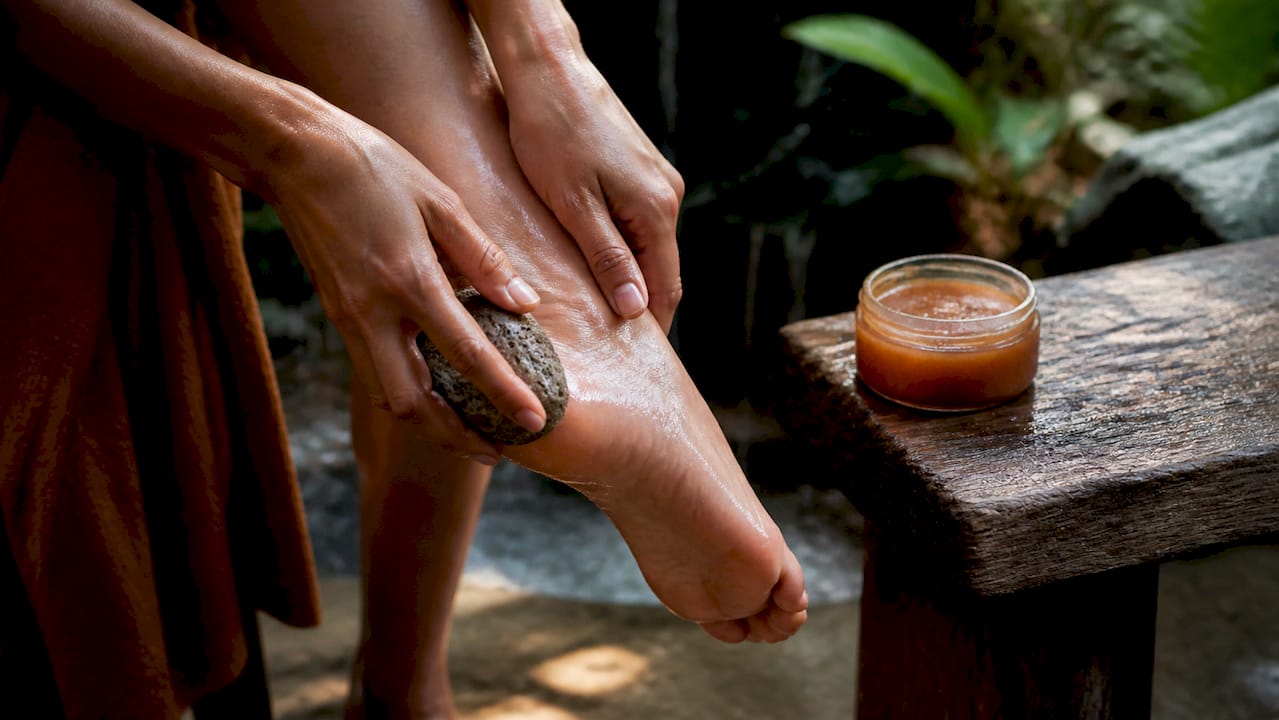
Feet are the one area where you can be more aggressive. A pumice stone or foot file on damp skin, used two to three times a week, handles thick calluses effectively. Always finish with an occlusive cream (something with petrolatum or lanolin) to lock in moisture after you’ve buffed the surface down.
Tools, technique, and maintenance tips that actually matter
Getting the motion right matters as much as picking the right product.
- Pressure: Light to moderate is always enough. If your skin is red immediately after scrubbing, you’re pressing too hard. The exfoliant does the work; your job is just to move it around.
- Motion: Circular motions for scrubs and mitts. Long upward strokes for dry brushing (always toward the heart, which supports circulation).
- Tool hygiene: Rinse your mitt or loofah after every use and hang it to dry. Wash it with soap weekly. Porous tools like natural loofahs harbor bacteria quickly — replace them every 4–6 weeks. A silicone scrubber is easier to keep clean and lasts longer.
- Dry brush care: Tap out the bristles after each use and wash the brush with mild soap monthly. When bristles start to fray or feel scratchy rather than firm, it’s time for a new one.
- Pumice: Rinse and air-dry after each use. When the surface becomes smooth and no longer feels gritty, it’s lost its effectiveness.
Pro Tip: Anchor your exfoliation session to an existing weekly habit — Sunday night shower, Saturday morning routine — so it becomes automatic rather than something you have to remember. Keep a simple note on your phone for two weeks tracking how your skin feels the day after each session. That data tells you faster than anything else whether your frequency is right.
The weekly ritual dermatologists actually recommend
The consistent message from dermatologists is this: start conservative, use chemical exfoliants on delicate areas, reserve physical methods for thicker skin, and never layer strong actives on the same day.
Research supports this rhythm: a single dedicated weekly session focused on gentle but thorough removal of buildup, followed by barrier restoration, outperforms frequent small attempts that chip away at the skin’s defenses.
Here’s a copyable Sunday night routine:
Sunday evening, ~15 minutes total:
- Dry brush for 2 minutes before stepping in (optional).
- Warm shower, 5 minutes to soften skin.
- Apply Tree Hut Sugar Scrub to legs and arms in circular motions; use Neutrogena Body Clear on chest and back if acne-prone.
- Rinse everything off.
- Pat dry, then immediately apply a lactic acid body lotion to KP-prone areas (upper arms, thighs).
- Follow with a rich ceramide body cream everywhere else.
- Monday morning: SPF on any exposed skin.
That’s it. No complicated layering, no 10-step process. The correct product application order matters for your face too — the same principle of thinnest to thickest applies to body care.
My take on making this routine actually stick
The routines that work long-term are the ones that feel like something you’re doing for yourself, not something you’re forcing yourself to do. That’s the part most exfoliation guides skip.
Treating Sunday night as a small ritual changes the experience. Light a candle, put on a podcast, use the scrub that smells like something you love. The physical result is the same, but you’re far more likely to actually do it when it feels like self-care rather than a chore on a list.
One thing I’d push back on: the instinct to do more when results feel slow. Skin takes time. If you’ve been consistent for three weeks and your KP hasn’t cleared, the answer is almost never “scrub harder.” It’s usually “add a leave-on AHA and give it another three weeks.” Patience and consistency beat intensity every time.
For anyone who wants to go deeper on products, Stacyknows Beauty Secret Finds is a good starting point for curated picks across every budget.
Sources
These are the sources that informed this guide. Each one is worth bookmarking if you want to go deeper on any specific aspect of body exfoliation.
- Have you exfoliated lately? — Harvard Health Blog
- How often should you exfoliate your body? — Healthline
- How to safely exfoliate at home — American Academy of Dermatology (AAD)
- How to Exfoliate Your Body for Silky-Soft Skin — InStyle
- How to Exfoliate Your Body: Methods, Frequency & Guide — INIA
When in doubt about your specific skin concerns, a board-certified dermatologist is always the right call. This guide covers general best practices, not personalized medical advice.
This article is general information, not a substitute for advice from a qualified doctor. Consult a qualified healthcare professional about your own circumstances before acting on anything here.
Recommended
- Solve All Skin Problems with These Natural Ingredients – Stacyknows
- Skin Procedures For A Youthful Appearance in 2025 – Stacyknows
- Signs Your Beauty Routine Needs a Serious Upgrade
- The Viral Glycolic Acid + Nivea Creme Trend Everyone Is Trying – Stacyknows The Viral Glycolic Acid and Nivea Creme Trend Everyone Is Trying
