
A month without alcohol typically improves sleep quality, raises daytime energy, and helps with hydration, and it often nudges the scale down a little from cutting empty calories. For most moderate drinkers, this kind of break is safe to do without medical help. If you drink heavily or daily, though, stopping cold can trigger dangerous withdrawal, so talk to a doctor before you start.
What Health Benefits Show Up During an Alcohol-Free Month?
Sleep is usually the first thing people notice. Alcohol disrupts the deep, restorative stages of sleep even when it helps you fall asleep faster, so cutting it out tends to mean fewer 3 a.m. wake-ups and less morning grogginess within a week or two, according to UC Davis Health.
Energy climbs for similar reasons. Better sleep plus fewer empty calories (a standard drink contains a moderate amount of calories, and a night of several adds up quickly) often means less afternoon fatigue and steadier moods.
The physical benefits go deeper than how you feel day to day:
- Blood pressure: alcohol is a well-documented driver of hypertension, and the CDC notes that cutting back lowers that risk over time.
- Liver fat: even a few weeks off alcohol can reduce liver fat buildup in people who drink regularly, since the liver gets a break from processing it.
- Weight: modest loss is common, mostly from calories cut rather than any metabolic magic.
- Skin and hydration: alcohol is a diuretic, so skipping it for a month often means fewer puffy mornings and better skin tone.
A scoping review of Dry January found real short and mid-term drops in drinking along with improvements in wellbeing and biological markers among participants, though most of that research comes from U.K.-based studies. Results vary by how much someone drank going in. A person having two glasses of wine most nights will likely notice more change than someone who drinks occasionally.
What Happens Week by Week During an Alcohol-Free Month?
The first month tends to follow a fairly predictable arc, whether you’re doing Dry January or picking any other 30 days on the calendar.
- Days 1 to 3: cravings peak, and sleep can actually get worse before it gets better as your body adjusts to functioning without a nightly depressant.
- Week 1 to 2: sleep starts stabilizing, mood lifts, and energy improves for most moderate drinkers. Heavier drinkers may feel irritable, anxious, or shaky. This is worth watching closely (more on that below).
- Week 3 to 4: skin often looks clearer, and if weight is going to shift, this is usually when you’ll see it. Some report feeling less reactive to stress.
- End of month: the biggest pitfall is treating day 31 as a finish line and celebrating with a big pour. Surveys of Dry January participants report high satisfaction and a strong tendency to repeat the challenge, per AARP, which suggests the smarter move is deciding your after-plan before the month even ends.
How Do You Prepare for an Alcohol-Free Month and Stick With It?
Success comes down to preparation, not willpower alone. UC Davis Health recommends recording your usual drinking before you start, choosing firm start and end dates, and telling supportive people in your life what you’re doing.
The habits that trip people up aren’t random. Map your automatic drinking moments: the time of day, the people you’re with, the emotion driving it, and what you’re actually hoping the drink will do for you (unwind, celebrate, fit in). Once you can name the pattern, you can design a replacement before the craving hits, rather than scrambling in the moment.
A few concrete steps make the month easier to survive:
- Clear alcohol out of the house so you’re not negotiating with a bottle in the fridge.
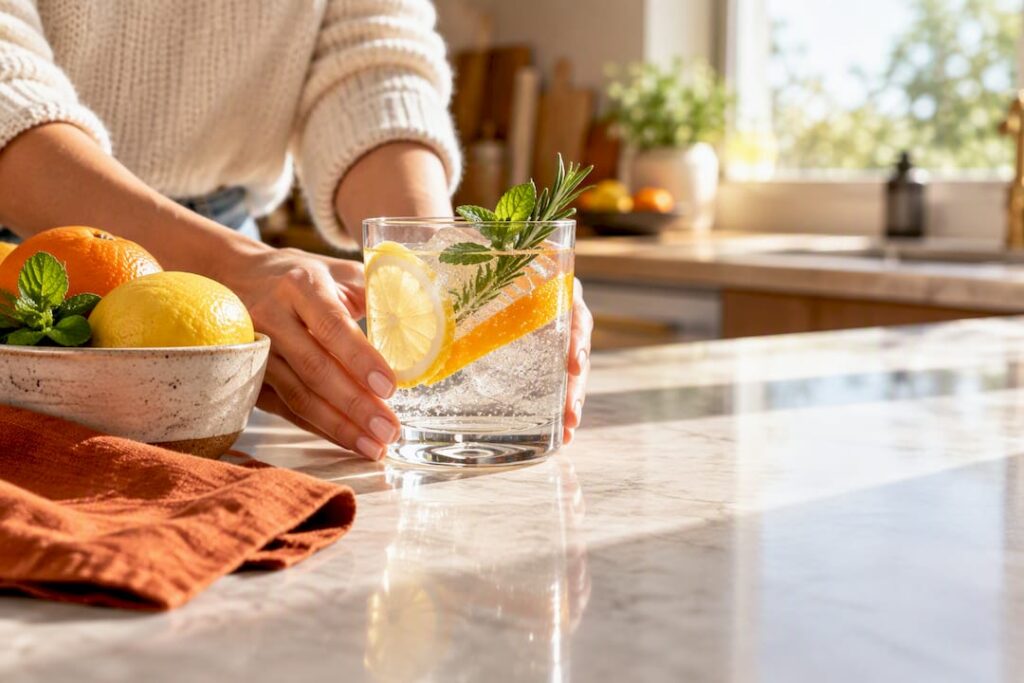
- Stock alcohol-free drink options: a good nonalcoholic beer, a sparkling water with bitters, or a proper mocktail so you’re not just drinking soda water at a dinner party.
- Prepare a short, firm response for social pressure. “Not tonight, thanks” said once and repeated without explanation shuts down most follow-up questions.
- Shift some plans toward activities where drinking isn’t the main event: a hike, a matinee, a coffee catch-up instead of happy hour.
- Bring your own drink to gatherings so you’re never standing there empty-handed, which is often the moment people cave.
Social friction is usually the hardest part of the month, harder than the physical cravings for most moderate drinkers. Letting your regular companions know what support looks like, and carrying a ready-to-drink alternative, means you’re not re-explaining yourself at every single event.
Pro Tip: Keep a tiny daily log, just three lines: sleep quality, mood, and money saved. Watching the savings add up over 30 days is oddly one of the most motivating parts of the whole thing.
Is Quitting Alcohol Cold Turkey Ever Dangerous?
For most moderate drinkers, no. But if you drink heavily or daily, stopping abruptly can trigger withdrawal serious enough to be life-threatening, per the NIAAA. Warning signs include seizures, hallucinations, severe agitation, a racing heart, or intense tremors, especially in the first 48 to 72 hours after your last drink.
If you’re unsure how your body will react, get a clinical assessment before you start. A doctor can determine whether you need a supervised taper or medication support. Clinical reviews note that mild withdrawal can sometimes be managed on an outpatient basis with a tapering plan, but severe cases require inpatient care and medication like benzodiazepines.
Two U.S. resources are worth saving in your phone right now:
- SAMHSA’s National Helpline: free, confidential, available 24/7 at 1-800-662-HELP (4357).
- FindTreatment.gov: a confidential locator for outpatient, intensive outpatient, and residential treatment options near you.
More background on what rehab actually looks like is available if you or someone you love ever needs to go further than a monthlong break.
How Do You Track Results During an Alcohol-Free Month?
Treat the month like a personal experiment. Note a few things daily or weekly: sleep quality on a simple 1 to 5 scale, mood, cravings, and money saved. If blood pressure matters to you, check it at the start and end.
Small shifts count. You don’t need dramatic weight loss to call the month a win if your sleep improved and you feel more in control around alcohol.
| What to track | Why it matters |
|---|---|
| Sleep quality | Usually the earliest and most noticeable change |
| Mood and energy | Reflects both better rest and fewer empty calories |
| Cravings | Shows whether drink-refusal confidence is building |
| Money saved | A concrete, motivating number by day 30 |
Once the month ends, you have three real options: keep going, set specific rules around future drinking (say, weekdays off-limits), or seek a professional evaluation if the break revealed a habit heavier than you’d realized.
Fitting an Alcohol-Free Month Into a Real Life
Treat this as an experiment, not a personality overhaul. You’re not swearing off wine forever. You’re collecting 30 days of data on how your body and social life actually run without it.
Swap the “sad seltzer” mindset for something better: a proper mocktail with fresh citrus and bitters, dinner-first invites instead of happy hour, or a wine-tasting swapped for a tea tasting. Choose events where the food, the view, or the company is the actual draw.

Pick two or three things to track (sleep, mood, how you feel walking into a party without a drink in hand) and check in weekly. Small, specific wins beat vague ambitions every time.
What Should You Actually Prioritize This Month?
The conventional advice on alcohol-free challenges leans hard into willpower: just don’t drink, tough it out, reward yourself at the end. That framing misses the point. The people who actually finish the month and keep some of the change afterward are the ones who treated it like a data-collection project, not a test of character.
What’s overrated: the finish line itself. Day 31 shouldn’t be a countdown to your first drink; it should be the moment you decide what you actually want going forward, based on what you noticed.
What’s underused: the prep work. Mapping your triggers before you start beats relying on willpower once you’re standing at a bar with friends. And the safety piece isn’t optional window dressing. If you drink heavily, a quick conversation with a doctor before day one matters more than any mocktail recipe.
Prioritize tracking over perfection. One missed night doesn’t erase what you learned in the other twenty-nine.
— Stacy Geisinger
Want More Lifestyle Experiments Worth Trying?
This site is where women 35+ come for lifestyle content that actually moves the needle, not another generic wellness checklist. Beyond alcohol-free months, we cover the everyday habits that show up on your skin, in your energy, and at your dinner table.
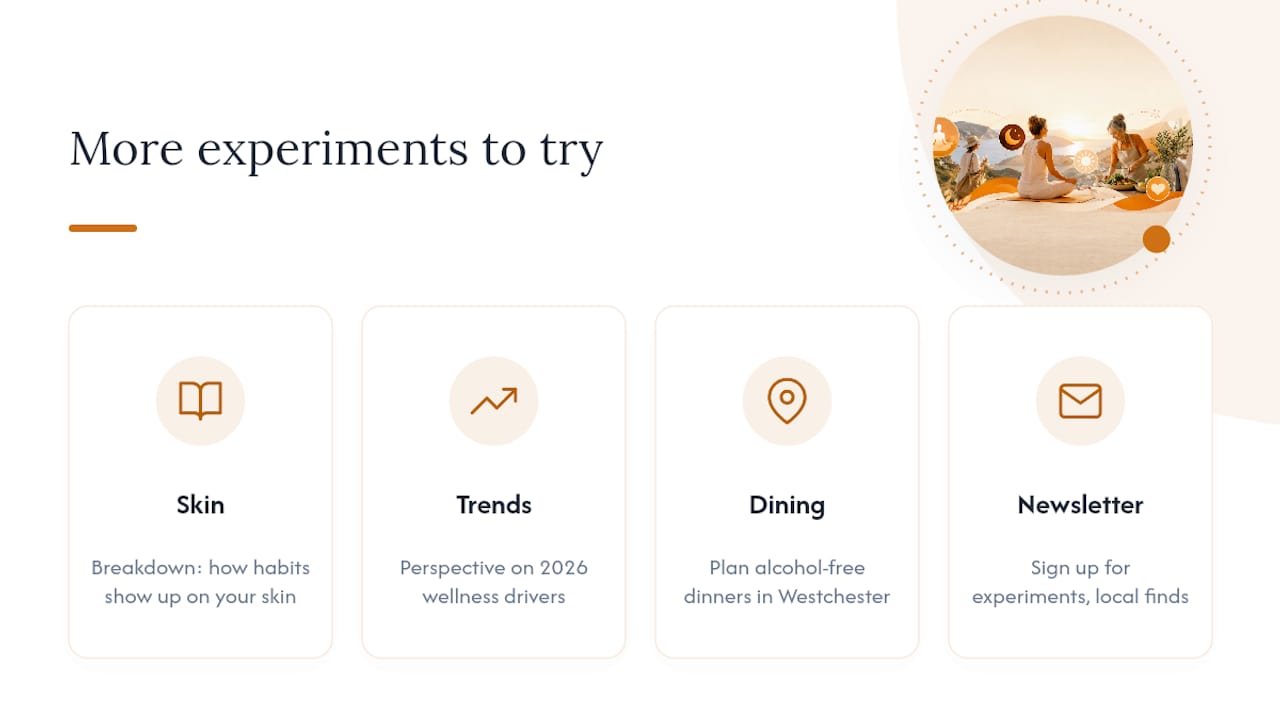
If clearer skin was one of the things you noticed this month, you’ll want to read our breakdown of how lifestyle choices show up on your skin. For perspective on how this Dry January moment stacks up against other 2026 wellness trends, see thoughts on what’s actually driving the conversation right now.
For planning an alcohol-free dinner out, browsing Westchester’s food scene can help find spots where the menu, not the wine list, is the reason to go. Signing up for a newsletter can provide more lifestyle experiments, local finds, and honest takes delivered straight to your inbox.
This article is general information, not a substitute for advice from a qualified doctor. Consult a qualified healthcare professional about your own circumstances before acting on anything here.
Sources
- Dry January: How to stay alcohol-free for a month — UC Davis Health
- Understanding Alcohol Use Disorder — NIAAA
- A scoping review of Dry January: Evidence and future directions — PMC
- SAMHSA national helpline — SAMHSA
- Alcohol and public health — CDC
FAQ
What happens to your body after one month without alcohol?
Most people see better sleep, more steady energy, and improved hydration within the first two weeks. Blood pressure and liver fat can also start improving, according to the CDC, though the degree of change depends on how much you drank going in.
How much weight will I lose if I stop drinking for a month?
It varies widely and depends on your prior drinking habits and diet. Cutting out regular drinking removes a meaningful source of extra calories, which is part of why participants in Dry January commonly report modest weight loss, though it’s not guaranteed for everyone.
Is 30 days sober actually a big deal?
Yes, especially if you drink regularly. A scoping review of Dry January found real short-term reductions in drinking and improved wellbeing among participants, and the confidence gained around refusing drinks tends to carry past day 30.
How many alcohol-free days does it take to help the liver?
Even a few weeks off alcohol can begin reducing liver fat buildup in regular drinkers, since it gives the liver a break from processing it constantly. A full 30-day break is a reasonable window to see a noticeable shift, though people with existing liver concerns should get a clinical evaluation rather than guessing at timing.
Do I need medical supervision to stop drinking for a month?
Only if you drink heavily or daily. The NIAAA warns that abrupt cessation after prolonged heavy drinking can cause dangerous withdrawal, so a quick clinical assessment beforehand is the safer route if you’re at all unsure.
Recommended
- Navigating Perimenopause? Here’s What I Added to My Morning Routine
- 4-Week Skin Barrier Repair Plan for Women 35+ With 3:1:1 Lipids
- Experts say quitting Diet Coke can improve heart health and gut balance
- How to Naturally Get Better Sleep
