
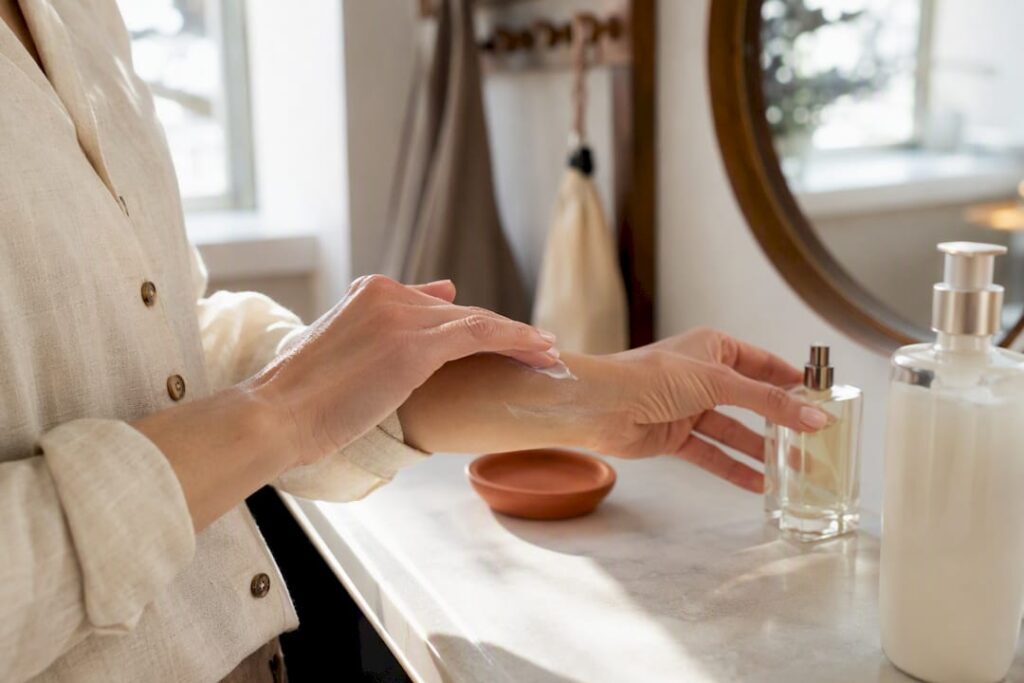
To layer perfume the right way, start with moisturized skin, apply your heaviest fragrance first as a base, then spritz a lighter scent on top from a few inches away, using small doses at every step. Do this and you get longer wear and a scent that feels like yours, not a fragrance counter collision.
What Is Fragrance Layering, Exactly?
Fragrance layering means wearing more than one scented product at once, applied separately rather than mixed together in a bottle. You are not blending liquids in your palm like a mad chemist. You are building up thin layers, one at a time, that interact on your warm skin throughout the day.
The most common version looks simple: a scented lotion under a perfume, or a hair mist over an eau de parfum. Some people layer a perfume oil as a base and add a spray on top. Others combine a shower gel with a matching body cream, then finish with the actual perfume. None of these require a special “layering kit” from a brand, even though plenty of brands sell coordinated lines built for exactly this purpose.
A few everyday combinations to picture before you try anything yourself:
- Vanilla body lotion under a woody eau de parfum for warmth without heaviness.
- A citrus hair mist paired with a floral perfume for a brighter top note.
- A perfume oil base with a light EDT spray for extra longevity.
There is no rulebook carved in stone here. Some regions, particularly in the Middle East, have layered multiple fragrances for generations as a way to build a personal, signature scent, and that tradition has helped push layering into the mainstream everywhere else, too, according to the Perfume Society. What used to be a niche habit is now something perfume counters actively encourage.
Why Bother Layering Fragrances at All?
Three reasons drive most people to start: longevity, customization, and mood. A fragrance that fades by lunch can often be coaxed into an all-day scent with the right base layer, since heavier materials evaporate slower and act like an anchor for lighter notes riding on top of them.
Customization is the more fun reason. Layering lets you soften a scent that reads too intense, sweeten something that feels flat, or nudge an old favorite (especially one that got reformulated or discontinued) closer to how you remember it. Fragrantica frames this as one of three core motivations for layering: strengthening a weak scent, softening a heavy one, or simply experimenting for the pleasure of it.
Realistic ways this plays out day to day:
- Transitioning a light daytime scent into something richer for evening without changing perfumes entirely.
- Reviving a discontinued bottle by adding a modern top note.
- Building a rotating “scent wardrobe” from a handful of products instead of buying a new perfume for every mood.
Treat it as low-stakes experimentation, not a formula you have to nail on the first try.
What Order Should You Layer Fragrances In?
The order matters more than the products themselves. Get the sequence wrong and even great scents fight each other. Get it right and they build on top of one another the way a good outfit layers a T-shirt under a blazer.
Here’s the sequence fragrance experts generally recommend, heaviest to lightest:
- Scented shower or bath gel, if you have one that matches your fragrance family.
- A matching body lotion or oil, applied while skin is still slightly damp.
- Your heaviest fragrance, usually a perfume oil, attar, or the richest scent in your rotation, worn as the base.
- An EDT or EDP layer, applied a bit more sparingly than the base.
- A hair mist or light body spray, added last and from a distance.
This mirrors the way perfume itself is built. Every fragrance is structured as a volatility pyramid, with light top notes (citrus, herbs) evaporating first, heart notes (florals, spices) settling in next, and base notes (woods, resins, musks) lingering longest. Applying your heaviest scent first and your lightest last respects that same order on your skin, according to guidance from Boadicea the Victorious.
A few safety notes worth keeping in mind before you start combining freely:
- Patch-test any new product on hair before a full application, since dyed or chemically treated hair can react differently to alcohol-based sprays.
- Keep sprays away from silk, delicate fabrics, and jewelry with pearls or porous stones.
- Layering too many strong, similar notes (three musky orientals, for instance) tends to create a muddy result rather than something richer, per the Perfume Society.
Pro Tip: Start with just two products, a base and a top layer, before adding a third. It’s much easier to diagnose what’s working (or not) when you’re only juggling two variables.
How Do You Test and Build a Layered Scent Step by Step?
Testing on skin, not just on a blotter card, is the part beginners skip and shouldn’t. Skin chemistry changes how a fragrance develops, and that’s exactly what you’re trying to observe before you commit to wearing a combination out the door.
Preparation:
- Pick one base candidate (lotion, oil, or your heaviest fragrance) and one top candidate (a lighter EDT or hair mist).
- If you’re not sure a pairing will work, try a discovery set or a decant before buying full bottles of either.
Testing protocol:
- Spray each product on a blotter first to get a rough sense of the notes.
- Apply the base to one pulse point and the top layer to a separate one, so you can smell them individually before they blend on your skin.
- Check in at 10 minutes, 1 hour, and 4 hours. Fragrances shift as they dry down, and testing patiently between applications is how you catch a clash before it becomes an all-day problem.
Daily wearing routine, once you’ve found a pairing you like:
- Moisturize with an unscented or matching lotion.
- Apply your base fragrance to pulse points: wrists, neck, behind the ears.
- Spritz your top layer from about six inches away so it settles rather than saturates.
- Finish with a hair mist if you’re using one, since hair holds scent differently than skin.
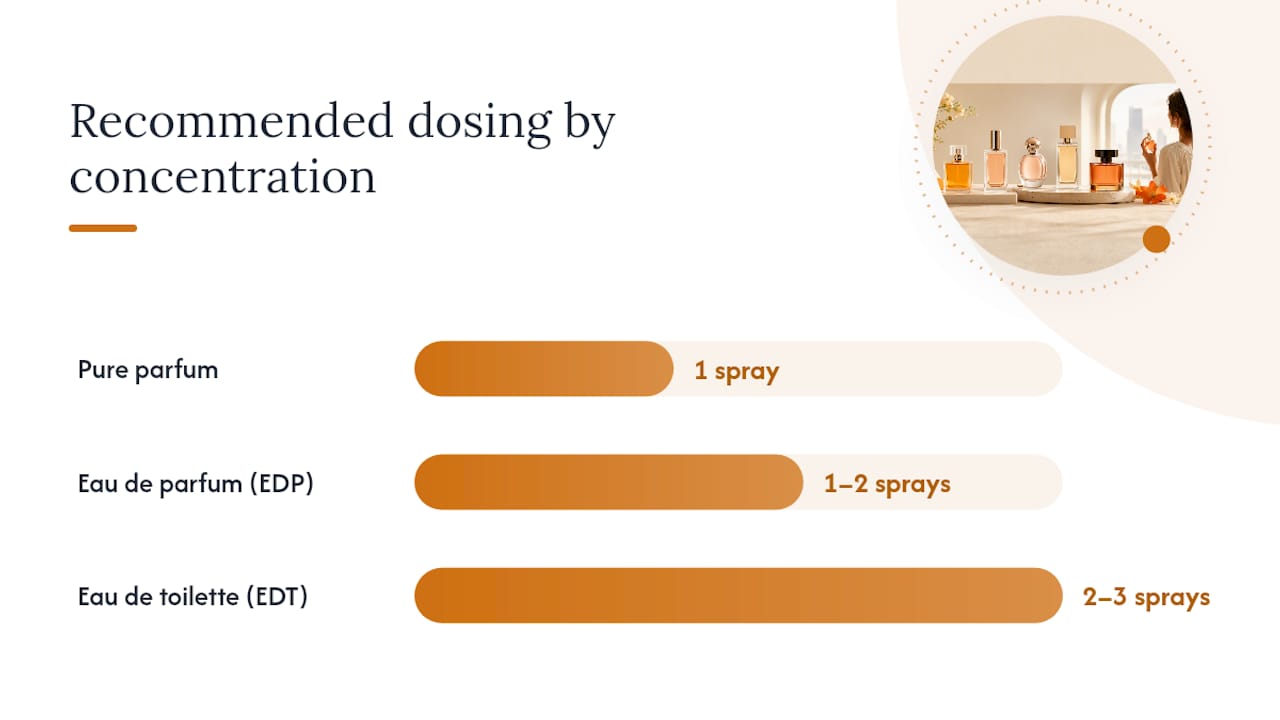
Dosing is where most beginners overdo it. One spray is plenty for a pure parfum, one to two sprays for an EDP, and two to three for an EDT, since concentration determines how much product actually delivers the same intensity. Oils should be measured in small swipes, not sprays. Adjust slightly based on your skin type; drier skin tends to need a touch more to hold scent, while oilier skin often amplifies fragrance without much help at all.
Pro Tip: Test a new combination on a day you’re not seeing anyone important. Give yourself permission to get it wrong before you wear it somewhere that matters.
What Are the Best Fragrance Combinations to Try First?
Some pairings work because they share a family and simply reinforce each other. Others work because they contrast, and that tension is what makes them interesting. Both approaches are worth trying before you decide which one suits your taste.
Harmony pairings, where similar notes deepen each other:
- Rose base with a vanilla top layer, for something warm and classic.
- Jasmine paired with a powdery musk, which softens jasmine’s intensity without erasing it.
Contrast pairings, where different note families balance each other:
- A cedarwood base fragrance with a bergamot top spray, pairing grounded warmth with citrus brightness.
- An oud base with an orange blossom top note, cutting oud’s heaviness with something floral and light.
Format combinations matter as much as the notes themselves:
- Lotion plus EDP for a subtle, close-to-skin effect that’s ideal for the office.
- Perfume oil as a base plus a spray on top for maximum longevity through a long day.
- Hair mist plus EDP when you want more projection, since hair carries scent outward as you move.
Two combinations to avoid until you’re more confident: stacking two heavy gourmands (think two dessert-like vanilla bombs) tends to read as cloying rather than complex, and layering two intensely smoky or oriental bases usually just creates a muddled, ashy result instead of the richness you were hoping for.
Which Formats Work Best for Layering?
Perfume oils last the longest on skin because they evaporate slowly and act as a natural fixative, which makes them an excellent base layer even though they’re often overlooked in favor of sprays, according to Vogue. A little goes a long way, so apply oils sparingly with a fingertip rather than pouring them on.
EDPs and EDTs give you flexibility depending on how much projection you want. An EDP carries more oil concentration and lasts longer; an EDT is lighter and better suited to layering without overwhelming whatever’s underneath it.
- Lotions and body oils hydrate skin and act as fixatives, making them the most forgiving base layer for beginners.
- Hair mists add scent that travels with your movement, but always patch-test on a small hidden section first since some sprays can affect color-treated hair.
- For refreshing scent midday, a small rollerball or solid perfume balm works well in a bag without the spill risk of a full bottle.
What Do You Do If Your Layered Scent Is Too Strong or Fades Fast?
Overpowering combinations and disappointing fadeouts are the two most common complaints, and both have quick fixes.
If it’s too strong: wash the affected area with unscented soap or hop in the shower if you’re still home, then reapply with a lighter hand. One spray fewer usually solves it.
If it clashes rather than overwhelms: a neutral wood or light musk applied on top can mute the fight between two competing notes. An unscented balm layered over the combination also dilutes intensity without adding a third competing scent.
If it fades too fast: switch your base from a spray to an oil, since oils hold onto skin longer, or layer with a lotion in the same scent family to reinforce it from underneath. A slightly higher concentration (EDT to EDP) can also help.
- Too strong: wash off, reapply lighter.
- Clashing: mute with wood, musk, or an unscented balm.
- Fading fast: switch to an oil base or matching lotion.
- Still not working: stop layering and wear one fragrance alone. Some scents are simply better solo, and that’s a legitimate outcome, not a failure.
Pro Tip: Keep a tiny unscented lotion in your bag. It’s the fastest fix for an overpowering layer when you’re not near a shower.
How Do You Adjust Layering for Your Own Skin Chemistry?
Skin chemistry changes how every fragrance develops, which is why a combination that smells incredible on your friend can smell completely different on you. pH, skin oiliness, and even diet subtly shift how notes emerge over the course of a wear.
Start by paying attention to how fragrances typically behave on your skin generally. If your perfumes tend to run sweeter or warmer than expected, lean toward lighter, greener top notes to balance that tendency. If scents tend to fade quickly on you, that’s a signal to lean on oil-based bases more heavily than sprays.
Give any new pairing real time before judging it. What smells too strong at the ten-minute mark can settle into something completely different by hour four, once the alcohol in a spray evaporates and the true notes underneath come forward. Testing the same combination on two different days, especially if your skin is drier one day than another, tells you more than a single trial ever will.
Keep a simple mental note (or an actual note on your phone) of what worked and what didn’t. Over a few weeks, you’ll start noticing patterns: maybe woody bases always read too heavy on you, or florals fade faster than they should. That personal data is more useful than any general rule, because your skin is the only one you’re actually dressing.
How Should You Store Layered Fragrances to Keep Them Fresh?
Heat, light, and humidity are the three things that break down fragrance fastest, and that’s true whether you’re storing one perfume or a whole shelf of layering components. A bathroom shelf near a hot shower is one of the worst places to keep any of them.
Store perfumes, oils, and mists in a cool, dark place, ideally a drawer or closet away from direct sunlight and temperature swings. Original boxes help block light, so it’s worth keeping them if you have the space rather than tossing them right away.
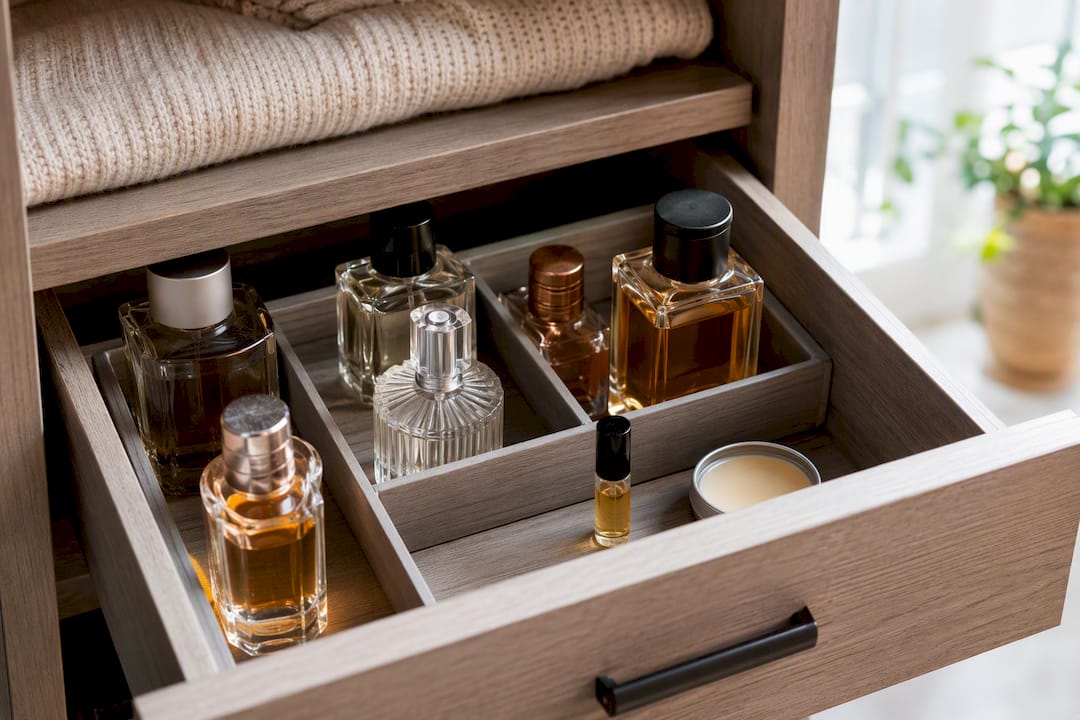
Oils in particular benefit from staying tightly capped, since they oxidize faster once exposed to air repeatedly. Lotions and body creams have a shorter useful life than perfumes, generally, so check texture and scent before relying on an older jar as your base layer; a lotion that’s separated or smells off will throw off the whole combination.
If you travel with layering products, decant into smaller travel-size containers rather than carrying full bottles exposed to heat in a bag or car. A rollerball or solid balm version of your base scent is far more stable on the move than a liquid spray sitting in direct sun on a car seat.
StacyKnows’ Take: Give Yourself Permission to Play
Here’s what I wish someone had told me years ago: you don’t need a perfume wardrobe to start layering. You need one lotion and one perfume you already own, sitting in your bathroom right now.
The beauty industry has made fragrance layering sound like a technical skill, and honestly, it’s closer to a kitchen experiment than a chemistry exam. Brands love selling coordinated “layering sets,” but you can build something just as good with what’s already in your drawer, since layering works with any fragrances you own, not only ones marketed together. If you want to test new combinations without committing to full bottles, discovery sets and decants are the smartest money you’ll spend, letting you try five pairings for what one bottle would cost.
A common shortcut for travel is a solid perfume balm as a base and a travel-size oil for touch-ups. This approach avoids spills and lasts through a full flight. If you’re rethinking your whole routine while you’re at it, it’s worth revisiting the order you’re applying your skincare in too, since a mismatched base can throw off everything you layer on top of it. And if you’re curious how other cultures have approached scent and beauty rituals for generations, there’s a lot to learn from beauty traditions from around the world that most Americans haven’t tried yet.
If layering fits into a broader beauty refresh you’re planning this year, a guide to beauty over 50 covers routines and product categories worth revisiting alongside your fragrance drawer.
Sources
- How to Layer Fragrances – The Perfume Society
- How Fragrance Layering Opens Up a World of Scent Possibilities | Vogue
- The Joy Of Layering Scents ~ Columns
- Guide To Layering Scents With Perfume Notes | Boadicea The Victorious
FAQ
What Are the Basic Rules for Layering Fragrances?
Apply heaviest products first and lightest last: lotion or oil, then your base fragrance, then a lighter EDT or hair mist on top. Use small doses and wait between applications so you can smell how each layer develops, per fragrance layering guidance.
What Are the Best Scent Combinations to Layer?
Rose with vanilla and jasmine with powdery musk work because the notes share a family and reinforce each other. Cedarwood with bergamot and oud with orange blossom work through contrast, pairing something grounded with something bright.
What Scents Should You Avoid Layering Together?
Avoid stacking two heavy gourmands, like two vanilla-forward scents, since they tend to read as cloying rather than richer. Two intensely smoky or oriental bases usually create a muddled result instead of complexity, according to Fragrantica’s layering guidance.
What Is the Five-Spray Rule for Fragrance?
There’s no single official “five-spray rule,” but a common guideline caps total sprays across all layered products at around five to avoid overwhelming a room or the people around you. In practice, that usually means one spray of a base fragrance plus two or three lighter sprays on top, adjusted for concentration and personal preference.
Can You Layer Fragrances From Different Brands?
Yes. Layering works with any fragrances you already own, not just products marketed together as a coordinated set. The notes and formats matter more than whether the bottles came from the same brand.
Recommended
- Beauty Secrets Women Around the World Swear By That Americans Haven’t Fully Discovered Yet
- Six Products, One Quart: Travel Skincare Routine for Busy Travelers
- The Little Luxuries I’m Loving Right Now (That Feel Expensive But Aren’t)
- Effortless Winter Style: Chic Looks You’ll Love
