

An anti-inflammatory diet is a whole-food, plant-forward eating pattern, think Mediterranean or DASH, that leans hard on omega-3s, polyphenols, fiber, and unsaturated fats while pushing ultra-processed foods to the margins. It is not a single food, a supplement, or a 14-day reset. It is a pattern you build meal by meal.
If you want one move to make today, do this: swap one ultra-processed item in your regular rotation for a whole-food alternative, and add a source of omega-3s or extra virgin olive oil somewhere in your day. That’s it. That’s the on-ramp.
The evidence behind this isn’t a single study or a wellness trend. It comes from decades of cohort research, randomized trials, and guidance from institutions that have no reason to chase a fad.
- Cohort studies like the Nurses’ Health Study link plant-rich eating patterns to lower markers of inflammation
- Clinical guidance from Cleveland Clinic recommends a food-first, pattern-based approach over chasing individual “superfoods”
- Public health researchers at Harvard have documented specific foods that fight inflammation across multiple food categories
What Inflammation Actually Is, and Why Your Diet Is Involved
Inflammation isn’t the enemy. Acute inflammation is your body doing its job. You twist an ankle, it swells, immune cells rush in, and within days the swelling resolves. That’s a functioning system.
Chronic inflammation is different. It’s low-grade, it doesn’t resolve, and it runs in the background for months or years without a single dramatic symptom. You might just feel tired, foggy, or achy in a way you’ve stopped questioning. This is the kind of inflammation an anti-inflammatory diet is actually built to address, not the sprained ankle kind.
Diet feeds into chronic inflammation through a few distinct pathways. Oxidative stress happens when free radicals, unstable molecules generated by normal metabolism and amplified by things like sugar-heavy diets, outpace your body’s antioxidant defenses. Left unchecked, this damage triggers inflammatory signaling. High glycemic load, the kind produced by white bread, sugary drinks, and refined snacks, spikes blood sugar and insulin repeatedly, and that repeated spiking is itself pro-inflammatory over time.
Then there’s the gut. A compromised gut lining, sometimes called increased intestinal permeability, lets bacterial byproducts leak into circulation where they trigger immune responses they shouldn’t. Diets low in fiber and high in processed ingredients tend to shift the microbiome toward species that produce more of these inflammatory metabolites and fewer of the short-chain fatty acids that keep the gut lining intact.
The connection isn’t abstract. Large prospective cohort studies using dietary inflammatory scores like the Empirical Dietary Inflammatory Pattern (EDIP) have found that people eating more pro-inflammatory diets carry meaningfully higher risk for cardiovascular disease, type 2 diabetes, and certain cancers. People eating more plant-rich, lower-EDIP diets show the opposite pattern.
Chronic inflammation has been implicated in an unusually wide range of conditions: heart disease, type 2 diabetes, several cancers, autoimmune flare severity, depression, and even accelerated skin aging. That last one surprises people, but oxidative stress and inflammation share the same cellular machinery that shows up on your face as much as it does on a lab report.
The Anti-Inflammatory Foods Worth Building Your Plate Around
Forget the idea that you need a rotating list of exotic superfoods. The research points to a fairly short list of nutrient categories, delivered through ordinary groceries, done consistently.
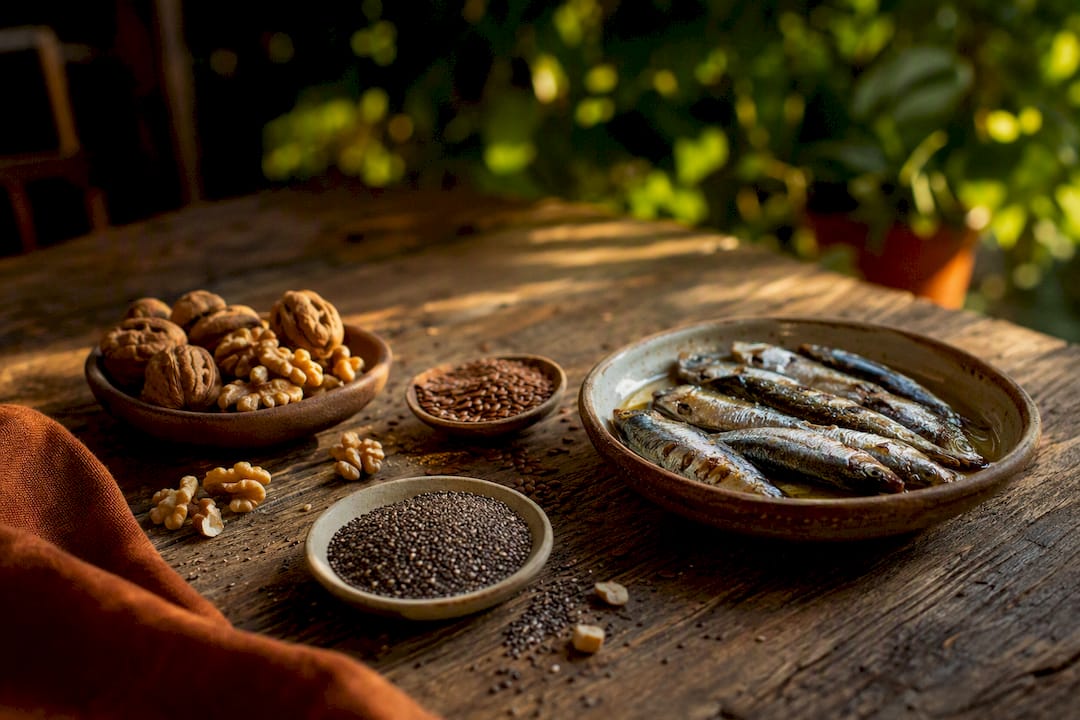
Omega-3 fatty acids top the list because they directly counter inflammatory signaling pathways. Fatty fish, salmon, mackerel, sardines, and anchovies, deliver the most bioavailable form (EPA and DHA). Regular servings of fish per week are generally recommended. Sardines in particular have become a quiet favorite among nutrition writers precisely because they’re cheap, shelf-stable, and packed with omega-3s alongside calcium and vitamin D. If fish isn’t your thing, walnuts, chia seeds, ground flaxseed, and algae-based supplements provide plant-based omega-3s, though the conversion rate to the active forms your body uses is lower.
Polyphenols are the pigment compounds that give berries, leafy greens, and cruciferous vegetables their color and their punch. Blueberries, blackberries, spinach, kale, broccoli, and Brussels sprouts all fall into this category. The mechanism is straightforward: polyphenols act alongside vitamins C and E as antioxidants, neutralizing free radicals before they can trigger the inflammatory cascade oxidative stress sets off.
Fiber and prebiotic sources show up in whole grains, legumes, nuts, and seeds. Oats, brown rice, quinoa, lentils, chickpeas, and black beans aren’t just filling, they’re feeding the bacteria in your gut that produce anti-inflammatory short-chain fatty acids. Many American adults do not consume enough fiber, which is one reason gut-related inflammation is so common even among people who otherwise eat reasonably well.
Unsaturated fats, led by extra virgin olive oil and avocado, replace the saturated and industrially processed fats that tend to promote inflammation. Olive oil in particular contains oleocanthal, a compound with anti-inflammatory activity that researchers have compared, loosely, to ibuprofen’s mechanism.
Herbs, spices, and fermented foods round out the list, and they’re the easiest additions to make without overhauling a single meal. Turmeric, ginger, garlic, and cinnamon all carry natural anti-inflammatory phytochemicals, and if you like heat, capsaicin-rich foods have their own protective associations with heart and brain health. Fermented foods, yogurt with live cultures, kefir, sauerkraut, kimchi, and miso, introduce live bacterial strains that support gut diversity, which circles back to the gut permeability mechanism.
Here’s a quick shopping-list version of everything above:
- Fatty fish (salmon, sardines, mackerel) or plant omega-3s (walnuts, flaxseed, chia)
- Berries, leafy greens, broccoli, Brussels sprouts
- Whole grains (oats, quinoa, brown rice), legumes (lentils, chickpeas, black beans)
- Nuts and seeds for snacking or topping meals
- Extra virgin olive oil as your primary cooking fat
- Turmeric, ginger, garlic, cinnamon for flavor and phytochemicals
- Plain yogurt, kefir, sauerkraut, or kimchi a few times a week
Pro Tip: You don’t need to eat all of these categories every single day. Think of it as a weekly checklist rather than a daily one. If you hit fish twice, fermented food three or four times, and vegetables at most meals, you’re covering the bases without turning grocery shopping into a research project.
The Foods Actively Working Against You
Some foods don’t just fail to help. They actively promote the mechanisms behind chronic inflammation, and cutting them tends to produce faster, more noticeable results than adding any single “good” food ever will.
- Sugary drinks. Soda, sweetened teas, and many fruit juices deliver a glycemic hit with zero fiber to slow it down. That repeated blood sugar spike is one of the clearest dietary drivers of chronic inflammation. Even diet sodas carry their own complications for gut and heart health worth knowing about if that’s your daily habit.
- Refined carbohydrates. White bread, most crackers, and pastries made from refined flour behave almost like sugar once digested. Swap white bread for a whole-grain loaf with the fewest ingredients you recognize.
- Processed and red meats. Bacon, sausage, deli meats, and frequent red meat consumption are consistently flagged across dietary guidance as pro-inflammatory when eaten often. This doesn’t mean never; it means not as a daily default.
- Deep-fried foods. Repeated high-heat frying, especially in reused oils, generates compounds that stress your cells in the same way chronic oxidative overload does. Baking, roasting, or air-frying at home solves most of this.
- Ultra-processed packaged foods broadly. This is the biggest category and arguably the most important one. Chips, packaged snacks, most frozen meals, and shelf-stable baked goods tend to combine several problems at once: refined carbs, added sugars, industrial oils, and long ingredient lists.
Reading labels is the fastest way to catch these before they hit your cart. Three cues matter most: an ingredient list longer than you’d need to make the item at home, added sugars listed under more than one name (look for anything ending in “ose,” plus syrups and concentrates), and partially hydrogenated oils, a marker of trans fat even in small amounts.
Clinicians and dietitians increasingly frame this as subtraction rather than addition: removing ultra-processed foods tends to move the needle faster than hunting for the next superfood. If you only make one change from this whole article, make it this one.
Building Your Anti-Inflammatory Plate, Step by Step
Theory is easy. Tuesday night dinner is where this actually gets tested. Here’s how to move from “I understand the concept” to “this is just how I eat now,” without burning out in week two.
The plate rule that makes every meal simple
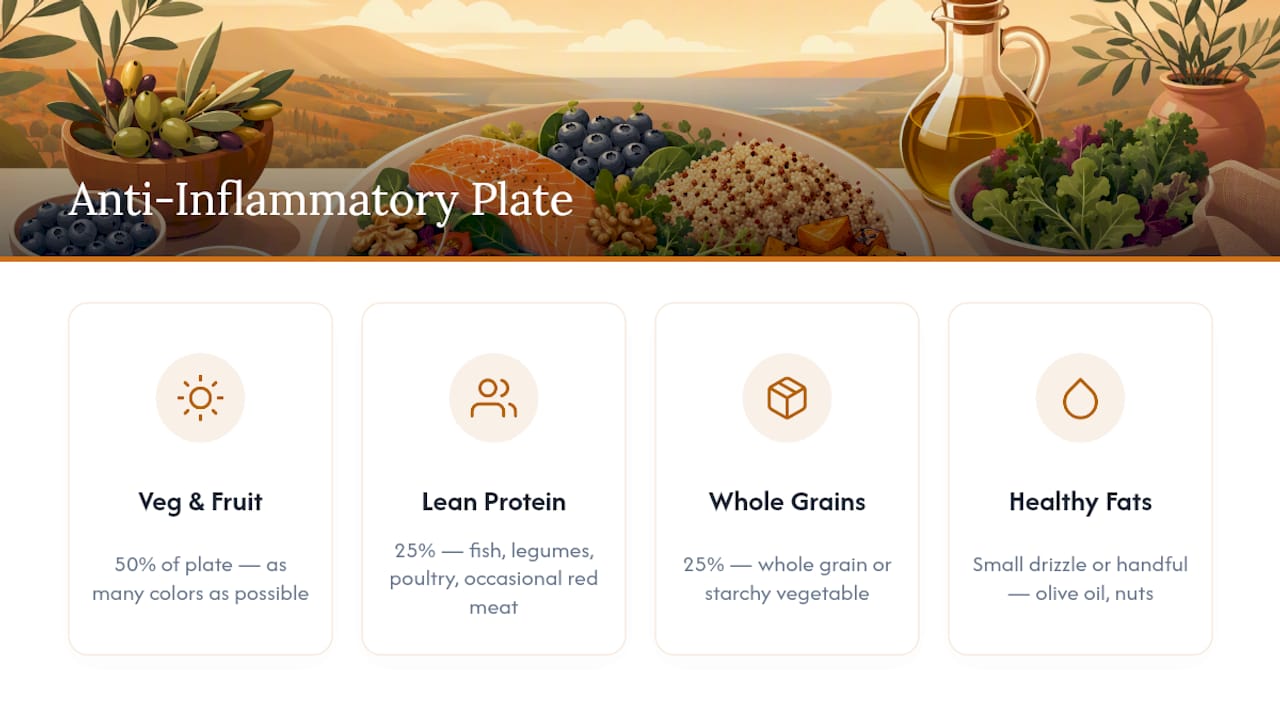
Picture your plate divided into quarters, roughly. Half goes to vegetables and fruit, spanning as many colors as you can manage. A quarter goes to a lean protein, fish, legumes, poultry, or occasionally red meat. The last quarter goes to a whole grain or starchy vegetable. Finish with a drizzle of olive oil or a handful of nuts for healthy fat. This single framework replaces almost every meal-planning decision you’d otherwise agonize over.
Stocking a realistic, budget-aware kitchen
You don’t need a specialty grocery run. Most of this lives in a regular supermarket:
- Canned sardines or salmon (cheaper than fresh, just as omega-3 rich)
- Frozen berries and frozen vegetables (nutritionally comparable to fresh. They don’t spoil before you use them)
- Dried or canned lentils, chickpeas, and black beans
- Rolled oats, brown rice, or quinoa in bulk
- A single good bottle of extra virgin olive oil
- Plain yogurt (unsweetened) and a jar of sauerkraut or kimchi
- Garlic, ginger, turmeric, and cinnamon, fresh or ground
A sample day that doesn’t require a culinary degree
Breakfast: Plain yogurt with frozen berries, a spoonful of chia seeds, and a drizzle of honey.
Lunch: A grain bowl: quinoa or brown rice, roasted broccoli, chickpeas, and a lemon olive oil dressing with garlic.
Snack: A small handful of walnuts and an apple.
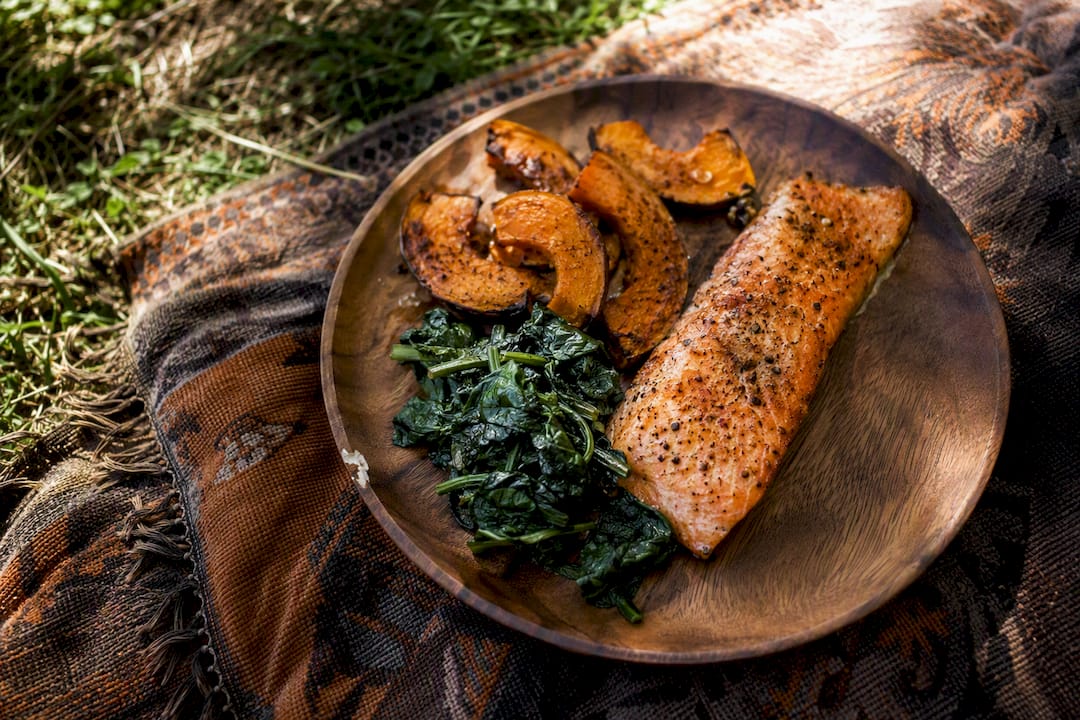
Dinner: Baked salmon or sardines with sautéed spinach and roasted sweet potato, seasoned with turmeric and black pepper (which improves turmeric’s absorption).
Optional evening addition: A small serving of kefir or a few forkfuls of sauerkraut alongside dinner.
Two templates you can repeat endlessly
The sheet-pan template: Toss any combination of vegetables (broccoli, Brussels sprouts, sweet potato, bell peppers) with olive oil, garlic, and a protein of choice, salmon, chicken thighs, or chickpeas, on one pan. Roast at 400°F for 20 to 25 minutes. Rotate the vegetable and protein combination weekly so it never feels repetitive.
The bowl template: Grain base, roasted or raw vegetables, a protein, a fermented element (a spoonful of kimchi works well here), and a simple dressing of olive oil, lemon, and a crushed garlic clove. This template alone can cover lunch five days a week without ever tasting the same.
Adjusting for real life
Eating out doesn’t have to derail this pattern. Choose grilled or baked proteins over fried, ask for dressing and sauces on the side, add a side salad or vegetable in place of fries, and don’t be afraid to ask a restaurant to swap a starch for extra vegetables. Most kitchens will do it without a second thought.
Sustainability matters more than perfection here. If you try to overhaul every meal on day one, you’ll likely burn out by week three. Start with breakfast and one dinner rotation, let those become automatic, and add from there. For meal-prep logistics on busier weeks, batch-cooking strategies built around a Sunday prep session can take most of the daily decision-making off your plate entirely.
Gut Health, Probiotics, and Prebiotics: What Actually Matters
The terms get thrown around almost interchangeably, but they describe different things, and mixing them up leads people to buy the wrong supplement for the wrong problem.
Probiotics are live microorganisms, specific bacterial strains, that when consumed in adequate amounts, can benefit your gut. Yogurt, kefir, and fermented vegetables deliver these naturally. Prebiotics are fibers that feed the bacteria already living in your gut, garlic, onions, leeks, oats, and legumes are good sources. Synbiotics combine both in one product or meal, and postbiotics are the beneficial byproducts bacteria produce after fermenting fiber, short-chain fatty acids among them.
The distinction matters practically: probiotics add new (temporary) residents, prebiotics feed the ones you already have. Most people benefit more from the second approach.
- Eat a wide variety of plant foods weekly, not just the same three vegetables
- Include a fermented food most days: yogurt, kefir, kimchi, sauerkraut, or miso
- Add prebiotic fibers regularly: garlic, onion, leeks, oats, bananas, legumes
- Treat probiotic supplements as situational, not default
The research is fairly clear on priority order. A diverse, fiber-rich diet is the most reliable way to increase gut microbial diversity, more reliable, in fact, than most single-strain probiotic supplements taken in isolation. One-off high-dose supplements rarely replicate what sustained dietary variety does over months.
Supplements have a real, narrower role. They can help during and after a course of antibiotics, when gut flora has been disrupted and needs support repopulating. They may also help with specific diagnosed conditions under a clinician’s guidance. But probiotics aren’t regulated by the FDA as drugs, which means quality and strain accuracy vary widely between brands, and safety data for immunocompromised individuals is limited. Talk to a doctor before starting one, particularly if you’re managing a chronic illness or a weakened immune system.
What the Research Actually Shows About These Diets
Not all dietary patterns carry equal evidence weight, and it’s worth knowing which ones do before you commit to a specific approach.
The Mediterranean diet has the deepest evidence base of any anti-inflammatory pattern, backed by decades of cohort data and multiple randomized trials linking it to lower cardiovascular risk and reduced inflammatory markers. The DASH diet, originally designed for blood pressure, shows a similar anti-inflammatory profile because it shares the same core structure: vegetables, whole grains, lean proteins, limited sodium and added sugar. The MIND diet, a hybrid of Mediterranean and DASH principles, has evidence specifically tied to cognitive health outcomes. Broader plant-forward diets, even without a formal name, track closely with the same inflammatory benefits when they emphasize whole foods over processed substitutes.
Researchers increasingly measure this through the Empirical Dietary Inflammatory Pattern (EDIP) and related indices, scoring systems that quantify how pro- or anti-inflammatory a person’s overall diet is based on food frequency data. Higher scores correlate with elevated CRP and IL-6, the same inflammatory markers tied to cardiovascular disease, type 2 diabetes, and certain cancers in long-running cohorts like the Nurses’ Health Study.
A few things to keep in mind about what this evidence does and doesn’t say:
- These associations come primarily from large cohort studies, which show strong correlation over years, not short-term causation in a lab setting
- The magnitude of benefit tends to scale with adherence: partial, occasional compliance shows weaker associations than sustained, years-long adherence
- Most of the strongest data comes from adult populations already at elevated cardiometabolic risk, so results may not generalize identically to every group
- Long-term consistency, not short bursts of “clean eating,” is what the data actually rewards
None of this means a Mediterranean-style diet is a guaranteed fix for any individual’s inflammation. It means that among dietary patterns studied at scale, this family of eating styles shows the most consistent, replicated signal.
How Long Before You Notice a Difference
Patience matters here, but so does knowing what to actually watch for.
Many people report feeling different, less bloated, steadier energy, milder joint discomfort, within two to three weeks of cutting ultra-processed foods and added sugar. That’s a real signal worth paying attention to, though it’s subjective and easy to attribute to other lifestyle changes happening at the same time.
Measurable changes in inflammatory biomarkers move slower. Blood markers like C-reactive protein (CRP) and erythrocyte sedimentation rate (ESR) typically need months of sustained dietary change before showing meaningful movement, not days or weeks.
A few low-effort ways to track your own progress:
- Keep a simple daily log of energy, sleep quality, and any pain or bloating, rated 1 to 5
- Note patterns around specific foods rather than assuming any single ingredient is “the problem”
- Ask your doctor about baseline CRP or ESR testing if you have a known inflammatory condition, then retest after three to six months
- Track consistency (days per week you hit your targets), not perfection
See a clinician sooner rather than later if symptoms persist despite consistent changes, or if you notice red flags like unexplained joint swelling, prolonged fatigue, or symptoms that suggest an autoimmune process. Diet supports these conditions; it doesn’t diagnose or replace treatment for them.
When Diet Changes Meet Medications and Existing Conditions
Shifting your eating pattern isn’t risk-free if you’re managing a health condition or taking medication, and a few interactions deserve attention before you overhaul your plate.
If you take warfarin or another blood thinner, a sudden jump in vitamin K intake, from suddenly eating far more leafy greens than usual, can interfere with your dosing. This doesn’t mean avoiding greens; it means keeping your intake roughly consistent and mentioning any major dietary shift to whoever manages your prescription.
People with type 2 diabetes on insulin or sulfonylureas need to watch carbohydrate reduction carefully, since cutting refined carbs too aggressively without adjusting medication can trigger hypoglycemia. This is a conversation for your prescribing physician, not a guess.
Anyone with kidney disease should be cautious with a sudden increase in high-potassium foods, certain beans, and leafy greens among them, since impaired kidneys can struggle to clear excess potassium. Similarly, people managing autoimmune conditions on immunosuppressive therapy should talk to their care team before starting any probiotic supplement, given the limited safety data in immunocompromised populations mentioned earlier.
None of this is a reason to avoid an anti-inflammatory pattern. It’s a reason to loop in whoever manages your prescriptions before making a dramatic shift, especially if you’re on medication tied to blood clotting, blood sugar, or kidney function.
The Downsides Nobody Mentions
Even a genuinely healthy eating pattern can create friction if you approach it too rigidly, and it’s worth naming that honestly.
The most common issue is social and psychological strain. Cutting out entire categories, sugar, all processed food, all red meat, can make dining out, holidays, and family meals feel like a minefield. Some people develop an unhealthy rigidity around food that outweighs any inflammatory benefit gained. If eating “clean” starts generating more anxiety than the inflammation it’s meant to address, that’s worth addressing directly, ideally with a professional.
Nutrient gaps can show up if the diet is followed too strictly without planning, particularly around vitamin B12, iron, and calcium if animal products are cut aggressively without deliberate substitution. Digestive discomfort, gas and bloating in particular, is common in the first couple of weeks after a sharp increase in fiber intake; your gut bacteria need time to adjust to the new fuel supply. Easing into fiber increases over two to three weeks rather than all at once usually resolves this.
Cost and time are real barriers too. Fresh produce, quality olive oil, and fatty fish cost more than the processed alternatives they’re replacing, and home cooking takes more time than a drive-through. The budget-friendly swaps mentioned earlier, canned fish, frozen produce, dried legumes, exist specifically to soften this barrier, but it’s worth acknowledging rather than pretending this eating pattern is cost-neutral for every household.
Adjusting the Approach for Different Life Stages and Conditions
This pattern isn’t one-size-fits-all, and a few populations need real adjustments rather than a scaled-down version of the standard advice.
Older adults often need higher protein intake alongside anti-inflammatory foods to preserve muscle mass, so leaning too hard into plant-forward eating without enough protein density can backfire. Pairing legumes with fish or eggs, rather than replacing protein sources entirely, tends to work better here.
Children generally shouldn’t follow a restrictive version of this pattern at all. Growing bodies need more total calories and fat than adult guidance assumes, so the right move is simply increasing variety, more vegetables, more whole grains, a couple of fish meals a week, without imposing adult-style restriction.
Pregnant women benefit from the same omega-3 and polyphenol emphasis, but need to be selective about fish choices (avoiding high-mercury species like swordfish) and should never start a new probiotic supplement or make dramatic dietary shifts without discussing them with an OB-GYN first.
People with autoimmune diseases sometimes find additional benefit from identifying personal trigger foods, dairy or nightshades for some, gluten for others with confirmed sensitivity, but this should happen through guided elimination with a dietitian, not blanket internet advice, since overly restrictive self-directed elimination diets can create nutrient gaps without solid evidence of benefit for every individual.
Sleep, Stress, and Movement: The Diet’s Quiet Partners
Food is doing a lot of the work here, but it isn’t doing all of it, and pretending otherwise sets people up for disappointment.
Sleep has a direct inflammatory cost. Chronic sleep deprivation raises inflammatory markers independent of diet, which means someone eating perfectly on four hours of sleep a night is still fighting an uphill battle. Prioritizing consistent sleep timing matters as much as any single food swap.

Chronic stress triggers cortisol release, and sustained high cortisol promotes the same inflammatory pathways diet is working to calm. This doesn’t require an elaborate meditation practice, even short daily walks or consistent downtime measurably lower stress-driven inflammation over time.
Movement rounds this out. Regular moderate exercise, walking, strength training, cycling, has its own independent anti-inflammatory effect, separate from any dietary change. The combination of food, sleep, stress management, and movement works as a system, not four unrelated checkboxes, and neglecting one tends to blunt the benefit of the others.
A Personal Note on Making This Stick
I didn’t overhaul my whole kitchen overnight, and I don’t think anyone should. The change that actually stuck for me was small: swapping my afternoon soda for sparkling water with a splash of tart cherry juice, and adding sardines to my grocery list once a week instead of “someday.”
Neither felt dramatic. Both stuck because they were boring enough to repeat without willpower.
Setbacks happen. A stressful week means takeout, a holiday means the sheet-pan template doesn’t get touched, and that’s fine. The pattern is meant to be resilient to a bad week, not undone by one. If you want a place to start building your own rotation, our recipe and wellness pages collect ideas that don’t require a culinary degree or a specialty grocery trip.
Progress here looks less like a straight line and more like a slowly rising average. That’s genuinely enough.
— Stacy
Where to Find Recipes and Shopping Guides That Make This Easier
Knowing what to eat is one thing. Having an actual shopping list and a recipe you’ll cook twice a week is another, and that’s the gap Stacyknows exists to close for readers who want less guesswork and more ready-made structure.

Stacyknows curates practical, everyday wellness content designed to sit alongside your existing routine rather than demand you rebuild it. That means shopping guides built around real grocery budgets, ingredient swaps that don’t require a specialty store, and lifestyle tips that treat food as one piece of a bigger picture, alongside sleep, skin, and stress. This is lifestyle support, not medical treatment, and it works best paired with guidance from your own doctor or dietitian for anything condition-specific.
If you’re ready to build out your kitchen and self-care routine around these principles, start with our practical wellness tips collection for grocery-ready ideas you can use this week.
This article is general information, not a substitute for advice from a qualified doctor. Consult a qualified healthcare professional about your own circumstances before acting on anything here.
Sources
- Overview of anti-inflammatory diets and their promising effects on non-communicable diseases — NCBI Bookshelf
- Probiotics vs prebiotics: Which to choose? And when? — ISAPP
- Anti-Inflammatory Diet: Foods List and Benefits — Cleveland Clinic
Recommended
- Is the Protein Craze Actually Healthy or Just Smart Marketing – Stacyknows Is the Protein Craze Healthy or Just Marketing Hype Is the Protein Craze Actually Healthy or Just Smart Marketing
- Weight Loss Journey: A Practical Roadmap Made Sustainable – Stacyknows
- The Carrot Salad Everyone’s Talking About—And Why You Might Want to Start Eating It Too – Stacyknows
- A Modern Look at Anti Aging Science in Long Island – Stacyknows
