
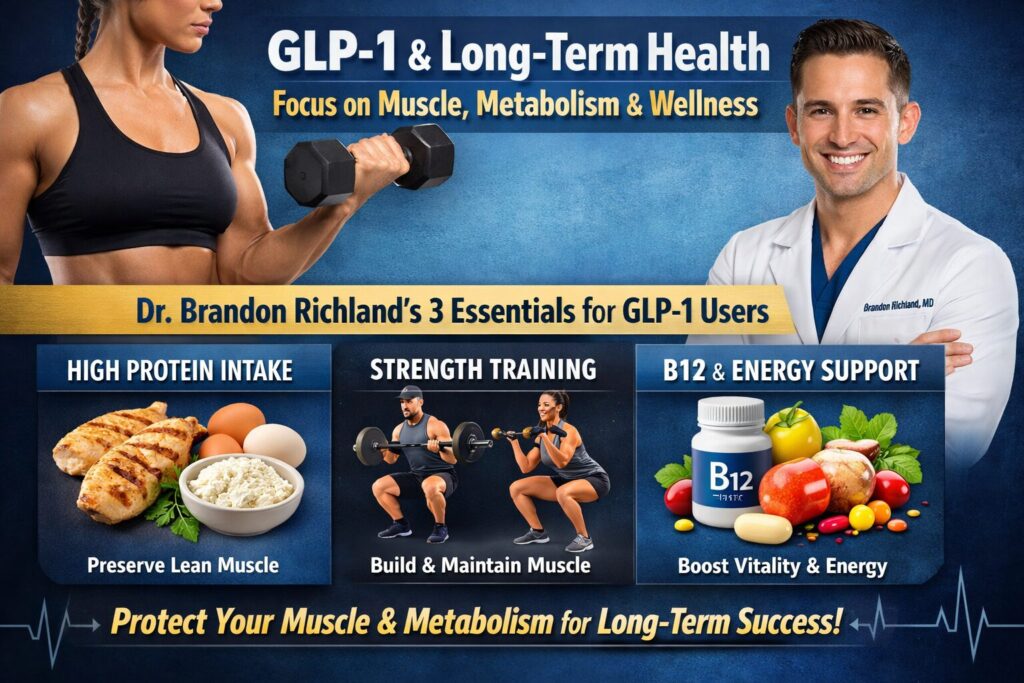
GLP-1 weight loss medications have changed the conversation around obesity and rapid weight loss. For many people, they’ve offered real results when diet and exercise alone didn’t seem to move the needle. But during National Nutrition Month, one expert says the focus should shift beyond the number on the scale and toward something even more important: protecting muscle, supporting metabolism, and staying healthy for the long haul.
Dr. Brandon Richland, a board-certified plastic surgeon and founder of Richland MD and Richland Aesthetics, says weight loss alone should never be the whole goal. He believes nutrition has to be part of the conversation, especially for those using GLP-1 medications. “Weight loss alone can’t be the goal,” he says. “Protecting muscle, supporting metabolism, and maintaining overall health are what truly determine long-term success.”
His message comes at a time when GLP-1 use is becoming more common. A November 2025 KFF Health Tracking Poll found that 1 in 8 adults say they are currently taking a GLP-1 drug to lose weight or treat a chronic condition. As more people turn to these medications, experts are paying closer attention to what can happen during rapid weight loss, including the risk of losing lean body mass along with fat. Research reviews published in 2024 and 2025 note that GLP-1-based weight loss can include reductions in lean mass, though the degree varies across studies.
That matters because muscle plays a major role in overall health. Muscle is metabolically active tissue, and losing it can affect strength, energy, function, and metabolic health over time. Dr. Richland warns that without a nutrition-forward approach, people may lose weight quickly but still create new challenges for themselves later.
So what should GLP-1 users be doing?
According to Dr. Richland, there are three essentials to keep in mind:
First, prioritize protein. Harvard Health notes that the recommended dietary allowance for protein is 0.8 grams per kilogram of body weight, or about 0.36 grams per pound, which is a baseline minimum rather than a personalized target for every situation. Building protein into each meal can help support lean mass while appetite is reduced.
Second, include resistance training. The CDC recommends that adults do muscle-strengthening activities on at least 2 days per week in addition to regular aerobic activity. Strength work can include free weights, machines, resistance bands, or bodyweight exercises, and it can play a key role in signaling the body to preserve muscle during a calorie deficit.
Third, watch energy and nutrient status, including B12 when clinically appropriate. Fatigue can happen for many reasons during weight loss, so this is something people should discuss with their healthcare provider rather than self-diagnose. Monitoring nutritional intake and lab work when needed can help catch deficiencies or other issues early.
Dr. Richland also notes that rapid weight loss can sometimes show up physically in other ways, including facial volume loss, skin laxity, and body contour changes. He recommends a medically supervised, gradual approach whenever possible, along with a strong nutrition plan. His overall message is simple: the real goal is not just to get thinner, but to stay strong, healthy, and feel good long-term.
For anyone using GLP-1 medications, National Nutrition Month is a timely reminder that long-term success is about more than weight loss. It’s about protecting your body while you lose the weight, so the results are not only visible, but sustainable.
