

An Instagram influencer is someone who has built a credible, engaged audience on the platform and uses that relationship to shape what followers think, buy, or try. They’re not just people with big numbers. They’re trusted voices in specific spaces, and brands pay attention because followers often treat their recommendations the way they’d treat advice from a friend. A few names you’ve almost certainly seen: @selenagomez (wellness and music), @kyliejenner (beauty and lifestyle), and @khaby.lame (comedy and reaction content). Instagram remains the dominant platform for influencer marketing, with creators spanning every niche from skincare to sports.
- @selenagomez — music, mental health, and beauty (Rare Beauty founder)
- @kyliejenner — beauty, fashion, and entrepreneurship
- @khaby.lame — wordless comedy and reaction videos
- @cristiano — fitness, sports, and global lifestyle
Who are the top Instagram influencers right now?
The most-followed Instagram accounts belong to global celebrities, but raw follower counts don’t tell the whole story. A creator with 800,000 highly engaged followers in a specific niche often drives more conversions than a mega-celebrity with 300 million passive ones. The shortlist below was chosen based on three criteria: verified public reach, active platform presence in 2026, and documented brand or cultural impact.
A note on these numbers: follower counts shift constantly as creators adapt to Reels and cross-platform growth. The figures above reflect publicly reported approximations and should be verified before any campaign planning.
Pro Tip: Don’t anchor your outreach strategy to follower count alone. A creator like James Charles with 22 million highly engaged beauty fans will often outperform a 200-million-follower celebrity on a mascara campaign because the audience fit is tighter and the trust runs deeper.
What are the different types and tiers of Instagram influencers?
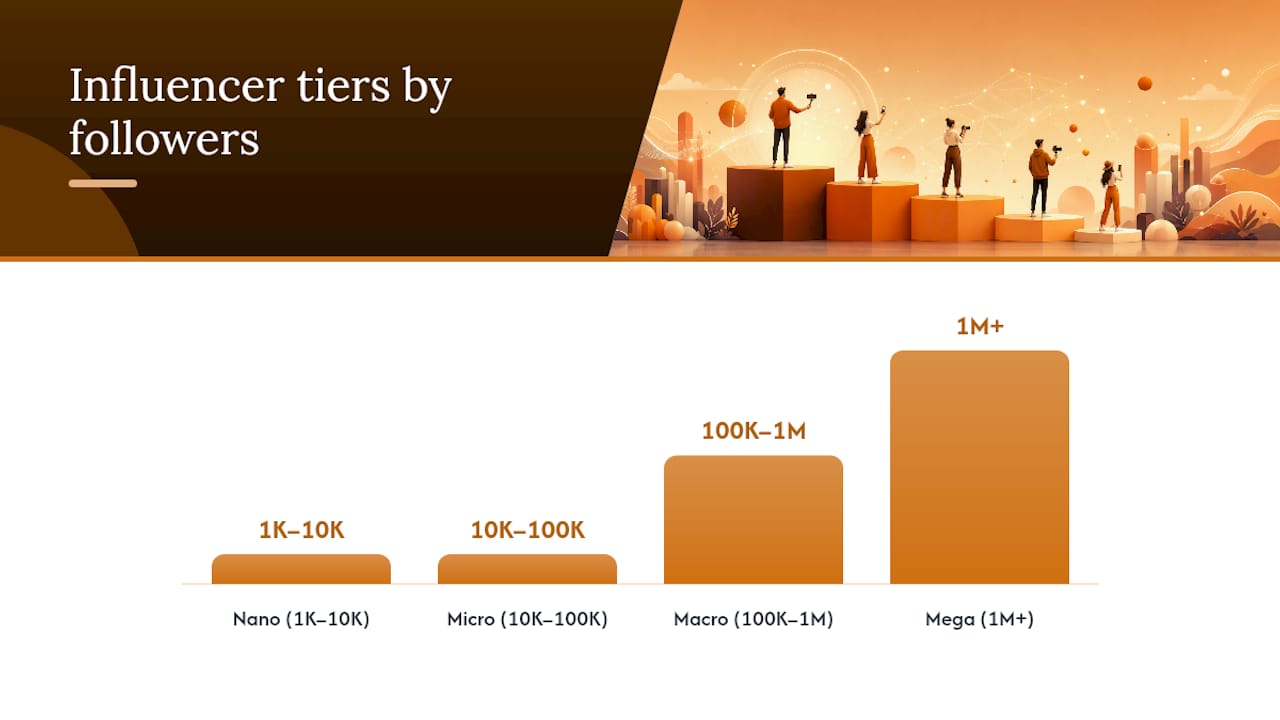
Not every creator operates at the same scale, and that’s actually a good thing for brands. The influencer world breaks down into four recognized tiers, each with different strengths.
-
Nano influencers (1K–10K followers): Hyper-local, highly trusted, often personal. Engagement rates tend to be the highest of any tier because followers genuinely know the creator. Best for local businesses, community-driven campaigns, and product seeding.
-
Micro influencers (10K–100K followers): The sweet spot for many brands. Specific niche authority, strong engagement, and more affordable rates than macro or mega creators. A fitness micro-influencer in Austin, for example, can move product for a regional supplement brand far more efficiently than a celebrity post.
-
Macro influencers (100K–1M followers): Established creators with broad reach and professional content quality. They often have media kits, agents, and clear rate cards. Good for brand awareness campaigns with a defined demographic.
-
Mega influencers (1M+ followers): Celebrities and platform-native stars. Maximum reach, premium pricing, and lower average engagement rates. Best for launches, cultural moments, and campaigns where visibility is the primary KPI.
Common niches include beauty, fashion, fitness, travel, food, parenting, tech, gaming, and lifestyle. Niche matters enormously for brand fit. A skincare brand pairing with a travel creator might get impressions, but a beauty micro-influencer with a dedicated skincare community will generate saves, comments, and clicks that actually convert.
Influencers leverage social capital and community engagement to shape product adoption, which is why niche alignment between creator and brand is the foundation of any effective campaign. Followers treat creator recommendations like advice from a trusted friend, and that trust is niche-specific. A beauty audience trusts a beauty creator. Sending them a tech gadget recommendation breaks the spell.
Pro Tip: When your campaign goal is conversions rather than awareness, go micro or nano. When you need cultural reach for a major product launch, go macro or mega. The mistake most brands make is defaulting to the biggest name they can afford regardless of fit.
How do Instagram influencers actually get paid?
Yes, influencers get paid, and often through several channels at once. Sponsored content, affiliate marketing, and product collaborations are the three most common income streams, but the full picture is broader.
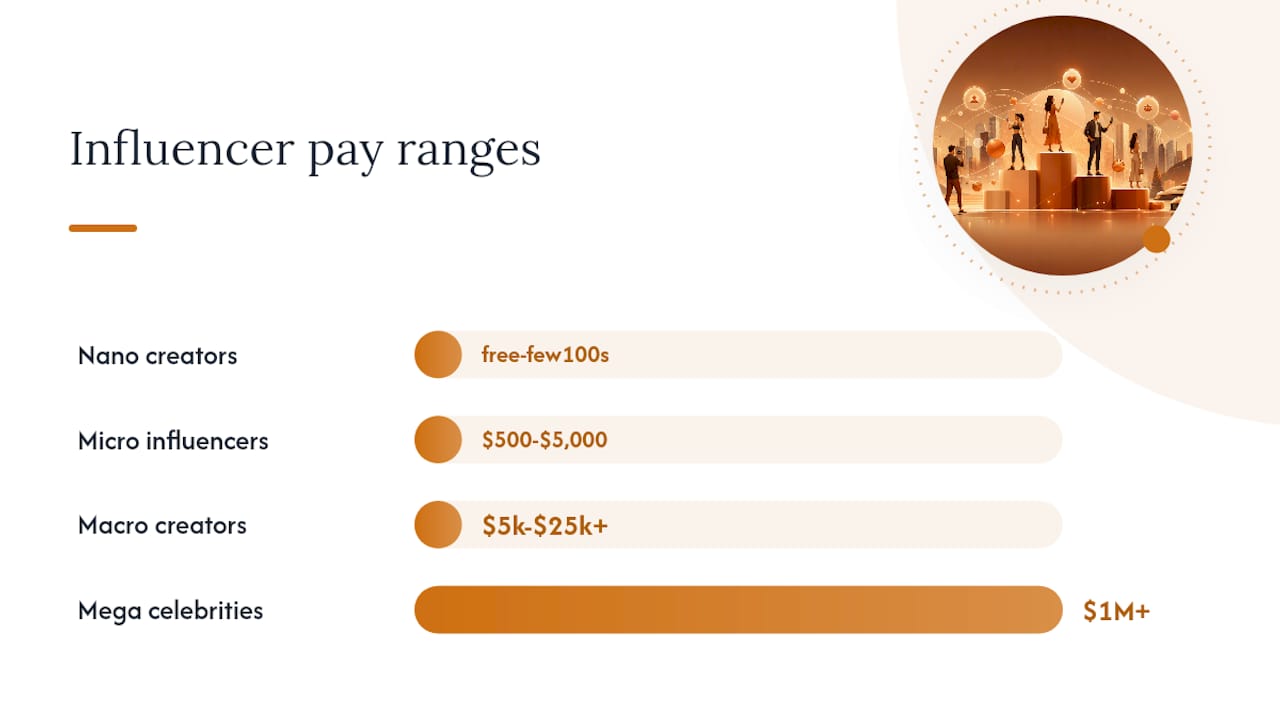
Sponsored posts are the most straightforward: a brand pays a creator to feature their product in a post, Reel, or Story. Rates vary widely by tier and niche. Nano creators might receive free product or a few hundred dollars per post. Micro influencers typically charge $500–$5,000 per post. Macro creators often start at $5,000 and climb well above $25,000. Mega celebrities and global figures like Cristiano Ronaldo command fees that can reach seven figures for a single sponsored post.
Affiliate commissions give creators a percentage of sales generated through a unique link or promo code. This model is popular in beauty, fashion, and fitness because it ties creator compensation directly to results.
Creator tools and ad revenue include Instagram’s native monetization features: in-stream ads on Reels, subscriptions for exclusive content, and badges in Live videos. These tend to supplement rather than replace brand deals for most creators.
Product lines and collabs are where the real money often lives. Kylie Jenner built Kylie Cosmetics largely through Instagram. Selena Gomez launched Rare Beauty with her platform as the primary marketing engine. James Charles has released his own makeup collections. For creators who reach macro or mega status, a product line can dwarf all other income combined.
Key metrics that drive compensation:
- Engagement rate: Brands pay more for creators whose audiences actually interact, not just scroll past.
- Audience quality: Verified demographics, low bot percentage, and geographic alignment with the brand’s market.
- Conversion history: Documented proof that past campaigns drove clicks, sales, or sign-ups.
- Content quality and consistency: Brands want creators who produce reliably good work on deadline.
Standard contract elements typically include deliverables (number of posts, format, platform), usage rights (whether the brand can repurpose the content), FTC disclosure requirements, exclusivity clauses, timelines, and revision rounds.
How do brands evaluate and hire Instagram influencers?
Brands evaluate creators on audience fit first, then engagement, then content quality, and finally trackable results. The era of “big number = good deal” is over. What brands actually want is proof that a creator’s audience matches their customer profile and that the creator can drive measurable action.
Here’s the vetting sequence most experienced marketers follow:
- Audience demographics check: Age, gender, location, and interests. A creator with 500,000 followers in Brazil doesn’t help a U.S.-only brand, no matter how good the content.
- Engagement rate review: Divide total engagements (likes, comments, saves, shares) by follower count. Anything above 2–3% for a macro creator is healthy. Micro creators should show 5% or higher.
- Content quality audit: Scroll the last 30 posts. Is the content consistent, on-brand, and well-produced? Does the creator disclose paid partnerships clearly?
- Previous campaign results: Ask for case studies or screenshots of past campaign metrics. A creator who can show UTM-tracked conversions from a prior brand deal is worth significantly more than one who can only offer impressions.
- Fraud check: Use a tool like HypeAuditor or Modash to scan for suspicious follower spikes, bot activity, or engagement pods. Fake followers are still a real problem.
Pro Tip: Saves and shares are the metrics that matter most for proving ROI on Instagram. A post with 10,000 likes and 50 saves is underperforming. A post with 3,000 likes and 800 saves is doing real work. Ask creators for their save rate before you sign.
Red flags to watch for:
- Sudden, unexplained follower spikes
- Engagement that doesn’t match follower count (10M followers, 200 comments)
- No FTC disclosure on past sponsored posts
- Vague or unavailable audience demographic data
- Poor or slow communication during the outreach process
For brands exploring influencer marketing strategies that drive real growth, the evaluation process is where campaigns are won or lost before they even launch.
What’s actually changing on Instagram in 2026?
Reels are the primary discovery engine on Instagram in 2026, and that single fact reshapes almost every decision a creator or brand makes on the platform. If your content isn’t showing up in Reels, you’re largely invisible to new audiences.
Here’s what’s driving growth right now:
- Reels-first discovery: The algorithm heavily favors short-form video for reaching non-followers. Static posts and carousels still serve existing audiences, but Reels is where new followers come from.
- Creator commerce integration: Instagram’s native shopping tools, affiliate links in Reels, and product tags have made the path from discovery to purchase shorter than ever. Creators who build shoppable content see measurably higher conversion rates.
- Authenticity over polish: Low-lift, mobile-shot Reels often outperform high-production content. Audiences respond to genuine, unfiltered moments more than studio-quality ads.
- Saves and shares as the new currency: The algorithm reads saves and shares as signals of high-value content. Brands and creators who optimize for these actions see stronger organic reach.
- Cross-platform content batching: Many creators now shoot one piece of content and adapt it across Instagram Reels, TikTok, and YouTube Shorts simultaneously, maximizing reach without multiplying effort.
For brands, the practical implication is clear: prioritize creators who are already active on Reels, not just those with large static-post followings. A creator with 80,000 followers and strong Reels performance will reach more new people than a creator with 500,000 followers who hasn’t adapted to short-form video.
Check out Stacyknows’s deep dive on social media trends in 2026 for a broader look at how these platform shifts are playing out across channels.
A 2026 data snapshot: what the numbers say about influencer impact
The core driver of influencer marketing spend is simple: audiences trust creators, and that trust translates to action. Followers treat creator recommendations like advice from a friend, which is why influencer campaigns consistently outperform traditional display advertising on engagement metrics.
| Metric | What it measures | Why it matters |
|---|---|---|
| Engagement rate | Interactions divided by followers | Predicts audience responsiveness to brand content |
| Save rate | Saves divided by impressions | Signals content value and purchase intent |
| Reels reach | Views from non-followers | Measures discovery potential for new audiences |
| UTM-tracked conversions | Clicks and purchases via tracked links | Proves direct campaign ROI |
Measurement is shifting from likes to trackable conversions. Brands that build UTM parameters into every influencer campaign can attribute revenue directly to creators, making the ROI case far easier to defend internally. — ContentStudio
The shift toward conversion tracking reflects a broader maturation of the influencer industry. Early campaigns were evaluated on reach and impressions. Today, brands expect creators to support UTM tracking, share post-campaign analytics, and demonstrate that their audience actually bought something. Creators who can provide that data command higher rates and longer partnerships.
For a practical guide to boosting brand visibility through influencer ROI, the key takeaway is that measurement infrastructure matters as much as creative quality.
Why Stacyknows follows creators closely and how we curate
Stacyknows has been covering lifestyle, beauty, and wellness for years, and the creator economy sits right at the heart of what we cover. When we recommend a creator or highlight an influencer’s work, the filter is always the same: does this person offer something genuinely useful or honest to our readers?
That means we’re not chasing follower counts. We’re looking for creators whose content holds up when you actually try the product, follow the advice, or attend the event they recommended. U.S. relevance matters too. A creator who resonates deeply with a specific American community, whether that’s beauty lovers in their 40s, local foodies, or wellness-curious readers, gets our attention faster than a global mega-celebrity with nothing specific to say.
We’re transparent about partnerships. When Stacyknows links to a product or creator, we flag affiliate relationships clearly. Readers deserve to know the difference between an editorial recommendation and a paid placement. That’s a line we take seriously.
If you’re curious about what it actually looks like to build a creator career, the reality of being an influencer in 2026 is something we’ve covered honestly, without the highlight-reel version most people see.
Sources
- Definition: What is an Instagram Influencer?
- Top 25 Instagram Influencers on the Planet
- What Is a Social Media Influencer? Types, Areas of Expertise, and More | Coursera
- Instagram marketing: A practical guide | ContentStudio
- Influencer
Recommended
- What Makes Someone An Influencer? I asked ChatGPT – Stacyknows
- The Reality of Being an Influencer in 2026 (No One Tells You This) – Stacyknows
- Local Influencer: Your 2026 Community Growth Guide – Stacyknows
- Stacy Knows: Your Guide to the Original Influencer – Stacyknows
