

Understanding the Value of Estate Jewelry and Luxury Watches
The allure of estate jewelry and luxury watches stems from a profound appreciation for history, artistry, and enduring quality. Unlike mass-produced items, each piece tells a unique story, carrying the essence of its era and the skilled hands that crafted it. These aren’t just accessories; they are tangible links to the past, offering both aesthetic pleasure and a wise investment.
Historical Eras and Iconic Design Movements
The journey through estate jewelry is a captivating exploration of design evolution. From the romantic intricacies of the Victorian era (circa 1837-1901), characterized by sentimental motifs, elaborate filigree work, and often set in yellow gold, to the delicate elegance of Edwardian designs (circa 1901-1910) where platinum settings became prominent, allowing for lighter, lacier designs with intricate milgrain detailing.
The vibrant Art Deco period (circa 1920-1939) brought a dramatic shift, embracing geometric patterns, bold lines, and a celebration of modernity, often featuring platinum and white gold with contrasting gemstones. Following this, the Retro design era (circa 1940-1950s) emerged, characterized by larger, more sculptural pieces, often in rose gold, reflecting a sense of optimism and glamour after wartime austerity. Each period offers distinct characteristics, from the hand engraving that added bespoke touches to the security of bezel settings for precious stones. Understanding these movements is key to appreciating the provenance and unique style of an estate diamond engagement ring.
Why Collectors Invest in Estate Jewelry and Luxury Watches
Investing in estate jewelry and luxury watches is a multifaceted decision driven by more than just aesthetics. For many, the rarity of these pieces is a significant draw. Original designs from specific historical periods, especially those featuring unique cuts or craftsmanship that are no longer common, offer an exclusivity that modern pieces often cannot match.
Furthermore, the conversation around ethical sourcing has grown exponentially, particularly by October 2026. While the debate between natural and lab-grown diamonds continues, with lab-grown options often highlighted for their reduced environmental impact compared to traditional mining, estate pieces offer a compelling alternative. They inherently participate in a circular economy, giving new life to existing treasures without demanding new resources. This makes them a highly sustainable and often more ethical choice, as their environmental and social impact has already occurred in the past.
Estate items also demonstrate remarkable value retention. Unlike new purchases that typically depreciate immediately, well-preserved estate jewelry and luxury watches often hold or increase in value over time, making them a sound investment. The average cost of a new engagement ring in the United States hovers around $5,500 to $6,000, and while the traditional guideline of spending ‘two to three months’ salary’ persists, an estate piece can offer exceptional quality and a distinctive character for a comparable or even lesser investment. This allows buyers to acquire pieces with artisan quality and historical significance, often at a more accessible price point than their newly manufactured counterparts.
Classic Diamonds and Fine Horology
The heart of estate jewelry often lies in its diamonds, and luxury watches is defined by its mechanical prestige. These two elements, when found in estate pieces, offer a rich tapestry of history, craftsmanship, and unique characteristics that set them apart.
Antique Engagement Ring Aesthetics and Gemstones
When considering a diamond engagement ring from a bygone era, the aesthetics are profoundly different from many contemporary designs. Antique diamonds, for instance, were cut by hand long before modern precision tools, resulting in unique light performance. The Old European cut, prevalent from the late 19th to early 20th century, features a small table, a high crown, and a large culet, designed to sparkle beautifully under candlelight. Similarly, the even earlier Old Mine cut (18th to mid-19th century) boasts a squarish shape with rounded corners, a high crown, and a deep pavilion, reflecting a charming, chunky brilliance.
Later, transitional cuts emerged as a bridge between these antique styles and the modern round brilliant, offering a glimpse into evolving cutting techniques. While modern cushion cuts are popular today, their antique predecessors often have larger facets and a softer, more romantic glow.
Understanding the 4Cs (cut, color, clarity, carat) is crucial even for antique diamonds, though their grading standards and aesthetic appreciation differ slightly. For instance, a lower color grade in an Old European cut might be less noticeable and even contribute to its warm, vintage charm. Many estate rings feature classic solitaire settings, allowing the unique diamond to be the focal point, or elegant three-stone rings, symbolizing past, present, and future.
The gemstones themselves often hold significant value. Many antique diamonds are natural diamonds sourced from mines long ago, and some pieces may feature untreated gemstones, which are highly prized for their inherent beauty and authenticity. The allure of colored gems like sapphires, rubies, and emeralds set alongside diamonds was also a prominent feature in many historical periods, adding vibrant character to engagement rings.
Mechanical Prestige and Collectible Timepieces
The world of estate luxury watches is equally rich, offering a profound appreciation for horology heritage and intricate Swiss engineering. These timepieces are not merely instruments for telling time; they are miniature mechanical marvels, often showcasing centuries of watchmaking tradition.
Collectors are drawn to specific features and complications. Chronographs, with their stopwatch functions, are highly sought after, as are watches with sophisticated automatic movements that power themselves through the wearer’s motion. The appeal often lies in the visible craftsmanship of the movement, sometimes displayed through an exhibition case back.
The condition of a vintage watch, including its dial patina—the natural aging and discoloration of the dial—can significantly contribute to its character and value, telling a story of its journey through time. For those seeking a blend of historical significance, reliable performance, and a tangible connection to luxury watchmaking, exploring options like certified pre-owned Rolexes can open doors to iconic designs and enduring value. These meticulously inspected and authenticated timepieces offer an accessible entry point into high horology, ensuring both quality and peace of mind.
Acquisition, Verification, and Maintenance
Acquiring an estate diamond engagement ring or a luxury watch is an exciting endeavor, but it requires diligence to ensure authenticity, condition, and long-term enjoyment. Proper verification and ongoing care are paramount to preserving the brilliance and value of these timeless pieces.
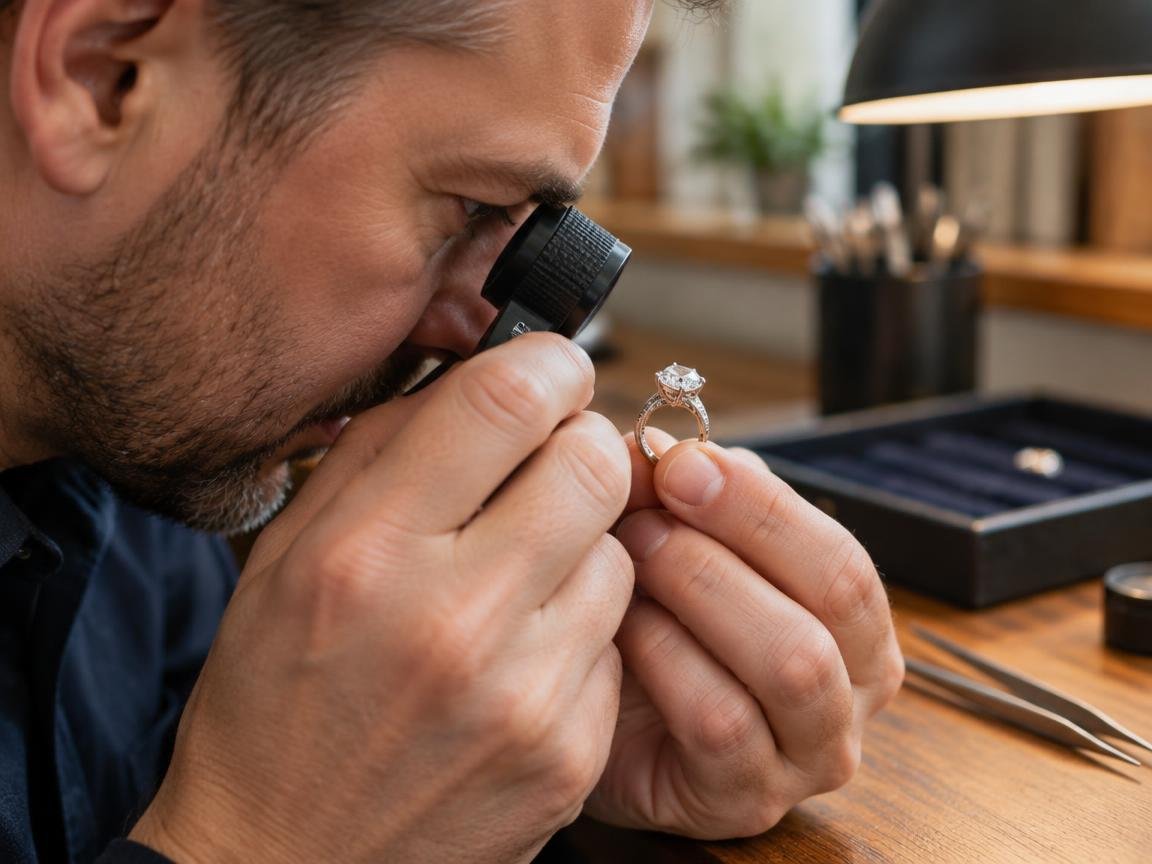
Evaluating Estate Jewelry and Luxury Watches for Authenticity and Condition
When considering an estate piece, thorough evaluation is essential. For jewelry, this often involves a detailed inspection under a jeweler’s loupe to examine the diamond’s cut, clarity, and any signs of wear on the setting. Crucially, always request appraisal documents and gemological certificates from reputable institutions like the GIA (Gemological Institute of America) for diamonds, which provide an objective assessment of the stone’s 4Cs. Look for hallmarking on the metal, which indicates its purity and often the maker or country of origin.
For watches, verifying serial numbers and reference numbers is critical for authenticity. A professional watchmaker can assess the movement health, checking for original components, signs of repair, and overall functionality. The dial condition is also a major factor; while some patina is desirable, significant damage or non-original parts can affect value. Understanding wear patterns on both jewelry and watches can help distinguish genuine age from damage.
When it comes to antique diamonds, their unique characteristics are a key part of their appeal. Below is a comparison of how these older cuts differ from their modern counterparts:
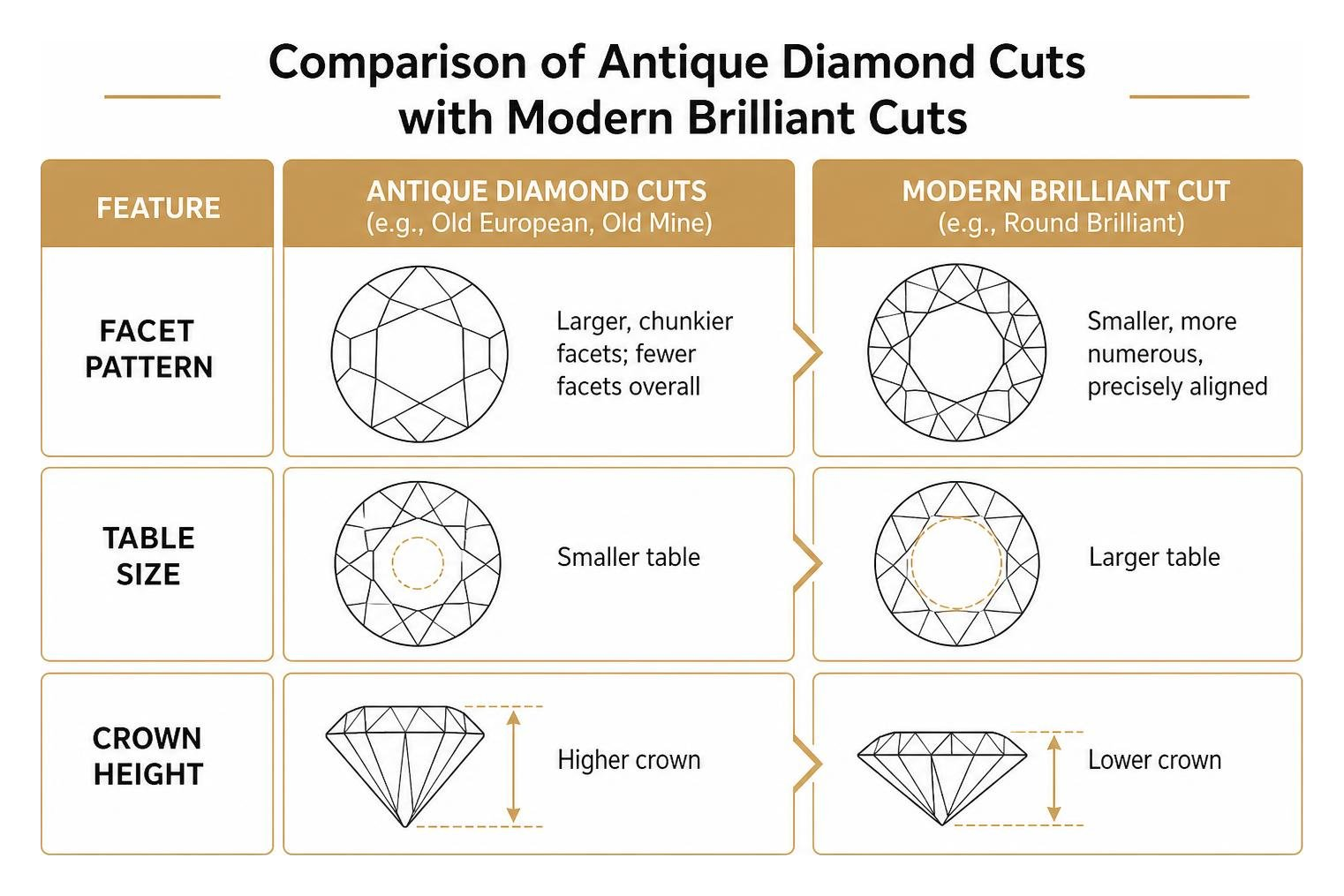
| Feature | Antique Diamond Cuts (e.g., Old European, Old Mine) | Modern Brilliant Cut (e.g., Round Brilliant) |
|---|---|---|
| Facet Pattern | Larger, chunkier facets; fewer facets overall | Smaller, more numerous, precisely aligned |
| Table Size | Smaller table | Larger table |
| Crown Height | Higher crown | Lower crown |
| Culet | Often large and visible (faceted or open) | Very small or pointed (no visible culet) |
| Brilliance | "Candlelight" brilliance; broader flashes of light | Intense, fiery sparkle; more scintillation |
| Shape | Often slightly irregular, squarish (Old Mine) | Symmetrical, perfectly round |
| Cutting | Hand-cut; unique character | Machine-cut; standardized precision |
This comparison highlights why antique cuts offer a distinct aesthetic, often preferred for their softer, romantic glow rather than the intense sparkle of modern diamonds.
Long-Term Care and Professional Maintenance
Once acquired, proper care and maintenance are vital to preserving the beauty and longevity of your estate pieces. For diamond rings, regular prong inspection by a jeweler is essential to ensure the stones remain secure. Gentle cleaning at home with a soft brush and mild soap can maintain brilliance, but periodic professional cleaning, such as an ultrasonic cleaning, can reach areas inaccessible at home.

Luxury watches, particularly those with mechanical movements, require professional attention. Periodic regulation and servicing, typically every 3-5 years, are crucial to ensure accuracy and prevent wear on delicate internal components. This involves disassembling, cleaning, lubricating, and reassembling the movement. Always ensure that any servicing is performed by a certified watchmaker using original or appropriate replacement parts.
Beyond cleaning and servicing, secure storage is important to prevent damage and loss. Keep jewelry in soft pouches or lined boxes, and watches in winders or cases to protect them from dust and scratches. Finally, obtaining insurance appraisals and updating them periodically is a wise step to protect your investment against unforeseen circumstances.
Frequently Asked Questions About Estate Fine Pieces
The world of estate jewelry and luxury watches can sometimes be confusing due to specialized terminology and unique characteristics. Here, we address some common questions to help clarify these distinctions.
What differentiates estate jewelry from vintage and antique items?
The terms “estate,” “vintage,” and “antique” are often used interchangeably, but they have distinct meanings in the jewelry world. Estate jewelry is a broad category referring to any pre-owned piece of jewelry, regardless of its age. It simply means it belonged to someone else previously.
Vintage jewelry typically refers to pieces that are at least 20 to 100 years old. This category encompasses a wide range of styles, from the Art Deco period to mid-20th century designs.
Antique jewelry, on the other hand, is generally reserved for pieces that are 100 years old or older. This means that as of October 2026, jewelry from 1926 or earlier would be considered antique. This classification often includes Victorian, Edwardian, and Art Nouveau pieces. Essentially, all antique and vintage jewelry can be considered estate jewelry, but not all estate jewelry is antique or vintage. The term “pre-owned” is a more general classification that applies to any item that has had a previous owner.
How do antique diamond cuts compare to modern brilliant diamonds?
Antique diamond cuts, such as the Old European and Old Mine cuts, were crafted by hand to maximize brilliance under the softer, warmer light of candles or gas lamps. They feature distinct characteristics:
- Faceted proportions: Antique cuts have larger, fewer, and often less uniformly shaped facets compared to the precise, numerous facets of modern brilliant cuts.
- Candlelight brilliance: They are renowned for a softer, more romantic “candlelight” brilliance, producing broad flashes of light rather than the intense, fiery sparkle of modern cuts.
- High crowns and small tables: These features contribute to a deeper stone and a unique light return.
- Light refraction: The way light refracts through these cuts creates a distinct visual effect, often described as a “checkerboard” or “chunky” sparkle, which is highly sought after by collectors for its unique charm. Modern brilliant cuts, in contrast, are designed for maximum sparkle under contemporary lighting conditions, with precise symmetry and proportions to optimize light return.
Why is documented provenance important for luxury timepieces and jewelry?
Documented provenance refers to the verifiable history of ownership and origin of a piece. For luxury timepieces and jewelry, it is incredibly important for several reasons:
- Authenticity verification: Provenance provides a crucial paper trail that helps confirm the item’s authenticity, ensuring it is not a counterfeit or a heavily modified piece. This is especially vital for high-value items where fakes can be sophisticated.
- Collector desirability: For collectors, a well-documented history often adds to an item’s desirability and prestige. Knowing the previous owner, the circumstances of its acquisition, or even its journey through time can enhance its narrative and appeal.
- Valuation impact: Strong provenance can significantly impact an item’s market value. Pieces with a clear, reputable ownership history or those linked to notable figures often command higher prices due to their unique story and verified authenticity.
- Ethical assurance: For items like diamonds, provenance can offer insights into their mine origins, contributing to the understanding of their ethical sourcing, even if historical records are less stringent than today’s. It provides a level of transparency that enhances trust in the item’s integrity.
Conclusion
The journey through estate jewelry and luxury watches reveals a profound appreciation for lasting artistry and enduring legacy. These aren’t just objects; they are custodians of history, each with a unique narrative waiting to be discovered. Whether it’s a diamond engagement ring that whispers tales of a bygone era or a meticulously crafted timepiece that embodies centuries of horological innovation, choosing an estate piece is a statement of refined taste and conscious consumption.
In an increasingly disposable world, the decision to invest in these treasures speaks to a desire for personal expression that transcends fleeting trends. They offer a sustainable choice, participating in a circular economy that values craftsmanship and history over novelty. By understanding their unique characteristics, ensuring their authenticity, and committing to their proper care, we ensure that these magnificent pieces continue to tell their stories, becoming cherished additions to our lives and future curated collections. They are not merely purchases; they are investments in beauty, history, and a legacy that will continue to shine for generations to come.
