
Crepey skin is defined as thin, loosely textured skin that resembles crinkled tissue paper, caused by the breakdown of collagen and elastin in the dermis. The honest answer to whether it can be fixed: not fully reversed, but significantly improved. With the right combination of topical treatments, professional procedures, and daily habits, most people see real, visible results. Retinoids, broad-spectrum sunscreen, and in-office options like radiofrequency microneedling are the treatments dermatologists reach for first. And with GLP-1 weight loss medications driving rapid body changes, crepey skin is showing up in younger patients than ever before.
Can crepey skin be fixed, or just managed?
The clinical term for what most people call crepey skin is cutaneous elastosis, a condition where the skin’s structural proteins degrade faster than the body can replace them. Understanding this distinction matters because it shapes what treatment can realistically achieve.
The primary drivers behind crepey skin include:
- Collagen and elastin loss from natural aging, which accelerates after age 40
- UV damage from cumulative sun exposure, which breaks down collagen fibers in the dermis even on cloudy days
- Dehydration and a weakened skin barrier, which make fine surface texture more visible
- Genetics, which determine how quickly your skin ages and how resilient it remains under stress
- Rapid weight loss, including from GLP-1 medications like Ozempic and Wegovy, which can leave skin without the underlying volume to stay taut
Each of these causes responds differently to treatment. UV damage, for example, is largely preventable going forward but cannot be undone. Collagen loss can be partially stimulated back through retinoids and professional procedures. Dehydration is the easiest to address and shows results fastest. Knowing which factor is driving your crepey skin helps you pick the right approach rather than throwing money at every product on the shelf.
The realistic answer is this: significant improvement is possible with consistent care, but total reversal is not. That is not a reason to give up. It is a reason to start with the right expectations.
What topical treatments actually do for crepey skin
At-home skincare is where most people start, and for good reason. It is accessible, affordable, and when done correctly, genuinely effective at improving skin texture over time.

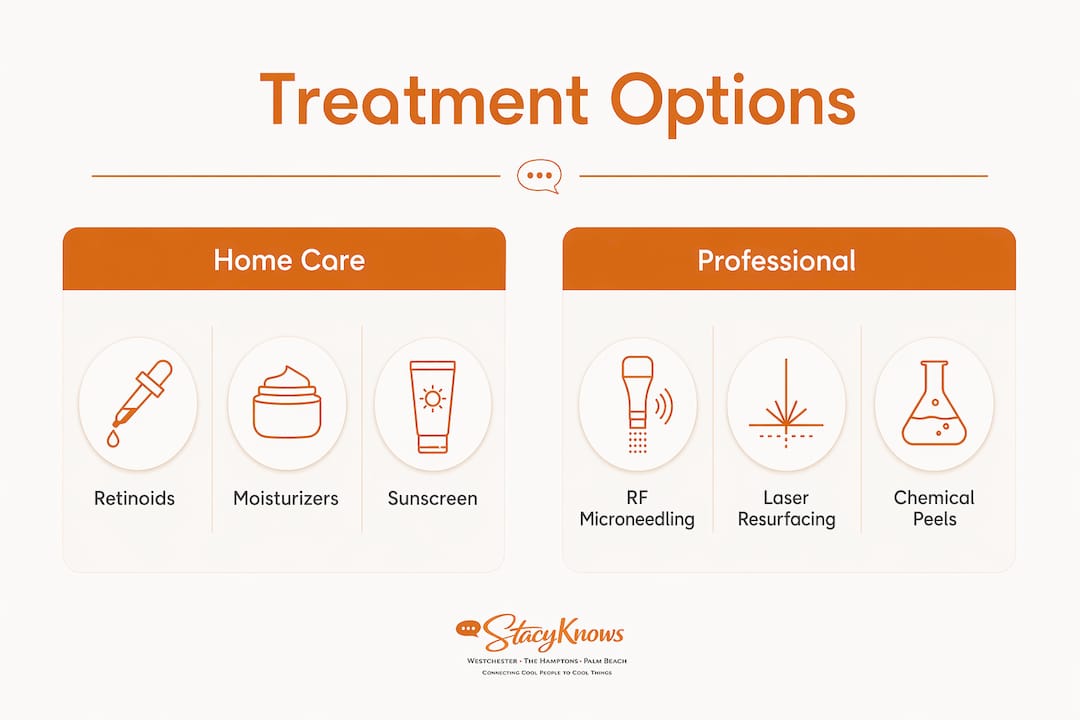
Retinoids are the gold standard. Tretinoin (available by prescription at concentrations of 0.025% to 0.1%) and over-the-counter retinol both stimulate collagen production by signaling fibroblasts in the dermis to ramp up activity. Measurable improvements in skin texture typically require 6 to 12 months of consistent use. That timeline surprises people, but it reflects how long collagen remodeling actually takes at a cellular level.
Pro Tip: Start retinoids two to three nights per week and build up slowly. Jumping straight to nightly use almost always causes redness and peeling that makes people quit before they see results.
Moisturizers with hyaluronic acid, ceramides, and urea do something retinoids cannot: they work immediately. Hyaluronic acid and ceramides cushion the skin surface and make fine lines less noticeable within days. They do not fix collagen loss, but they reduce the visual severity of crepiness while longer-term treatments do their work underneath.
Antioxidants, particularly vitamin C in a stable L-ascorbic acid form, protect existing collagen from oxidative damage. Vitamin C and antioxidants support collagen preservation rather than rebuilding it, so they work best as a preventive layer on top of your retinoid routine.
The key limitations to understand:
- Topical treatments improve surface texture and skin plumpness
- They cannot address deep structural laxity or significant volume loss
- Results are gradual and require months of consistency
- Overusing multiple active ingredients at once often causes irritation that sets progress back
For those with sensitive skin who cannot tolerate retinoids, gentle anti-aging alternatives like bakuchiol and peptide-based formulas offer a milder path with less irritation risk.
What professional treatments can do that home care cannot
Professional procedures reach deeper into the skin than any topical product. They trigger collagen remodeling at a structural level, which is why results are more visible and more durable. The tradeoff is cost, downtime, and the need for multiple sessions.
Here are the main options dermatologists recommend, in order of invasiveness:
- Radiofrequency microneedling (devices like Morpheus8 or Vivace): Combines micro-injuries with radiofrequency energy to stimulate deep collagen production. Experts recommend 3 to 5 sessions spaced several weeks apart, with downtime of 1 to 3 days per session.
- Ultrasound treatments (Sofwave, Ultherapy): Use focused ultrasound energy to stimulate collagen at deeper skin layers. Ultrasound technology like Sofwave typically requires just one treatment with minimal downtime, making it popular for people who cannot afford recovery time.
- Fractional laser resurfacing (Fraxel): Targets both surface texture and deeper collagen. Offers a middle ground between aggressive CO2 lasers and gentler options, with shorter downtime and noticeable improvement.
- CO2 laser resurfacing: The most dramatic option. CO2 lasers produce significant results but require 5 to 7 days of downtime and careful post-treatment care. Best suited for people with significant skin laxity who can plan for recovery.
- Platelet-rich plasma (PRP) therapy: Often combined with microneedling, PRP uses growth factors from your own blood to accelerate collagen repair. Results are gradual and build over several months.
| Treatment | Sessions needed | Downtime | Best for |
|---|---|---|---|
| RF microneedling | 3 to 5 | 1 to 3 days | Moderate laxity, body areas |
| Sofwave/Ultherapy | 1 | Minimal | Mild to moderate laxity |
| Fraxel laser | 3 to 5 | 3 to 5 days | Surface texture and tone |
| CO2 laser | 1 to 2 | 5 to 7 days | Significant laxity |
| PRP with microneedling | 3 to 4 | 1 to 2 days | Gradual collagen support |
A dermatology consultation before committing to any procedure is non-negotiable. Skin tone, depth of laxity, and lifestyle all affect which treatment is appropriate. You can read more about FDA-authorized microneedling protocols and what to expect from the process.
Daily habits that slow crepey skin progression
Prevention is not glamorous, but it is the most cost-effective crepey skin solution available. The habits below do not reverse existing damage, but they stop new damage from compounding what is already there.
- Daily broad-spectrum SPF 30 or higher applied to all exposed skin, every day, regardless of season. This is the single most important step to prevent UV-driven collagen breakdown. Most people apply too little and skip reapplication.
- Consistent moisturizing, morning and night, with products containing ceramides or hyaluronic acid to maintain the skin barrier
- Staying hydrated internally, since chronic dehydration visibly worsens skin texture and makes crepiness more pronounced
- Avoiding smoking, which accelerates collagen degradation through oxidative stress and reduced blood flow to the skin
- Eating enough protein, since collagen synthesis requires amino acids from dietary sources like eggs, fish, and legumes
- Protecting skin during weight loss, especially rapid weight loss, by maintaining muscle mass and keeping skin well-moisturized throughout the process
Pro Tip: Apply sunscreen as the last step of your morning skincare routine, after moisturizer but before makeup. Most people apply it too early in the routine, which dilutes its effectiveness.
The cumulative nature of skin damage means that every day of unprotected sun exposure adds to the total. Starting sun protection now, even if you have existing crepey skin, slows the rate at which it worsens. That matters more than most people realize.
Home care vs professional treatments: how to combine them
The most effective approach to improving crepey skin is not choosing between home care and professional treatments. It is using both in a way that makes each more effective.
| Approach | What it does well | Limitations | Cost range |
|---|---|---|---|
| Home care (retinoids, SPF, moisturizers) | Gradual texture improvement, collagen support, barrier health | Cannot address deep laxity; slow results | Low to moderate |
| Professional treatments | Visible structural improvement, faster results | Cost, downtime, multiple sessions required | Moderate to high |
| Combined approach | Maximizes and maintains results from both | Requires consistency and planning | Varies |
Combining home care with professional procedures yields the best sustainable results. Dermatologists consistently recommend building a solid foundation of daily sunscreen and retinoids before adding professional treatments. This is because skin that is already conditioned responds better to procedures and heals faster afterward.
The most common mistake people make is expecting topical products alone to fix significant laxity, or assuming one laser session will deliver permanent results. Multiple sessions spaced weeks apart are required for meaningful collagen remodeling, and patients who stop too soon rarely see the full benefit. Patience is not optional here. It is part of the treatment.
Checking in with a dermatologist or plastic surgeon to separate social media claims from evidence-based options is worth doing before spending money on trending devices or products. Stacyknows has covered how TikTok anti-aging myths stack up against actual medical evidence, and the gap is often significant.
What I’ve learned about crepey skin after years of covering beauty
Here is what I keep coming back to: most people who feel frustrated with their crepey skin are not using the wrong products. They are using the right products for the wrong amount of time, or they are skipping the one thing that matters most, which is sunscreen.
The skin does not respond to urgency. It responds to consistency. A retinoid used three nights a week for a full year will outperform an expensive firming serum used every day for a month. I have seen this play out in reader feedback, in dermatologist interviews, and in my own routine. Simpler, sustained care wins.
I also think the conversation around crepey skin has shifted in a way that is worth acknowledging. Rapid weight loss from GLP-1 medications is bringing this concern to people in their 30s and 40s who were not expecting it. If that is your situation, the same principles apply, but the timeline for improvement may feel more urgent. A consultation with a board-certified dermatologist is genuinely the fastest way to get a personalized plan rather than guessing at products.
The goal is not perfection. It is skin that looks and feels healthier than it did six months ago. That is achievable for almost everyone who commits to the right routine.
— Stacy
Find the right products to support your skin
If you are ready to build a routine that actually works for crepey skin, the right products make a real difference.

Stacyknows has done the research so you do not have to. The Stacyknows Beauty Secret Finds page is a curated collection of vetted skincare products focused on improving skin texture, firmness, and hydration. From retinol formulas to ceramide-rich moisturizers and SPF options that actually feel good to wear, every pick is chosen with real results in mind. Professional treatments work best when your at-home routine is already solid. Start there, and you will get more from every procedure you invest in down the line. You might also find inspiration in global beauty remedies that American skincare culture has largely overlooked.
FAQ
Can crepey skin be fully reversed?
Crepey skin cannot be fully reversed, but significant improvement is possible with consistent use of retinoids over 6 to 12 months combined with professional treatments like radiofrequency microneedling or laser resurfacing.
Does retinol help with crepey skin?
Yes. Retinoids stimulate collagen production in the dermis and improve skin texture over time, with measurable results typically appearing after 6 to 12 months of consistent use at concentrations between 0.025% and 0.1% tretinoin.
What is the best professional treatment for crepey skin?
Radiofrequency microneedling and CO2 laser resurfacing are among the most effective options. Experts recommend 3 to 5 sessions of radiofrequency microneedling for collagen remodeling, while CO2 lasers offer more dramatic results with 5 to 7 days of downtime.
How do you prevent crepey skin from getting worse?
Applying broad-spectrum SPF 30 or higher daily to all exposed skin is the most critical preventive step. Consistent moisturizing with ceramides and hyaluronic acid, avoiding smoking, and maintaining a stable weight also slow progression significantly.
Is crepey skin only an aging concern?
No. Rapid weight loss from GLP-1 medications like Ozempic has made skin laxity a concern across age groups, with dermatologists now seeing crepey skin in patients in their 30s and 40s who experienced significant body weight changes.
Recommended
- Skin Procedures For A Youthful Appearance in 2025 – Stacyknows
- Facelift vs. Fillers: Why Temporary Fixes May Be Costing You More – Stacyknows
- Solve All Skin Problems with These Natural Ingredients – Stacyknows
- Plastic Surgeon Dr. Frederick Weniger Debunks TikTok Anti-Aging Myths — What’s Science vs. Social Media Hype – Stacyknows
